One hand Clapping: or is the DNI a Zen Pundit?

Know when you’ve arrived at the bookstore (a) because you can see the books and (b) because your glasses tell you so.

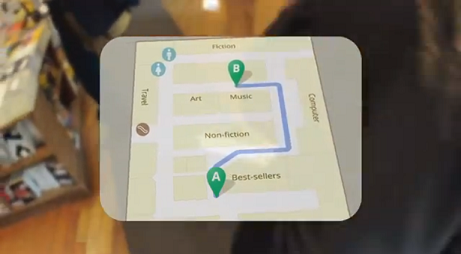
Use a map to navigate to the Music section:
And locate the Ukulele shelf:
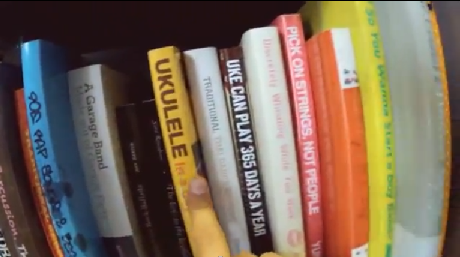
When IMO you’d be better off reading about Johann Sebastian Bach — though that’s a matter of personal taste.
With zen, your thoughts and emotions are like head- and heart-mounted displays — you can see them, they can inform your understanding, but you can also see through them, they’re transparent. You can see the world.
**
I’m going to suggest my own definition of intelligence: it’s the ability, given some data point or points, to recognize a variety of salient patterns into which it or they fit, and to create a synthetic understanding of how to move, given that all those salient pattern-fields are in play.
It is seeing in depth, past the surface, where the surface is your assumptions and expectations, and depth is the currents and undercurrents of nuance that your expectations hide.

Let me say that another way: assumptions and preferences — taking sides, being on a team — deprive you of depth. And another: the opposite of surface / superficial thinking is depthful thinking / pattern-recognition.
That, in a nutshell, is why I feel intelligence and zen “go together” even more seamlessly than zen and bikers.
**
Here’s Clapper’s speech:
**
In a future post, I hope to tackle the question of koans — those strange zen riddles, of which the best known may be…
What is the sound of one hand clapping?
Page 2 of 2 | Previous page
zen:
October 16th, 2012 at 4:25 pm
Hi Charles,
.
Excellent post. To quote a different Suzuki (DT Suzuki):
.
“Zen does not teach, it points”
.
I have read Shunryu and a lot of the other common texts in the “zen for westerners/beginners” genre and i think you are on the right track. Zen meditation and koan wisdom isn’t about getting or doing but learning how to let go of baggage and lacunae. You can also develop immense powers of concentration by the by but that is not the objective ( and habitually doing things with objectives in mind is one of the things cluttering up “mindfulness”). Zen is the springcleaning for your brain that might make you a better intelligence analyst or doctor or martial artist or whatever, but those things are incidental spillover benefits