The Xenophon Roundtable
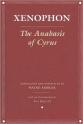
The Anabasis of Cyrus
Translation by Wayne Ambler.
The long awaited Xenophon Roundtable begins today at Chicago Boyz with an introductory post by our host and moderator, Lexington Green, which I reproduce in full, followed by a few comments.
Xenophon Roundtable: List of Contributors
Our Xenophon Roundtable begins this week.
Xenophon‘s Anabasis of Cyrus was written roughly 2,400 years ago. Yet it is still of interest and value today, for many reasons. It is an exciting tale of adventure. It is the first war memoir. It is a firsthand account of a military campaign that goes badly wrong, and of a man taking command and saving himself and his army from destruction. It is a travel book about exotic locales and natives. It depicts leadership under life and death circumstances. It contains remarkable examples of oratory and persuasion, where Xenophon had to convince because he could not compel. It is a portrait of conditions in the era following the victory of Sparta in the Peloponessian War. It is a comparison between the Greek way of political and military organization, and that of the Persians and other “barbarians”.
There is a lot in this very old book. I and the other participants will be putting up several posts in the next three weeks about it. I look forward to what the others will have to say.
Our distinguished roundtable participants are the following:
Disraeli1867 is a graduate of the College and the Business School at the University of Chicago. He works in venture capital and equity research.
“josephfouche” is a software engineer and system administrator slaving away for a technology startup somewhere in flyover country. He’s been reading military history since age nine and talking about it since his fourth grade teacher, asking a pro forma question, inquired if any student in the class knew anything about the Crimean War. (She got more than she bargained for.) He blogs at The Committee of Public Safety, a group blog dedicated to understanding the subtle interplay of human nature, culture, war, and power.
Fringe is a University of Chicago Alum, and is employed as an academic. He has been a student of military history and military affairs since his childhood. He knows strategists, and understands the difference between a strategist and a student of strategy. He has published on many topics and in many venues, including articles about modern warfare.
Lexington Green is a lawyer in Chicago. His common core humanities class freshman year at the University of Chicago was Greek Thought and Literature. It was the only A he got that year. Hblogs at ChicagoBoyz.
Page 1 of 3 | Next page