Marginalia
The New York Times, which I read on my iPad, particularly the non-political news sections of the paper where the obnoxious spin is reduced and the content quotient is higher, had an article that I think will ring a bell with ZP readers:
Sam Anderson –What I Really Want Is Someone Rolling Around in the Text’
One day in college I was trawling the library for a good book to read when I found a book called “How to Read a Book.” I tried to read it, but must have been doing something wrong, because it struck me as old-fashioned and dull, and I could get through only a tiny chunk of it. That chunk, however, contained a statement that changed my reading life forever. The author argued that you didn’t truly own a book (spiritually, intellectually) until you had marked it up.
….All of which means I’ve been feeling antsy over the last five years, as I’ve watched the inexorable rise of e-readers. I sympathize with the recent wave of public teeth-gnashing about the future of marginal notes. The digital book – scentless, pulp-free, antiseptic – seems like a poor home for the humid lushness of old-fashioned marginalia. You can’t even write by hand in an e-book – at least not comfortably, not yet. As John Dickerson recently put it on Slate, describing his attempt to annotate books on an iPad: “It’s like eating candy through a wrapper.” Although I’ve played with Kindles and iPads and Nooks, and I like them all in theory, I haven’t been able to commit to any of them. As readers, they disable the thing that, to me, defines reading itself. And yet I’ve continued to hope that, in some not-too-distant future, e-reading will learn to take marginalia seriously. And it looks as if that might be happening right now.
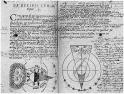
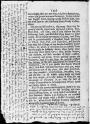
According to the marginalia scholar H. J. Jackson, the golden age of marginalia lasted from roughly 1700 to 1820. The practice, back then, was surprisingly social – people would mark up books for one another as gifts, or give pointedly annotated novels to potential lovers. Old-school marginalia was – to put it into contemporary cultural terms – a kind of slow-motion, long-form Twitter, or a statusless, meaning-soaked Facebook, or an analog, object-based G-chat. (Nevermind: it was social, is my point.) Samuel Taylor Coleridge, the undisputed all-time champion of marginalia, flourished at the tail end of this period, and his friends were always begging him to mark up their books. He eventually published some of his own marginalia, and in the process even popularized the word “marginalia” – a self-consciously pompous Latinism intended to mock the triviality of the form.
Incidentally, How to Read A Book is by Mortimer J. Adler. A classic
Page 1 of 2 | Next page