US Defense Budget, Fear and Interest
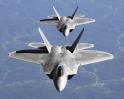
Major Chris, a ZP reader, wrote in today to draw my attention to an item at NRO and I promised a comment:
From Reihan Salam at The Agenda:
Matt Frost and Jim Manzi on US Military Expenditures
Matt Frost (you can find him on Twitter: @mattfrost) copied me on an email earlier today, and he’s kindly given me permission to share his thoughts with all of you:
Comparing the US’s military expenditures against the next three or five potential competitors doesn’t have much analytical value as such, because there are thresholds of capability that you can only cross at some absolute level of cost. Let $x be how much the US spends on the military.
Let $y be how much China spends. The difference between $xand $y, whether in terms of ratio or absolute dollars, doesn’t tell you much, because what matters is value $z, which is how much it costs to field a carrier battle group and maintain bases for air tankers and launch a constellation of GPS satellites and have all your planes be all-weather capable etc etc. Once you get to point $z+1, your capabilities are categorically different from those of a country at $z-1.
Sure, the US spends over $600 billion while the Chinese only spend $98 billion. That difference looks absurd in comparative terms. But between $98 billion and $600 billion there’s a threshold below which you just can’t project power globally. If we think that #winning means global power projection, then cutting to $200 billion won’t work, since it’s not a matter of keeping a 100% lead over the Chinese, or 150% or whatever. Superpower status does not depend on a proportional lead over our competitors; our place at the head of the pack requires staying above that magic increment while everyone else stays below it.
I don’t know what the magic number really is. If it’s $599 billion, then we’re spending the exact amount that our global strategy insists we spend. If it’s $300 billion, then we’re wasting half of every dollar. My hunch is that the real value is closer to the top than the bottom of this range. [Emphasis added]
Hmmm. My two cents:
Comparing the ostensible dollar figures of the Chinese and US defense budgets is a relatively meaningless exercise.
First, like the old Soviet Union, you are not dealing with honest budget figures in regard to Chinese military power. Many military expenditures in China are subsumed by other state agencies, such as for internal security paramilitary troops which even China admits to being slightly over 100% of the PLA budget. This alone would make China’s defense budget twice as large as admitted and we can reckon these figures as being a) underestimates and b) not comprehensive, failing to count military expenditures billed to scientific, industrial, intelligence, nuclear and space related entities. The official published statistics for these items could also be outright lies. Their system is as opaque as it chooses to be. If China’s real national security and defense budget is a cent under $ 300 billion I’d be very surprised.
Then there are the technical economic questions of converting their currency into dollars and whether that accurately reflects the purchasing power of the Chinese government on national security items. Hint: It doesn’t.
Page 1 of 2 | Next page