zenpundit.com » national security

Archive for the ‘national security’ Category

Turning Away From Strategy

Thursday, August 23rd, 2012

It appears that the Pentagon no longer intends to educate the most talented members of the officer corps to think strategically.

I say this because the status of the premier professional military education institutions – the war colleges and NDU – have been devalued, their leadership slots demoted and their educational mission degraded. As a guest columnist for Tom Ricks noted back in June:

….The new uniformed leadership of the Armed Forces, i.e., General Dempsey and his staff, apparently intend to prune NDU back to where it was a few decades ago. There will be some modest resource savings, but since the entire university budget doesn’t amount to the cost of a single joint strike fighter, one has to wonder what is motivating all of what is happening here. In the cuts that have been discussed, Dempsey’s deputy, Marine Lt. Gen. George J. Flynn has wielded the meat axe, often with the aid of micromanaging action officers. No one here in the rank-and-file is sure if the urbane chairman is on board with the details of all of this. (Ironically, both the chairman and J-7 are NDU graduates with advanced degrees.)

This set of changes took place in stages. First, while very few general or flag officer slots were cut in the armed forces, the three-star president of the university slot was downgraded to two, and the school commandants, downgraded from two to one star. No big deal, one might say, but one would be wrong, very wrong. A three star in Washington can go head-to-head with a principal on the joint staff or a senior OSD bureaucrat to protect the university. To compound the problem, the last three star president was retired in the spring and the university was left for a few months under the command of a senior foreign service officer, a former ambassador, a woman of great diplomatic talent and experience with no clout in the Pentagon. The new commandant — a highly regarded Army two-star — will not report until deep into June, when all or most of the cuts have been set in concrete. (Interesting question: can an employee of the State Department legally or even virtually assume command of a DoD organization?)

….A new “charter” was subsequently published by the Chairman. It focused the university on joint professional military education and training, which in itself, is a good thing. Immediately, however, the research and outreach activities of the university, often more focused on national strategy than military affairs, came under intense scrutiny. These outfits had grown way beyond their original charters and had become effective and highly regarded servants of a wider interagency community. Much of their work was not done for the joint staff but for OSD Policy, and some of that in conjunction with civilian think-tanks. The research arm of the university was productive, even if not always useful in a practical way to the joint staff. It also was helpful to the colleges in a much more proximate and direct fashion than other think tanks, like RAND.

….The research, gaming, and publications arms of the university — a major part of the big-think, future concepts and policy business here — will be cut to somewhere between half and a third of their original sizes. To make things worse, many of the specific cuts appear to have been crafted in the Pentagon, and nasty emails have come down from on high, about how the university is bankrupt and going into receivership, which was never the judgment of the military and civilian accrediting officials, who inspect us regularly and have generally given the university high marks.

If it would be impressive if some of our senior generals had been as effective on the battlefield as they are in the bureaucracy.

Uncreative destruction of intellectual seed corn is a bureaucrat’s way of telling everyone to shut up, don’t question and get in line. There’s nothing wrong with having excellence at joint operations as an educational goal for most future brigadiers and major generals but our future theater commanders, combatant commanders, service chiefs and their respective staff officers need something more – they need strategy.  More importantly, the Secretary of Defense, the President, the Congress and the American people need the DoD to have an in-house capacity to generate deeply thought strategic alternatives, question assumptions and red-team any self-aggrandizing options the services or bureaucracy feel like offering up in a crisis.

The motivation here is simple, really. If you put out all the strategic eyes of the Pentagon, then the one-eyed men can be King. Or he can always contract out his strategic thinking to highly paid friends to tell him what he wishes to hear.

Naturally, this will have bad effects downstream in a superpower whose civilian leadership seldom has as good a grasp of geopolitics and the fundamentals of classical strategy as they do of law or the partisan politics of running for office. They will be in need of sound strategic advice from uniformed military leaders and they will be much less likely to get it. Instead, they will have senior officers who are less likely to balk when the President’s back-home fixer turned “adviser” or superstar academic with delusions of grandeur pushes a half-baked plan at an NSC meeting to “do something”. When that happens, the jackasses kicking down this particular barn will have long-since retired and cashed out with consultancies and sinecures on boards of directors.

While a lack of strategic thinking can undermine even a lavishly funded and well-trained military, the reverse is also true; strategic leadership can revive an army that is but a half-dead corpse.

A brief illustration:


After WWI the two states that made the most extreme cuts in military power were defeated Germany and the victorious United States. Germany was forced to do so by Versailles, but responded by opting under General von Seeckt to reduce to 100,000 men by making the Reichswehr a qualitatively superior nucleus of a future expanded German Army. Prohibited from having mass, the Germans opted for class with every long-serving recruit being considered officer material and being superbly trained (even to the extent of covert training and weapons testing jointly with the Red Army deep inside the Soviet Union to evade Allied inspections). Von Seeckt also instituted a shadow general staff office that thought deeply about tactical lessons, operations and strategy for the next war. Without the Reichswehr being what it was it is highly dubious that Hitler could have so rapidly expanded the Wehrmacht into a world-class land fighting force in so few years time.

.

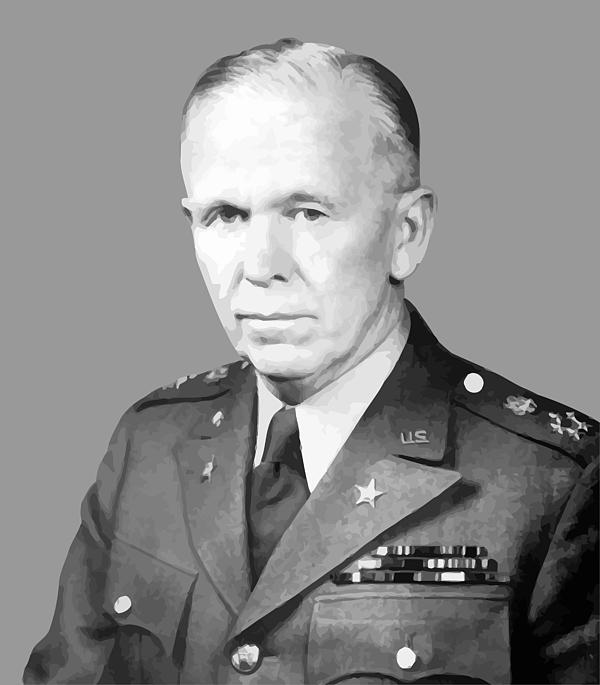
In contrast, the United States radically reduced the size of the regular Army and starved it of weapons, ammunition, gasoline, training and basic supplies. Promotions slowed to a crawl where ancient colonels and elderly majors lingered on active duty and future four and five star generals like Eisenhower, Patton, and Marshall all despaired and contemplated leaving the service. The Army’s – and to extent, America’s – salvation was in the fact that George Marshall persevered as a major and colonel in keeping a little black book of talented, forward thinking, officers and thought deeply and reflectively about building armies, helping enact “the Fort Benning Revolution” in military training. When FDR placed the power in Marshall’s hands as Chief of Staff he knew exactly what to do because he had a well-conceived vision of where the US Army needed to go to meet the national emergency of WWII. He was the American von Seeckt, except that Marshall was an infinite improvement morally, strategically and politically on his German counterpart. We were extremely fortunate to have had him.
.
We may not be as lucky next time.

The Twilight War—a review

Monday, July 23rd, 2012

[by J. Scott Shipman]

The Twilight War, The Secret History of America’s Thirty-year Conflict with Iran, by David Crist

When President Obama made a heartfelt opening, a smug Iranian leadership viewed it as a ruse or the gesture of a weak leader. Iran spurned him. Obama fell back on sanctions and CENTCOM; Iran fell back into its comfortable bed of terrorism and warmongering. Soon it may no longer be twilight; the light is dimming, and night may well be approaching at long last. [emphasis added]

Thus concludes senior government historian David Crist’s The Twilight War, and be assured Crist’s language is not hyperbole. Crist masterfully details the tumult of U.S.-Iranian relations from the Carter administration to present day. Using recently released and unclassified archived data from principals directly involved in shaping and making American foreign policy, Crist provides the reader an up-front view of “how the sausage is made;” and, as with sausage, the view often isn’t pretty for either side. Crist’s access wasn’t limited to U.S. policy makers, as he conducted interviews with principles on the other side as well, for instance, he had secret meetings/interviews with pro-Iranian Lebanese officials in south Beirut. In all, Crist estimated he interviewed over “four hundred individuals in the United States and overseas.”

Crist begins his story with the Shah of Iran in the last days of his leadership, as popular sentiment was turning against both his regime, as well as his American enablers. He reveals the Carter administration’s fleeting notion of military intervention following the fall of the Shah, and includes details how the clerics reigned in professional Iranian military members, purging the “unreconstructed royalists.” From the start, the U.S. learned how difficult, if indeed impossible, relations were going to be with the new Iranian leadership. One State Department report summed up the situation:

It is clear that we are dealing with an outlook that differs fundamentally from our own, and a chaotic internal situation. Our character, our society are based on optimism—a long history of strength and success, the possibility of equality, the protection of institutions, enshrined in a constitution, the belief in our ability to control our own destiny. Iran, on the other hand has a long and painful history of foreign invasions, occupations, and domination. Their outlook is a function of this history and the solace most Iranians have found in Shi’a Islam. They place a premium on survival. They are manipulative, fatalistic, suspicious, and xenophobic.

While I am certain the writer of this report was not intending to be prophetic, as it turns out this paragraph captures the essence of our conflict. Each American president has thought himself equal to the challenge and each has thus far failed.

The Twilight War includes the birth of Hezbollah, accounts of the Marine barracks bombing in 1983 (from the men who were there), and the details of the Kuwaiti request for American protection of their tanker fleet from the Iranians. From this decision, the U.S. committed military force to protect Middle East oil—a difficult and at times, contentious decision. This decision resulted in continued sporadic confrontations between the U.S. and Iranian forces in the Persian Gulf.

Crist’s book is an illustration writ-large of a book previously reviewed here at Zenpundit.com; Derek Leebaert’s Magic and Mayhem, The Delusions of American Foreign Policy—as both “magic” and “mayhem” figure large in our on-going relationship with Iran. Most U.S. administrations when dealing with Iran came to rely on the “magic, ” and often divorced, or worse, ignored the realities.

At 572 pages, the fast paced narrative is a must read for anyone wanting insight into the origins and issues that remain in the ongoing U.S.-Iran conflict. The Twilight War is exhaustively sourced.  Crist says in the Notes his book was twenty-years in the making and it shows. Further, this book comes with excellent maps, so keeping up with the geography is made easier.

Tom Ricks said, “this is the foreign policy book of the year, perhaps many years,” and Ricks may be right. The Twilight War is an important and timely book on a vital topic, and comes with my strongest recommendation.

Postscript:

A copy of The Twilight War was provided to this reviewer by the publisher.

Putin and Syria: Siloviki Realism in Geopolitical Strategy

Thursday, July 12th, 2012


Russian President Vladimir Putin made a foreign policy speech to Russia’s ambassadors and Foreign Ministry officials that is very much worth reading in context of his dispatch to Syria of a fleet of warships, including a battleship, to the modest Russian naval base in Tartus. Under Putin’s hand, Russian support for the bloody regime of Bashar Assad has consistently been more about safeguarding and expanding Russia’s strategic place in world than about Syria:

….We are forced to admit that no reliable solution for overcoming the global economic crisis has been found yet. Indeed, the prospects are looking more and more worrying. The debt problems in the Eurozone and its slide towards recession are just the tip of the iceberg as far as the global economy’s unresolved structural problems go. The traditional powerhouses of global development – the USA, the EU, and Japan – are seeing their leadership erode, but the absence of new development models is putting a brake on global growth. There is increasing competition for access to resources, and this provokes abnormal fluctuations on the raw materials and energy markets. The traditional Western economic powers are being weakened by the crisis, which has exacerbated social and economic problems in the developed economies, and by the multi-vector nature of global development today. We can already see this for a fact now. 

Colleagues, this is no cause for joy. We should not take delight in this turn of events, and much less feel malicious glee. On the contrary, we cannot but worry over these developments, because the consequences of these tectonic shifts in the global economy are not yet clear, nor are the inevitable shifts in the international balance of power and in global policy that will follow. 

We are all the more worried when we see attempts by some actors in international relations to maintain their traditional influence, often by resorting to unilateral action that runs counter to the principles of international law. We see evidence of this in so-called ‘humanitarian operations’, the export of bomb and missile diplomacy, and intervention in internal conflicts.

We see how contradictory and unbalanced the reform process is in North Africa and the Middle East, and I am sure that many of you still have the tragic events in Libya before your eyes. We cannot allow a repeat of such scenarios in other countries, in Syria, for example. I believe that we must do everything possible to press the parties in this conflict into negotiating a peaceful political solution to all issues of dispute. We must do all we can to facilitate such a dialogue. Of course this is a more complex and subtle undertaking than intervention using brute force from outside, but only this process can guarantee a lasting settlement and future stable development in the region, and in Syria’s case, in the country itself….

It would be harder for Putin to have been more clear about what his priorities were, or that for Russia, R2P as a doctrine has no standing whatsoever in international law [ incidentally, he’s correct on that point] and Syria is not going to be allowed to go the way of Libya, if the Kremlin can prevent it.

Generally, the media reported this speech, highly misleadingly, as Putin’s prediction of “Western decline” when the message was Russia’s opposition to Western military intervention in Syria to remove Assad from power. Putin neither overestimates the means at Russia’s disposal to accomplish his limited objective (blocking intervention) nor inflates his objective to an unrealizable, vaguely defined, abstraction.

Contrast, with the speech on Syria made recently by SECSTATE Hillary Clinton. Here is a snippet that gives the tenor of her remarks:

….What was accomplished in Geneva by the action group was, for the very first time, to enlist not only all five permanent members of the Security Council including Russia and China, but also important leaders in the region and in the Arab League in support of such a transition. The issue now is to determine how best to put into action what was accomplished there and is continuing here. And I really hope everyone reads the communique from Geneva, because for example, one of the earlier speakers from Syria expressed concern there was nothing about political prisoners. Well, indeed there is. And a call for the release from detention. So it would be very helpful to get everybody on the same page if we’re going to work together about what we have already done and what we need to be doing as we move forward.

Under the Geneva communique, the opposition is for the first time put on an even basis with the government. They are given equal power in constituting the transition governing entity that will have, as we just heard, full executive authority. That could not have been imagined three months ago, let alone a year ago.

So although none of us here is satisfied or comfortable with what is still going on inside of Syria, because it is against every norm of international law and human decency for a government to be murdering its own people, there has been in the last several months, starting in Tunisia, a steady, inexorable march toward ending this regime. What we need to do is to follow through on what each of us can contribute to the end of the Assad regime and the beginning of a new day for Syria. 

….Now what can every nation and group represented here do? I ask you to reach out to Russia and China and to not only urge, but demand that they get off the sidelines and begin to support the legitimate aspirations of the Syrian people. It is frankly not enough just to come to the Friends of the Syrian People, because I will tell you very frankly, I don’t think Russia and China believe they are paying any price at all – nothing at all – for standing up on behalf of the Assad regime. The only way that will change is if every nation represented here directly and urgently makes it clear that Russia and China will pay a price, because they are holding up progress – blockading it – that is no longer tolerable. 

First of all, the Secretary of State needs a more effective speechwriter. Period.

Secondly, there is a substantive problem here with an obsession with the minutia of process, possibly because the legal principle behind American policy on Syria is a novelty of intellectuals and is not accepted by two veto-wielding great powers that sit on the UN Security Council. Moreover this focus on minutia of process obstructs clear thinking in regard to the larger geopolitical picture and the ways to get to the end in mind – the removal of Assad’s regime – or the consequences for opposing American policy. Russia and China are told their continued support for the Assad regime, which they see as being in their own interests, is “intolerable” – an outburst of unseemly frustration as we have no stick and strangely offer no carrots for these states to change their positions. Instead we choose to moralize  in public, a diplomatic technique with a long pedigree of failure.

The comparison of statecraft between Russia and the United States is unflattering. Russia has vastly fewer cards to play, but because  Putin has grounded his policy in a siloviki assessment the realities of power, has limited his objectives to those within Russia’s means and related those to the larger diplomatic context that would appeal to other powers, he has played those cards well. Moreover, Putin has positioned Russia to be an indispensable party in a peaceful resolution of the conflict in Syria at very little cost, as Secretary Clinton herself has admitted and capped it off with a naval show of force in the eastern Mediterranean.

We, who have a wealth of resources to employ, have squandered them ineffectively and navigate the ship of state with our heads in the clouds. We forced a vote in the UNSC on Syria, ignoring all signals that the end result would be failure. Syria shoots down a Turkish warplane intruding in it’s airspace (likely at our request) and we had no plan to capitalize on the incident. We gratuitously leak information or disinformation about covert operations that serves more to make us look amateurish than to intimidate our opponents. We do not even appear to be well-informed about the Syrian opposition we are aiding inside Syria, as opposed to expatriate organizations. Some of the fighters in the opposition are as morally objectionable as Assad’s militia thugs and secret police killers.

We play at tactical geopolitics while the Russians do strategy.

It Seems the Oligarchs Distrust their own Creepy-state

Tuesday, July 10th, 2012

I previously made note of the emergence of an authoritarian Creepy-state element in American government, enjoying bipartisan popularity with this era’s predominantly Boomer elite politicians, CEOs and academic activists. Largely because this growing surveillance state is directed at controlling the rest of us and eroding the democratic and legal accountability of a self-imagined superclass.

Here’s a new (but unsurprising) wrinkle. The political-bureaucratic folks quietly building this incipient machinery of coercion already distrust and fear the men and women who are employed to run it. Evidently, the Rise of the Praetorian Class theory has been widely read.

US spy agency accused of illegally collecting personal data

WASHINGTON — One of the nation’s most secretive intelligence agencies is pressuring its polygraphers to obtain intimate details of the private lives of thousands of job applicants and employees, pushing the ethical and legal boundaries of a program that’s designed instead to catch spies and terrorists.

The National Reconnaissance Office is so intent on extracting confessions of personal or illicit behavior that officials have admonished polygraphers who refused to go after them and rewarded those who did, sometimes with cash bonuses, a McClatchy Newspapers investigation found.

The disclosures include a wide range of behavior and private thoughts such as drug use, child abuse, suicide attempts, depression and sexual deviancy. The agency, which oversees the nation’s spy satellites, records the sessions that were required for security clearances and stores them in a database.

Even though it’s aggressively collecting the private disclosures, when people confess to serious crimes such as child molestation they’re not always arrested or prosecuted.

“You’ve got to wonder what the point of all of this is if we’re not even going after child molesters,” said Mark Phillips, a veteran polygrapher who resigned from the agency in late May after, he says, he was retaliated against for resisting abusive techniques. “This is bureaucracy run amok. These practices violate the rights of Americans, and it’s not even for a good reason.”

The agency refused to answer McClatchy’s questions about its practices. However, it’s acknowledged in internal documents that it’s not supposed to directly ask more personal questions but says it legally collects the information when people spontaneously confess, often at the beginning of the polygraph test.

Even though it is against the law as well as internal regulations, the NRO management have given themselves the green light in a self-investigation to keep doing it to their own employees and anybody going through a security clearance background investigation – a vast number of people, many of whom have or will someday have incredibly sensitive positions in the defense, intelligence and national security communities.

After a legal review of Phillips’ assertions, the agency’s assistant general counsel, Mark Land, concluded in April that it did nothing wrong. “My opinion, based on all of the facts, is that management’s action is legally supportable and corrective action is not required,” he wrote.

But McClatchy’s review of hundreds of documents – including internal policy documents, memos and agency emails – indicates that the National Reconnaissance Office is pushing ethical and possibly legal limits by:

-Establishing a system that tracks the number of personal confessions, which then are used in polygraphers’ annual performance reviews.

-Summoning employees and job applicants for multiple polygraph tests to ask about a wide array of personal behavior.

-Altering results of the tests in what some polygraphers say is an effort to justify more probing of employees’ and applicants’ private lives.

Read the rest here.
.
The charitable explanation is that all this is bureaucratic overreach motivated by tiny empire building and budget-padding in the age of  austerity, where cybersecurity is one of the few “growth” areas of discretionary spending for senior bureaucrats to pursue.
.
The cynical explanation is that these are blackmail files being compiled systematically and deliberately; to be used later to compel IC/DoD/DHS/DoJ employees to stick with an agency party line, intimidate and punish whistleblowers or use their official positions to engage in illegal misconduct to benefit politically influential VIPs. Like harassing American citizens or journalists critical of an agency or administration policy or special interests.
.
There’s few good reasons for the government to do this – and those few are all narrowly related to genuine and specific security concerns we have had to live with since WWII – but many bad ones.

SWJ: Casebooks on Insurgency

Tuesday, July 10th, 2012

This looks to be an invaluable resource. From SWJ:

Casebooks on Insurgency and Revolutionary Warfare 

US Army Special Operations Command and Johns Hopkins University/Applied Physics Laboratory National Security Analysis Department have put together a useful reference for small wars students and practitioners entitled “Casebook on Insurgency and Revolutionary Warfare Volume II:  1962-2009.”  The resource is available for download in PDF format here.  If you are wondering where Volume I is, that government document covers post-World War I insurgencies and revolutions up to 1962 and can be downloaded in PDF here.  The original was published by the Special Operations Research Office at The American University in 1962.

Volume II is broken down by conceptual categories as can be seen by the table of contents….

Read the rest here.


Switch to our mobile site