zenpundit.com » foreign policy

Archive for the ‘foreign policy’ Category

Honor, Fear and Interest

Wednesday, September 22nd, 2010


The Landmark Thucydides: A Comprehensive Guide to the Peloponnesian War by Thucydides, Robert B. Strassler (ed.)

As noted earlier today by Crispin at Wings over Iraq, Dan Drezner has written one of his better posts:

“The Top Three Reasons You Should Read Thucydides

3) You will recognize some recurrent patterns in history. Thucydides will help one develop a better appreciation for life in 5th century BC, but it will really help one develop an appreciation for the aspects of human nature that are unchanged through time. 

For exhibit A, consider this recent Kindred Winecoff post with respect to American soldiers, war crimes, and nativism. The relevant section…

Agreed. Human nature has not changed much since 400 BC nor has politics become more nuanced than in the days of the polis. I am also dubious that America, or most nations, for that matter, have produced leaders recently who were of the caliber of Pericles or Lysander. On the other hand, Nicias, Alcibiades, HyperbolusCritias and various bumbling Spartan Navarchs, the world appears to enjoy in spades.

It is often said that history is philosophy from examples, but in Thucydides, history is also strategy from examples. I agree with Professor Drezner that Thucydides belongs on the shortlist of books military officers should read; I’d feel a lot better when the next international crisis erupted,  if our politicians read him too. If our elected officials could at least internalize “honor, fear and interest”, it would make our foreign policy debates markedly less stupid and public expectations of policy more realistic.

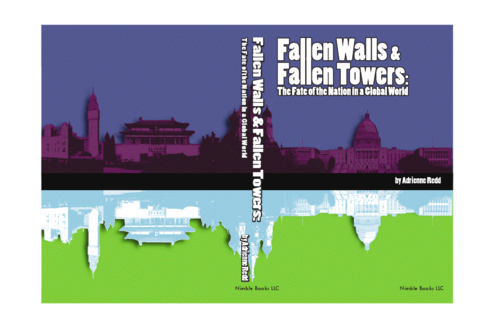
Fallen Walls and Fallen Towers by Adrienne Redd

Monday, August 30th, 2010

redd.png

Fallen Walls and Fallen Towers: The Fate of the Nation in a Global World by Adrienne Redd

I “met” Dr. Adrienne Redd some years ago through the kind offices of Critt Jarvis, which resulted in a wide-ranging and intermittent email discussion, sometimes joined by John Robb and others, of “virtual states”, “virtual nations”, “micropowers” and evolving concepts of sovereignty and statehood in international relations. It was an intellectually stimulating conversation.

Today, Dr. Redd is Nimble Books’ newest author, and she has just sent me a review copy of Fallen Walls and Fallen Towers, the culmination of approximately seven years of research and writing.  Redd investigates nothing less than the “fate of the state” and I am looking forward to reading her argument in detail.

To be reviewed here soon….

Pakistan, More Time Bomb than Ally

Thursday, July 15th, 2010

The only question is who will be damaged more when their political system implodes after a coup by the ISI’s carefully cultivated  Islamist lunatic fringe, Pakistan or every other country connected to it including the United States?

Will we wake up and disentangle ourselves in time? Our strategic relationship with Islamabad is deemed necessary because of the logistical pipeline that flows through Pakistan (hint: smaller footprint makes Pakistan less valuable) but it is analogous to the guy who remains married to his wife who is a habitually violent, bipolar, crack addict because she stays home and watches the kids.

A superb post by Pundita on America’s whistling past the graveyard policy ofnPakistan:

He ain’t heavy, he’s my genocidal, hallucinatory, two-faced ‘ally’

Earlier this month the Chairman of the Joint Chiefs of Staff, Admiral Michael Mullen, twisted his mouth into the shape of a pretzel to explain why it was okay for the U.S. to support Pakistan’s nuclear arsenal but not okay to support North Korea’s arsenal and Iran’s nuclear ambitions. He also saw no problem with the United States as much declaring war on India when he sympathized with Pakistan’s need to use nuclear weapons against India in order to feel safe.Then Americans wonder why Pyongyang and Tehran laugh at Washington’s lectures on nuclear proliferation. The leaders of both regimes have been doing clandestine nuke business with Pakistan for decades. They know Pakistan is the biggest nuclear weapons proliferator on the planet — and so does Mullen, who is the highest ranking military officer in the USA and as such is the principal military advisor to the President of the United States, the National Security Council, and the Secretary of Defense.

That’s not the half of the double standard America has practiced with regard to Pakistan. Barely a day goes by that the American news media doesn’t warn of the dangers of a nuclear-armed Iran because of the regime’s end-of-time religious views, which American news analyst John Batchelor has termed “hallucinatory.”

It doesn’t get more hallucinatory than the views of Pakistani media mogul, Majeed Nizami, the owner of the Nawa-i-Waqt, The Nation, and Waqt TV channel. During a recent speech at a function given in his honor he declared that Pakistan’s missiles and nuclear bombs were superior to “India’s ghosts,” and that unleashing nuclear war against India was imperative. “Don’t worry if a couple of our cities are also destroyed in the process.”That would be the same Nation newspaper that cites the United States government as being behind every terrorist incident in the world, including the Times Square attack.If you think Nizami is an isolated nut case, you don’t know much about him, or Pakistan. He is the true face of the most powerful factions in Pakistan including its military leaders.

But in the view of the U.S. government and news media it’s okay for Pakistan’s military to hold hallucinatory views whereas it’s not okay for Iran’s leaders because, well, because.

It’s the same for anti-Semitic views that abound in Pakistan. In the same article that discussed Nizami’s view that nuclear Armageddon was the ticket to peace in South Asia, Pakistani journalist Shakil Chaudhary reported on a June 18 column in Nizami’s Nawa-i-Waqt paper in which Lt. Gen. Abdul Qayyum (ret), former chairman of Pakistan Steel Mills, approvingly quoted Adolph Hitler as saying: “I could have annihilated all the Jews in the world, but I left some of them so that you can know why I was killing them.”

Read the rest here.

Reality, Strategy and Afghanistan: Some Questions

Tuesday, July 6th, 2010

Are all the strategic objectives in Afghanistan clearly defined and acheivable by military force?

Of the operational activities that might support our strategic objectives that require civilian expertise, why in nine years have we not sent adequate civilian agency representation and funding?

If military operations in Afghanistan require a single commander, why does the civilian side of the COIN campaign have authority divided between at least a half-dozen senior officials without anyone having a deliverable “final say” reporting to the President?

If Pakistan’s “partnership” is officially a requirement for strategic success (and it is), why would Pakistan be a “partner” in helping stabilize an independent regime in Afghanistan that would terminate Pakistan’s ability to use Afghanistan as “strategic depth”?

Is the Taliban more important to our national security than is al Qaida?

If we can’t get at al Qaida after nine long years to finish them off, why is that?

If Pakistan’s ISI is sponsoring the Haqqani Network, the Quetta Shura Afghan Taliban and other extremist jihadi groups, doesn’t that make the ISI as a critical component – the strategic “brains” – of the Enemy’s center of gravity?

Shouldn’t we be targeting the Enemy center of gravity if we are to acheive our strategic objectives? (If we are going to be squeamish and pants-wetting about that, how about the retired and bearded “plausibly deniable” ex-ISI guys running around FATA as “advisers” and fixers to jihadi and tribal factions?)

Should we be sending the Enemy’s strategic brains billions of dollars annually?

For that matter, is the size of our own logistical tail effectively funding the guys in black turbans shooting at American soldiers and burying IEDs? Would less be more?

Can we ever gain the initiative if the Enemy has safe sanctuaries – oh, has anyone noticed that Pakistan has twice as many Pushtuns as Afghanistan and how does that affect the odds for winning a purist COIN campaign….in 18 months?

Are COIN warfare and proxy warfare the same thing to be treated with the same policy?

If we assume the Enemy has read FM 3-24, shouldn’t we make certain that a considerable percentage of our tactical moves in AfPak are not coming out of a “cookbook”? Is the element of surprise something we can use, or is it considered unsporting these days in warfighting doctrine?

Given that most of Afghanistan’s GDP is derived from US military spending, how is the Karzai regime going to afford an ANA of the requisite size that COIN theory requires for an operational handoff at our arbitrary political deadline of 18 months?

And on a related note, if the Karzai regime in it’s entirety was suddenly frozen in carbonite like Han Solo in The Empire Strikes Back, how much more efficient and popular would the Afghan government instantly become with ordinary Afghans compared to how it is now?

If we can’t work with Karzai why can’t we work with somebody else? It’s not like he was, you know, actually elected 😉

If political authorities are not effectively linking  Ends, Ways and Means – some old-fashioned gadflys call this state of affairs “not having a strategy” – and are unlikely to acheive our objectives and said political authorities will not consider changing the objectives, what practical actions can we take in the next 18 months to seize the initiative,  maximize the harm inflicted on our enemies, ensure help for our friends and the furtherance of our own interests?

Intriguing Analysis on NYT-Obama Admin Policy Split on Pakistan

Monday, June 28th, 2010

Pundita detects the Old Gray Lady going off Rahm Emanuel’s reservation:

Afghanistan War: Obama tries to quash New York Times mutiny

I don’t know whether the mutiny is actually against the White House or the ISAF command or both. All I’ve been able to piece together is that after fortifying themselves with rum and the battle cry, ‘We’re nobody’s poodle!‘ the New York Times editorial board gave the heave-ho to NATO’s march to the rear in Afghanistan.

So this is a very strange turn of events and worthy of examination.The mutiny might have started earlier but as near as I can figure it began June 11. On that date the New York Times reported on a version of what transpired during Karzai’s dispute with two officials….

….State Department spokesman P.J. Crowley, who evidently had not gotten the memo about the mutiny by the time of his June 25 press briefing, only poured fuel on the fire started by the mutineers:

QUESTION: … the New York Times today reported that the Pakistan army has offered to mediate for peace talks with the Taliban and also with the Haqqani network. Is the offer with you?MR. CROWLEY: Well, as we’ve said many times, this is an Afghan-led process, but obviously there are discussions going on between Afghan officials and Pakistani officials, and we certainly want to see ways in which Pakistan can be supportive of this broader process.

QUESTION: Do you see the Haqqani network coming – sharing power with the Afghan Government? Do you support that?

MR. CROWLEY: We have been very clear in terms of the conditions that any individual or any entity need to meet in order to have a constructive role in Afghanistan’s future: renouncing violence, terminating any ties to al-Qaida, and respecting the Afghan constitution. Anyone who meets those criteria can play a role in Afghan’s future.

The White House, more alarmed by the Times mutiny than Crowley’s foot-in-mouth replies, scrambled to do damage control. Yesterday Democratic Senator Dianne Feinstein and a toady in the GOP camp, Republican Senator Lindsey Graham, were packed off to Fox News Cable’s Sunday show to give assurances that if General Petraeus needed more time to win the war in Afghanistan he had it.Leon Panetta was also dispatched to the Sunday morning TV network circuit, which receives close attention here in the nation’s capital. So it came to pass that Panetta made his first appearance on American network television since he became director of the CIA. He appeared on ABC’s “This Week” and faced questions from Jake Tapper, who soon turned discussion to the June 24 Times report:

Pundita has much more here.

The problem for the Obama administration is that if the generally incurious and poorly informed American public ever grasped the nature and an accurate record of Pakistan’s ongoing sponsorship the Taliban, Pakistan would quickly become an object of hatred in the eyes of US voters which, with the right visceral image, could quickly turn passive disquiet into righteous rage. My read, and it is just an informal sense, is that frustrations with the war are building into a dangerous powder keg beneath a placid surface of widespread anxiety and concern for the well-being of the troops.

A mass-casualty act of terror on American soil traced back to Pakistan, or some grisly image broadcast from the Afghan battlefield could unleash a political tsunami.


Switch to our mobile site