Guest Post: U.S. Marines, the Forever Tribe by Stan Coerr
I was only one of many…but at the same time, I was one of the few.
The Marine Corps serves the nation, and those of us who are called serve the Marine Corps.
We serve the unit.
We serve the tribe.
Most of all, we serve our brothers.
Semper Fidelis.
Page 3 of 3 | Previous page
J.ScottShipman:
January 30th, 2015 at 3:48 pm
This is splendid! Thanks for giving Stan’s Facebook post a bigger perch!
Stan:
January 30th, 2015 at 10:10 pm
Mark- Thanks for the shout-out! I am proud to be part of this group….
Stan
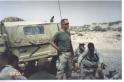
P.S. I cannot look at that photo without laughing at Sergeant Walsh….he is the one right behind me, with his arms across his knees.
I can hear him now: “Sir, are we really going to do this? Geeeeezzzzzzz….”
david ronfeldt:
January 31st, 2015 at 12:46 am
as one who wrote years ago about “tribes — the first and forever form”, i am heartened to read this. the marines are a shining modern example, blending institutional and tribal principles in positive balanced ways.
.
elsewhere, however, i was disheartened to see new york city police unionists opt to engage in public displays of a negative tribalism, showing institutional and tribal impulses spiraling out of balance. not to mention other city police.
.
one of our country’s key challenges at home and abroad, including for grand strategy, is dealing with the continued rise and spread of so many dark varieties of preternatural tribalism.
.
onward.
zen:
January 31st, 2015 at 4:57 am
Glad you enjoyed it Scott!
.
Stan, very glad to have you here – top notch post!
.
David – Agree with you. Tribalism is such a powerful force because it builds resilience along with other capabilities. How would you characterize ISIS in your TIMN framework?
Charles Cameron:
January 31st, 2015 at 6:39 am
I can relate:
One of my last memories of my father, a Captain RN, is sleeping overnight in a hammock on his ship, HMS Protector — and yes, to this boy it was the coolest thing ever. I’d fired the Oerlikon and Bofors guns earlier in the day, while we were out on exercise, and those names remain with me still. My father died soon after: I was nine.
david ronfeldt:
February 4th, 2015 at 8:47 pm
I’m a little late replying, Zen, but I do have tentative partial answers. And they are essentially TIMN-framework answers:
.
Much as I appreciate seeing so many efforts to analyze ISIS (and earlier, Al Qaeda) as a network and/or a hierarchy of some new kind, I continue to believe (as I did with Al Qaeda) that the tribal form is relentlessly at work as well, if not more so. Thus, I’d propose (as I tried with Al Qaeda) that ISIS and affiliates are operating much like a global tribe waging segmental warfare. ISIS and ilk seem classically tribal in terms of what drives them, how they organize, how they fight. Viewing ISIS mainly as a cutting-edge, post-modern network phenomenon of the information age, while not inaccurate, misses a crucial point: Al Qaeda and affiliates are using the information age to reiterate ancient patterns of tribalism on a global scale. The war they are waging is more about virulent tribalism than religion. As I’ve said before, the tribal paradigm should be added to the network and other prevailing paradigms to help figure out the best policies and strategies for countering these violent actors, organizationally and ideologically.
(reference: http://www.rand.org/pubs/reprints/RP1371.html)
.
But this is a trying and troublesome point to make effectively, because network and religion paradigms have powerful holds around analysis, strategy, and the media. Heads may nod when I bring up the tribal form and its implications for analysis and strategy, but not many analysts are suited to working on it (anthropology has basically ostracized the concept, and anthropologists would rather argue about it than help out). Moreover, bringing up the tribal paradigm means recognizing the significance of all sorts of negative modern expressions that may make some people averse and uncomfortable (e.g., Fox News broadcasts more tribalists intent on tribalizing than any other network, in my view).
.
In contrast, a vast apparatus, indeed a veritable industry, has grown around discussing jihadi extremism and counter-extremism from the standpoint of religion. The religious aspects are undeniably important, but after watching the back and forth among various religious scholars and pundits over many years, I still think that what’s going on is more about tribalism than religion, and that dwelling on religion is not the best way to counter the jihadi movement. Maybe a way to bridge from religion to tribalism in order to root out extremism is to ask: Are you fostering Islam, or are you fostering tribalism? And what do you think your answer means?
.
Since this movement has arisen in a part of the world that, in my view, can’t seem to get any of the TIMN forms right in order to construct modern societies — it’s fraught with failed tribes as well as failed states, etc. — I expect that, if ISIS takes hold over territory and consolidates a caliphate-type state, the outcome will be a vicious fascism. Moreover, its options for future expansion may include something new: a global “panarchy” (see Wikipedia article on its original meaning, which is different from recent modern network usage) consisting of semi-autonomous zones and nested enclaves that abide more-or-less the surrounding state/country, but obey the caliphate — an ummah-state quite distinct from a nation-state. But maybe I’m being too speculative? (But maybe it’s been tried before — e.g., by the Papacy?)
.
Elsewhere here at your blog, I applaud Charles’ post about “unholy war”. He too is trying to come up with a way to get beyond the hold of established religious terminology. I have a similar problem with terminology about the tribal form. Since “extreme tribalism” hasn’t quite worked for me, I’m currently trying out “preternatural tribalism” as a focus. Who knows?
Charles Cameron:
February 4th, 2015 at 11:23 pm
Thanks, David.
.
While we’re on the topic of tribalism, I noticed your use of the term “honoritarian” in Tribes — The First and Forever Form.
.
I have the impression that “honor / shame” is another issue that anthropology has tended to ostracize — not quite identical to tribalism, but certainly showing a strong overlap? — and I wondered whether you have written that axis up in detail elsewhere, or could point me to a resource or resources on the topic you consider particularly useful.
.
I am pretty sure I saw a paper once, written for the US military, describing in a couple of paragraphs how a herding society would tend to develop honor / shame dynamics — as I recall, the gist was that the herdsman, being way off up some mountainside with his herd, would be risking his family’s entire capital in the form of that herd, and his family in the form of his wife, if he did not threaten massive retaliation on any brigand or kidnapper audacious enough to take either from him, with extended clan-loyalty being the guarantee of that retaliation. If I could ever find it again, I’d quote it quite a bit.
.
I noticed your use of “preternatural tribalism” too — a very interesting usage that I’ll be keeping an eye out for in your own and others’ writings.
david ronfeldt:
February 5th, 2015 at 2:35 am
I didn’t follow up with “honoritarian”. But as for a paper once written for US mil, a quick search of some of my holdings indicates you should check past writings by William McCallister and Ralph Peters about tribes. Also a Leavenworth HTS Army study “My Cousin’s Enemy is My Friend: A Study of Pashtun “Tribes”. I didn’t like it much, as I once blogged. And especially go look at a DoD study “Iraq Tribal Study – Al-Anbar Governorate: The Albu Fahd Tribe, The Albu Mahal Tribe and the Albu Issa Tribe”. The last has quite a lot about herders.
Charles Cameron:
February 5th, 2015 at 5:53 am
That’s extremely helpful, David — thank you so much.
.
Maj. Gant’s paper I was familiar with, and the Al Anbar Tribal Governate piece, since I’ve been redaing Col. Lang for a while and he was one of the contributors. My Cousin’s Enemy is My Friend looks familiar, too, as does McCallister’s COIN and Irregular Warfare. I’ll have to go through them all, and a dozen more, with a fine tooth comb now, and see whether the two or three paragraphs that I so vividly remember turn up in one of them.
.
Many thanks again.
.
And I really liked “honoritarian”.
david ronfeldt:
February 5th, 2015 at 10:48 pm
thanks for highlighting “honoritarian”. as i recall, i kept seeing a common set of adjectives used to characterize tribes: e.g., acephalous, egalitarian, segmental. but no adjective that captured the respect, pride, honor, dignity bundle that is so important in/to tribes. and i couldn’t locate one. so i came up with honoritarian. i don’t recall whether it had already been coined somewhere, but i think not. so i’m doubly delighted it sticks around usefully.