ISIS and the Crisis in American Statecraft
[by Mark Safranski, a.k.a. “zen“]
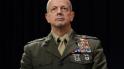

A Facebook friend with an astute comment pointed me toward this Wall Street Journal article by Joe Rago on the mission of General John Allen, USMC as “Special Presidential Envoy for the Global Coalition to Counter ISIL”. What is a “Special Presidential Envoy” ?
In diplomatic parlance, a special envoy is an official with full powers (a “plenipotentiary”) to conduct negotiations and conclude agreements, but without the protocol rank of ambassador and the ceremonial duties and customary courtesies. A special envoy could get right down to business without wasting time and were often technical experts or seasoned diplomatic “old hands” whom the foreign interlocuter could trust, or at least respect. These were once common appointments but today less so. A “Special Presidential Envoy” is typically something grander – in theory, a trusted fixer or VIP to act as superambassador , a deal-maker or reader of riot acts on behalf of the POTUS. Think FDR sending Harry Hopkins to Stalin or Nixon sending Kissinger secretly to Mao; more recent and less dramatic examples would be General Anthony Zinni, USMC and former Senate Majority Leader George Mitchell.
In practice, a presidential special envoy could also be much less, the foreign policy equivalent of a national commission in domestic politics; a place to park thorny, no-win, political headaches the POTUS wants to ignore by creating the illusion of action and get them off the front pages. The position is really whatever the President wishes to make of it and how much power and autonomy he cares to delegate and what, if anything, he wishes the Special Envoy to achieve. Finally, these appointments are also a sign the President does not have much confidence or trust in the bureaucracy of the State Department or DoD, or their respective Secretaries, to carry out the administration’s policy. I wager that this is one of the reasons for General Allen’s appointment.
This means that General Allen is more or less stuck with whatever brief he was given, to color within the lines and make the best uses of any carrots or sticks he was allotted ( in this micromanaging administration, probably very little of either). Why was he chosen? Most likely because the United States sending a warfighting Marine general like Allen ( or a high CIA official) will always concentrate the minds of foreigners, particularly in a region where the US has launched three major wars in a quarter century. If not Allen, it would have been someone similar with similar results because the policy and civilian officials to whom they would report would remain the same.
So if things with ISIS and Iraq/Syria are going poorly – and my take from the article is that they are – the onus is on a pay grade much higher than General Allen’s.
I will comment on a few sections of the interview, but I suggest reading the article in full:
Inside the War Against Islamic State
Those calamities were interrupted, and now the first beginnings of a comeback may be emerging against the disorder. Among the architects of the progress so far is John Allen, a four-star Marine Corps general who came out of retirement to lead the global campaign against what he calls “one of the darkest forces that any country has ever had to deal with.”
ISIS are definitely an bunch of evil bastards, and letting them take root unmolested is probably a bad idea. That said, they are not ten feet tall. Does anyone imagine ISIS can beat in a stand-up fight, say, the Iranian Army or the Egyptian Army, much less the IDF or (if we dropped the goofy ROE and micromanaging of company and battalion commanders) the USMC? I don’t. And if we really want Allen as an “architect” , make Allen Combatant Commander of CENTCOM.
Page 1 of 4 | Next page