Zen in the Art of Future Warfare
[ by Charles Cameron — a highly interesting discussion, discussed ]
.
How to Write and Fight World War III:
This is the video of a terrific discussion of the future of warfare — peacemaking, too, if you see them as two sides of a coin — from the Art of Future Warfare project, to which I have contributed [two stories, 1, 2, a video appearance, 3, and even a DoubleQuotes reference 4]
**
I want to select certain phrases from the discussion above, and comment on them.
It’s a work of fiction, not prediction.
The thing is, a work isn’t just what its creators intend it to be, it can also be whatever its readers make of it. It’s my impression that the Hebrew prophets were not predicting so much as warning — that’s a distinction Wallace Black Elk made a point of mentioning when he was waxing prophetic — but todays “prophecy teachers” all too often read prophecy as a statement of future fact rather than as a warning of a dangerous path to be avoided.
So we’re dealing with this incredibly complex world – how do we grapple with it? How do we think about these problems?
There’s a class of answers to this question, ranging from complex mathematical models, sims and games to stocks and flows diagrams to Dialogue Mapping and my own HipBone Games. Most if not all of the items in this class are graph-based (node and link) networks.
My own vector is away from high tech and “big” data, towards “rich” data and human-sized graphs — ie graphs with few enough nodes that the human mind can fairly easily envision them, and nodes and links rich enough in anecdotal, visual, statistical, aphoristic, quotatiuonal and other forms of data to elicit full-spectrum human responses, emotional, cultural, mental, heart and mind in conjunction.
we hunger for creativity and intellectual agility in our national security leaders, and our military leaders
The usual routes to leadership significantly fail to provide such agility, although occasional good apples to manage to survive among the rotten throng.. That’s why it takes so long to go from John Boyd being a voice in the wilderness to his being lauded by SecDef.
how do we actually cultivate that kind of thinking, that creative, lateral thinking?
Again, my own practice draws explicitly on Arthur Koestler‘s insight that it is at the intersection of “planes of thought” — silos, anyone? — that creative insights arise.
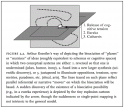
My games accordingly, simply and elegantly make all moves consist, at some level, of such intersections. The HipBone move is a conceptual leap, regular practice of HipBone Games is the most focused way to train the mind in creative leaping, on or off the gameboard, in play or in life.
fiction, literature and the arts are a critical and often overlooked vehicle for exactly that
I fully agree, and indeed it turns out that the style of “creative leaping” I am talking about is richly found within the complex weavings of the arts — and indeed, my games were directly inspired by a Nobel-winning novel by Hermann Hesse.
I lack the competence to build a web-playable version myself, but a museum-oriented adaptation of my game ideas by Cath Styles can be played on iPads in the Australian National Museum, and its web implementation, also focused on visual artefacts rather than concepts, can serve as a proof of concept for the wider uses I envision — intelligence analysis included.
Paul Callaghan, a writer, game developer, and university lecturer who has played Cath’s Sembl game commented:
Sembl incredibly succesfully mixes competitive and collaborative play, creativity and expression, and exploration and inspiration. It’s the sort of game you think about when you’re not playing it, and it’s the sort of game that helps you see the world in new ways.
That’s very precisely what any HipBone derived game aims to do, and if we want creative leadership, getting the HipBone Games up and running online and using them in analytic and decision-making training would be a pretty useful step to take.
it was basically this Army / Marine Corps answer to a zen koan, right
and
Page 1 of 2 | Next page