zenpundit.com » lapido media

Archive for the ‘lapido media’ Category

Religious aspects of the conflict in Yemen – no easy answers

Wednesday, April 22nd, 2015

[ by Charles Cameron — an attempt to make it clear how complex the various religious affiliations in the Yemeni conflict are ]
.

My latest piece for LapidoMedia, briefing journalists on religious aspects of contemporary news, is now posted there under a slightly modified title:

BRIEFING: The roots of conflict in Yemen – no easy answers

by Charles Cameron – 22nd April 2015

Credit: screencap from PBS Frontline, The Fight for Yemen
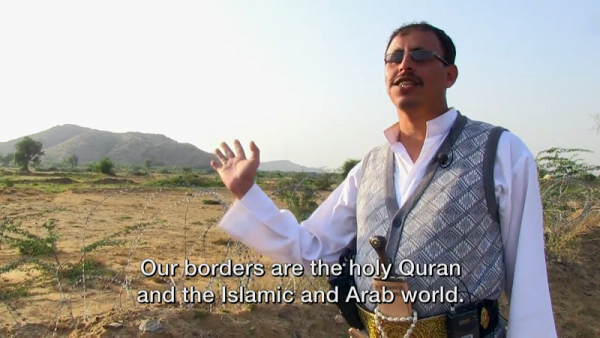
Credit: screencap from PBS Frontline, The Fight for Yemen

THE prophet Muhammad is recorded as saying: ‘When disaster threatens, seek refuge in Yemen.’

He spoke those words after he and his small band of followers had been driven out of Mecca, and before it was clear that their emigration – the Hijra – to Medina would prove the success that turned the tide in favor of the new religion. Not surprisingly, then, religion means much to the Yemeni people and Yemen much to pious Muslims.

Indeed, less than a minute into the April 2015 PBS Frontline special on Yemen, reporter Safa Al Ahmad is told by a Houthi informant ‘Our borders are the Holy Quran and the Islamic and Arab world’.

In an article titled The Middle East’s Franz Ferdinand Moment: Why the Islamic State’s claimed attack in Yemen could spark an Arab World War, JM Berger of Brookings gives us context:

‘The crisis in Yemen is one of the more complicated stories to emerge from a complicated region. It involves a cyclone of explosive elements: religious extremism, proxy war, sectarian tension, tribal rivalries, terrorist rivalries and US counterterrorism policies. There is little consensus on which element matters most, although each has its fierce partisans.’

Berger offers the bombing of two Sanaa mosques on March 20 as his candidate for the spark that ignited the current situation in Yemen – just as the bombing of the Shiite al-Askari Mosque in Samarra was a turning point leading to all-out sectarian civil war in Iraq.

**

Since Lapido commissioned this piece, they deserve your clicks: please read the rest of the article on the Lapido site.

Sunday surprise: Ernst Haas

Sunday, March 22nd, 2015

[ by Charles Cameron — beauty is in the viewfinder of this beholder ]
.

Two bodies of water:

Ernst Haas, Tobago Wave
Tobago Wave, photograph by Ernst Hass, with permission of the Ernst Haas Estate

**

The closest correlation to this image that comes to mind is from Genesis:

And God made the firmament, and divided the waters which were under the firmament from the waters which were above the firmament: and it was so.

**

I’d like us to explore this juxtaposition of two bodies of water a little farther. Here, for instance, is Terence Stamp, retelling The Tale of the Sands from Idries Shah‘s Tales of the Dervishes:

And to bring that tale, lyrical as it is, home to the realities of twenty-first century living — and indeed the context of national security — consider the matter of the Rios Voadores or Flying Rivers, as described in a National Geographic piece this February, Quirky Winds Fuel Brazil’s Devastating Drought, Amazon’s Flooding:

The loop starts in the Atlantic Ocean, where the winds carry moisture westward over the Amazon. Some falls as rain, but as the air passes, it also absorbs moisture from trees. When these “flying rivers” hit the Andes, they swing south, showering rain over crops and cities in eastern Bolivia and southeastern Brazil.

Beginning a year ago, however, a phenomenon called “atmospheric blocking” transformed that wind pattern. Marengo, a senior scientist at the Brazilian National Center for Early Warning and Monitoring of Natural Disasters (CEMADEN), likens this to a giant bubble that deflected the moisture-laden air, which instead dumped about twice the usual amount of rain over the state of Acre, in western Brazil, and the Bolivian Amazon, where Cartagena lives.

At the same time, cold fronts from the south, which cause precipitation over São Paulo and Rio de Janeiro, were shunted aside, and as the system lingered, the drought took hold ..

Here’s a video to give you a glimpse..

**

Did I mention national security? Here’s what Chuck Hagel said in the second paragraph of his Foreword to the Pentagon’s 2014 Climate Change Adaptation Roadmap:

Among the future trends that will impact our national security is climate change. Rising global temperatures, changing precipitation patterns, climbing sea levels, and more extreme weather events will intensify the challenges of global instability, hunger, poverty, and conflict. They will likely lead to food and water shortages, pandemic disease, disputes over refugees and resources, and destruction by natural disasters in regions across the globe.

I have an analytic post forthcoming on Lapido Media about Water shortages and violence in the Middle East. A hat tip to blog-friend Pundita, who has been blogging intensively on water shortages recently [1, 2, eg]. And my grateful thanks to Victoria Haas for her gracious permission to use her father’s superb photograph at the head of this post.

**

The master’s eye — to catch the two-in-oneness of sky and sea, cloud and wave, water and water so exactly, in so balanced a form.. and then, within that massive, unmissable symmetry in blue and green, the milder asymmetries he captures of left and right — the billowing, the surging. Exquisite.

It is Sunday: treat yourself to a viewing of his portraits of Marilyn Munroe, of Jean Cocteau, of Albert Einstein, his extraordinary Sea Gun. Who has both the wanderlust to find and the eye to see such a thing?

Two new hipbonegamer appearances: Lapido & WotR

Friday, February 20th, 2015

[ by Charles Cameron — two recent posts elsewhere, and two forthcoming posts here on ZP ]
.


About LapidoMedia, including a great short Simon Schama clip

**

My second post for LapidoMedia went up a couple of days ago, along with my first appearance on War on the Rocks.

The LapidoMedia piece summarizes much that I have written here about the Islamic State / Daesh and its apocalyptic view as expressed in Dabiq magazine. From Lapido’s statement of purpose:

Many news stories do not make sense – whether to journalists or policy makers who feed off what they report – without understanding religion. Lapido Media is an internationally networked, British-based philanthro-media charity, founded in 2005, that seeks to increase understanding among journalists and opinion formers of the way religion shapes world affairs.

It’s called religious literacy. We run media briefings, publish research and essays and work with journalists around the world. Our stringers practise on our website the kind of religiously literate journalism we wish to see, going deeper to the sources of social motivations, and providing a resource for other journalists. And we work with civil society groups on campaigns and media strategy to improve the flow and quality of stories with a religion dimension.

My Lapido piece, ANALYSIS: ISIS’ magazine Dabiq & what it tells us, begins:

THE TITLE, and much of the content, of the Islamic State’s magazine, Dabiq, emphasises the ‘end times’ nature of Abu Bakr al-Baghdadi’s so-called caliphate.

The beheadings, crucifixions and most recently the burning of 45 people in Al-Baghdadi, grab the West’s attention, and are intended to trigger a military over-reaction, proving to those who are willing to believe it that the West is in a ‘war with Islam’.

But the Islamic State’s English-language magazine Dabiq has a different audience and a distinctly different message.

**

I was also delighted to make a small appearance at War on the Rocks, thanks to both August Cole and Ryan Evans. WotR is working closely with the Brent Scowcroft Center’s Art of Future Warfare project, and it was my piece for that project’s first Challenge that landed me on WotR’s pages.

My story was excerpted on WotR with a link to the whole thing, and since I really like the opening, I’ll repost it here:

Flashing across my sub-eyes and a few dozen others today, those tiny edge of vision thunderclouds that when my saccade leaps to them indicate increasing war chance – lit by a single bolt of miniscule lightning. As my transport turns itself into its parkplace, too far from the Ed’s for me to throat her a quick morning buzz, I flipvision up and “Temple” appears in yellow and red across the sub-world, and an accompanying jolt from the adrenals gets me out of the comfort of my now stationary pod, through visual check-in and up to my console where I can dig into deets..

Not my usual Zenpundit style, but great fun to write!

**

I want to note in passing that I am working on a few major posts, though they may take a while.

  • I intend to comment in detail on Graeme Wood‘s major piece, What ISIS Really Wants in The Atlantic. It gets one huge piece of the puzzle right, and for that reason I’m delighted to see some of the things Tim Furnish and I have been pounding away at for years getting visibility. Various scholars have weighed in, and one very interesting comment has come from JM Berger — I’d definitely like to weigh my response to his view, too. So that’s one forthcoming piece.
  • Another, which would have been teh major piece for me this month all on its own if Wood’s article hadn’t appeared, will cover “countering violent extremism” — the topic, the White House event, the many interesting comments from Humera Khan, Clint Watts and others.
  • Also worth mentioning — in response to a suggestion from T Greer, I have a piece in the works listing the best books to read on Islamic apocalyptic, both for its content and context. But first, my responses to both Graeme Woods and the current interest in CVE — with a few quick posts along the way, while those twon are in preparation.


    Switch to our mobile site

