zenpundit.com » book

Archive for the ‘book’ Category

New Article at Pragati: Diplomatic Warfare?

Tuesday, January 13th, 2015

[by Mark Safranski, a.k.a. “zen”]

I have a new article up at Pragati: The Indian National Interest. A review of Warrior Diplomat by Michael G. Waltz

Diplomatic Warfare? 

….Waltz, now the president of Metis Solutions, brings to the table a powerful juxtaposition of perspectives on the Afghan war. As a Department of Defense civilian official, he served variously as an Interagency Counter narcotics Coordinator in the Office of the Secretary of Defense (OSD) developing strategies to combat opium trafficking in Pashtun regions, as the Pentagon’s Afghanistan Country Director, as the Special Adviser to Vice President Dick Cheney on South Asia and Counterterrorism and finally, as an adviser on negotiations with the Taliban to the deputy assistant secretary of defense in the Obama administration.

This is “making policy at 50,000 feet”, briefing and advising senior administration officials on national policy formulation and implementation. No contrast could be more dramatic with Waltz’s alternate role as a Green Beret company commander living among Pashtun tribal villagers, drinking tea with tribal elders, working with village police chiefs, engaging in brutal firefights with Haqqani network insurgents, disarming IEDs and delivering medical care to remote Afghan districts. Like few other officers, Waltz could see the life or death impact of policy he had helped craft on his own soldiers, Afghan farmers, and the Taliban enemy; but at other times, the blindness of policy or its complete irrelevance to the often ugly ground truth of counterinsurgency warfare.

Though the story of Waltz’s gritty experience in combat looms large in Warrior Diplomat, he also lays out a hard analysis regarding the self-created problems that impaired the American war in Afghanistan, including a paucity of resources, the incapacity of NATO partners, a muddled strategy, bureaucratic and political risk aversion and micromanagement of military operations down to the smallest units, a stubborn refusal to confront Pakistan over Taliban sanctuaries and announcing an early withdrawal date from Afghanistan. There is an additional subtext to Waltz’s story; the transformation of the legendary Green Beret Special Forces, intended to work autonomously in small groups training and fighting with indigenous forces, to ‘conventionalised’ units of ‘door-kickers’ who spend enormous amounts of time on powerpoint slides, making fruitless requests for helicopters or artillery support and fighting the timidity and capriciousness of Waltz’s own chain of command.

Read the rest here.

Some of you may have read American Spartan or my earlier review of that book. The stories of Michael Waltz and Jim Gant are not the same but the setting, their operational environment, largely was. Some of the frankly preposterous, Catch-22 restrictions with which Waltz struggled mightily to comply while effectively circumventing may illuminate some of the unspoken reasons why Jim Gant took a different path.

I cannot say it was the objective of the US Army and ISAF to prevent effective COIN operations in Afghanistan in writing their regulations and ROE, but it might as well have been

A very brief brief on black banners

Thursday, January 8th, 2015

[ by Charles Cameron — wherein black flag patches run riot ]
.

Just a quick something I gleaned via Leah Farrall‘s recent blog post:

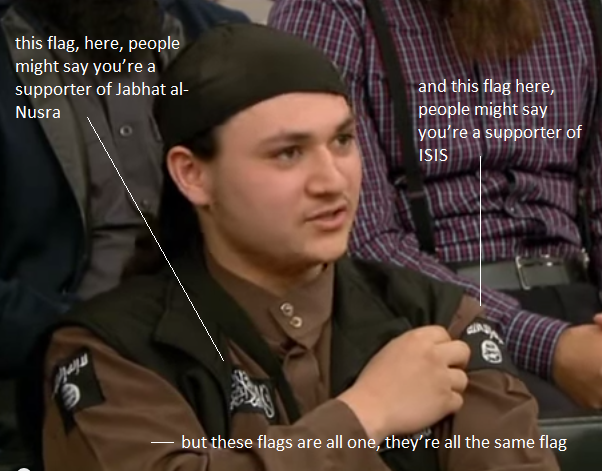
Abu Bakr on IS and JaN flags

That’s the gist of an excerpt I transcribed from an Aussie Insight video last year, which featured host Jenny Brockie and the gentleman depicted, one Abu Bakr. Bakr was arrested just before Christmas and charged with “possession of documents designed to facilitate a terrorist attack”. The exchange went like this:

Jenny Brockie: I see you’re wearing the ISIS flag on your shirt

Abu Bakr: It doesn’t really come down to what sort of flag because this flag, here, people might say you’re a supporter of Jabhat al-Nusra, and this flag here, people might say you’re a supporter of ISIS, but these flags are all one, they’re all the same flag, one Muslim nation and that’s it.

**

It’s great to see you back and blogging, Leah —

Arabs at War

— and we’re keenly awaiting the arrival of your book!

New Bookapalooza

Tuesday, January 6th, 2015

[by Mark Safranski, a.k.a. “zen“]


Stalin: Volume I – The Paradoxes of Power by Stephen Kotkin

World Order by Henry Kissinger 

Song of Wrath: The Peloponnesian War Begins by J.E. Lendon

A Culture of Freedom by Christian Meier

On Sacrifice by Moshe Halbertal

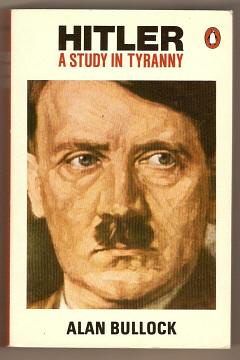
Hitler: A Study in Tyranny by Alan Bullock

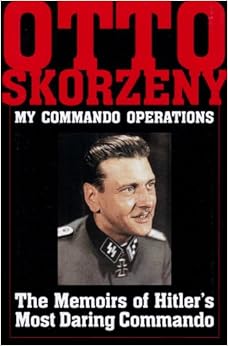
My Command Operations by Otto “Scarface” Skorzeny 

Thinking Fast and Slow by Daniel Kahneman

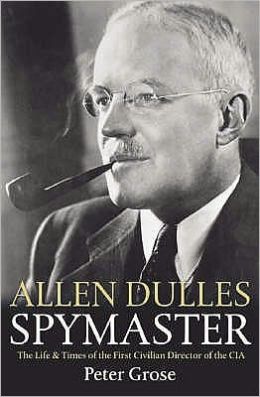
Allen Dulles: Spymaster by Peter Grose

The Road to Terror: Stalin and the Self-Destruction of the Bolsheviks 1932-1939 by J. Arch Getty and Oleg Naumov

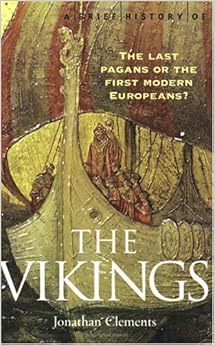
The Vikings by Jonathan Clements

An unusually large book-buying spree on my part, fueled in part by a stash of Xmas gift cards.

Reading Thinking Fast and Slow already and will probably start the Kotkin book on Stalin tomorrow and I have already finished On Sacrifice, which I will review elsewhere. I’ve resolved to get more books read this year as 2014 was kind of a nadir in that regard (more on that in another post) by my previous standards and looks rather woeful next to T. Greer’s list.

Scott Shipman was instrumental in my picking up World Order, as he convinced me that after I had slogged through all the volumes of Kissinger’s memoirs that he still had something to say.

What new titles have you acquired?

Reading “Hard” Books vs. Pretending to Do So

Sunday, December 14th, 2014

[by Mark Safranski, a.k.a. “zen“]

The other day, some friends shared an old post by controversial conservative activist, writer and publisher of  The Federalist,  Ben Domenech, that struck a chord:

The Top Ten Books People Lie About Reading 

Have you ever lied about reading a book? Maybe you didn’t want to seem stupid in front of someone you respected. Maybe you rationalized it by reasoning that you had a familiarity with the book, or knew who the author was, or what the story was about, or had glanced at its Wikipedia page. Or maybe you had tried to read the book, even bought it and set it by your bed for months unopened, hoping that it would impart what was in it merely via proximity (if that worked, please email me). 

I have not, though I frequently catch many people in conversation and even more online who do.

What does happen too often is a sense of despair welling up as my Antilibrary looks down from the shelves with disapproval as I wonder when I will ever get around to reading them. Maybe this weird bibliophiliac guilt is what spurs people to lie about books they have read. Or perhaps they merely are lazy and want intellectual street cred without the work:

….Take Neil DeGrasse Tyson as one example, whom the internet loves with an unrestrained passion usually reserved for fluffy cat videos. He was asked a few years ago on reddit to share his recommended reading list.Given his brief commentary on the eight books he recommends, he seems largely unfamiliar with the actual content of the works by Adam Smith, Thomas Paine, Niccolo Machiavelli, and particularly Sun Tzu, who views the avoidance of killing as the best form of warfare.

The truth is, there are lots of books no one really expects you to read or finish. War and Peace? The Canterbury Tales? The History of the Decline and Fall of the Roman Empire? Announcing that you’ve finished those books might surprise a lot of people and make them think you’re abnormal or anti-social, unless you’re an English or History major who took their reading very, very seriously. Perhaps the shift to ebook format will diminish this reading by osmosis – and book sales, too – since people can afford to be honest about their preference for 50 Shades over The Red and the Black since their booklists are hidden in their Kindles and iPads.

E-reading and reading a book are different experiences. I read Caesar’s Conquest of Gaul on a kindle once. It was convenient, as I was traveling, but the kindle seemed better suited for fiction; with a serious book, I felt the need to mark up pages with marginalia. I last used the Kindle for reading Daniel Suarez’s Daemon and Freedom and then gave it to my Eldest child:

So here’s my attempt to drill this down to a more realistic list: books that are culturally ubiquitous, reading deemed essential, writing everyone has heard of… that you’d be mildly embarrassed to admit you’ve never read.

10. Atlas Shrugged, Ayn Rand: The libertarian moment has prompted a slew of people to lie about reading Ayn Rand, or to deploy the term “Randian” as a synonym for, say, competitive bidding in Medicare reform without even bothering to understand how nonsensical that is.

9. On the Origin of Species, Charles Darwin: Many pro-evolutionists online display no understanding that the pro-evolution scientific community rejects the bulk of Darwin’s initial findings about evolution.

8. Les Miserables, Victor Hugo and A Tale of Two Cities, Charles Dickens: Virtually every bit of literature about the French Revolution could be tied here, though ignorance of it might inspire fun future headlines, such as “De Blasio Brandishes Knitting Needles, Calls For ‘The People’s Guillotine’ To Be Erected In Times Square.”

7. 1984, George Orwell: A great example of a book people think they have read because they have seen a television ad. On Youtube.

6. Democracy in America, Alexis De Tocqueville: Politicians are the worst about this, quoting and misquoting the writings of the Tocqueville without ever bothering to actually read this essential work. But politicians do this a lot – with The Federalist Papers and The Constitution, too.

Read the rest here.

I have read # 10, 7, 3 and 2 multiple times each and expect I will read them again.  I’ve read de Tocqueville and Tale of Two Cities once. I have looked up stuff in Wealth of Nations but never read it despite having read von Hayek, von Mises, Galbraith, Friedman, Veblen and Marx. I can’t muster much enthusiasm either for Melville or James Joyce, though if forced to choose, I’d select the former.

There’s a lot of intellectual merit – and consequent pride, sort of a nerd throw-down bragging rights – in conquering a “hard” book. I’ve read many that didn’t make that particular list, but perhaps should – Gibbon’s Decline and Fall of the Roman Empire,  Montesquieu’s The Spirit of the Laws, Clausewitz’s On War, Aristotle’s The Politics, Herodotus and Thucydides and (in a more modern vein) Barzun’s  Dawn to Decadence or Solzhenitsyn’s The Gulag Archipelago.  But there’s many more I have not yet read and worse, may never get to, for lack of time or inclination. My hat is off to those who have slogged through Hobbes’ Leviathan or Kant’s Critique of Pure Reason because I’m dubious that I ever will; and while I will probably get around to The Muqaddimah, I’m not sure if I will ever dive into Montaigne or Spengler or most of the great twentieth century novelists. Our time is scarce and so we must choose.

This is of course, what makes book-phonies so worthy of ridicule. There’s something pretentious and absurd about holding forth on a book you have not yourself read as if you were an expert. It’s not remotely as morally serious as the “Stolen honor” frauds who are regularly exposed faking military heroics, but the “Stolen intellect” pretenders to knowledge have a similar motivation and in the end, they are only fooling themselves.

What “hard” books do you take pride in having read?

Grothendieck’s mathematics and Child Born of Water

Saturday, December 13th, 2014

[ by Charles Cameron — two approaches to mathematics, two types of heroism, and their respective complementarities ]
.

I wish to propose a clear analogy between the mathematician Grothendieck‘s two styles of approach to a problem in mathematics, and the Navajo Twin Gods, Monster-Slayer and Child-Born-of-Water.

**

Twins

**

Steve Landsburg‘s post, The Generalist, compares two approaches to mathematics, as practiced by two eminent mathematicians:

If there was a nut to be opened, Grothendieck suggested, Serre would find just the right spot to insert a chisel, he’d strike hard and deftly, and if necessary, he’d repeat the process until the nut cracked open. Grothendieck, by contrast, preferred to immerse the nut in the ocean and let time pass. “The shell becomes more flexible through weeks and months — when the time is ripe, hand pressure is enough.”

**

In the paras leading up to this one, Landsburg gives us the insight that these two approaches can be generalized as “zooming in” and “zooming out”:

Imagine a clockmaker, who somehow has been oblivious all his life to many of the simple rules of physics. One day he accidentally drops a clock, which, to his surprise, falls to the ground. Curious, he tries it again—this time on purpose. He drops another clock. It falls to the ground. And another.

Well, this is a wondrous thing indeed. What is it about clocks, he wonders, that makes them fall to the ground? He had thought he’d understood quite a bit about the workings of clocks, but apparently he doesn’t understand them quite as well as he thought he did, because he’s quite unable to explain this whole falling thing. So he plunges himself into a deeper study of the minutiae of gears, springs and winding mechanisms, looking for the key feature that causes clocks to fall.

It should go without saying that our clockmaker is on the wrong track. A better strategy, for this problem anyway, would be to forget all about the inner workings of clocks and ask “What else falls when you drop it?”. A little observation will then reveal that the answer is “pretty much everything”, or better yet “everything that’s heavier than air”. Armed with this knowledge, our clockmaker is poised to discover something about the laws of gravity.

Now imagine a mathematician who stumbles on the curious fact that if you double a prime number and then halve the result, you get back the number you started with. It works for the prime number 2, for 3, for 5, for 7, for 11…. . What is it about primes, the mathematician wonders, that yields this pattern? He begins delving deeper into the properties of prime numbers…

Like our clockmaker, the mathematician is zooming in when he should be zooming out. The right question is not “Why do primes behave this way?” but “What other numbers behave this way?”. Once you notice that the answer is all numbers, you’ve got a good chance of figuring out why they behave this way. As long as you’re focused on the red herring of primeness, you’ve got no chance.

Now, not all problems are like that. Some problems benefit from zooming in, others from zooming out. Grothendieck was the messiah of zooming out — zooming out farther and faster and grander than anyone else would have dared to, always and everywhere. And by luck or by shrewdness, the problems he threw himself into were, time after time, precisely the problems where the zooming-out strategy, pursued apparently past the point of ridiculousness, led to spectacular, unprecedented, indescribable success. As a result, mathematicians today routinely zoom out farther and faster than anyone prior to Grothendieck would have deemed sensible. And sometimes it pays off big.

**

I no longer have — alas — a copy of Where the Two Came to their Father, the first volume in the Bollingen Series, with its suite of 18 sand paintings beautifully rendered in silkscreen by Maud Oakes, but their respective black and blue colorations lead me to suppose that the illustration at the head of this post, taken rom that series, shows the twin heroes, Monster Slayer (black) and Child Born of Water (blue) whose journeys and initiation are the subject of the rituasl “sing” recorded in that book.

The theme of two male hero twins is central to the mythologies of the American continent, according to Jospeh Campbell, who contributed a commentary to Oakes’ recording of Jeff King‘s performance of this ceremony, and lacking both the King > Oakes > Campbell book and Gladys Reichard‘s two volumes on Navaho Religion, I must draw on brief quotes from miscellaneous web sources to dramatize the differences between the twins.

Monster Slayer is the doer of deeds, similar in nature to other masculine, not to say macho, heroes — while Child Born of Water is the contemplative of the pair:

The Sun [Jóhonaa’éí] gave them prayersticks and then told them that the younger of the two (Born for Water) would sit watching these prayersticks while the older (Monster Slayer) went out to kill the monsters. If these prayersticks began to burn, this would signal that his brother was in danger and that he should go to him to help.

Reichard explains:

Monster Slayer (na’ye’ ne’zyani) (I) represents impulsive aggression, whereas Child-of-the-water represents reserve, caution, and thoughtful preparation.

A measure of their respective strategies, and of the ways in which the insights of Child Born of Water can succeed where the brute force tactics of Monster SLayer fail, can be gleaned from this section of their story, also I believe taken from Reichard:

When The Twins visited Sun the second time, he said he was willing to help them, but this time he wanted them to return the favor: “I wish you to send your mother to the west that she may make a new home for me.” Whereupon Monster Slayer, believing himself equal to any task, replied, “I will do so.I will send her there.” Then Child-of-the-water reminded them both: “No, Changing Woman is subject to no one? we cannot make promises for her. She must speak for herself? she is her own mistress. But I shall tell her your wishes and plead for you.”

**

One commentator glibly suggests that the joint presentation of the hero as twins is “a clever reminder that progress depends upon cooperation between our mind and our heart” — but the psychologist Dr Howard Teich offers a far more depthful interpretation: that the two twins represent two forms of masculine heroism, one the familiar macho hero of war movies, and the other wiser and subtler, the possessor of traits commonly attributed to the feminine — and hugely undervalued — in our culture.

Dr Teich suggests we must (urgently) abandon the division of virtues into “male” and “female” types, reognize that these types are complementary rather than rivalrous, that both are necessary functions of both males’ and females’ psyches, and begin to integrate the wholeness that both strategies together represent, in our own approaches to our lives in general, to the natural world around us, and indeed to warfare — unsurprisingly, since we first encounter the twins in the ceremonial specifically devised by the Navajo to protect young warriors on their way to battle, and to reintegrate them in harmony and balance on their return.

As Teich puts it:

Monster Slayer and Child Born of Water, as these Twin Heroes are called, are the most sacred of all the legendary heroes in Navaho mythology. It is rare for the Navaho even to speak of the twins; their presence is to be felt rather than observed, and their lessons absorbed rather than applied. Although the lessons the twins hold may be countless, their particular manifestation of a deeper, more complex image of masculinity deserves the reader’s especial attention.

**

I’d like to suggest that in the same way that there are “zooming in” and “zooming out” styles in mathematics, and “monster-slayer” and “born of water” styles of heroism, there are in fact twin traditions of understanding the world which we might term scientific and poetic, or in Teich’s terms — and those of the alchemists — solar and lunar.

A unified or “solunary” vision will encompass the virtues of both.

**

Dr Teich’s review of the King > Oakes > Campbell book under the title A Dual Masculinity was irst piublished in The San Francisco Jung Institute Library Journal, Vol. 13, No. 4, 1995. He now has a book out treating these themes: Solar Light, Lunar Light.

Oh, and please don’t expect me to know anything more about Grothendieck’s mathematics than I read in Landsburg’s article.

Switch to our mobile site