zenpundit.com » recommended reading

Archive for the ‘recommended reading’ Category

The Human Face of War, a second review

Wednesday, November 16th, 2011

[by J. Scott Shipman]

images-1.jpeg

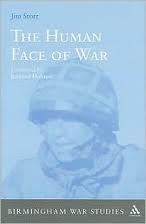
The Human Face of War by Jim Storr 

[Zen reviewed this book earlier here. I had forgotten that I wrote a rather long review at Amazon after finishing in January 2010. Perhaps Storr will gain a wider audience as a result.]

Mr. Storr’s The Human Face of War will be I predict, a book studied by military professionals (and smart policy makers) for years to come. Using straightforward prose, Mr. Storr seeks to provide a philosophical approach to war—as he says, “In practice we are concerned so much with war as with waging it.” Storr goes on to differentiate between war and warfare; where war is an “issue” with history and warfare dedicated to methods/methodology. Storr rejects notion that war is art or science, and prefers instead to embrace pragmatism and limited empiricism. He points out correctly: “Pragmatism has obvious application to warfare. A significant aspect of warfare is `a process of trial and error; seeing what wins and exploiting it.” Storr continues that “empiricism is not just trial and error: it is a logical process based on structuring observed facts.” What “works” will suggest a way ahead. 

Storr uses broad themes of what has worked and what has not worked in military history by explaining the nature of combat and tools and models available to the practitioner. He uses Clausewitz’s “dialectic of aims and means” in conjunction with Systems Theory to describe the holistic nature of military units; where effective/efficient output is dependent on input—where a good outcome is “winning” (as Storr repeatedly observes throughout the book, armies aren’t paid to come in second). Hence, organization of military units is fundamental; efficient/effective organizations are more likely to succeed. He observes: “Cohesion and collective performance indicate the whole is greater than the sum of the parts. There is a systemic effect, and we should see armed forces as systems.” 

Storr is a proponent of forcing decision making to the folks on the ground using brief and succinct communications. His chapter on Commanding the Battle is excellent. Storr advocates lean command staff’s and dispersed decision making. “We should employ the best brains in small groups, rather than try to assemble a collective brain.” He points out that “when staff numbers are reduced, the effectiveness of HQ improves.” “Reducing staff numbers would increase speed with which they could get things done.” [Amazingly, Storr quotes a work from 1998 that reports a typical Western division commander has 600 people supporting!—and that number has, I’m sure increased in 10 years.] He concludes this excellent chapter making a distinction between technology and the human factor: “…the future is not digital: it’s human. What is needed is things that bind talents together as a team, not more bandwidth…given time, resources, open minds and not much money we could revolutionize land tactical command. The key problems are human, cultural and institutional.” 

Storr asserts that successful modern commanders are most likely intuitive thinkers and possess the ability to learn from experience. He suggests further the “tendency to learn is more critical. It implies a tendency to reflect on experience and to learn from it, to maximize the benefit of the experience.” This tendency is key to the development of “skills”. He encourages a “permissive man-management regime that allows those who can learn rapidly from their experience to do so.” At the opposite end, Storr makes clear the unsuitability of many leaders who use bullying tactics and fear to motivate. 

Storr concludes by observing that “institutional conservatism” inhibits armed forces from improving significantly during times of peace; that “the current size and shape of Western armies reflect issues that are not primarily related to warfighting effectiveness.” He insists that doctrine should be explicit, relevant,(descriptive and where appropriate, prescriptive), coherent, and practical. The short tours common in western armies harm team integrity—which is “huge”. Innovation is vital, and in many cases military members aren’t with a unit long enough to have the experience necessary to truly innovate. Storr advocates “experience is the best way to achieve practical coordination and overcome the fog of war, as long as the experience gained is positive.” He discourages the common use of lieutenant-colonels in jobs where a captain or major could function/thrive/learn; as these junior officers will have less experience when they are promoted and will have probably developed the habit of “referring decisions upwards, and hence develop little initiative.” 

According the Storr, the “human” aspect of war should take prevalence over technology. He acknowledges the utility of technology, but asks the reader to “…pause and look for a moment at the Vietnam War, which suggests that superior technology is not always the deciding factor.” [9-11 is illustrative of this point on the “terror” side; determination and box cutters wreaked havoc.] 

My review does not do justice to the wealth of information, insight, and counsel in Storr’s book and I quote him frequently because his style is better than a summary. This book was aimed at a narrow audience, hence the high price. When I began, I was concerned about Storr’ opinions concerning John Boyd’s OODA loop; but in late 2009 I rejected Boyd’s deterministic underpinnings of OODA—Storr’s pragmatic and partial empiricism makes more sense. OODA remains, in my humble opinion, a valuable and versatile methodology in both the military/law enforcement and business arenas. 

This book is highly recommended; particularly for junior officers and NCO’s—the price is high, but what you will gain will be worth the cost.

UPDATE 11.17.2011: Jim Storr contacted me and confirmed the issue of a paperback for about $40.
Mini-Recommended Reading & Viewing

Friday, November 11th, 2011

Top Billing!SWJ Blog – Finding Petraeusism in Naglandia

What one SWJ editor calls “their most controversial article ever”:

….Today, we could use the term “Petraeusism” to mean “U.S military efforts conceived in disregard or ignorance of U.S. military limitations.” Likewise, we could use the name “Naglandia” to describe Afghanistan, a place where, much like Ford had attempted to do in the Amazon, the U.S. has attempted to establish a “New America,” albeit with the modern and contradictory political correctness that comes with our current obsession with “absolute tolerance” and our culturally-biased interpretation of Galula’s population-centricity in counterinsurgent activities. As if in some kind of twisted Shakespearean comedic tragedy, the U.S. military, traditionally an organization filled with political conservatives and Peace Corps-doubting Thomas’s, has turned itself into an organization that believes there is a Thomas Jefferson inside every Afghan and the solution to jump-starting an economy is to throw money at it. If only our losses could be capped in another seven years at the similar $240 million (inflation-adjusted figure) of Ford’s Amazon experiment.

Regardless of what General Petraeus’ and John Nagl’s concept for countering an insurgency actually was when they wrote the Army’s Field Manual on Counterinsurgency, FM 3-24, the manifestation in the military was one that had tactics dictating strategy, gave nation-building as the only option, and forced upon us all an assumption that has since become dogma: that bad governance is at the root of all discontent, followed closely by disgruntlement at not having a job. In addition, instead of stressing supporting a government’s internal defense when they align with our objectives and a population centricity that means an understanding- and not a protection- of the people, the U.S. went the opposite direction: emphasizing our own objectives and a “for their own good” attitude towards protection of the people. This operational paradigm does not, in and of itself explain all of our failures in Afghanistan-the lack of a clear goal and plan in the beginning probably holds most of the blame for that-but in the absence of a strategy in 2009 and after the very public vindication of General Petraeus’ textbook execution of FM3-24 in Iraq, it makes sense that the military brass turned very quickly to something they like at least slightly better than no plan: a bad plan.[4]

In defense of Henry Ford, in 1922, long before the advent of synthetics, naturally grown rubber along with oil was a natural resource of critical strategic military value with a high market price due to a British-Dutch-Belgian imperialist rubber oligopoly that left US producers eking out a market share from subpar plantations in Central American banana republics. Afghanistan isn’t quite as valuable as that.

John Hagel – Cognitive Biases in Times of Uncertainty

The rise of threat based narratives

But, there’s more.  Zero sum mindsets naturally lead us to focus on threat, rather than opportunity. If there’s only a fixed set of resources and rewards, there’s limited upside. Our attention shifts to protecting what we already have, however little it might be.  In a zero sum world, we are constantly vulnerable to the efforts of others to grab our share of the pie.

Threat based narratives take root – enemies are gathering force and intent on destroying or appropriating what we have.  We need to be vigilant and band together to protect our interests.  A quick look at the political narratives dominating the discourse in the US – whether on the Right or the Left – reveals the growing prevalence of threat based narratives.  Threat based narratives lead to polarization – if you’re not with us, then you must be against us.

Threat based narratives again have a pernicious effect – they reinforce our tendency to focus on the short-term.  They lead us to further magnify risk and discount potential rewards. The threat is imminent – we must focus on protecting ourselves now from the enemies gathering force.  We can’t afford to be diverted by longer-term issues – the battle is here and now. If we don’t win today, we will have no tomorrow.

Threat based narratives lead to a further consequence. They motivate us to seek out those who agree with us.  We can’t tolerate divergent views when we are under attack.  We must all come together under the same banner.  Uniformity of thought and perspective is highly valued and rewarded.  This pressure to conform reduces the potential for creative thinking and new ideas which further reinforces our sense that we live in a static world with a given set of resources and wealth. The passion of the explorer gives way to the passion of the true believer. Once again, we find reinforcement for a short-term mindset.

This is congruent with what I have been reading about intractable problems in Coleman’s The Five Percent

Recommended Viewing:

Wikistrat’s “The World According to Tom Barnett” 2011 brief, Part 8 (Q&A on global economic crisis)

More Q&A from my presentation of the current Brief to an international military audience in the Washington DC area in September 2011.

Audience question was about the global economic crisis and role of China in global economy.


Referenced from: http://thomaspmbarnett.com/#ixzz1dMqQSbVh

RSA Animate – “Drive” by Dan Pink

Steve Jobs by Walter Isaacson, a review

Thursday, October 27th, 2011

 [by J. Scott Shipman]

steve-jobs.jpeg

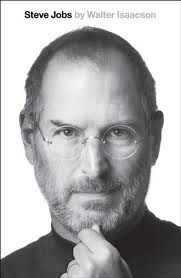
Steve Jobs by Walter Isaacson

Walter Isaacson, the acclaimed author of biographies of Benjamin Franklin and Albert Einstein, has produced a definitive and up-close biography of Steve Jobs. The book is a very readable 571 pages that took only a couple of days to read. Jobs approached Isaacson to write his bio in 2004, but Isaacson resisted until 2009 when  Jobs’ wife Laurene Powell “said bluntly, “If you’re ever going to do a book on Steve, you’d better do it now.”” Isaacson insists no restrictions were placed on him, in fact, Jobs and his wife facilitated access to many people who do did not hold Jobs in high regard—the man excited passions good and bad. I found it ironic that Jobs, a man who obsessed with control would willingly relinquish control in what will probably be the definitive biography of his life.

Isaacson offered early that his book is really about innovation. He offers: “At a time when the United States is seeking ways to sustain its innovative edge, and when societies around the world are trying to build creative digital-age economies, Jobs stands as the ultimate icon of inventiveness, imagination, and sustained innovation.” Given Apple’s growth, his point is well taken.

Isaacson clearly admires Jobs, but he does not spare the reader of Jobs volatile and brutal out-bursts directed at just about anyone he considered a “bozo” or worse. From the beginning, Jobs was a very difficult person to work with. He did not tolerate mediocrity and punished what he thought was mediocre thinking, often publicly. Isaacson offers some insights and ideas as to the cause of Jobs distinctly caustic personality, but most ring hollow. Jobs was a driven and passionate man, with very little empathy—even for family members. Isaacson suggests “people who were not crushed ended up being stronger” and many of the folks interviewed agreed—Jobs drove people to do things they didn’t know they could do. As one of Jobs colleagues Debi Coleman said, “You did the impossible, because you didn’t realize it was impossible.” So the folks he didn’t scare off, appear to have been inspired. Tim Cook, Jobs’ successor offered, “What I learned about Steve was that people mistook some of his comments as ranting or negativism, but it was really just the way he showed passion. So that’s how I processed it, and I never took issue personally.”

My favorite parts of the book were Isaacson’s liberal use of quotes from Jobs. Some quotes bristle with passion, and a few were profound. This one appealed to my notions on pattern cognition:

Your thoughts construct patterns like scaffolding in your mind. You are really etching chemical patterns. In most cases,  people get stuck in those patterns, just like grooves in a record, and they never get out of them.

Isaacson covers Jobs journey at Apple, NeXT, Pixar, and his triumphant return to Apple. I did not know much about Jobs at Pixar and found it interesting that Jobs was CEO at both companies simultaneously—and both companies had a “different” versions of Jobs. Isaacson says, “Pixar was a haven where Jobs could escape the intensity of Cupertino. At Apple, the managers often excitable and exhausted, Jobs tended to be volatile, and people felt nervous about where they stood with him….It was a Pixar that he learned to let other creative people flourish and take the lead.” Jobs was more hands-on at Apple I sense because he considered it his creation—essentially an extension of his person. I suspect Jobs viewed his role at Pixar as more that of a steward in comparison.

Jobs hated slide presentations (I agree—one great thing about Boyd & Beyond is the general ban on PowerPoint) and said, “People who know what they’re talking about don’t need PowerPoint.” There is a poignant passage towards the end where Jobs was meeting with his team of doctors and the doctor had a PowerPoint presentation. Jobs gently suggested the Apple Keynote program was better.

Jobs, despite his bristly exterior, reached deep in his Zen training and life experience (particularly after his cancer diagnosis) when he spoke at the 2005 Stanford commencement:

Remembering that I’ll be dead soon is the most important tool I’ve ever encountered to help me make the big choices of life. Because almost everything—all external expectations, all pride, all fear of embarrassment or failure—these things just fall away in the face of death, leaving only what is truly important. Remembering that you are going to die is the best way I know to avoid the trap of thinking you have something to lose. You are already naked. There is no reason not to follow your heart.  

We are a Apple/MacBook Pro family, we have iPhones, iPods, and the iPad on our wish list. Isaacson discusses one thing I’ve noticed with every Apple purchase; the thought put into packaging of the product. Apple packaging is patented and it shows. Jobs alter ego and head Apple designer Jonathan Ive, said, “Steve and I spend a lot of time on the packaging…I love the process of unpacking something. You design a ritual of unpacking to make the product feel special. Packaging can be theater, it can create a story.” I believe we have kept every box our Apple products arrived in—they are works of art.

This book will elicit the spectrum of emotions, there are parts where I was embarrassed or appalled at Jobs poor behavior, there were tender moments towards the end of his storied life that brought a tear to my eye. Isaacson has given us a valuable portrait of a man mathematician Mark Kac “called a magician genius, someone whose insights came out of the blue and require intuition more than mere mental processing power.”

Isaacson’s Steve Jobs comes with my highest recommendation.

NOTE: This is admittedly a different book review for this site. I’ll admit up front that I’m a fan of Jobs and his products—and I know many people hate him passionately and with good reason. I’m sharing this review because Jobs was an iconoclast very similar to John Boyd: people either loved him or hated him. Both men were driven, had poor people skills, and both left rich legacies in completely different areas, and are eminently interesting figures.

Boyd & Beyond 2011 Reading List

Wednesday, October 26th, 2011

[by J. Scott Shipman]

As promised in the original review, the following books and articles were recommended during the Boyd & Beyond 2011 event. Some of these titles are well-known in Boydian circles, others are new to me.

TEMPO Venkatesh Guru Rao [Zen reviewed this book here. Chet Richards here, and Fred Leland here. This is the most anticipated book in my anti-library, but I don’t want to read it until my book is finished and with the publisher.]

Sound Doctrine by Sid Heal

The Monks of War Esquire

The Mind of War Grant Hammond

The Talent Code Daniel Coyle [This was the lone book that I recommended this year. I read The Talent Code a few years ago and must say, Coyle makes a compelling case for the power of what he calls “deep practice.” His deep practice tracts nicely with Polanyi’s ideas of “indwelling” and tacit knowledge.

Strategic Intuition William Duggan

Unity of Mistakes Marianne Paget

Sensemaking Karl Weick

Sources of Power Gary Klein

Streetlights and Shadows Gary Klein

Heavy Matter Russell Glenn

On Combat Dave Grossman

Bond-Relationship Targeting Dr. Robert J. Bunker (this may not be the precise reference, the topic seems to be within an essay Higher Dimensional Warfare)

Blink Malcolm Gladwell

Descarte’s Bones Russell Shorto

Unrestricted Warfare Qiao Liang & Wang Xianqsui

How to Be Your Own Best Friend Berkowitz and Newman

The Logic of Failure Dietrich Dorner

The Psychology of Personal Constructs GA Kelly

The Unity of the Philosophical Experience, Etienne Gilson

Geography of Thought Richard Nisbett

The classes conducted by Edward Tufte were recommended for visualizing information.

I could not find the following references, so if you have them, please feel free to add a link in the comments or send an email and I’ll add.

1955 Hogenboom Report

Field Command

1970’s Urban Planning/Wicked Problems Rittel and Webbes

Swarming Cato

This is an excellent video series on US Strategic Nuclear Policy.

One closing note, Cameron Schaefer at his blog recommended a healthy dose of fiction for the strategic practitioner, and I agree—here is a link to his list of fiction.

UPDATE 10-29-2011

I did recommend Melanie Mitchell’s book Complexity A Guided Tour, but never managed to write it on the white board—best book I’ve read on the topic.

Recommended Reading & Viewing

Monday, October 24th, 2011

Top Billing! John Fonte (FPRI) – Sovereignty or Submission: Liberal Democracy or Global Governance?

Hudson Institute scholar John Fonte critically analyzes how the ideology of “global governance” and R2P erodes American sovereignty as well as liberal democratic norms. Normally, I give the “top billing” post a generous excerpt, but FPRI copyright mandates posting in it’s entirety, which is not feasible given the length of the essay. However, I give it a strong recommendation to be read in full ( Hat tip to Col. Dave and Bruce Kesler).

Global Guerrillas –AMERICA IS BROKEN, WHAT NOW?

The US is broken.  In the years after WW2 the US made tangible the American dream.  It did so through by connecting incomes to improvements in productivity.  Simply:  If you do more work per hour, your income should go up (see chart).  

The result was a decentralization of economic decision making on a scale never seen before in the history of the world.  

It was AMAZING.  Tens of millions of financially prosperous households making decisions on what they should buy and invest in.   Most of what America still is today was built during that period….

Productivity and prosperity

Bruce Kesler –Critique of Cordevilla’s “The Lost Decade”

….There are two core arguments in Cordevilla’s almost 8,000 word essay, a self-serving, misfocused and exclusionary US elite that failed to identify or act against domestic and foreign threats. Instead, they enriched themselves and intruded into all Americans’ freedoms with the overly expensive and expansive, ill-suited to US liberties, feeble Homeland Security, and got bogged down in self-limited wars of illusory nation-building that distracted funding from the major weapons systems necessary to US strategic superiority and failed to confront real enemies. Combined with irresponsible profligate domestic spending and programs that have led to our deep ongoing recession, our means and will to continue our foreign engagements or rebuild our needed future weaponry and military has deteriorated. No wonder most Americans distrust these elites and the federal government.

….Cordevilla’s essay first sentence says, “America’s ruling class lost the war on terror.” Cordevilla looks below tactical disagreements to say of this class of Democrat and Republican leadership, “It is more or less homogeneous socially and intellectually.” Democrat and Republican elites created a public-private industry that expanded their own powers over our lives while not focusing on the root of our adversaries’ antagonism toward our way of life, Moslem societies dysfunction and anti-Western propaganda, that was further encouraged by our feeble reactions. “But U.S. policy has made things worse because the liberal internationalists, realists, and neoconservatives who make up America’s foreign policy Establishment have all assumed that Americans should undertake the impossible task of changing such basic facts, rather than confining themselves to the difficult but vital work of guarding U.S. interests against them.”

Here’s where I have reservations on Cordevilla’s analysis and prescriptions….

The Atlantic (Howard French) –E. O. Wilson’s Theory of Everything

Studies in Intelligence (Dennis C. Wilder) –Improving Policymaker Understanding of Intelligence *An Educated Consumer Is Our Best Customer [95.7KB**]

Recommended Viewing:

Nassim Nicholas Taleb on Occupy Wall Street

Richard Resnick: Welcome to the Genomic Revolution

“China is winning the race to the new moon”

Conversations with History – Philip Bobbitt


Switch to our mobile site