zenpundit.com » recommended reading

Archive for the ‘recommended reading’ Category

Recommended Reading

Sunday, January 23rd, 2011

Top billing! The New York Times (Mark Mazetti)Former Spy With Agenda Operates a Private C.I.A.

WASHINGTON – Duane R. Clarridge parted company with the Central Intelligence Agency more than two decades ago, but from poolside at his home near San Diego, he still runs a network of spies.

Over the past two years, he has fielded operatives in the mountains of Pakistan and the desert badlands of Afghanistan. Since the United States military cut off his funding in May, he has relied on like-minded private donors to pay his agents to continue gathering information about militant fighters, Taliban leaders and the secrets of Kabul’s ruling class.

Hatching schemes that are something of a cross between a Graham Greene novel and Mad Magazine‘s “Spy vs. Spy,” Mr. Clarridge has sought to discredit Ahmed Wali Karzai, the Kandahar power broker who has long been on the C.I.A. payroll, and planned to set spies on his half brother, the Afghan president, Hamid Karzai, in hopes of collecting beard trimmings or other DNA samples that might prove Mr. Clarridge’s suspicions that the Afghan leader was a heroin addict, associates say.

….”Sometimes, unfortunately, things have to be changed in a rather ugly way,” said Mr. Clarridge, his New England accent becoming more pronounced the angrier he became. “We’ll intervene whenever we decide it’s in our national security interests to intervene.”

“Get used to it, world,” he said. “We’re not going to put up with nonsense.”

Good.

Duane “Dewey” Clarridge’s talents as a CIA field operative were held in very high esteem by two CIA directors, Robert Gates and William Casey. It was Casey who put Clarridge, known as results oriented wild man, in charge of the Contra war against the Soviet proxy Sandinista regime in Nicaragua. Whatever Clarridge is up to in AfPak, he’s a walking, talking refutation of the politics and policies advanced by the Church-Pike committees against CIA covert operations in the 1970’s.  That Clarridge is active and running private networks in parallel to official IC ones – this model may or may not have originally been Casey’s brainchild BTW – must be driving some people inside the Beltway absolutely up the frigging wall.

The Times editors can’t be too pleased either, as this is at least the second time they have tried to draw national attention to Clarridge’s operation, having first gone after another ex-spook, Mike Furlong last fall.

Useless. Private intel networks, like PMCs are here to stay because of the geopolitical environment. The 21st century is their world.

Feng – Information DisseminationSome thoughts about the growing US/China rivalry

This is the key strategic issue of the decade, the Sino-American relationship.

FLAME ON! For those readers who lack the time to follow COIN inside baseball, here goes a quick summary…..

Paula Broadwell, a Petraeus-ite COINdinista doing her PhD at King’s College, had a guest post at Thomas Rick’s Best Defense entitled Travels with Paula (I): A time to build on the destruction of Tarok Kolache, a Taliban held village in Afghanistan by Combined Joint Task Force 1-320th under the command of LTC. David Flynn. Boadwell’s post caused the head of Josh Foust to explode and Josh responded en fuego at Registan.net with The Unforgivable Horror of Village Razing. Broadwell responded to Foust’s accusations on Facebook (!) – yes, it is getting weird now – prompting Josh to write Revisiting the Village Razing Policies of ISAF in Kandahar. That sat poorly with Andrew Exum, who had a joint post thingy with Josh at Abu Muqawama/CNAS-Registan called Exum and Foust on Tactics in Afghanistan, though not before arguing about it first on twitter. Meanwhile, Tom Ricks gave LTC. Flynn a chance to weigh in defense of his troops and himself A battalion commander responds to a blogger on how to operate in Afghanistan where he took the opportunity to label Foust an “orator”, which made me inclined to photoshop a picture of Josh’s head on to a statue of Cicero. Ricks gave Foust equal time with The battalion commander debates the blogger (II): Foust responds to Flynn and also at Registan, Josh added Responding to Lt. Col. Flynn.

Whew! I think that is where it stands now, though if anyone has links to posts from other COIN blogs, leave them in the comments and I will add the kibbitzers here later. I think we should acknowledge though that this may have been the first extended, acrimonious debate over COIN without being graced by the presence of Col. Gian Gentile. 🙂

 Dr. Thomas Rid – Kings of War The Origins of Counterinsurgency

Superb post. Highly recommended.

Jason Fritz – Inkspots Is a clear and equal enemy necessary to develop a valid grand strategy? and Grand enemies and grand strategy – Part II

Well worth the time to read. The first post spawned responses from Adam Elkus as well as myself, but Jason has called attention to a critical theme thast I wish was a topic of national discussion.

Dave Anderson, Steve Hynd – Newshoggers  On a progressive grand strategy and Progressive Grand Strategy And Nuremberg

I have to say that, while I do not agree with everything here, I think it is a good thing if progressives turn their attention to grand strategy, a subject they have generally avoided in past decades unless you can count being reflexively against whatever the US is doing as a “strategy”. Actually, this might be very interesting because it will split the Left camp between democratic progressives, who think what the US is doing is the problem and the hard, authoritarian, Left who think the existence of the US is a problem. I count Steve and Dave in the former camp BTW, though I think Steve, who is strongly anti-interventionist, is misreading Nuremburg in the context of International Law if he believes the only legitimate use of military force is self-defense in the face of an attack. That’s not the case.

John Hagel – The Edge Perspective Passion and Plasticity – The Neurobiology of Passion

I consider Hagel to be a “never miss, must read”. Hat tip to Scott Shipman

John Robb is   up to some very cool things.

That’s it!

ADDENDUM:

Clarridge is the story du jour. Also commenting:

SWJ BlogNewshoggers, The Agonist,

ADDENDUM II.

I forgot to include this riff by Joseph Fouche:

Tactics Are From Newton. Strategy Is From Heisenberg.

….Going into the Franco-Prussian War, Prussia was dominated by the almost Clausewitzian trinity of King Wilhelm of Prussia (primordial violence, hatred, and enmity, which are to be regarded as a blind natural force), Moltke (the play of chance and probability, within which the creative spirit is free to roam), and Chancellor Otto von Bismarck ([war’s] element of subordination, as an instrument of policy, which makes it subject to pure reason). In fact, Old Wilhelm (more the people), Old Moltke (more the commander and his army), and the young whippersnapper Bismarck (more the government) are almost a 1 to 1 translation of the secondary trinity as well. Moltke’s philosophy of strategy reflected a role assigned by Clausewitz where the play of courage and talent enjoyed in the realm of probability and chance depended upon his particular character and the particular collective character of Prussian army. As such his strategy was a system of expedients that he systematically shifted as his carefully laid prewar plans collided with the French.

Bismarck had a similar notion of the role of chance in the realm of international politics even without the addition of other (usually violent means):

“Politics is the art of the possible.”

“Politics is not an exact science.”

But perhaps his most famous remark in this spirit was his statement that “A statesman…must wait until he hears the steps of God sounding through events, then leap up and grasp the hem of His garment.” Bismarck’s problem was that Moltke was also listening for the footsteps of God through history and Moltke thought those footsteps were heading towards Paris.

Recommended Reading and Viewing

Monday, January 10th, 2011

Top Billing!COMMAND POST Clint Van WinkleThe Guilt

Powerful. Poignant.

Van Winkle is the author of Soft Spots: A Marine’s Memoir of Combat and Post Traumatic Stress Disorder:

The film focuses on my friend SSgt David Paxson. In 2003, Paxson and I fought at Nasiriyah together-one of the earliest and bloodiest battles of Iraq-and making the film forced us to relive those memories. It was a difficult shoot and took all of us months to recover. Talking about war isn’t easy either.

Paxson and I were 25 when we went to Iraq. One week we were in combat, trying to survive insurgent attacks and the next week we were at home, trying to survive panic attacks. After Iraq, we didn’t see each other much. We spoke, but rarely about our experiences. We didn’t talk about the smell of death, the killing, the loss of friends. Day-to-day life was a struggle, but we pretended like we were okay.

We thought we had experienced the worst life had to offer, but Paxson still had another round of pain coming his way….

The EconomistOur global oligarchs  ( hat tip Jessica Margolin)

The problem is that too many of the people who allegedly claim to understand capitalism best, working in the world of high finance are in reality, too frequently, short-term time horizon, zero-sum oriented, assholes with contempt for the idea that markets, to be free, also need to be free of illicit collusion, regulatory capture and rentier self-dealing.

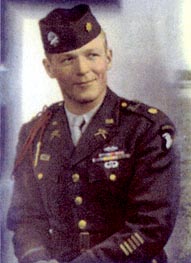
Pennlive.comDick Winters, of ‘Band of Brothers’ fame, dies  ( Hat tip to Starbuck)

Dick Winters, the former World War II commander whose war story was told in the book and miniseries “Band of Brothers,” has died.

Dick Winters led a quiet life on his Fredericksburg farm and in his Hershey home until the book and miniseries “Band of Brothers” threw him into the international spotlight. Since then, the former World War II commander of Easy Company had received hundreds of requests for interviews and appearances all over the world.He stood at the podium with President George W. Bush in Hershey during the presidential campaign in 2007. He accepted the “Four Freedoms” award from Tom Brokaw on behalf of the Army. He was on familiar terms with Tom Hanks and Steven Spielberg, producers of the HBO mini-series, the most expensive television series ever produced.

Winters was always gracious about his new-found celebrity, but never really comfortable with it. He never claimed to be a hero and said that he had nothing to do with the national effort to get him the Medal of Honor, the nation’s highest military honor. When people asked him if he was a hero, he liked to answer the way his World War II buddy, Mike Ranney, did.

“No,” Ranney said. “But I served in a company of heroes.”

Zero Intelligence AgentsSwallowing the Academic “Red Pill”

….Part of the problem for academics is the mythology of their career is not celebrated to an even reasonably comparable degree as that of the professional athlete. On my first day of graduate school one of my professors said, “Congratulations on being accepted to the program. While most people will not understand it, you have one of the greatest jobs one the planet. People are going to pay you to think, and I think that is pretty cool.”

I think it is pretty cool too, and while at face value that statement no better reflects the reality of graduate school anymore than Summer Catch reflects the realities of the Minor League baseball system, it is an important to remember what an academic career is really about: to be one of the world’s best thinkers, period. The original article attacking academia never considers this point, and rather places doctoral research as any other kind of on-the-job training. The fact is, there are very few people who will successfully navigate their graduate program and be hired as a tenure-track faculty, and even fewer who will go on to be successful academics. It is an environment where a very specific set of goals blended with unique intellectual, interpersonal and labor skills are needed to flourish, not unlike many other highly specialized careers.

PunditaThe ghost

….The true Pakistan is a ghost, a ghost of the British Empire at its most glorious.Westerners can understand, I think, what the most informed Indians already know: that without the help of the ruling families who supported the British enterprise in India the British couldn’t have lasted there as long as they did. The ruling families were the British Raj. So it was a symbiotic relationship, not a parent-child one, a relationship that created a lifestyle of timeless order.

The order was an illusion, just as an unsinkable ship is an illusion, but that was seen only when the British could no longer afford to maintain the illusion. Yet the illusion was so powerful that Pakistan’s rulers didn’t see Partition as abandoning the motherland: they would go on ruling, as they had always done, and the mighty British Empire would continue to remain their protector. The second great European war was a blip, as the first great European war had been; the British would bounce back and everything would continue as before.

When the illusion vanished Pakistan’s ruling families were left with the outward forms, the mannerisms of Pax Britannica: cricket matches, marching bands, a patronizing contempt for Hindus, high tea. That’s what they gave up the motherland for and they know it. That’s why it could take Pakistan’s ruling families another generation before they’re able to let go of a past that is more real to them than anything around them today.

That’s it.

Holiday Recommended Reading

Sunday, December 26th, 2010

Top Billing! Callie Oettinger at Steven Pressfield OnlineThe Elephant in the Room

Callie has become a friend through many backchannel emails but she is known for work in the publishing world as a publicist for such luminaries as Col. TX Hammes, General Hugh Shelton, Nathaniel Fick and, naturally, Steven Pressfield. It is good to see Callie blogging with Steve; here’s a sample with some sage advice for would-be authors:

….For now, I want to jump back to Shawn Coyne’s first “What It Takes column”-“Getting the Meeting“-in which he shared the big elephant in the sales room:

“My colleagues and I were not in the business of selling to consumers. We made (and our authors made) our livelihood by selling to retailers.”

Delete the word retailers and insert traditional media and you’ll have the big elephant in the publicity room.

Traditional media has always been the way-point on publishers’ routes to connect with consumers. Book reviews, radio and television interviews, and magazine features have been the middlemen. With a few exceptions, direct-connects between publishers, publicists, authors and readers didn’t exist.

As we started building awareness for Steve’s blog, his work was featured by traditional outlets like the New York Times, the Washington Post, the NY Daily News,  and Newsweek. These are the outlets publishers and their sales reps like to see.

Reality: None of these outlets triggered the traffic that we witnessed when Crossfit posted the name of one of Steve’s blog series on its site. That was Oct. 2, 2009, and we’re still seeing traffic from the Crossfit community today. The same is true for sites such as Small Wars Journal and individual bloggers Glenn Reynolds (a.k.a. Instapundit) and Seth Godin.

Traditional media outlets have never covered even a dime in the dollar of books published each year. Everyone wants in, but there’s not enough room. And even though specific genres have never received equal coverage from traditional media outlets-military, science-fiction, and romance come to mind-many of the publishers and authors of these books continue traditional pitching, hoping something will stick. Why? Because that’s what’s always been done.

Those interested in having Callie’s professional expertise at their disposal can contact her at Oettinger & Associates.

Thomas P.M. BarnettThe final version of the Sino-American grand strategy “term sheet” , WPR’s The New Rules: Obstacles to a U.S.-China Partnership Made in U.S.A.? , Esquire: “When China Ruled the World” (January issue)

Due to some serious offline issues the past few months, I have not been able to devote a sufficient amount of attention to a number of significant projects and arguments going on in this corner of the blogosphere. A critical one is Dr. Barnett’s attempt to fashion a potential “grand bargain” for Sino-American relations, which he has done in partnership with John Milligan-Whyte and Dai Min, with the support of Wikistrat, for whom Tom is the resident Chief Analyst. Given the reception the proposal has received in Beijing, this is Tom’s most significant geostrategic work since The Pentagon’s New Map.

I am going to give this fuller analytical examination in the near future, but here is some explanation from Dr. Barnett:

….Okay, a gruesome analogy, perhaps, but apt. I’m here to tell you that America plunged its fingertips into the Middle Kingdom’s body politic across the 1970s, beginning with Nixon going to China in 1972 and culminating with Jimmy Carter’s normalization of relations in 1979. The first embrace allowed aged Mao Tse-tung to extinguish his nonstop internal purge known as the Cultural Revolution by firewalling his fears of Soviet antagonism. The second cemented China’s wary-but-increasingly-warm relationship with the United States and allowed Deng Xiaoping, who narrowly survived Mao’s insanities, to dismantle the dead emperor’s dysfunctional socialist model, quietly burying Marx with the most revolutionary of eulogies – to get rich is glorious!

Deng chose wisely: Reversing Mikhail Gorbachev’s subsequent logic, he focused on the economics while putting off the politics. This decision later earned him the sobriquet “the butcher of Tiananmen” when, in 1989, the political expectations of students quickly outpaced the Party’s willingness for self-examination. But it likewise locked China onto a historical pathway from which it cannot escape, or what I call the five D’s of the dragon’s decline from world-beater to world-benefactor: demographics, decrepitude, dependency, defensiveness, and – most disabling of all – democratization.

Eide Neurolearning BlogAnalogy as the Core of Cognition, Curiosity and the Creative Drive

Two excellent metacognitive posts by the Drs. Eide:

Jonah Lehrer adds this additional interesting reflection: “the scientists found is that curiosity obeys an inverted U-shaped curve, so that we’re most curious when we know a little about a subject (our curiosity has been piqued) but not too much (we’re still uncertain about the answer). This supports the information gap theory of curiosity, which was first developed by George Loewenstein of Carnegie-Mellon in the early 90s. According to Loewenstein, curiosity is rather simple: It comes when we feel a gap “between what we know and what we want to know”. This gap has emotional consequences: it feels like a mental itch, a mosquito bite on the brain. We seek out new knowledge because we that’s how we scratch the itch.”

This is a prerequisite for insightful breakthroughs – the desire to “know” is high without the student having internalized the “rules” of what the field consensus considers “impossible”.

Colonel Robert Killebrew at CNASCrime Wars: Gangs, Cartels and U.S. National Security (PDF)

This report is from late September but I only ran across it now – strongly recommended.

SEEDOn Education

Frames the epistemic problem of systemic paralysis by analysis in the face of uncertainty and complexity very well:

…The global skill gap arises because neither the high-level specialist within a discipline nor the policy-school graduate is likely to be equipped with the skills needed to solve global problems of a cross-disciplinary nature. The experts provide crucial insights, but their skills are typically focused on generating research, debating ideas, and addressing narrow issues rather than large-scale professional problem solving and management. Meanwhile, the policy graduate typically lacks the grounding in core scientific principles across the appropriate range of topics. The solution lies in training sophisticated science-educated generalists who can coordinate insights across disciplines while managing complex agendas for results.

The National Security ArchiveThe United States and Pakistan’s Quest for the Bomb

That’s it!

Recommended Reading

Wednesday, December 8th, 2010

Top billing! Spengler BOOK REVIEW Reason to pause The Closing of the Muslim Mind: How Intellectual Suicide Created the Modern Islamist Crisis by Robert R ReillyI am not a regular reader of Spengler except when friends draw my attention to him, but this column had a heavy dose of intellectual and cultural history, theology and epistemology. Much food for thought here ( hat tip to the Warlord):

Mainstream Islam rejected Greek-derived philosophy at the turn of the 12th century, when Abu Hamid al-Ghazali established a theology of divine caprice. In the normative Muslim view of things, Allah personally and immediately directs the motion of every molecule by his ineffable and incomprehensible will, according to the al-Ghazali synthesis, directly and without the mediation of natural law. Al-Ghazali abolished intermediate causes, that is, laws of nature, leaving great and small events to the caprice of the absolute tyrant of the universe.In place of Hellenistic reasoning, Islam turned to a literal reading of the Koran. Robert Reilly recounts Islam’s abandonment of Hellenistic reason, and blames it for the subsequent decline of Muslim civilization and the rise of radical Islam….

John P. Sullivan and Sam LoganLos Zetas: Massacres, Assassinations and Infantry Tactics

Two expert and cutting edge thinkers on Mexico’s narco-insurgency: 

In the aftermath of the massacre, the lead investigator and another police officer were reported missing. Car bombs exploded near a police station and a Televisa office; a grenade exploded in a Puerto Vallarta bar; and, the mayor of Hidalgo was assassinated. The Zetas are suspected in those actions, too. Such is the tempo of extreme violence in areas contested by the Zetas: primitive car bombs, grenade attacks, assassinations, and massacres. Tamaulipas, Nuevo León, and Jalisco-states contested by the Zetas-are deluged by the spate of violence.Urban blockades, or narcobloqueos, are a quasi-political tool recently employed by Los Zetas in Monterrey and Reynosa. For example, on August 14, 2010, members of the Zetas blocked off at least 13 major roads in Monterrey, preventing access to the city’s international airport and major highways entering and exiting the northern industrial city. The narcobloqueos were deployed in the aftermath of a shootout between the military and Los Zetas that killed reputed Monterrey Zeta leader “El Sonrics.” Drivers were carjacked and their cars were used to close the roads. These blockades are a “show of force,” a demonstration of the Zetas’ power….

HG’s World –How Will Two Goliaths Meet?

….Today our national creed has become to spread American style democracy around the globe, even to the point of a gun. The results have backfired in several places as nationalistic tendencies led to the election of leaders now bent on confronting our hegemony by inciting disdain for all things American. We should all be reminded of America’s first foray into imperilism cum, “nation building” in 1900, which saw the Philippines racked with a war of resistance that cost thousands of American and Philippine lives and ended in the United States tarnishing it’s image of being the shinning hope for the down-trodden. Ultimately we left behind a country still struggling to make it’s way beyond the grinding poverty that still resides on many of their far flung islands.Many Americans still see the rise of China in Cold War terms. China is continually referred to as Communist or the Chi-Coms who are still bent on changing the world into a collective farm and concrete block apartments of robotic people dressed in  drab Mao jackets and riding bicycles in mass transit to equally drab work assignments. For anyone who has visited China, you will quickly learn that image has joined Chairman Mao in his tomb. Mao jackets along side Russian style fur caps are sold only to tourists by hundreds of vendors, all eager to gain a middle class existence. This is aptly apparent when one considers that just a short thirty years ago, over 65% of the Chinese people lived in extreme poverty on less than $1 per day, but by 2007 it had fallen to 4%. Today, it is even lower, but still far behind our American standard of living. Bottom line, they accomplished this by emulating the best traditions of liberal Capitalism, not Communism. If anything, China is returning to her roots, as the Communist Party assumes the role traditionally held by the Mandarin class who administered policy for the imperial court. We may not like it, but with the growing nationalist pride many Chinese feel, seeing them elect a firebrand who becomes bent on starting wars is not in any one’s best interest at this time. So in the short run it is better to allow them to progress towards a popularly elected representative government at their own pace.

RECOMMENDED VIEWING:

“Soft Power” theorist Joseph Nye on global power shifts

Recommended Reading

Tuesday, November 23rd, 2010

Top Billing! Robert MackeyWhen Cowards Speak

Dr. Mackey is a professor of military history and is a retired US. Army Lieutenant Colonel, and he unloads here on a couple of lunatic wingnuts:

….The Medal of Honor is, other than its value in precious metals, not actually worth that much, at least from a physical view. It is a piece of starry ribbon, a piece of gold, some words. No, its real worth is that it is recognition of bravery and courage under fire, from the fellow citizens of a grateful nation. The history of the Medal is filled with men who did things that few others can imagine, from young black men seizing a Confederate flag from an enemy’s hands in the Civil War, to leading soldiers up San Juan Hill (and to the White House), across No-Man’s Land in the Great War, to World War II submarine captains, bomber pilots and a little known Texan who was rejected by every service except the Army and would become the most decorated soldier in U.S. history, to young Marines in the frozen retreat in the winter of 1950 in Korea, to medics saving their dying comrades in the jungles and paddies of Vietnam, through Somalia, to today. The history of the Medal is the history of our Republic, and its winners are the best of our nation–courageous, honorable, common men, who, almost as a man, would repeat what Audie Murphy said, “I never like being called the ‘most decorated’ soldier. There were so many guys who should have gotten medals and never did – guys who were killed.”

Then you have men–and I use that word in this case to only describe the male of the human species–who have never served a day in uniform, much less a moment in combat. Who have never sacrificed for their fellow countrymen, who have never given a moment’s thought to anything but their own self-centered and selfish pursuits, men to whom the idea of running forward when others run away is anathema.

Eide Neurolearning BlogOur Metaphorical Minds

The Drs. Eide kindly respond to the discussion of metaphorical thinking that Charles and I and our commenters have had recently:

….In other research, scientists found that metaphoric ‘priming’ could change social and political attitudes. Little creepy, huh? Subliminal effects. If one looks at Marcel Just’s work involving literal and metaphorical meanings though, it’s not surprising that cross-talk occurs. What is so surprising is how common it is and how significant the effect. It’s an interesting thought that we are journeying through life constantly triggering metaphorical and literal meanings of which we are dimly aware.

John Arquilla U.S. not prepared for Mumbai-like terror attacks

Dr. Arquilla points out that the national security-homeland security establishment remain tribally wedded to the hierarchical model of counterterror response that amounts to an iron rice bowl for bureaucracies and deeply hostile to local or private citizen response to an attack.

Our military’s Northern Command, responsible for dealing swiftly with major terrorist attacks on American cities, remains largely wedded to the notion of responding by being able to move a brigade-size force – about 3,000 troops – where it’s needed in a day or so. This is too much, too late when it comes to trying to counter small teams attacking a city at several points simultaneously.

Instead of this big, bulky approach, planners should aim at being able to deploy many small teams within minutes. This means giving a lot of attention, training and resources to local law enforcement and other first responders. It means doing simple things like providing more small-arms practice for all police. They don’t have to become SWAT-like master snipers to take down terrorists – incremental improvements in a patrolman’s already strong weapons-handling skills will pay huge dividends.

Global Guerrrillas- OPEN SOURCE JIHAD

John says “I told you so” 🙂

That’s it.


Switch to our mobile site