[ by Charles Cameron — to Chris Bateman and all — concerning the hard problem in consciousness ]
.
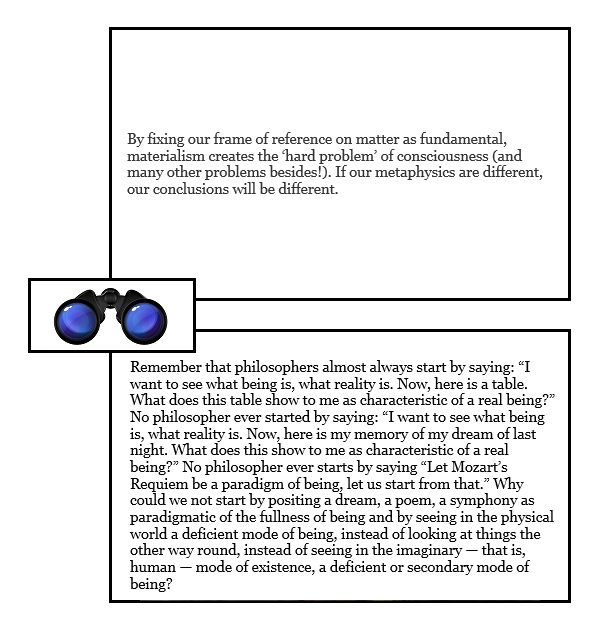
Chris Bateman is a game designer and philosopher whose sense of games informs his philosophy, while Cornelius Castoriadis was a philosopher influenced by Lacanian psychoanalysis — for some reason, I have previously and it seems erroneously identified him as an architect. The first quote below is from Chris Bateman’s blog post a day or three ago, Voiding The Hard Problem of Consciousness on Only a Game:
[ by Charles Cameron — wherein black flag patches run riot ]
.
Just a quick something I gleaned via Leah Farrall‘s recent blog post:
That’s the gist of an excerpt I transcribed from an Aussie Insight video last year, which featured host Jenny Brockie and the gentleman depicted, one Abu Bakr. Bakr was arrested just before Christmas and charged with “possession of documents designed to facilitate a terrorist attack”. The exchange went like this:
Jenny Brockie: I see you’re wearing the ISIS flag on your shirt
Abu Bakr: It doesn’t really come down to what sort of flag because this flag, here, people might say you’re a supporter of Jabhat al-Nusra, and this flag here, people might say you’re a supporter of ISIS, but these flags are all one, they’re all the same flag, one Muslim nation and that’s it.
[ by Charles Cameron — you can’t even watch the Super Bowl without the Antichrist slipping deftly into your subconscious — or can you? ]
.
Thank God I don’t watch the Super Bowl. If I did, and unless I’d been taking a break during the commercials to go on a scavenger hunt in the kitchen, I might have been exposed to this:
Horrific, no? And yet so smoothly and sweetly done!
As you might imagine, this cute commercial was “the Most Successful Commercial of the Super Bowl” according to TIME, and “racked up more than 37 million views”.
On the other hand, this video commentary has only managed 13,495 views as of the time my writing this post:
It seems the forces of advertising Antichrist are beating out the voices of false prophecy about 2472 to 1.
**
Or perhaps not.
I have an alternative theory. Perhaps the Budweiser Clydesdale horses are just Clydesdales, the puppies just puppies — and for the record, it was “17 Clydesdale horses and eight golden Labrador puppies” I missed, thank God, fingers crossed, just in case — and the ad just an ad, the beer just a beer, with nary an Antichrist in sight.
**
Scholar that I am, I believe you might like further resources with which to deepen your understanding of this matter of commercial appeal or (fingers crossed) theological interpretation.
Our “co-prophet” skipped his usual introduction in this particular “cute puppy” video, but he posts extensively, and I was happy to find his commentary on the Vatican Doves, which I discussed recently [ here and here ]:
So that’s how our co-prophet sees himself — the “third eagle” of the Apocalypse.
And then there’s the ad itself, which I must finally admit I prefer to its alleged millennial meaning.
Two looks behind the scenes:
and:
**
And that’s it, folks.
Sigmund Freud, or was it Groucho Marx, said it first: sometimes a Clydesdale is just a Clydesdale.
[ by Charles Cameron — frankly, I’m more concerned about the spiritually and socially corrosive impact of fear, myself ]
.
**
I know, technically radiation and paranoia are incommensurables. But still…
Blog-friend Cheryl Roferposted today at Nuclear Diner, pointing out the fallacies in some recent reports about Fukushima, spreading like wildfire on the web:
I particularly like the “Fukushima melt-through point” in one of the illustrations in that apparently original source, reproduced here. That’s referring to the China Syndrome, in which the melted reactor core melts down through the earth. But once it gets to the center, does it keep climbing, against gravity, to that “melt-through point”?
How much outrageous or stupid stuff does it take to discredit a source? For me, the misuse of the tsunami map and the belief that a core could melt clear through the earth, against gravity, are quite enough.
Boom!
I recommend Chery’s whole piece, both to read and to circulate. And she includes a number of other more specific sources worth takeing a look at, including:
As the holiday season is here, I thought it would be amusing between now and Christmas to do a series of posts on books by people who have, in some fashion, been friends of ZP by supporting us with links, guest-posts, friendly comments and other intuitive gestures of online association. One keyboard washes the other.
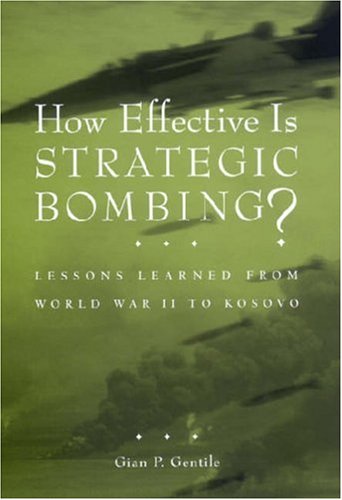
Colonel Gentile is a historian, a professor at West Point, a combat veteran of Iraq and is the foremost public critic of pop-centric COIN theory around, bar none, which he has translated into a book-length critique that is required reading for the con side of the COIN debate. Gian has also been kind enough to grace the comment section here from time to time as well as participating in the Afghanistan 2050 Roundtable at ChicagoBoyz blog.
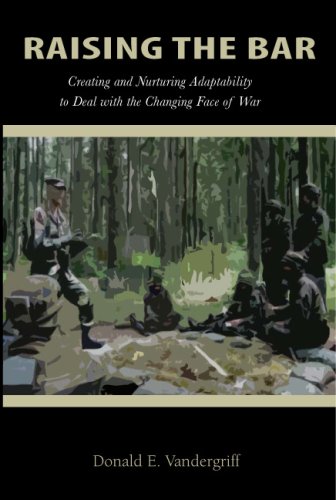
I have had the pleasure of hearing Don speak and demonstrate some of his adaptive leadership techniques at the Boyd Conferences which I greatly enjoyed and strongly endorse, for those interested in having Vandergriff as a speaker or consultant. His absence this year at Boyd was much regretted but Don was off doing some important work this year overseas. Catch him in print instead.
I am an unabashed huge fan of John’s work and Global Guerrillas has been on my (very) short list of must read sites for years. This book, like Ronfeldt and Arquilla’s Netwars, is a classic of emerging trends in warfare and strategy that belongs on your shelf.
Zenpundit is a blog dedicated to exploring the intersections of foreign policy, history, military theory, national security,strategic thinking, futurism, cognition and a number of other esoteric pursuits.