zenpundit.com » scriptures

Archive for the ‘scriptures’ Category

It’s an abomination!

Saturday, July 21st, 2012

[ by Charles Cameron — the perils of adding scriptures to scripture, tearing or burning them — and flags, paper money too ]
.


.

It may be that the last time you used the word abominable it was in relation to a snowman. It’s not a word that’s frequently on my tongue, I have to admit, but an Israeli MK apparently used it — or it’s Hebrew equivalent — to describe the New Testament, which he was in the process of ripping up.
.


.

Shades of Pastor Jones burning a copy of the Quran!

**

The thing is, when you have a sacred scripture it’s delimited, it’s hands-off! And if someone else comes along and adds a slim volume or two, it’s an abomination, almost by definition, sight unseen.

Thus the New Testament is an abomination to Knesset member Michael Ben Ari, according to YNet:

“This abominable book (the New Testament) galvanized the murder of millions of Jews during the Inquisition and during auto da fe instances,” Ben Ari said adding that “Sending the book to MK’s is a provocation. There is no doubt that this book and all it represents belongs in the garbage can of history.”

And please note, I am definitely not suggesting that Ben Ari is representative of all Jews — nor, for that matter, Pastor J. Grant Swank of all Christians. Yet from Swank’s perspective, the Tanakh and New Testament are scriptures, but, and I’m quote him:

Obama’s so-called holy writ is the abominable Koran.

The Qur’an is a later scripture, neh?

And Swank’s tirade gets better. Still speaking of the President of the United States, he continues:

His hope for eternity is unknown; but if he becomes a suicide bomber for Allah, he will be guaranteed pronto a score of virgins for everlasting. His hope for the present seems to be his reliance upon Islam’s Koran furthered by his clandestine support of Islam World Rule via czars and a shadow government given to overthrowing our Republic.

And then on the other side of the political aisle there’s Mitt Romney‘s Latter-day scripture, The Book of Mormon, which bills itself as Another Testament of Jesus Christ. It too has been considered an abomination.

I don’t know if people still use the word much when talking about the Book of Mormon, it’s considerably less controversial these days than the Qur’an — but abominable was what Arthur Cleveland Coxe called it in his 1855 Sermons on doctrine and duty, writing of Joseph Smith:

an obscure and illiterate individual, in our great West, was busily forging the abominable “Book of Mormon,” which, fourteen months later, he foisted into the world…

People really don’t like other people making add-ons to their scriptures, do they?

**

Scriptures — and flags.

Look, I weep for a religion some of whose adherents kill when their scripture is burned or defiled, and I am glad for a religion that condemns such killings. As you might expect, there are tearers and burners in all three Abrahamic religions, and all three religions have those who object to such tearings and burnings.

And yes, the ratios of religiously-provoked modes of destruction vary across religions and across centuries…

**

But what of flags?

I raise the issue because a fellow in Pakistan who manufactures flags for burning, Mamoon-ur-Rasheed, was in the news recently, and made this point:

Isn’t flag burning positive, compared to American atrocities? And also compared to the Taliban? We’re not attacking mosques. … We’re not targeting American embassies. We’re not killing anyone. Nor are we flying drones around, we’re just burning flags, mere pieces of cloth, and then we’re done. It’s over.

Setting aside Rasheed’s political opinion, Matthew Wallin at American Security Project asks the right questions in the security context:

Is it really over after the deed is done? Does anger against the United States dissipate? What do people do after they have gone home after a flag burning?

A key question to answer is: how much of these protests are translating into actual violence? This is an element that must be understood to determine if flag burning is simply a form of protest, or if those involved are planning more sinister actions. We must also seek to understand to what degree these protests endanger traditional diplomacy efforts and the challenges faced by members of the Pakistani government attempting to pursue diplomatic cooperation with the United States. If they are harmless expressions of anger and frustration, we have an obligation to understand this.

But that’s really just the beginning of a much wider-ranging discussion, philosophically speaking, which Rasheed’s comments also address:

what’s the relation of a symbolic object to the reality is symbolizes? If a flag is hurt, does it hurt the United States? If a Bible is burned, does it hurt Christianity? God?

If the word “spider” was an actual, live spider, arachnophobes couldn’t read the rest of this sentence… Is Picasso’s signature on a two dollar check worth as much as his signature on a check for a thousand bucks? Come to that, when paper money goes up in smoke when a house catches fire, where does the value go?

And yet, and yet, we are very attached to our flags, our scriptures — and our money.

**

The poet Coleridge in his Statesman’s Manual suggests:

On the other hand, a Symbol is characterized by a translucence of the Special in the Individual or of the General in the Especial or of the Universal in the General. Above all by the translucence of the Eternal through and in the Temporal. It always partakes of the Reality it renders intelligible; and while it enunciates the whole, abides itself as a living part in that Unity, of which it is the representative.

So. Do we find this translucence in our scriptures, in our flags, in our money, in our fellow humans — in the world around us?

Liminality II: the serious part

Monday, July 16th, 2012

[ by Charles Cameron — follow-up to Liminality I: the kitsch part, dealing with the strange business of liminality, submarines, monks and more ]
.

Limen is the Latin for threshold, and the liminal is therefore what happens at thresholds.

**

Something pretty remarkable happened as 1999 turned into 2000 — something liminal. And it happened aboard the USS Topeka, SSN-754 (below):

USS Topeka, credit: United States Navy, released ID 090623-N-1126G-005

The Associated Press reported:

Its bow in one year, its stern in another, the USS Topeka marked the new millennium 400 feet beneath the International Dateline in the Pacific ocean. The Pearl Harbor-based navy submarine straddled the line, meaning that at midnight, one end was in 2000 while the other was still in 1999… The 360-foot-long sub, which was 2,100 miles from Honolulu, Hawaii, straddled the Equator at the same time, meaning it was in both the northern and southern hemispheres. Some of the 130 crewmembers were in Winter in the North, while others were in Summer in the South…

Sitting pretty on the threshold between two millennia, two centuries, two decades, years, seasons, months, days and hemispheres was an extraordinarily liminal idea — as the two-faced January is a liminal month — and I think illustrates effectively the terrific power of the liminal to sway human thinking

Navy commanders in charge of billion dollar ships seldom get up to such “fanciful” behaviors!

**

And if we might turn from the contemporary US Navy and its submarine to ancient Indian mythology and Hindu religion for a moment:

Narsingh avatar depicted in Nepali dance, credit: Navesh Chitrakar, Reuters / Landov

The story of Narsingh (above), the fourth avatar of Vishnu in Vaisnavism, also captures the idea of what’s meant by thresholds very nicely:

A tyrannous and oppressive king obtained a boon from the gods that he should die “neither by day nor night, neither within the palace nor outside it, neither at the hand of man nor beast” and thought his boon conveyed immortality — but when he persecuted his son, a devotee of God, a half-man half-lion figure — the Narsingh avatar of Vishnu — met him on his own doorstep at dusk and slew him, so that he died neither by day nor by night, neither within the palace nor outside it, and neither at the hand of beast nor of man.

Dusk, doorsteps and metamorphs are all liminal, — with respect to day and night, home and abroad, man and beast respectively.

**

Anthropologist Mary Douglas has pointed out how things that are “not this, not that” (ie that don’t fit our categories) are precisely the ones that taboos form around – hence her remark in Purity and Danger:

Uncleanness or dirt is that which must not be included if a pattern is to be maintained

Consider for instance the dietary condemnation of amphibians in Leviticus, as being neither walking nor swimming creatures — fitting neither the normative category of “animal” nor that of “fish”. But Douglas is thinking in static categories, while Victor Turner thinks in process.

**

Turner takes the condition that’s between “this” and “that” and views it as part of a process in time, where “this” is how things have been, and “that” is how they can be in future – effectively, the turning point between one way of life and another.

Turner is interested in this primarily because the tribes he studies as an anthropologist create rituals which act as magnifiers of this sort of transition (his scholarly reason), and because such turning points, so ritualized, turn out to be important junctions in human lived experience (his human reason).

Turner tells us that those who are passing through a limen in social life are usually thrown in the stockade — the vice-chief who is about to become chief along with the village drunk, the pickpocket and the crazed idiot — and can then be taunted and tomatoed by all and sundry, while feeling that intense kinship with their stockade mates no matter the symptoms (success, failure) which brought them there. Which keeps them humble, builds character, and builds their capacity for empathy.

Only then can the vice-chief be brought back into society and proclaimed as the new chief.

**

Basing his own work on van Gennep‘s account of rites of passage, Turner sees such rites as involving three phases: before, liminal, and after.

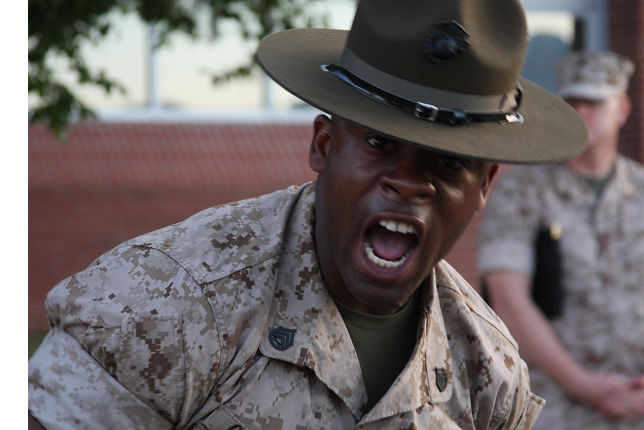
  • Before, you’re a civilian, after, you’re a Marine — but during, there’s an extraordinary moment when you’ve lost your civilian privileges, not yet earned your Marine status, and are less than nothing — as the drill sergeant constantly reminds you — and yet feel an intense solidarity with your fellows.
  • .

    .

    • Before, you’re a novice, not yet “professed”, after, you’re a monk — but during, you lie prostrate on the paving stones of the abbey nave in as you transition into lifelong vows poverty, chastity and obedience.
    • .

      .
      There are two things to note here. One is that liminality is a *humility* device, the other is that is creates a strong sense of bonding which turner calls *communitas*: in one case, the Marine’s esprit de corps, in the other quite literally a monastic community. Part of what is so fascinating here is the (otherwise not necessarily obvious) insight that humility and community are closely related.

      **

      There are also liminal festivals, like India’s Holi Festival or the mediaeval Catholic Feast of Fools (about which Harvey Cox wrote a book), in which the usual hierarchy is turned upside down for a day — so that a choirboy celebrates Mass and the bishop becomes the busboy, or the brahmins are pelted with old shoes and paint balloons by the village prostitutes and drunks…

      This may all sound pretty silly, but consider again the specific quality of humility which it brings out:

      Something of the sacredness of that transient humility and modelessness goes over, and tempers the pride of the incumbent of a higher position or office. Liminality implies that the high could not be high unless the low existed, and he who is high must experience what it is like to be low.

      Turner comments that these are socially sanctioned devices for *making the certain degree of hierarchy that’s inevitable in human affairs tolerable once again* — that we need such devices, that the “modernizing” west tends to forget them, and that liminality as process is deeply embedded in human social wiring, and should be appreciated rather than overlooked.

      **

      Turner himself was a Catholic, and it’s not surprising that he turns to Saint Francis for another example of liminality, pointing out that Francis was basically trying to convene a group of friends to live a *permanently liminal life* with him – that was what his idea of the Franciscan Order was all about — and that all such attempts fail (he compares flower power in the sixties) because the liminal cannot sustain itself but must naturally pass across into hierarchy, where it refreshes and revivifies structures which would otherwise become dry and lifeless:

      It is as though there are here two major “models” for human interrelatedness, juxtaposed and alternating. The first is of society as a structured, differentiated, and often hierarchical system of politico-legal-economic positions with many types of evaluation, separating men in terms of ” more ” or ” less.” The second, which emerges recognizably in the liminal period, is of society as an unstructured or rudimentarily structured and relatively undifferentiated comitatus, community, or even communion of equal individuals who submit together to the general authority of the ritual elders.

      In Turner’s view, this liminal refreshment is constantly arising in the margins of structures, and should be welcomed and incorporated — the strange, edgy and uncomfortable fellow in beggars rags being invited to the high feast – the limen offering spontaneity and inspiration to match and complement the discipline and reliability of the structure.

      **

      And where does all this leave us?

      Hopefully, with the understanding that our categories of the sacred and the profane are too simplistic for the complex workings of human culture and religion.

      Liminality is a mode of intensification.

      And I’m wondering to myself: regiments and battalions and brigades are clear cut categories, there’s nothing (apart from their initiation rites) liminal about them. But insurgents, able to blend in and out of a population, civilian yet militant, militant yet civilian?

      Is insurgency warfare inherently liminal? And if so, what does that have to teach us?

Mali: a tale of two tweets

Tuesday, July 3rd, 2012

[ by Charles Cameron — Timbuctu, Bamiyan, iconoclasm, dissolution of the monasteries, conceptual mapping, ethics, aesthetics, Venice ]
.

credit: Alidade, see below


.

Zen called the Ansar al-Din “The Taliban of the Mahgreb” today, pointing to an article on the destruction of the Bamiyan Buddhas, and that’s an equation of a sort: destruction of the Sufi shrines in Mali compares with and in some ways equates to destruction of the Buddhas of Bamiyan.

The similarity lies in the destruction by Islamic zealots of images considered idolatrous — and as Curtis reminded us, a Chritian expression of the same concept also motivated the Iconoclastic movement in Orthodoxy.

To some extent, the dissolution of the monasteries in Henry‘s England under Thomas Cromwell carries a similar resonance.

Which brings me to two tweets I received in my Twitterfeed today.

**

Here’s Tweet Number One, as Dr Seuss might have said:

And Tweet Number Two:

**

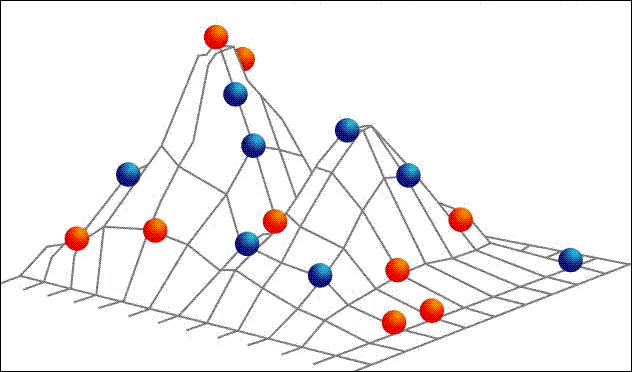
Between the two of them, and with an eye to Zen’s remark, I get the idea that there’s a style of mental mapping that I can just about see out of the corner of my eye — a mapping that would interest me if I could figure out more about how to take it from being implicit and verbal and make it graphical and visible.

In this mapping, we would lay out the manner in which things presumed equal are treated differently.

I suspect the mapping might initially look something like the graphic at the head of this post — which I’ve borrowed from the materials on an interesting “Co-Revolutionary War Game” devised by Alidade in 2003 or thereabouts.

**

Arguably the publication of blasphemous cartoons of the Prophet upsets many Muslims more than does the destruction of Sufi shrines. Likewise, the publication of Salman Rushdie‘s Satanic Verses upsets many Muslims more than does the fatwa calling for Rushdie’s death. The burning of Qur’ans seems to upset many Afghans more than the deaths of nine Afghan children… And likewise, the loss of human lives in Mali seemingly pales in comparison to the loss of the Timbuctu shrines of saints in the eyes of the western press.

Throw in the Bamiyan Buddhas, and you have a first cluster of data-points that might be mapped in terms of public outrage — Christian, Buddhist, Muslim, cultural, political. the peaks and valleys will differ according to the perspectives chosen, and mapping the differences too would be of considerable interest.

**

The question has become something of a classic among ethicists, I believe: whether to rescue an unknown human child — who may if saved, as they say, grow into a Mao or a Michelangelo — or a great masterpiece of painting, if both are swirling past you in the same Venetian flood…

My instinct is with the child, but oh! — my temptation goes towards the painting…

Damascus, Dearborn, Rome, Vienna?

Sunday, July 1st, 2012

[ by Charles Cameron — first in a series of three posts about celestial & terrestrial geographies ]
.


.

Joel Rosenberg, again. This time it’s Damascus he’s on about, and he’s been discussing it with “a prominent Member of Congress”:

… the official asked, “What are your thoughts on Isaiah 17?” For much of the next hour, therefore, we discussed the coming judgment of Damascus according to Bible prophecy, and how this scenario could possibly unfold in the coming years in relation to other Bible prophecies and current geopolitical trends in the Middle East.

Should we file that under Foreign Policy background, Syria?

Rosenberg clearly thinks Damascus is Damascus — and it’s easy to see why, it’s almost a tautology, one might think:

These prophecies have not yet been fulfilled. Damascus is one of the oldest continuously inhabited cities on earth. It has been attacked, besieged, and conquered. But Damascus has never been completely destroyed and left uninhabited. Yet that is exactly what the Bible says will happen. The context of Isaiah 17 and Jeremiah 49 are a series of End Times prophecies dealing with God’s judgments on Israel’s neighbors and enemies leading up to — and through — the Tribulation.

How exactly will Damascus be destroyed? When will exactly it be destroyed? What will that look like, and what will be the implications for the rest of Syria, for Israel and for the region? The honest answer is that the Bible does not say. I’m currently writing a novel entitled, The Damascus Countdown, that envisions how these prophecies could come to pass.

**

But wait — the idea that Damascus (the word) means Damascus (the place) may not be so obvious at all. Consider the possibility that the names of peoples and places are, well, somtimes a bit mixed up.

Read this, for instance, from Rafil Kroll-Zaidi, Byzantium: Their ears were uncircumcised, in Harper’s, May 2102:

The Byzantines called themselves Greeks (because they were) and also Romans (because they had been). To the Muslims, who had been the Arabs (who had coveted Constantinople even before they were Muslims) but were later the Turks, the Byzantines were usually the Romans (Rum) and sometimes, though these Romans spoke Greek, the Latins (which to the Byzantines meant the barbarians of Western Europe), and sometimes the Children of the Yellow One, who was Esau. The Arabs called the Byzantine emperor (who signed his letters in purple ink EMPEROR AND AUTOCRAT OF THE ROMANS) the Dog of the Byzantines, and by the fifteenth century the sultan of the Ottoman Turks (whom the Muslims farther east called Romans and whom the Byzantines called Trojans) called himself sultan i-Rum in expectation that he soon would be and in recognition that he already, for most purposes, was.

You can see why GEN Boykin might think Dearborn is Damascus:

Dearborn, in fact, I’ve been there a couple of times recently, and if you walk down the streets, you would think you were in Beirut or Damascus.

Just kidding — Boykin sees a cultural similarity between them, that’s all.

**


.

But Rum — that means Rome, remember? — figures prominently in Islamic apocalyptic, so we “need to know” what it actually refers to. Here’s Harun Yahya on the topic:

Another astonishing piece of revelation that the Quran gives about the future is to be found in the first verses of Surah Rum, which refers to the Byzantine Empire, the eastern part of the later Roman Empire. In these verses, it is stated that the Byzantine Empire had met with a great defeat, but that it would soon gain victory.

“Alif, Lam, Mim. The Romans have been defeated in the lowest land, but after their defeat they will themselves be victorious in a few years’ time. The affair is God’s from beginning to end.”(The Quran, 30:1-4)

Okay, Rome is Byzantium, got it. Constantinople. Istanbul.

Stamboul.

**

Ibn Kathir, in The Signs Before Day of Judgement, offers this hadith from the collection Sahih Muslim:

Nafi’ ibn ‘Utbah said, “The Prophet said, ‘You will attack Arabia, and Allah will enable you to conquer it. Then you will attack Persia, and Allah will enable you to conquer it. Then you will attack Rome, and Allah will enable you to conquer it. Then you will attack the Dajjal, and Allah will enable you to conquer him.'”

Let’s get into a little more detail. Stephen Ulph quotes a writer in Al-Jama’a, a “periodical magazine on Algerian jihad affairs” in a 2004 piece in CTC’s Terrorism Monitor:

From Afghanistan comes the kernel of the Nation; it was the beginning…proud Iraq was not the end…for those infidels and the apostate agents in our lands there are not enough graves…it is high time that Rome had its Cross uprooted and the city decked out for the arrival of the new conquerors, passing through Al-Andalus and the Pavement of the Martyrs, and Vienna and Constantinople, to which we are yet drawn by a longing that grows in our breasts day by day. For our Prophet (who does not lie when he speaks, being the most truthful of speakers) did promise: “God hath set aside for me the world, and I beheld its east and western lands, and the dominion of my Nation shall reach unto that which was set aside for me.”

So Afghanistan is Afghanistan, Al-Andalus is Andalusia, Vienna is Vienna — and Rome is Rome along with the Vatican, eh?

Or is Al-Andalus Spain — or Afghanistan Khorasan for that matter?

**

**

I was reminded by another sentence in Rafil Kroll-Zaidi’s piece in Harper’s —

Halfway between Heaven and earth were tollbooths where demons taxed the sins of the Byzantines.

— of the beautiful opening sentences of Charles Williams‘ lyrical “short history of the Holy Spirit in the Church”, The Descent of the Dove:

The beginning of Christendom, is, strictly, at a point out of time. A metphysical trigonometry finds it among the spiritual Secrets, at the meeting of two heavenward lines, one drawn from Bethany along the Ascent of the Messias, the other from Jerusalem against the Descent of the Paraclete. That measurement, the measurement of eternity in operation, of the bright cloud and the rushing wind, is, in effect, theology.

And the title essay of Guy Davenport‘s book The Geography of the Imagination should give us a clue that confusion as to what exactly is where is not solely the province of prophets and their interpreters. In a memorable sentence about the American artist Grant Wood, he writes:

If Van Gogh could ask, “Where is my Japan?” and be told by Toulouse-Lautrec that it was Provence, Wood asked himself the whereabouts of his Holland, and found it in Iowa.

**

Photo credits:

Damascus: Roberta F under CC BY-SA 3.0
Vatican: Sébastien Bertrand under CC BY 2.0
Istanbul: Preference-events & elsewhere
Vienna: Canaletto, Kunsthistorisches Museum Wien via Wikipedia
Cordoba: Timor Espallargas under CC BY-SA 2.5

**

So. Where is Zion / Jerusalem?

When you have a worldview, it all fits together

Saturday, June 30th, 2012

[by Charles Cameron — the difficulty of difference, plus a poem for M ]
.


.

When you have a worldview, it all fits together pretty seamlessly. You see a map of record high temperatures such as the one above, swiped from emptywheel today, and it’s either global warming, and maybe:

this is getting to a point where the terror industry and the homeland security industry, generally, needs to come to grips with the fact that the biggest immediate threat to the “homeland” is not terrorism or drugs or even hackers, but climate change…

or it’s the hot face of an angry God:

And the fourth angel poured out his vial upon the sun; and power was given unto him to scorch men with fire.

— Revelation 16.8

**

I read the Book of Revelation in much the same spirit in which I read William Blake or WB Yeats — as figurative, imaginative thinking rather than future history. Record high temperatures, rising sea levels, dazzling storms, wildfires and the like I tend to view as natural phenomena belonging to the realm of science as far as causation is concerned, and to first responders and FEMA in terms of crisis response.

But they’re still awesome, the poet in me still stirs…

**

What concerns me here, though, is not to explain my own position nor to refute or approve either the prophetic or scientific explanations, but to emphasize that when you have a worldview, you have explanations ready-made in place for (almost) whatever happens.

And that goes for the Taliban, for Al Qaida, for the Brotherhood, for Christians of the Dominionist or Soon Coming or Episcopalian varieties, for Buddhists, for Scientists, and for many who are braiding their own, picking up different strands in different places as they go along.

If someone else’s worldview is not your worldview, it may very well be as different as the world in which God is blasting His displeasure at Washington DC is different from the world in which Washington DC needs to do something about global warming before nature re-balances our ecosystem in a manner we find decidedly inhospitable.

**

In a shared worldview, you can talk face to face. Across worldviews, you can only talk worldview to worldview — and the “other” worldview may well be unable to make sense of what you say or do, or take a meaning from it that has serious negative consequences for you in your world.

Just yesterday, Gulliver tweeted:

Ha!

But it’s true, as Paul Van Riper said and I know, I’ve quoted him before, but this is good:

What we tend to do is look toward the enemy. We’re only looking one way: from us to them. But the good commanders take two other views. They mentally move forward and look back to themselves. They look from the enemy back to the friendly, and they try to imagine how the enemy might attack them. The third is to get a bird’s-eye view, a top-down view, where you take the whole scene in. The amateur looks one way; the professional looks at least three different ways.

The thing is: how do you get inside a magical head with a rational mind?

It’s not impossible, mind you — but it takes great strength of imagination.

That’s the point I’m trying to make here. Done. Finished.

**

And this is for Madhu, who encourages me to post my poems:

Storm words
.

There are no words for the stride of thunder –

pounding stride of clouds across a drumhead of plains,
the traveling downpour, drenching
the dry gullies and passing, words cannot
see nor show what the eye sees, the great lights
thrown, the target trees scorched and left —

but for man who lives in the path of thunder,
wrestling a little grass for soup from the parched land,
feeling thrum of a god’s advance under bare feet,
seeing the lowering god with his bright arms striding,

sensing the god’s strong coming, longing
for the fresh grasses after the storm’s passing,
the calm that follows the god: fearing
the god’s blasting, scorching, man’s words are prayer.


Switch to our mobile site