zenpundit.com » #FAIL

Archive for the ‘#FAIL’ Category

For the Fourth of July: The Once and Future Republic?

Thursday, July 4th, 2013

Ahem….”I told you so“.

“Congress intended to allow the intelligence communities to access targeted information for specific investigations. How can every call that every American makes or receives be relevant to a specific investigation?”

                                                             – Representative James Sensenbrenner (R-Wisconsin)
                                                                 A primary author of The Patriot Act 

“We have not yet seen any evidence showing that the NSA’s dragnet collection of Americans’ phone records has produced any uniquely valuable intelligence. Gen. Alexander’s testimony yesterday suggested that the NSA’s bulk phone records collection program helped thwart ‘dozens’ of terrorist attacks, but all of the plots that he mentioned appear to have been identified using other collection methods. The public deserves a clear explanation”

                                                                 – Senators Ron Wyden (D- Oregon) and Mark Udall (D- Colorado)

“What I learned from our journalists should alarm everyone in this room and should alarm everyone in this country….The actions of the DoJ against AP are already having an impact beyond the specifics of this particular case. Some of our longtime trusted sources have become nervous and anxious about talking to us, even on stories that aren’t about national security. And in some cases, government employees that we once checked in with regularly will no longer speak to us by phone, and some are reluctant to meet in person. This chilling effect is not just at AP, it’s happening at other news organizations as well”

                                                               – Gary Pruitt, President of the Associated Press 

“The people who are worried about privacy have a legitimate worry….But we live in a complex world where you’re going to have to have a level of security greater than you did back in the olden days, if you will. And our laws and our interpretation of the Constitution, I think, have to change.”

                                                              – Michael Bloomberg, Mayor of New York City 

“One-party autocracy certainly has its drawbacks. But when it is led by a reasonably enlightened group of people, as China is today, it can also have great advantages.”

                                                                -Thomas Friedman, NYT Columnist 

“Toll records, phone records like this, that don’t include any content, are not covered by the fourth amendment because people don’t have a reasonable expectation of privacy in who they called and when they called, that’s something you show to the phone company. That’s something you show to many, many people within the phone company on a regular basis.”

                                                                 – James Cole, Deputy Attorney-General 

“In the abstract you can complain about Big Brother and how this is a program run amok, but when you actually look at the details, I think we’ve struck the right balance.”

                                                                 -Barack Obama, President of the United States 

While we need intelligence services, including the formidable collection capacity of the NSA, we don’t need a mammoth repository of information being continually compiled on every American, held in perpetuity by the US government.

First, the mere existence of so massive a database on the data of all Americans is itself a critical strategic vulnerability and a potential risk to the national security of the United States because it centralizes for any would be spy or hacker not just anything, but virtually *everything* they would want to know about *everyone*. The greatest testament against the strategic wisdom of this scheme from a counterintelligence perspective is the erstwhile Mr. Edward Snowden – breach just one security regime and you walk away with the whole store or as much of the store as you have time and brains to snatch.

How many Snowdens have we *not* heard about because they were quietly fired by a contractor? How many other Snowdens working for foreign intelligence services eluded government detection and got away with who knows what?  Or are still doing it now?

Not exactly a resilient system from a cybersecurity perspective, is it?

What the USG has done here is not dumb. It is fucking dumb with a capital F. Sometimes we get so caught up from a technical viewpoint in what we might be able to do that no one stops and seriously considers if we should do it. From such unasked questions come the unwanted second and third order effects we live to rue.

Unless, of course,  building a draconian comprehensive digital dragnet for a  “leaky system” is what was desired in the first place. If so, bravo gentlemen.

Which brings us to the second point: the surveillance state as currently configured in law with the legal equivalent of string and chewing gum is inimical to the long term survival of the United States as a constitutional Republic. This is not an attack on any particular person or politician or three letter agency. It’s a hard world filled with extremely bad men who would do us lasting harm, so we need our spooks, but the spooks need proper constitutional boundaries set by our elected representatives in which to operate and somewhere in the past decade we have crossed that Rubicon.

The United States of America has had a historically remarkable run of 237 years of good government and in all that time the system failed us only once. That one time cost the lives of approximately 630,000 Americans.

On a level of moral and political legitimacy, we have created a bureaucratic-technological machine, a sleepless cyber  J. Edgar Hoover on steroids that contradicts our deeply held political values that define what America is and aspires to be. There is no way to reconcile cradle-to-grave digital dossiers on the 24/7 life of every American with the provisions of the US. Constitution. Really, an ever-watching state was not in the cards at our Constitutional Convention, even with the delegates like Alexander Hamilton who privately thought George Washington might make a fine King.

On a more pragmatic level, in creating the SIGINT-cyber surveillance state we have made not an idiot-proof system, but an idiot-enabling one that represents an enormous potential reserve of power that will be an unbearable temptation for misuse and abuse. The long, bloody and sordid record of human nature indicates that someone, eventually, will not be able to resist that temptation but will be smart enough to get away with it. If we are greatly fortunate, it will be a lazy person of limited vision looking merely to enrich themselves and their friends. Or a malevolent minor bureaucrat like Lois Lerner looking to punish “the little people” who raised her ire.  If we are unlucky, it will be a gifted figure of ill intent and outsized ambitions, an American Caesar.

Or an American Stalin.

In the long term, our Democracy will not be healthy when the government – that is, the Executive – monitors everyone and stores everything  we do forever. While most of us are not that interesting, reporters, public figures, newspaper publishers, members of Congress, aspiring politicians, their campaign donors,  judges, dissenters, writers and so on are very interesting to people in power. The Congress, for example, cannot do it’s job properly when it’s cloakroom is bugged and their email is read anymore than can the editorial office of the Associated Press. What we have built, if it existed in a foreign country, would be frankly described as a “Deep State.  Nations with deep states are not pleasant places to live and they usually do not work well. At best, they look like Russia and Turkey, at worst they look like Pakistan and Iran.

Rolling the surveillance state back to targeting foreign enemies, it’s proper and constitutional role, instead of every American citizen – yes, we are all, every man, woman and child of every race, creed, color and political persuasion being treated as potential enemies by the Federal government – is up to us and only us.  Tell your Congressman, your Senator and the President what you think in a respectful and thoughtful way – and then make this an issue that decides your vote.

If we do nothing, we have no one to blame but ourselves for what comes next. We can at least console ourselves with pride in the fact that the US had a good go at making freedom work unequaled in world history, but that democracy may had had it’s time.  Others in the distant future, may profit from our example the way we learned from Athens, Rome and Britain. Or we can leave while the door still remains open.

Enjoy your Fourth.

                                                “Well, Doctor, what have we got, a republic or a monarchy?”

                                                                      – Mrs. Powell

                                             ” A Republic, if you can keep it”

                                                                      – Benjamin Franklin
                                                                         Signer of the Declaration of Independence
                                                                         Delegate, Constitutional Convention

More Books and Bookshelf Musings

Sunday, June 30th, 2013


Mussolini’s Italy:Life under the Fascist Dictatorship by by R. J. B. Bosworth 

Seeing Like a State by James C. Scott

Been busy writing a book review and a long and serious post, so here is something more lighthearted and tangible in the meantime.

Having recently purchased the Bosworth bio of Mussolini, I went back and bought his history of Italian Fascism. While doing that, I came across Scott’s Seeing Like a State, which had either been highly recommended in a discussion over at Chicago Boyz blog or perhaps in an email by one of the Chicago Boyz themselves ( maybe Lex will help me out here).

However, a long discussion by my amigo Adam Elkus on Facebook about his emerging organizational system for his books coupled with an hour long search to try and find a book I needed to cite in the review I was writing have made me realize something: I no longer have any organization to my books.

Sure, there’s still a semblance of a core – a Soviet/Russian bookcase, an antique/antiquarian bookcase for collectible editions 80-130+ years old, three shelves of strategy and war, two and half on Nazi Germany, two on Richard Nixon, an “Ummah” shelf on Islam, al Qaida, Central Asia and the Mideast but after that it starts getting messy. Once methodically organized, diplomatic history and diplo memoirs are spread across two rooms, four bookcases and three packing boxes in the garage; the Vietnam War is on two shelves in two different bookcases plus a half dozen or books so shelved at work; ancient history and classical philosophy have metastasized to occupy parts of three shelves in two different rooms; American history, European history, Japan and China,  sociology, general science, politics, biographies, neuroscience, intelligence community, economics are everywhere and anywhere. Your guess is probably almost as good as mine.

And then there are book piles randomly stacked horizontally on top of shelved books and bookcases or stacked by my computer desk or on/under/next to my nightstand. I no longer recall what books I have loaned out or to whom vice given away as gifts.

Bibliomania….A Gentle Madness …..


Heavy breathing on the line: Crouching hero, Hidden nitwit

Saturday, June 15th, 2013

[dots connected by Lynn C. Rees]

Sigh

Sigh

What did Lucius Aemilius Paullus know and when did he know it?

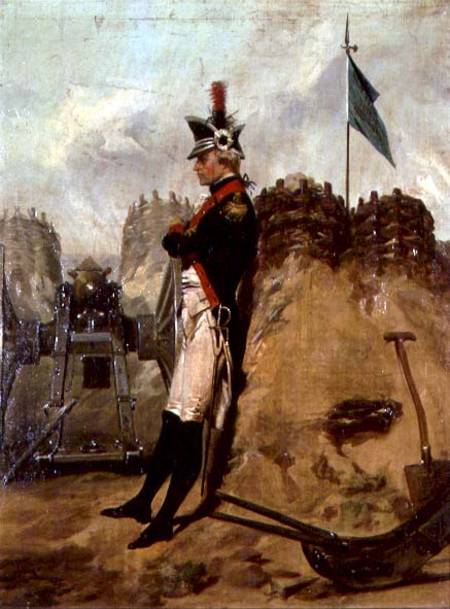
Colonel Hamilton

Colonel Hamilton

Alexander Hamilton thought he knew. And who is Colonel Hamilton (as he so liked to be called) that he should know?

Not (then) Colonel Hamilton

Not (then) Colonel Hamilton

Recommendations on LinkedIn? Glowing:

Je considère Napoleon, Fox, et Hamilton comme les trois plus grands hommes de notre époque, et si je devais me prononcer entre les trois, je donnerais sans hesiter la première place à Hamilton. Il avait deviné l’Europe.

Reviews on RateMyFounder.com? Less glowing:

Consider, the profligacy of his life; his fornications, adulteries and his incests… lol 😉

[He is] an insolent coxcomb who rarely dined in good company, where there was good wine, without getting silly and vaporing about his administration like a young girl about her brilliants and trinkets, yet I lose all patience when I think of a bastard brat of a Scottish pedlar daring to threaten to undeceive the world in their judgment…This creature was in a delirium of ambition; he had been blown up with vanity by the tories, had fixed his eyes on the highest station in America, and he hated every man, young or old, who stood in his way or could in any manner eclipse his laurels or rival his pretensions.

lol :O

GLOWING HERO OF DESTINY:

How far Colo. Hamilton, of whom you ask my opinion as a financier, has turned his thoughts to that particular study I am unable to answer because I never entered upon a discussion on this point with him; but this I can venture to advance from a thorough knowledge of him, that there are few men to be found, of his age, who has a more general knowledge than he possesses, and none whose Soul is more firmly engaged in the cause, or who exceeds him in probity and Sterling virtue…

In every relation, which [he has] borne to me, I have found that my confidence in [his] talents, exertions and integrity, has been well placed. I the more freely render this testimony of my approbation, because I speak from opportunities of information which cannot deceive me, and which furnish satisfactory proof of [his] title to public regard.

fevered preening nitwit:

Hamilton’s character is extremely unfortunate. An opinion has grown out of it, which at present obtains almost universally, that his character is radically deficient in discretion, and therefore [we] ask, what avail the most preeminent talents—the most distinguished patriotism—without the all important quality of discretion? Hence he is considered as an unfit head…and we are in fact without a rallying point. 🙁

GLOWING HERO OF DESTINY:

Colonel Hamilton was indisputably pre-eminent. This was universally conceded. He rose at once to the loftiest heights of professional eminence by his profound penetration, his power of analysis, the comprehensive grasp and strength of his understanding, and the firmness, frankness, and integrity of his character.

He generally spoke with much animation and energy and with considerable gesture. His language was clear, nervous, and classical. His investigations penetrated to the foundation and reason of every doctrine and principle which he examined, and he brought to the debate a mind filled with all the learning and precedents applicable to the subject. He never omitted to meet, examine, and discover the strength or weakness, the truth or falsehood of every proposition with which he had to contend. His candor was magnanimous and rose to a level with his abilities. His temper was spirited but courteous, amiable and generous, and he frequently made pathetic and powerful appeals to the moral sense and patriotism, the fears and hopes of the assembly, in order to give them a deep sense of the difficulties of the crisis and prepare their minds…

fevered preening nitwit:

An indiscretion got him into trouble with W— for whom he served as confidential secretary; other indiscretions obliged him to leave C— in ?83. He has a little too much pretension and too little prudence.

He is only too impetuous and because he wants to control everything, he fails in his intentions. His eloquence is often out of place in public debates, where precision and clarity are preferred to a brilliant imagination. It is believed that Mr. Hamilton is the author of the pamphlet entitledThe Federalist. He has again missed his mark. This work is of no use to educated men and it is too learned and too long for the ignorant. lol 😉

It was in this Federalist that Col. Hamilton, one of the three fevered GLOWING nitwits OF DESTINY of his epoch, said what he thought Lucius Aemilius Paullus knew and when he knew it:

The experience of other Nations will afford little instruction on this head. As far, however, as it teaches anything, it teaches us not to be enamored of plurality in the Executive. We have seen that the Achæans, on an experiment of two Prætors, were induced to abolish one. The Roman history records many instances of mischiefs to the Republic from the dissensions between the Consuls, and between the Military Tribunes, who were at times substituted for the Consuls. But it gives us no specimens of any peculiar advantages derived to the State from the circumstance of the plurality of those magistrates. That the dissensions between them were not more frequent or more fatal, is a matter of astonishment, until we advert to the singular position in which the Republic was almost continually placed, and to the prudent policy pointed out by the circumstances of the State, and pursued by the Consuls, of making a division of the Government between them. The Patricians engaged in a perpetual struggle with the Plebeians for the preservation of their ancient authorities and dignities; the Consuls, who were generally chosen out of the former body, were commonly united by the personal interest they had in the defence of the privileges of their order. In addition to this motive of union, after the arms of the Republic had considerably expanded the bounds of its empire, it became an established custom with the Consuls to divide the administration between themselves by lot one; of them remaining at Rome to govern the city and its environs; the other taking the command in the more distant provinces. This expedient must, no doubt, have had great influence in preventing those collisions and rivalships which might otherwise have embroiled the peace of the Republic.

Boy

Undoubtedly inspired by Boy, the Aemili Paulli’s kept historian. And Boy did glow for Lucius Aemilius Paullus:

Next morning the two Consuls broke up their camp, and advanced to where they heard that the enemy were entrenched. On the second day they arrived within sight of them, and pitched their camp at about fifty stadia distance. But when Aemilius observed that the ground was flat and bare for some distance round, he said that they must not engage there with an enemy superior to them in cavalry; but that they must rather try to draw him off, and lead him to ground on which the battle would be more in the hands of the infantry.

He refused to let his glow so shine for Gaius Terentius Varro, Paullus’ consular colleague for 216 B.C.:

But Caius Terentius being, from inexperience, of a contrary opinion, there was a dispute and misunderstanding between the two leaders, which of all things is the most dangerous. It is the custom, when the two Consuls are present, that they should take the chief command on alternate days; and the next day happening to be the turn of Terentius, he ordered an advance with a view of approaching the enemy, in spite of the protests and active opposition of his colleague.

Hannibal set his light-armed troops and cavalry in motion to meet him, and charging the Romans while they were still marching, took them by surprise and caused a great confusion in their ranks. The Romans repulsed the first charge by putting some of their heavy-armed in front; and then sending forward their light-armed and cavalry, began to get the best of the fight all along the line: the Carthaginians having no reserves of any importance, while certain companies of the legionaries were mixed with the Roman light-armed, and helped to sustain the battle. Nightfall for the present put an end to a struggle which had not at all answered to the hopes of the Carthaginians.

GLOWING HERO OF DESTINY:

But next day Aemilius, not thinking it right to engage, and yet being unable any longer to lead off his army, encamped with two-thirds of it on the banks of the Apennines…For the other third of his army he caused a camp to be made across the river, to the east of the ford, about ten stades from his own lines, and a little more from those of the enemy; that these men, being on the other side of the river, might protect his own foraging parties, and threaten those of the enemy…Aemilius, dissatisfied with his position, and seeing that the Carthaginians would soon be obliged to shift their quarters for the sake of supplies, kept quiet in his camps, strengthening both with extra guards.

fevered preening nitwit:

After waiting a considerable time, when no one came out to attack him, Hannibal put the rest of the army into camp again, but sent out his Numidian horse to attack the enemy’s water parties from the lesser camp. These horsemen riding right up to the lines and preventing the watering, Caius Terentius became more than ever inflamed with the desire of fighting, and the soldiers were eager for a battle, and chafed at the delay. For there is nothing more intolerable to mankind than suspense; when a thing is once decided, men can but endure whatever out of their catalogue of evils it is their misfortune to undergo…When he took over the command on the following day, as soon as the sun was above the horizon, Caius Terentius got the army in motion from both the camps…

GLOWING HERO OF DESTINY:

Though he had been from the first on the right wing, and had taken part in the cavalry engagement, Lucius Aemilius still survived. Determined to act up to his own exhortatory speech, and seeing that the decision of the battle rested mainly on the legionaries, riding up to the center of the line he led the charge himself, and personally grappled with the enemy, at the same time cheering on and exhorting his soldiers to the charge…

Lucius Aemilius fell, in the thick of the fight, covered with wounds: a man who did his duty to his country at that last hour of his life, as he had throughout its previous years, if any man ever did. As long as the Romans could keep an unbroken front, to turn first in one direction and then in another to meet the assaults of the enemy, they held out; but the outer files of the circle continually falling, and the circle becoming more and more contracted, they at last were all killed on the field; and among them Marcus Atilius and Gnaeus Servilius, the Consuls of the previous year, who had shown themselves brave men and worthy of Rome in the battle.

fevered preening nitwit:

While this struggle and carnage were going on, the Numidian horse were pursuing the fugitives, most of whom they cut down or hurled from their horses; but some few escaped into Venusia, among whom was Caius Terentius, the Consul, who thus sought a flight, as disgraceful to himself, as his conduct in office had been disastrous to his country.

Contemptible, if true“, as our third Vice President once observed.

And that’s why the NSA records (meta)data on all Americans.

What could have stopped Snowden

Thursday, June 13th, 2013

[ by Charles Cameron — mini-rant on importance of humans, human errors, and insight ]
.

OK, I watch TV & this screencap is from *Lie to Me* - this is about more than that


.

One proficient judge of human character with a good combo of micro-observation skills and / or gut instinct present at a Booz Allen job interview might very well have made a substantial difference, no?

**

I see this as a case to consider in terms of the human intelligence : number crunching ratio, or HUMINT : SIGINT balance.

Or rich data : Big Data or mind : machine question.

Or am I missing something?

**

Just one piece of the puzzle:

Microexpressions, from Wikipedia:

A microexpression is a brief, involuntary facial expression shown on the face of humans according to emotions experienced. They usually occur in high-stakes situations, where people have something to lose or gain. Microexpressions occur when a person is consciously trying to conceal all signs of how he or she is feeling, or when a person does not consciously know how he or she is feeling. Unlike regular facial expressions, it is difficult to hide microexpression reactions. Microexpressions express the seven universal emotions: disgust, anger, fear, sadness, happiness, surprise, and contempt. Nevertheless, in the 1990s, Paul Ekman expanded his list of basic emotions, including a range of positive and negative emotions not all of which are encoded in facial muscles. These emotions are amusement, contempt, embarrassment, excitement, guilt, pride, relief, satisfaction, pleasure, and shame. They are very brief in duration, lasting only 1/25 to 1/15 of a second.

Microwizards, from Wikipedia — which may not be quite the same as the ability to detect microexpressions:

O’Sullivan and Ekman identified only 50 people as Truth Wizards after testing 20,000 (~0.25%) from all walks of life, including the Secret Service, FBI, sheriffs, police, attorneys, arbitrators, psychologists, students, and many others. Surprisingly, while psychiatrists and law enforcement personnel showed no more aptitude than college freshmen, Secret Service agents were the most skilled.

**

That’s all, folks. It’s a beginning — what say you all?

Dajjal and Antichrist: the family resemblance

Sunday, May 26th, 2013

[ by Charles Cameron — on the assignment of archetypal roles to members of the British Royal Family ]
.

For those having trouble distinguishing the Dajjal from the Antichrist, I thought I’d post two screen-caps from a video of the Royal Wedding of Prince William and Kate Middleton, one of whom is identified as the Dajjal:

together with the cover of a book identifying the Antichrist — by his coat of arms — as Prince Charles:

In true conspiracist connect-the-dots fashion, then, the Antichrist is the Dajjal’s father.

**

Dajjals, Antichrists, Messiahs and Mahdis all function as Rorschach blots on which people project their hopes and fears, associating celebrities and leaders they despise and admire with archetypal instances of the final evil and the final savior.

By now, we should surely have figured out that this tells us more about those making the attributions than it does about the supposed, dreaded or hoped for end of days…


Switch to our mobile site