zenpundit.com » prophecy

Archive for the ‘prophecy’ Category

Wei Wu Wei, or the inactionable option

Tuesday, November 13th, 2012

[ by Charles Cameron — the excellence of today’s piece by Joshua Foust and the importance of intelligence that is not actionable, with illustrations from Zenpundit, Dickens and Shakespeare ]
.

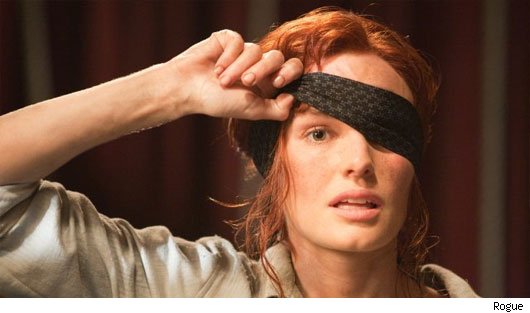
Kate Bosworth peers out from under a blindfold in the 2010 movie, Warrior's Way

**

Josh Foust just posted an important piece in his Atlantic column and on his American Security Project blog titled Myopia: How Counter-Terrorism Has Blinded Our Intelligence Community, with the subtitle:

The United States’ overriding interest in “actionable” information on terrorists has produced a dangerous form of tunnel vision.

Bingo.

This is important, and I’ll circle back to it. But first, please follow the full arc of the circle…

**

I post little headers at the top of all my Zenpundit posts these days, to let people know where on the irrelevance scale my latest offering should be placed — I guess the idea came from the 19th century practice of offering “synoptic chapter headings” to titillate the reader of novels, as when Mr Dickens titles one chapter of The Pickwick Papers:

Chapter XVIII. Briefly illustrative of two points; first, the power of hysterics, and, secondly, the force of circumstances

I digress.

Some while back, I posted a piece called The Haqqani come to high Dunsinane here on Zenpundit, and gave it the header:

why is non-actionable (useless) intelligence sometimes the most intelligent (useful)? – importance of multiple frames for complex vision

The piece was about the Haqqani network, but obliquely so — I was leaping from an image in a video where a cluster of Haqqani-guys in training were running around dressed as trees, to a similar image in Shakespeare‘s Macbeth:

Macbeth shall never vanquish’d be until
Great Birnam wood to high Dunsinane hill
Shall come against him.

Well, that was the prophecy, and Macbeth took it to mean he’d never be defeated in battle:

That will never be.
Who can impress the forest, bid the tree
Unfix his earthbound root? Sweet bodements! Good!

Prophecies and portents are notorious for their double meanings, however, and this one’s fulfillment comes when Malcolm gives the order to his men:

Let every soldier hew him down a bough
And bear’t before him. Thereby shall we shadow
The numbers of our host and make discovery
Err in report of us.

Heh — “discovery” here means what today we’d call “intelligence” — and notice the importance here of reading multiple meanings out of a single sign.

A while later, a messenger arrives, and declaims:

As I did stand my watch upon the hill,
I look’d toward Birnam, and anon, methought,
The wood began to move.

This turns out to be true enough, for in the next scene Malcolm, now before Dunsinane, gives the order:

Now near enough: your leafy screens throw down.
And show like those you are.

and:

Make all our trumpets speak; give them all breath,
Those clamorous harbingers of blood and death.

And so it goes.

**

Let me emphasize, this is not, definitively not, actionable intelligence that I am in any way attempting to offer as such to anyone engaging in close-quarters combat with the Haqqanis.

Our arc is almost complete at this point, so let’s take a closer look at Josh Foust’s piece:

Large areas of the IC have move away from their traditional role of analyzing a broad range of current events for policymakers and toward supporting the global counterterrorism mission. News stories about this shift suggest the counterterrorism mission has become the overarching concern of the national security staff.

This shift in focus can create blind spots that pose unique challenges for the president. If branch chiefs and the policymakers they support value “exploitable” information over deep understanding, they might be ignoring potentially vital information that doesn’t seem immediately of interest.

Imagine an analyst finding reports of a growing discontent in a Middle Eastern country’s politics; if that does not provide immediate benefit for a decision-making process for targeting suspected terrorists, it can easily be ignored in the avalanche of targeting information.

Blind spots, eh?

Those would be “the dots” in the “larger picture” that you can’t “connect” until it’s too late. And where are they found? In “information that doesn’t seem immediately of interest” — intelligence that’s not “actionable” in other words.

Or to put that another way, what Josh calls “tunnel vision” comes from staring at what’s “actionable” — whereas vision that’s “out of the tunnel” comes from noticing what’s in peripheral vision.

**

Wei wu wei? It’s a Taoist motto: literally, it means “action without action” though it can also be translated “effortless action”.

I know, I know, this is a useless post. But you know what Hui Tzu said to Chuang Tzu?

I have a big tree of the kind men call shu. Its trunk is too gnarled and bumpy to apply a measuring line to, its branches too bent and twisty to match up to a compass or square. You could stand it by the road and no carpenter would look at it twice. Your words, too, are big and useless, and so everyone alike spurns them!

And you know what Chuang Tzu said in response?

The Messianic Mahdist Moebius strip — or maybe Maze?

Monday, October 29th, 2012

[ by Charles Cameron — a quick look at some confusing clashes between messianisms, with specific reference to the MUJAO — also the late Ayatollah Baqir al-Sadr sounding an ecumenical note ]
.

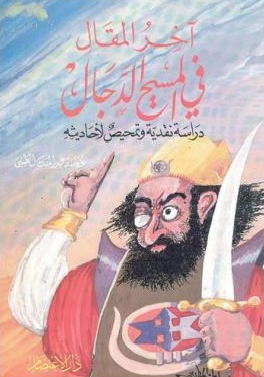
image: Dajjal, from Okasha Abdelmannan al-Tibi's The Whole Truth about the Antichrist

.

Tim Furnish opens his book Holiest Wars: Islamic Mahdis, their Jihads and Osama bin Laden, with the words:

One man’s messiah is another man’s heretic.

What he doesn’t state outright, which is also true, is that all too often that heretic is the anti-Messiah.

**

I use that term “anti-Messiah” deliberately, because in discussing Islamic end times beliefs, the term “Antichrist” is frequently used by both Christians and Muslims to refer to the Muslim “equivalent” of the Christian Antichrist — ie the “deceiving messiah” or Masih al-Dajjal, whose coming at the end of days is predicted in Islamic apocalyptic narratives in negative counterpoint to the coming of the Mahdi, in much the same way that some Christian apocalyptic narratives predict the coming of the Antichrist in negative counterpoint to the return of the Christ.

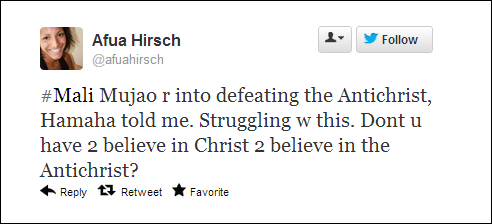
This issue was brought home to me once again today when Aaron Zelin pointed me to this tweet from Afua Hirsch [ @afuahirsch ], West Africa Correspondent for the Guardian:

Frankly, I think that’s a very natural question to raise, and one that has an even more intriguing answer.

**

One other note, which I’ve separated out between asterisks here because I think it’s a crucial one at that:

by Afua Hirsch’s account, Mali’s Movement for Unity and Jihad in West Africa (MUJAO) has the apocalyptic fever…

**

Strange things happen when different views of the end times, as prophesied one way or another in various branches of all three Abrahamic religions, clash.

Here’s where I see the moebius strip effect, whereby apocalyptic figures are turned into their opposites by rival sets of beliefs:

Some Muslims call the Dajjal (literally, “the deceiver”) the Antichrist — here, for instance, is a video clip of Sheikh Imran Hosein, whom I have discussed on Zenpundit before, quoting a hadith or tradition of the Prophet from the Sahih Muslim collection, and using the term “Antichrist” without further comment in his translation of the term Dajjal —

While some Christians call the Mahdi the Antichrist — as does Joel Richardson in his book currently issued under the title The Islamic Antichrist: The Shocking Truth about the Real Nature of the Beast. Reviewing the book in its first edition under its earlier title, Dr David R. Reagan sums Joel’s basic points succinctly:

Joel Richardson in his book Antichrist: Islam’s Awaited Messiah argues that the Mahdi will be the Antichrist of the Bible and that the Muslim Jesus will be be the False Prophet of the Bible who serves the Antichrist and his purposes. Both will be destroyed when the true Jesus returns at the end of the Tribulation.

We were talking about the Sufyani just the other day, right? Here’s a stunner to spin your head a further 180 degrees — the Sufyani as a second (and more dangerous) Dajjal than the Dajjal:

While the great Dajjal focuses on atheism and fights Christianity, the Islam Dajjal, Sufyan, fights Islam, which is the only true religion before Allah, openly. Therefore he is regarded as more frightening.

There’s also a question of one and / or many Antichrists in Christianity, of course — see 1 John 2:18:

Little children, it is the last time: and as ye have heard that antichrist shall come, even now are there many antichrists; whereby we know that it is the last time.

And hey, bear with me, I’m not done yet: members of the Ahmadi school quote a hadith from the Sunan Ibn Majah collection which says:

There is no Mahdi but Jesus son of Mary.

Ibn Majah, however, also has a hadith in which it is stated that at the time of the Mahdi’s advent he will invite the returning Jesus to lead the evening dawn prayer [as quoted here]:

…while their Imaam will have advanced to pray the Fajr prayer with them, Eesa, the son of Mary will descend [at the time of the Fajr prayer]. The Imaam will draw backward so that ‘Eesa would go forward and lead the people in prayer. However, ‘Eesa would put his hand between his shoulders and say to him: “Go forward and pray, as it is for you that the call for the prayer was called, so their Imaam would lead them in prayer.”

**

Confusing?

I think so, unless you are paying close attention.

My own recommendation would be that the phrase “the Islamic Antichrist” should be replaced by “the Islamic equivalent of an Antichrist” when referring to the Dajjal, and “the Mahdi viewed as Antichrist” when referring to the Mahdi.

I know, I know — the chances of changing people’s verbal habits across the board are pretty slender.

But have I made things seem complicated enough?

**

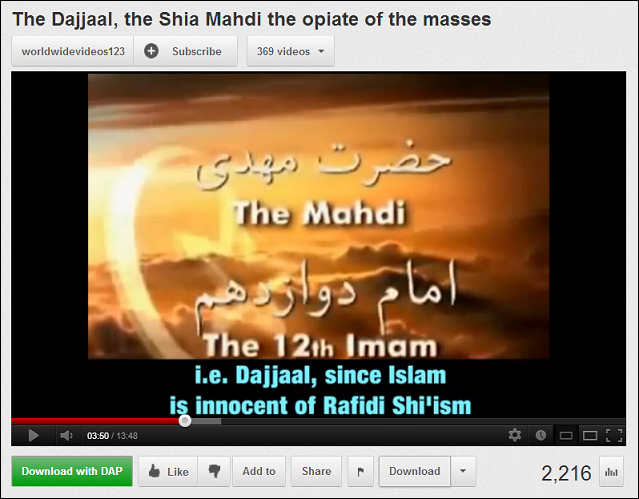
This whose business naturally gets just a tad more complicated once one adds in the Sunni concept — I am not sure how widespread it is, but it would make a fascinating topic for research for someone with the requisite language skills — that the Mahdi of the Shiites will be the Dajjal of the Sunni… as shown in this screen cap of a YouTube video.

[Rafidi means one who has deserted the truth, and is a derogatory term, in this case used by Sunnis to disparage the Shiites.]

Or this one — with its equation of the Shiites with the Jews:

Of course, Christianity too has its share of internecine apocalyptic mud-slinging: Rev. Ian Paisley (long-time leader of the Ulster Unionists and Moderator of the Free Presbyterian Church of Ulster) interrupted Pope John Paul II‘s speech at the European Parliament to denounce him as the Antichrist — while Rev. JD Manning gives Oprah Winfrey that title

**

Everything I have described above is dualistic in nature and sectarian in its specifics. It comes as something of a surprise, then, to find the late Ayatollah Muhammad Baqir al-Sadr quoted as writing:

The Mahdi is not an embodiment of the Islamic belief but he is also the symbol of an aspiration cherished by mankind irrespective of its divergent religious doctrines. He is also the crystallization of an instructive inspiration through which all people, regardless of their religious affiliations, have learnt to await a day when heavenly missions, with all their implications, will achieve their final goal and the tiring march of humanity across history will culminate satisfactory in peace and tranquility. This consciousness of the expected future has not been confined to those who believe in the supernatural phenomenon but has also been reflected in the ideologies and cult which totally deny the existence of what is imperceptible. For example, the dialectical materialism which interprets history on the basis of contradiction believes that a day will come when all contradictions will disappear and complete peace and tranquility will prevail.

The point is made even more clearly in a speech given by the Iranian scholar Muhammad Ali Shumali:

So, our own camp comprises of people who have this understanding: First of all, they are the people who believe in the Ahl al-Bayt. Yet, in our camp it is possible for there to be people who work for the Ahl al-Bayt without knowing the Ahl al-Bayt. This is also something very important. You may have a non-Shia who works for the Ahl al-Bayt better than many Shias. Indeed, you have some Shias that work against the Ahl al-Bayt. You may even have non-Muslims who are working for Imam Mahdi—for the cause of Imam Mahdi, for justice, for many things—and they may not even know who Imam Mahdi is. So it is not that whoever is not a Shia is not in our camp.

and:

I believe that the majority of the people of the world are not against us; it is just our failure to present our ideas and to convince them that what we have is for all mankind. I think in particular, in the case of Imam Mahdi, we must do the same thing: we must not present Imam Mahdi as a saviour for the Shias. Imam Mahdi is not a saviour for [just] the Shias. Imam Mahdi is a saviour for all mankind…

**

And then you see what you yourself see, and believe what you yourself believe.

Frankenstorm: some rules proposed for prophecy & prediction

Sunday, October 28th, 2012

[ by Charles Cameron — some thoughts on news reports and prophecy, since it is not unheard of for people to bolster their versions of prophecy by quoting current events ]
.

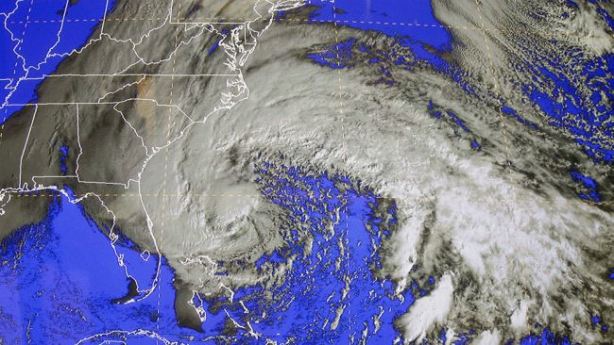
AP satellite image - which might as well be titled, in Shelley's words, "look on my works, ye mighty, and despair"

.

I want to explore the relation of prophecy and prediction to news, and my inbox in the last couple of days has provided me with a simple way to compare and contrast the two.

Here, then, are two versions of what might shortly come to pass:

The upper panel offers a snippet from the Washington Post‘s piece today — in other words, the news. The lower panel offers the headline from an overtly scripture-driven source — in other words, prophecy.

The Joel Rosenberg piece providing an interpretation of what might be just a day away, under that alarming headline, begins:

“For thus says the Lord of hosts, ‘Once more in a little while, I am going to shake the heavens and the earth, the sea also and the dry land. I will shake all the nations.” (Haggai 2:6-7) Just days before one of the most significant and momentous presidential and Congressional elections in American history, God is reminding us that America’s fate lies not in the hands of the politicians, but in His hands. Weather experts are warning Americans on the East Coast to “get ready, be prepared” for Hurricane Sandy, which they say could prove to be one of the most devastating storms in American history. Is that hype, or is it true? Tens of millions Americans are not taking any chances. They are buying water, food, gasoline and other supplies as the storm moves towards land. I can tell you that my family and I in the Washington, D.C. area are doing the same.

**

The interesting question from my POV is whether it is legitimate to invoke supernatural causes when natural causes could sufficiently account for what is observed to be happening.

There is indeed a major storm system in the offing, and it is indeed as yet uncertain whether it will be devastating, a comparatively minor irritant, or somewhere in between. But the Washington Post appears content to attribute the possibilities to natural forces, whereas Rosenberg prefers an explanation in terms of his views on morality.

Basically, there are two positions here:

  • If we are shaken, it is because we are sinful.
  • If we are shaken, it is because natural forces are interacting in such a way as to cause devastation on the scale of human interest.
  • I would argue for a third view:

  • If we are shaken, it is because we have messed enough with the planet’s intricate homeostases as to drive weather patterns to inhospitable extremes.
  • **

    Here are some rules that the looming Frankenstorm has prompted me to consixder:

    One:

    Don’t overstate the case: if you want a worst case scenario for warning and planning purposes, clearly mark it as such, and at least sketch the alternative scenarios and an informed guess as to their respective likelihoods.

    Two:

    If you associate a presumed cause to an expected effect, and when the time comes the effect does not happen, admit that the cause as presumed was flawed within your own system of explanation. In the case of Rosenberg’s storm, should it prove to be less of a shaker than Rosenberg’s headline suggests, this would mean he would admit that God obviously didn’t intend to shake America all that much — either because America is less sinful and more pleasing to God than Rosenberg gives it credit for, or because the threat of the storm caused a sufficient moral awakening to make its actuality unnecessary, or because God is more long-suffering than Rosenberg initially imagined.

    Three:

    Keep your explanation internally consistent. The storm is, even in Rosenberg’s sense, a meteorological phenomenon — which is why his post carries the AP satellite image of Hurricane Sandy that I put at the top of this post. It is a stretch — biblically permitted, but a stretch nevertheless — to assert a moral cause (such as tolerance of homosexuality) for a meteorological event, particularly if the known meteorological causes would in themselves be sufficient to account for it.

    **

    And then there’s the most interesting part of all.

    Suppose that prophecy isn’t a matter of specific and accurate prediction, but a sketch of possible outcomes, along the lines of “if you carry on like that, you’ll drink yourself into an early grave.” When someone says something like that, they don’t mean the person concerned will find an empty grave and get so drunk as to fall into it — they mean that excessive imbibing, over the long term, puts the imbiber at risk of a variety of distressing ends, fatal car crashes and kidney failure among them.

    We have the saying, “pride comes before a fall.” Is that prophecy? It is found in scripture, in Proverbs 16.18:

    Pride goeth before destruction, and an haughty spirit before a fall.

    Arguably the proud and power-hungry have a tendency to overextend themselves — the Greeks would call it hubris, and see nemesis close on its heels. Is it prophecy, then, or a simple observation of human nature? It certainly seems to fit quite a number of circumstances — to be “fulfilled” on a regular basis.

    **

    My friend and mentor the shaman Wallace Black Elk emphasized to me that in his Lakota tradition, prophecies were understood as visionary warnings of likely outcomes to be avoided — not as inevitabilities.

    **

    What I’m getting at here is that as predictions become specific — Edgar Whisenart‘s prediction that the Rapture would occur between September 11 and 13, 1988, or Jose Arguelles proclamation that the harmonic convergence of August 17, 1987 would be the great moment of shift — or are interpreted in specific ways — I linked to a minister preaching that Oprah Winfrey was the Antichrist only yesterday — we may be mistaking a poetic reading of trends for an act of previsioning in detail a predetermined, preordained and predestined future.

    From my POV, this would mean that prophetic texts should be read as poetic foreshadowings — “put too much strain on the environment and it will bite back at you” — rather than as matrices into which the events of the day should be shoehorned — back in the days of Nero and Domitian, back in the days of Hitler and Stalin, or today, tomorrow and tomorrow…

    In this way, both prophetic and scientific traditions can be appropriately honored.

    The cloak, mantle and authority of the Prophet

    Sunday, September 30th, 2012

    [ by Charles Cameron — the symbolic importance of Mullah Omar with the cloak of the Prophet, comparative, frankly long, and IMO worth it ]
    .
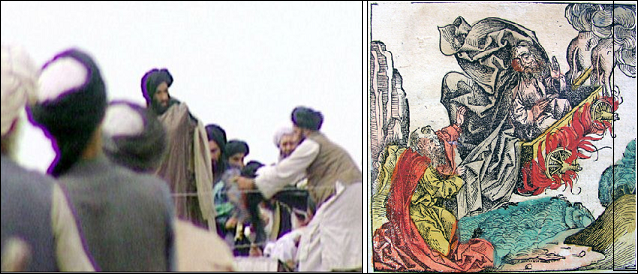
    Mullah Omar in Kandahar; Elijah & Elisha from the Nuremberg Chronicle

    .
    I would like to give you a sense of the significance of an apparently insignificant detail, which I was reminded of today while skimming Charles Kurzman‘s The Missing Martyrs: Why There Are So Few Muslim Terrorists, page 74:

    To gain legitimacy as he was taking over Afghanistan,Taliban leader Mulla Muhammad Umar literally wrapped himself in the cloak of the Prophet Muhammad, a cherished relic stored for two centuries at a shrine in Qandahar. He ordered the custodians to unlock the sanctuary, then stood on the roof of a nearby mosque and placed his hands in the cloth as a crowd of supporters chanted “Commander of the Faithful,” a title associated with the first caliphs to succeed the Prophet Muhammad.

    To better grasp the significance of the situation, I will first quote from the Jewish and Buddhist scriptures to illuminate the symbolic power that can be vested — interesting word — in a cloak or robe.

    **

    John Daido Loori is a zen master in whose teishos or teachings I often find insight and delight. Here’s his description of the original transmission of “bowl and robe” in Buddhism, from the Buddha to his disciple Mahakashyapa:

    After Buddha died, Ananda became the attendant of Mahakashyapa. One day he asked, “That time on Mount Gudhakutra, when the World-Honored One gave you the bowl and robe, and transmitted the Dharma to you, what else did he give you?” Mahakashyapa called out, “Ananda.” Ananda responded, “Yes, Master?” Mahakashyapa said, “Take down the flagpole.” At that point, Ananda finally had a realization. He realized what Mahakashyapa had realized. So it has been, down through successive generations, mind-to-mind for 2,500 years.

    The Buddha’s teaching later passes from India into China, where the transmission continues. Here’s how Hui Neng, in the Platform Sutra, describes his own enlightenment and reception of the teachings:

    At midnight the Fifth Patriarch called me into the hall and expounded the Diamond Sutra to me. Hearing it but once, I was immediately awakened, and that night I received the Dharma. None of the others knew anything about it. Then he transmitted to me the Dharma of Sudden Enlightenment and the robe, saying: ‘I make you the Sixth Patriarch. The robe is the proof and is to be handed down from generation to generation. My Dharma must be transmitted from mind to mind. You must make people awaken to themselves.’

    **

    There’s a remarkable story told in 2 Kings 2.8-15 that concerns the transmission of prophetic gifts by similar means, when the prophet Elijah is carried up into heaven:

    And Elijah took his mantle, and wrapped it together, and smote the waters, and they were divided hither and thither, so that they two went over on dry ground. And it came to pass, when they were gone over, that Elijah said unto Elisha, Ask what I shall do for thee, before I be taken away from thee. And Elisha said, I pray thee, let a double portion of thy spirit be upon me. And he said, Thou hast asked a hard thing: nevertheless, if thou see me when I am taken from thee, it shall be so unto thee; but if not, it shall not be so.

    And it came to pass, as they still went on, and talked, that, behold, there appeared a chariot of fire, and horses of fire, and parted them both asunder; and Elijah went up by a whirlwind into heaven. And Elisha saw it, and he cried, My father, my father, the chariot of Israel, and the horsemen thereof. And he saw him no more: and he took hold of his own clothes, and rent them in two pieces.

    He took up also the mantle of Elijah that fell from him, and went back, and stood by the bank of Jordan; And he took the mantle of Elijah that fell from him, and smote the waters, and said, Where is the Lord God of Elijah? and when he also had smitten the waters, they parted hither and thither: and Elisha went over. And when the sons of the prophets which were to view at Jericho saw him, they said, The spirit of Elijah doth rest on Elisha. And they came to meet him, and bowed themselves to the ground before him.

    The beauty, the power in this telling comes from the cloak’s ability to part the waters, as on an earlier occasion Moses‘ staff had done, not merely in the hands on Elijah, but also, once the transmission has been made, in the hands of Elisha. It is that double motif of the parting of the waters that demonstrates the efficacy of the prophetic transmission.

    Coming fresh from the Buddha, Mahakashyapa, Hui Neng, Elijah and Elisha, we should be ready to appreciate that the mantle, cloak or robe of a sacred person is imbued with that person’s power — Matthew 14.36 describes crowds bringing the sick to Jesus:

    that they might only touch the hem of his garment: and as many as touched were made perfectly whole.

    **

    In light of these examples, let us consider the reports of the day when Mullah Omar was proclaimed Amir of the Faithful:

    There was a tremendous stir in Kandahar: we followed the crowds to a mosque in the city center. The Taliban had been holding an assembly of mullahs from all over Afghanistan. Now the results were about to be made public. Holy war was announced against the government of President Rabbani in Kabul. The head of the Taliban, Mullah Omar, was declared to be the Amir or leader of all Muslims everywhere. Because this was regarded as a key moment for the Afghan nation, Mullah Omar displayed the holy cloak of the Prophet Muhammad to the crowd. It’s kept in Kandahar and shown only in times of crisis. The last time was sixty years ago. Neither the cloak nor the ceremony has ever been filmed before, not has Mullah Omar. People in the crowd threw up their turbans to touch the cloak and be blessed by it. It was like being at some great religious ceremony in the Middle Ages.

    That’s from the soundtrack of a video I sadly can’t post here, but which you can see for yourself on a BBC site under the title Mullah Omar reveals the Prophet’s cloak.

    Adam Curtis, who posted the clip, describes it thus:

    In the early 90s the students returned to Afghanistan and set up the Taliban – to cleanse the country of a revolution that had gone wrong, compromised by the futile idea of modernising Islam. And in April 1996 Mullah Omar went to the Shrine of the Holy Cloak. He took out the cloak for the first time in 60 years and waved it from the roof – just as Amanullah had in 1929 – and announced a jihad against the Islamist factions in Kabul.

    The BBC producer Tom Giles and John Simpson were in Kandahar that day – and they captured this extraordinary moment on video.

    When King Amanullah had held the cloak above his head in 1929 it symbolised the end of his dreams of creating a modern world in Afghanistan. Now – in 1996 – Omar was saying the same thing – forget the future, listen to the ghosts of your past – and follow their rules.

    Let’s note in passing that Omar holds the cloak up — neither in the video clip nor in the two accounts is it suggested that he wore it — and that it had previously been held up by Amanullah Shah in 1929.

    **

    For the symbolic impact as reported in the West, let’s turn to Tim Weiner‘s piece, Seizing the Prophet’s Mantle: Muhammad Omar, in the NYT of December 7, 2001:

    And as the country was falling to the Taliban five and a half years ago, Mullah Omar literally cloaked himself in the trappings of the Prophet Muhammad.

    On April 4, 1996, as the Taliban neared total control, he was moved by zeal to unseal a shrine in Kandahar that held a cloak believed to have belonged to the prophet, the founder of Islam. The cloak had not been touched since some time in the 1930’s. He lifted it in the air as he stood on a rooftop, displaying it to a crowd of followers. The event was caught on videotape, one of the very few times that he was ever photographed. He placed the cloak, which only the Prophet was said to have worn, upon his own shoulders.

    And at that moment, he declared himself the commander of the faithful, the leader of all Islam. No one had claimed that title since the Fourth Caliph, more than 1,000 years ago.

    That’s impressive stuff, and “Seizing the Prophet’s Mantle” and “Omar literally cloaked himself in the trappings of the Prophet” do a decent job of capturing the marriage of literal and symbolic that’s at work here.

    But “he placed the cloak … upon his own shoulders”? I’m not so sure.

    **

    It was a tremulous moment, evidently, even for Omar, as Norimitsu Onishi reported in the NYT a couple of weeks later on December 19, 2001, in A Tale of the Mullah and Muhammad’s Amazing Cloak:

    The first time Mullah Muhammad Omar was allowed to enter the Shrine of the Cloak of the Prophet Muhammad here in Kandahar, and cast his gaze on the sacred ancient robe, he trembled. So disoriented was Mullah Omar that as he prepared to pray, he mistook the way toward Mecca.

    “He turned to face toward the south,” recalled Qari Shawali, 48, the keeper of the prophet’s cloak. “So I made him change his position to turn toward Mecca.”

    I suspect that here we have an indication that Omar was surprised by the event, that he was in fact acclaimed by the assembly of mullahs rather than claiming the robe and title for himself.

    However, as the saying goes: Allah is the best of knowers.

    **

    Mujib Mashal‘s piece, The myth of Mullah Omar on al-Jazeera, 6 June 2012, gives us a few clues as to informed Afghan responses to the event, throwing in the detail that bin Laden was there at the time -– but also informing us that Omar “donned the cloak” and claiming this was the first time in 250 years that this had happened:

    To formally announce his leadership in 1996, Mullah Omar, then 36 years old, brought forth the purported cloak of the Prophet Mohammed, one of Afghanistan’s most cherished Islamic relics. For the first time since the reign of Ahmad Shah Abdali more than 250 years before, Omar donned the cloak in the presence of about 1,500 religious leaders, including the late Osama bin Laden.

    “Wearing the cloak was a masterstroke,” Sharifi said, adding that it linked the ex-guerrilla fighter to both Abdali and the Prophet. But Wahid Muzhda, an Afghan analyst and one-time high-ranking official in the Taliban foreign ministry, disputes that narrative. “From what I know, from sources close to Omar, and from a chat with the keeper of the shrine [where the cloak is kept], Omar did not wear the cloak.” “With great respect, he held the cloak in front of the religious leaders gathered for allegiance.”

    This gesture, more than any other, was the impetus that allowed Mullah Omar, without any deep political or tribal base, to become the iron-fisted ruler of about 90 per cent of Afghanistan until the US invasion in 2001.

    **

    I know, you’re fatigued and I’m excited: bear with me, let’s hear the story of Ahmad Shah as told by Steve Inskeep on NPR in The Cloak of the Prophet some time in 2002:

    According to the version of the legend that I heard, Ahmad Shah traveled to Bokhara — once one of the major centers of Islamic scholarship and culture, now a modern city in the former Soviet state of Uzbekistan . There he saw the sacred Cloak of the Prophet Mohammed, and decided to bring it home. He wanted Kandahar to have the artifact, so he asked to “borrow” the cloak from its keepers.

    The keepers knew he might steal it, and told him he must not take the cloak from Bokhara. So Ahmad Shah pointed to a stone in the ground and made a promise. He said, “I will never take the cloak far away from this stone.”

    Relieved, the keepers let him take the cloak. Ahmed Shah kept his word, in a sense. He had the stone taken up out of the ground, and had it carried back to Kandahar, along with the cloak, which he never returned. Today, the stone stands on a pedestal near the shrine.

    The Cloak of the Prophet is normally hidden from public view. It is taken out only for special occasions. The last such occasion came in 1996, as the Taliban seized control of the country.

    The Taliban leader, Mullah Omar, made what was considered a brilliant propaganda move. He took Mohammed’s shroud out of storage and wore it in a public rally, as a way to identify himself with the Prophet, and give himself legitimacy.

    That’s an interesting tale in its own right, and reminds me of another Abrahamic treasure, the Stone of Scone, throned above which Scottish and British Kings and Queens are crowned. For your viewing delight: Stone of Destiny.

    **

    Fast forward to July 1928, a more recent moment when Afghanistan was in crisis.
    Adam Curtis reports in The Weird World of Waziristan, 5 April 2010:

    Amanullah fled to Kandahar. He knew that his attempt at modernization had failed and to save himself he tried to prove that in reality he was a traditional Islamic monarch. He did it in a final dramatic gesture.

    Amanullah went to the Shrine of the Holy Cloak in the centre of Kandahar. He opened up the brass bound chest where the cloak which was reputed to have been the Prophet’s had lain for over a 100 years. Amanullah lifted it above his head and demanded of the mullahs in front of him whether Allah would allow a heretic or an apostate to perform such a sacred act.

    **

    And so to our most serious analytic effort on the topic, and a couple of indicators of the point I’m so often trying to make, here and in other posts on ZP. Here are Thomas H. Johnson and M. Chris Mason, writing in Terrorism, Insurgency, and Afghanistan as published by the Naval Postgraduate School, where both of them work in the Program for Culture & Conflict Studies:

    Omar joined this rogues gallery of politicized insurgent Mullahs by means of a politico-religious stunt that is of enormous importance to the Taliban movement but that is considered insignificant by most Western analysts, if they are aware of it at all. In doing so, he became the epitome of the charismatic leader as described by Max Weber, who he defined as having:

    … a certain quality of an individual personality, by virtue of which he is set apart from ordinary men and treated as endowed with supernatural, superhuman, or at least specifically exceptional powers or qualities. These are such as are not accessible to the ordinary person, but are regarded as of divine origin or as exemplary, and on the basis of them the individual concerned is treated as a leader.

    The event in question was Omar’s removal in 1994 of a sacred garment -— believed by many Afghans to be the original cloak worn by the Prophet Mohammed -– from its sanctuary in Kandahar, and actually wearing it while standing atop a mosque in the city. Whereas Omar had been a nonentity before this piece of religious theatre, the audacious stunt catapulted him to a level of mystical power (at least among the 90 percent of Pahstuns who are illiterate) in a manner that is almost impossible for Westerners to understand, and it resulted in his being proclaimed locally the Amir-ul Momineen, the Leader of the Faithful — not just of the Afghans but of all Muslims.

    I would draw your particular attention to this phrase:

    a politico-religious stunt that is of enormous importance to the Taliban movement but that is considered insignificant by most Western analysts, if they are aware of it at all.

    Why? Why do we continually overlook such indications of the depth of feeling that animates the Taliban? Perhaps another analogy, from closer to home, will help us here.

    I’m not sure that I’d call the exposition of the Shroud of Turin a “piece of religious theatre” or an “audacious stunt” — even if Pope Benedict, famously concerned at the secularization of Europe, visited it and remarked both on the Shroud as an icon of the death and burial of Christ, and of our era’s participation in the “death of God” “after the two World Wars, the lagers and the gulags, Hiroshima and Nagasaki”:

    Jesus remained in the tomb until dawn of the day after the Sabbath and the Turin Shroud presents to us an image of how his body lay in the tomb during that period which was chronologically brief (about a day and a half), but immense, infinite in its value and in its significance.

    You may regard the Son of God and the Prophet of Allah as similar figures or utterly different: but to understand the emotions roused by Mullah Omar’s gesture, these correspondences drawn from other religious traditions may provide a useful place to start.

    **

    As for myself, I have a poet’s reverence for symbols, but I recognize that it is what they symbolize that is important — and so I’ll close as I began, with the Buddhist robe and bowl and another delighful teisho from Abbot Loori:

    Ming was chasing after Hui-neng, determined to retrieve the bowl and robe of Bodhidharma from him. Finally, when he caught up to Hui-neng, the Sixth Ancestor put down the robe and bowl and said, “This robe was given to me on faith. How can it be fought for by force? I leave it for you to take it.” Ming tried to pick up the robe and bowl but couldn’t—they were as heavy as a mountain. He fell to his knees, trembling, and said, “I come for the teachings, not the robe. Please teach me, oh lay brother.” Completely open, completely receptive, completely ready, he was a man teetering on the brink of realization. Immediately, the Sixth Ancestor struck. “Think neither good nor evil,” he said. “At that very moment, what is the true self of monastic Ming?”
    Biblical prophecy and foreign policy: a caution

    Thursday, September 6th, 2012

    [ by Charles Cameron — on prophetic stances towards Israel: both blessings and rebukes ]
    .

    It seems to be fairly common in some Christian circles to view the Israeli Prime Minister’s position on war with Iran as somehow sacrosanct.

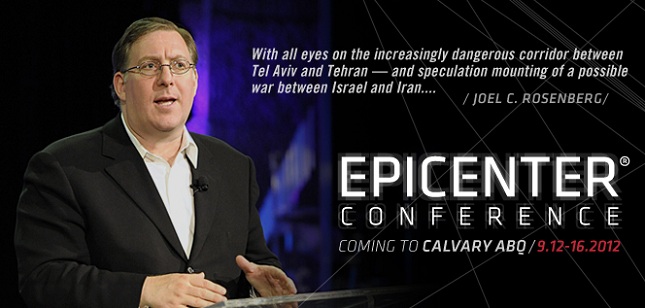
    Thus the end times fiction and non-fiction author Joel Rosenberg, for instance, recently blogged a “sermon” in two posts [Rediscovering the power and purpose of Bible Prophecy: 1 and 2] about the importance of prophecy to an understanding of Middle Eastern affairs, noting:

    Israel is the epicenter of God’s plan and purpose in the last days. Other countries mentioned in Bible prophecy are Russia, Iran, Syria, Lebanon, Turkey, Libya, Sudan, the revived Roman empire, and several others. The United States, however, is never mentioned directly or specifically in the Bible. In my recent book, Implosion, I go into this in greater detail. But the bottom line is that even though America is the wealthiest and most powerful nation on the face of the earth in the history of mankind, the Bible does not describe a specific role for us in the last days. Something, therefore, apparently happens to neutralize us or paralyze from played a key role in the events that lead to the return of Christ.

    Despite this lack of emphasis on the Unites States, he followed these two posts up with a post titled Troubling development: rift between White House & Israel growing as threat of war rises:

    In recent days, anyone watching U.S.-Israel relations has seen a very troubling development: the already serious rift between the current White House and Israel is growing. The relationship between President Obama and Prime Minister Netanyahu has been strained for nearly four years. But as the threat of war between Israel and Iran this fall continues to rise, the Obama administration seems to be intentionally signaling a growing distance from the Netanyahu government.

    He doesn’t draw a direct link to prophecy in this particular post, but he does close with this prayer:

    Please pray for the Lord to change the heart of President Obama and his advisors, and that they would change course and truly and publicly stand firmly with Israel, our most faithful ally in all of the epicenter. As we read in Genesis 12:1-3, God promises to bless those who bless Israel, and curse those who curse Israel. With America facing a growing risk of economic and moral implosion, now is certainly not the time to turn our backs on Israel.

    **

    As usual, my interest is in nuance — so I’d just like to say that from a purely Biblical point of view, it is by no means out of the question for believers to disagree with the kings and rulers of Israel. Indeed, Rav Moshe Taragin, writing in the Virtual Beit Midrash of Yeshivat Har Etzion, hardly a bastion of anti-Israeli sentiment, goes so far as to say:

    In general, the function of the prophet is to rebuke the nation, to expose its negative traits and to help the people improve their behavior. As the Rambam teaches (Hilkhot Teshuva 4:2): “Thus, all the prophets rebuked Israel so that they would repent.”

    Just because someone rebukes Israel doesn’t mean they don’t bless her…

    **

    I addressed a question to my Christian friends on Twitter the other day, using the Iraq war as my example — but it applies to the current face-off between Israel and Iran, too:

    If you and I disagree on, say, the Iraq war now, will one of us have to change his or her mind in heaven?

    I added that my question was not about the Iraq war as such, but about our certainties when so many of our certainties differ.

    My friend Mike Sellers responded with this admirable quote — which as he pointed out is often attributed to St Augustine (for more on its origins, try Wikipedia):

    In things necessary, unity, in things doubtful, liberty, in all things, charity.


    Switch to our mobile site