zenpundit.com » 2015 » April

Archive for April, 2015

Bobcat jumps shark..

Wednesday, April 8th, 2015

[ by Charles Cameron — I suppose you could call this “land-sea battle” ]
.

**

I couldn’t quite let this tweet go by without recalling the two quotes that gave me the DoubleQuotes idea in the first place:

From Haniel Long’s Letter to Saint Augustine:

My friend Jens Jensen, who is an ornithologist, tells me that when he was a boy in Denmark he caught a big carp embedded in which, across the spinal vertebrae, were the talons of an osprey. Apparently years before, the fish hawk had dived for its prey, but had misjudged its size. The carp was too heavy for it to lift up out of the water, and so after a struggle the bird of prey was pulled under and drowned. The fish then lived as best it could with the great bird clamped to it, till time disintegrated the carcass, and freed it, all but the bony structure of the talon.

And from Annie Dillard‘s Teaching a Stone to Talk:

And once, says Ernest Seton Thompson–once, a man shot an eagle out of the sky. He examined the eagle and found the dry skull of a weasel fixed by the jaws to his throat. The supposition is that the eagle had pounced on the weasel and the weasel swiveled and bit as instinct taught him, tooth to neck, and nearly won. I would like to have seen that eagle from the air a few weeks or months before he was shot: was the whole weasel still attached to his feathered throat, a fur pendant? Or did the eagle eat what he could reach, gutting the living weasel with his talons before his breast, bending his beak, cleaning the beautiful airborne bones?

**

The photo almost, though not quite, captures the full circularity of the two narratives above — but even so, the sense of two elemental beasts, one of earth, one of water, grappling each with the other, is powerful, rare, and memorable.

Yes and no — but by analogy with innocence, yes?

Tuesday, April 7th, 2015

[ by Charles Cameron — Dzhokhar Tsarnaev and those black banners again — I’m just curious ]
.

Judy Clarke, an attorney specializing in death penalty cases, addresses the Tsarnaev jury in the closing statement for the defense:

**

Clark is right that the flag is a religious flag, but whether or not for Dzhokar Tsarnaev it had further, specifically jihadist or even eschatological implications is open to question. As you know, black banners commonly signify apocalyptic jihad.

By analogy with the presumption of innocence, though, this flag should be presumed to be purely religious (ie without jihadist implication) unless demonstrated otherwise, no?

**

Incidentally, Aaron Zelin dealt carefully with a similar question about essentially the same flag — the calligraphy differs slightly in detail — in a tweet regarding the Sydney incident:

**

And in any case, while we’re waiting for the verdict in the Boston trial, I’m just curious.

How does the law deal with issues such as this? To what extent is non-definitive circumstantial evidence contextual and cumulative?

New Books, On China and Neighbors

Tuesday, April 7th, 2015

[by J. Scott Shipman]

china books


Imperial China, by F.W. Mote

Mountains of Fame, John W. Wills (not pictured)

Liao Architecture, by Nancy Steinhardt

The Seven Military Classics of Ancient China, by Ralph D. Sawyer

Inner Asian Frontiers of China, by Owen Lattimore

Empires of the Silk Road, Christopher I. Beckwith

The Perilous Frontier, by Thomas Barfield

The Horse, The Wheel, and Language, by David W. Anthony

3,000 Years of Chinese Statecraft, by Dennis Bloodworth

The Imjin War, by Samuel Hawley

The Tyranny of History, by W.J.F Jenner

The Wars for Asia 1911-1949, by S.C.M. Paine

Hard Road Home, by Ye Fu (not pictured, and a specialty publisher with great customer service Ragged Banner Press)

After the first of the year I commenced yet another “modern” assessment of China as a potential adversary, and had not gotten too far before the author attempted to channel ancient Chinese history to explain current Chinese policies. The author’s confidence and specious use of history made me aware of just how illiterate I am in that portion of the world. I don’t know about you, but when I’m faced with a known gap and seam in some area of knowledge, I do a (fill in the blank) study. (I’ve done studies on central Africa, cognition, neuroeconomics, strategy (which seems on-going), and naval tactics to name a few.) My normal process is to find a syllabus from someone I trust or admire, or ask my network to offer five or six must read books on the topic. T. Greer at Scholar’s Stage, is a well known to the readers here at Zenpundit as a commenter and very knowledgeable on Chinese history. He recommended most of the books in the list above.

Sawyer’s Seven Military Classics was already in my library, and often read as a reference. Also I’d read large chunks of Empires and Horse, Wheel, Language (these books were already in my library, too, and are very complementary in their approach). And while the Imjin War book is focused on Japan, someone on Facebook suggested the addition. The only books purchased new was the Imperial China volume by Mote and Imjin. The remainder were purchased used and cost less than $75 total on the secondary market (I use both Amazon and ABE.com).

I’m a little more than a third through Imperial China, and while it is textbook, Mote’s writing style is engaging and exhaustive. Halfway through Mountains of Fame; it has been my go-to travel book—hence I forgot to include in the picture as the volume remains in an unpacked bag from a recent trip. I have read the introductions to all of these titles and by far the Paine book seems the most intriguing—I love the writing style. The only two likely to be relegated to the anti-library are the architecture book and the volume by Lattimore.

So, along with Zen, what new books are you reading?

New Books

Saturday, April 4th, 2015

[by Mark Safranski, a.k.a. “zen“]


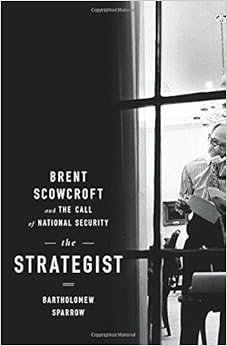
The Strategist: Brent Scowcroft ad the Call of National Security by Bartholomew Sparrow

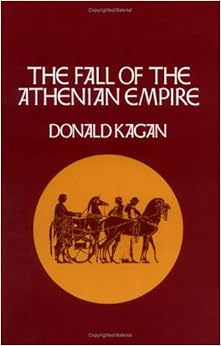
The Fall of the Athenian Empire by Donald Kagan

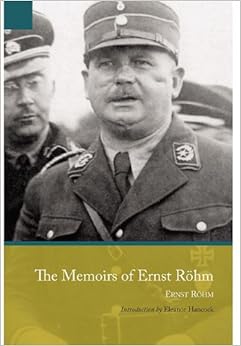
The Memoirs of Ernst Rohm by Ernst Rohm

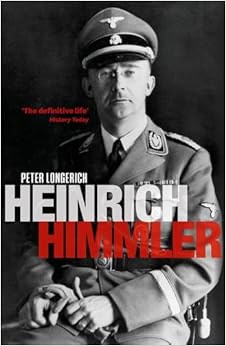
Heinrich Himmler by Peter Longerich 

The Origins of the Final Solution by Christopher Browning

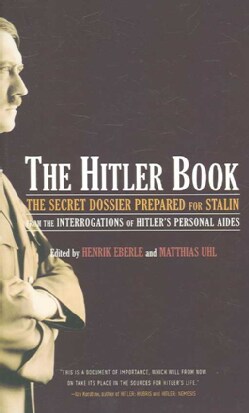
The Hitler Book: The Secret Dossier Prepared for Stalin by Henrik Eberle

Some new books….

The bio of Brent Scowcroft, if my impressions from picking up and opening to two random sections are valid, is going to be very. very good (they were on Scowcroft’s estimation of the working relationship of Henry Kissinger and Richard Nixon and Scowcroft’s strategic adice to the first President Bush during German reunification). I was very impressed both with Sparrow’s prose and his ability to let Scowcroft’s voice shine through the text.

I’m a fan of the pessimistic Donald Kagan and recommend his Yale Open Courseware series on Ancient Greece from time to time to my own students who show an interest in the Classical world. One of Kagan’s students, now an academic nautical archaeologist, John R. Hale, also produced a fine history of the Athenian navy and the intertwining of thalassocracy, empire and the Radical Democracy and I recommend that book to my students as well.

The next three books are related.  Last year I read the frequently useful, but also at times turgidly tedious, I Knew Hitler, by Kurt G. W. Ludecke. The cause of Ludecke’s downfall with his semi-friend Adolf Hitler was the former’s constant embrace and enthusiastic promotion of the populist roughneck, leftist and “idealist” figures in the Nazi Party, like Ernst Rohm, the Strasser brothers and Alfred Rosenberg and Ludecke’s belief that the “movement” came before the Fuhrer. Ludecke dedicated his massive memoir to the memory of Rohm, who was the catalyst between the old Freikorps paramilitarism of the old German nationalist Right and its hideous and radicalized offspring, National Socialism. Rohm is a key figure in the development of Nazism and a complicated one, being one of the few early Nazi leaders to have been on familiar (“Du”) terms with Adolf Hitler and his sudden fall had wider implications than were realized at the time – including inspiring Stalin to reshape Soviet society with terror and murder  (“Hitler, he shows us how to deal with political opponents!”). Rohm’s memoir has been partially translated into English and deals with the early years when the Nazis were but one extremist party in an ecosystem of radical right German politics.

Peter Longerich is one of the top German experts on the Holocaust and it is fitting that he has completed a monumental biography of Rohm’s former deputy, Heinrich Himmler, Reichsfuhrer-SS and the chief implementer of the Holocaust of European Jewry. Chris Browning, another expert on the Holocaust also has much to say on the role of Himmler and competing Nazi functionaries in the evolution of genocide as a state policy of the Third Reich. Finally, The Hitler Book was an NKVD/MGB top secret analysis put together by Soviet intelligence for Josef Stalin, mirroring, to a small extent, the OSS psychological profiling of Hitler and top Nazi leaders during the war.

Recently, T. Greer of Scholar’s Stage blog asked me how many of the strategy related books on my shelves had been read vs. being in the antilibrary. The answer was “most”. My antilibrary tends toward history and biography where I buy books more quickly than I can read them, while more instrumental books are bought and read shortly thereafter. I also trend toward “collecting” in Soviet studies, classical antiquity, Second and Third Reich Germany, US diplomatic history and books related to the Nixon administration.

What are you reading and buying these days?

A powerful, credible narrative?

Wednesday, April 1st, 2015

[ by Charles Cameron — how about a powerful, credible foreign policy? — maybe that’s asking too much ]
.
double

**

James P. Farwell‘s piece in the National Interest, Information Warfare: The Key to Destroying ISIS, claims:

A coalition of Shia militias, Iraqi government forces and anti-ISIS Suncni tribesman are making progress towards ejecting ISIS from Tikrit. What’s needed now is to capitalize on those defeats and complement kinetic action with a cohesive information war campaign driven by a powerful, credible narrative that demoralizes, divides, confuses, and frustrates ISIS members in order to blunt their effectiveness as fighters, and undermine their expectations, destroy their momentum, and quash any hope of victory in creating a sustainable Islamic State or caliphate.

A powerful, credible narrative?

**

Let’s look at two recent efforts. The first was just “published from above” by the US Government:
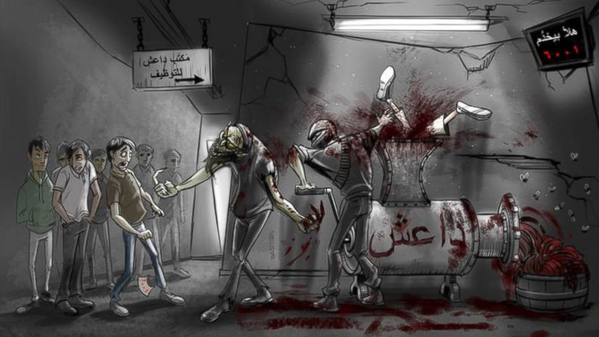
PsyOps lealet

Here’s some context and commentary, from Al Jazeera’s DC office:

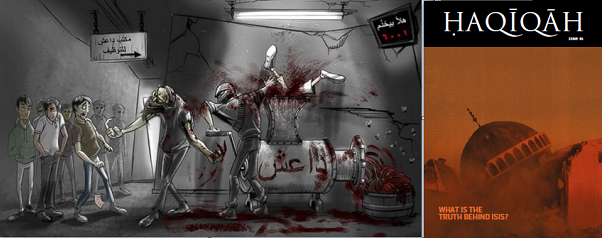
On March 16 an F-15E fighter jet dropped 60,000 copies of the above leaflet on Raqqa, the base of operations for the Islamic State of Iraq and the Levant, or ISIL.

The image shows a “Daesh Employment Office” (Daesh is a pejorative nickname for ISIL in the Arab world).

Two ISIL recruiters, one of whom appears more monster than man, feed young men into a meat grinder with “Daesh” written in blood on its side. A sign in the upper-right corner reads “Now Serving Number 6,001”.

When asked about the intended message of the leaflet, Pentagon spokesman Colonel Steve Warren, said “If you allow yourself to be recruited by Daesh, you will find yourself in a meat grinder.”

Warren said the leaflet was created by the Army’s Military Information Support Operations, or MISO. Until 2010 that outfit was known as “PSY-OPS” (short for “Psychological Operations”).
Experts have questioned the efficacy and tenor of the leaflet.

Faysal Itani, a Fellow at the Atlantic Center in Washington who studies the various groups fighting in Syria’s civil war, said anyone in Raqqa thinking of joining ISIL is either ideologically committed or coerced.

“Members of the first category are likely immune to leaflet propaganda, especially if distributed by an air force that has been bombing Raqqa,” Itani told DC Dispatches.

Frankly, I think that’s the wrong way to appeal to the people of Raqqa, who see worse everyday, and either don’t want or don’t need to be reminded.

**

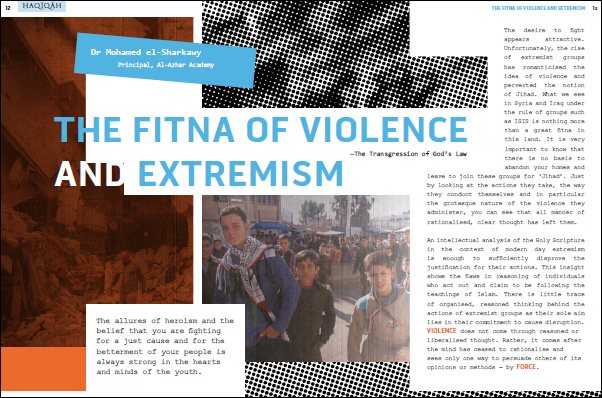
Next up is the effort of a consortium of British Imams — a magazine called Haqiqah, whose editor pitches it thus:

We’re turning the tide – though we still have a way to go, we know that by taking efforts to support and mobilise the huge online Muslim population we will eventually drown out the violent voices

Here’s a sample double-page spread:
Haqiqah

I would like to applaud the effort, but I’m afraid a 17-page magazine featuring text blocks in a typewriter face and the occasional poor color photograph is just no match for IS’ own magazine, Dabiq, whose first issue ran 50 pages, and which looked like this:

Dabiq double page

Ouch. Richard Barrett of the Soufan Group is gentle in the way he phrases his comment, but I’m afraid he’s also right on the mark:

**

Okay, let’s look at some of the possible theological “alt-narratives” I’ve seen proposed.

First, there’s the idea that losing battles might “prove” that ISIS was not divinely approved and supported — but Qur’an 2:154-56 concerns those who fight fi sabil Allah, an suggests they will encounter “tests” up to and including “loss of lives” in the course of events:

And do not say about those who are killed in the way of Allah, “They are dead.” Rather, they are alive, but you perceive [it] not. And We will surely test you with something of fear and hunger and a loss of wealth and lives and fruits, but give good tidings to the patient, Who, when disaster strikes them, say, “Indeed we belong to Allah , and indeed to Him we will return.”

Furthermore, IS’ favorite eschatological hadith (I’ve quoted it before) specifies that many will be lost, both to glorious death and inglorious desertion:

The Last Hour would not come until the Romans would land at al-A’maq or in Dabiq. An army consisting of the best (soldiers) of the people of the earth at that time will come from Medina (to counteract them). When they will arrange themselves in ranks, the Romans would say: Do not stand between us and those (Muslims) who took prisoners from amongst us. Let us fight with them; and the Muslims would say: Nay, by Allah, we would never get aside from you and from our brethren that you may fight them. They will then fight and a third (part) of the army would run away, whom Allah will never forgive. A third (part of the army). which would be constituted of excellent martyrs in Allah’s eye, would be killed ani the third who would never be put to trial would win and they would be conquerors of Constantinople

Losing ground? I think the third “alt-narrative” — the narrative brought into effect by IS losing significant ground they had previously captured, is the most powerful of those currently proffered — but it depends on perspective rather than capture or loss. Blows to IS such as the loss of Tikrit, or a fortiori the possible loss of Mosul, might seem persuasive to most western eyes, but in the eyes of potential recruits they may well be counterbalanced by new oaths of allegiance such as thos of Boko Haram and Al-Shabaab to the IS caliph.

At least, though, we glimpse here that changes in military reality may impact thelogically-based beliefs.

**

Taking that a step further, I’d suggest that credible behavior on our own part, rather than the fatwas of ulema — even Abu Muhammad al-Maqdisi, let alone those who may seem obviously compromised by complicity in power — will comprise the most effective of counter-narratives.

America supported Muslims in Afghanistan against the Russians, America supported Bosniac Muslims against the Orthodox Serbs and Catholic Croats — these are the kinds of action that most clearly refute the idea that the US is at war with Muslims — as it may appear to be in the cases Bacevich listed a few months back in a WaPo op-ed:

As America’s efforts to “degrade and ultimately destroy” Islamic State militants extent into Syria, Iraq War III has seamlessly morphed into Greater Middle East Battlefield XIV. That is, Syria has become at least the 14th country in the Islamic world that U.S. forces have invaded or occupied or bombed, and in which American soldiers have killed or been killed. And that’s just since 1980.

Let’s tick them off: Iran (1980, 1987-1988), Libya (1981, 1986, 1989, 2011), Lebanon (1983), Kuwait (1991), Iraq (1991-2011, 2014-), Somalia (1992-1993, 2007-), Bosnia (1995), Saudi Arabia (1991, 1996), Afghanistan (1998, 2001-), Sudan (1998), Kosovo (1999), Yemen (2000, 2002-), Pakistan (2004-) and now Syria. Whew.

That could be viewed as a pretty devastating list.

**

Actions — as a poet, I dread to utter these words, but they seem appropriate in this context — actions (in the form of foreign policy) just may speak louder that words .

Switch to our mobile site