Don’t forget Rule No. 1 (special unplanned edition)
October 4th, 2013This post will return when actually complete.
Moral of the story: blue buttons look strikingly like grey buttons at 1:30 am.
This post will return when actually complete.
Moral of the story: blue buttons look strikingly like grey buttons at 1:30 am.
[by Mark Safranski, a.k.a. “zen“]

Charles Hill pens a favorable but also fairly critical review of Sir Lawrence Freedman’s tome-like, Strategy: A History.
.…Sir Lawrence Freedman’s 750-page magnum opus, Strategy: A History, is encyclopedic, although not alphabetical, a pleasure to dip into here and there to get a carefully considered summary briefing on the strategy of the Hebrew Bible, the 1815 Congress of Vienna, Jane Addams, Black Power, or the strange array of social science attempts to redefine human behavior as a contribution to strategy. Everybody talks about strategy, but no one seems to know what it is. But now there are no excuses; it’s all here, at least in chronological array. As with my childhood set of Compton’s, I read it straight through for its several-thousand-years’-long narrative arc; it only remains to try to make sense of the whole thing as one big idea.
Freedman begins by admitting that there is no agreed-upon definition of strategy. When one encounters the word applied to battle plans, political campaigns, and business deals, “not to mention means of coping with the stresses of everyday life,” the concept may begin to seem meaningless. But not so for Sir Lawrence, a most distinguished professor of war studies at King’s College, London, who unapologetically focuses his modern section on American approaches because “the United States has been not only the most powerful but also the most intellectually innovative country in recent times.”
The “origins” of strategy run from David and Goliath to Machiavelli to Milton’s Paradise Lost, a vast stretch of time covered, for this big book, in a relatively short space, as though the author is hurrying to get to strategy in our modern age. All the old warhorses are here. Thucydides is analyzed as the start of “real” strategy and the distortions of language as a cause of Athens’ fall is featured. Plato’s Republic is taken seriously as a “strategic coup” by which philosophy defeats strategy. (I am one of those who read Plato’s Socrates as ironic, playing along with an overnight concoction of a perfect polity—which turns out horribly—as the most effective way of showing us what not to do when thinking strategically.) Sun Tzu is properly portrayed not so much as a strategist as a master of stratagems, a subset of the art in full: To do the opposite of what is expected is not enough to qualify as strategy. Overall, the centuries of “Origins” analyzed here could be characterized as “a series of footnotes to Homer,” a running debate between advocates of force (Achilles) and those who prefer guile (Odysseus). The Trojan Horse was guile personified; it worked, but thereafter could be scorned as a despicable trick unworthy of heroes. The strategic approach of Milton’s Satan to his own demonic team, as well as toward Adam and Eve, was all seductive guile and still seems to be working….
The book comes across as being rather unwieldy in size, scope and definition of strategy, though informative. I disagree with Hill’s interpretation of Sun Tzu as well as Plato ( Socrates was an ironist, Plato? Well, he wandered quite far from his master’s teachings in the fullness of time). Nevertheless, worth a read.
[by Mark Safranski, a.k.a. “zen“]
Working on a number of things, top priority among which is a cross-post for Nuclear Diner about the Myhrvold Report that Cheryl Rofer decisively shredded here last week. Cheryl and I have done some point-counterpoint and blogging round tables together in the past but, this time I have been handicapped in my response by being largely in agreement 🙂 I will try to hit the report from a somewhat different angle but like Cheryl I have some serious reservations.
Picked up a few new reads this weekend that should be interesting to the readership:
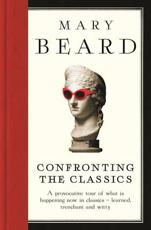

Confronting the Classics by Mary Beard
Mary Beard is a British celebrity classicist from King’s College, an eminent figure in the field and extremely active in the social media realm where her blog, A Don’s Life and her twitter account are highly popular. She seems somewhat leftish anti-American in her politics, but does not appear to be under what Popper termed “the spell of Plato” and regards Socrates as a radical and subversive ( which he was, though not quite in the modern sense of those words). Here is a sample of Beard’s prose:
Marcus Tullius Cicero was murdered on 7 December 43 BC: Rome’s most famous orator, off-and-on defender of Republican liberty and thundering critic of autocracy. He was finally hunted down by lackeys of Mark Antony, a member of Rome’s ruling junta and principal victim of Cicero’s dazzling swansong of invective: more than a dozen speeches called the Philippics, after Demosthenes almost equally nasty attacks on Philip of Macedon, three centuries earlier.
Cicero of course shared the fate of Demosthenes, dying less ignobly than Pompey but much less impressively to his fellow Romans than did the fanatical Cato. As a result, Cato has an equally uncompromising libertarian think tank named in his honor while America’s gift to Cicero’s posterity is only a mafia-infested Chicago suburb.
Scahill is much better known figure than Beard. I frankly disagree in principle with his take on drones and al Qaida targets – unless they are hors d’ combat or attempting to surrender, as combatants *all* AQ members are legitimate military targets under the laws of war, period – but I wanted to see what his argument was at it’s most expansive and fully documented. Should be an interesting read.
[ by Charles Cameron — a sign of the times? ]
.
Definitely of interest, implications to be discovered:
Wow. Isfahan v conservative city in #Iran “@NegarMortazavi: "Death to America is not in the Quran" Isfahan's friday prayer Imam told Fararu”
— Suzanne Kianpour (@KianpourWorld) September 30, 2013
Excellent theology, that, at the very least!
[ by Charles Cameron — when is a sword just a metaphor, when does it spill blood, and what can be done about it when it does? ]
.
Hayder al-Khoei is presently in Rome for an interfaith conference on “Religions and Cultures in Dialogue” organised by the Community of Sant’Egidio, attended Mass this morning at the Basilica of Saint Paul Outside the Walls, and posted this fascinating comment on Twitter:
I assumed Saint Paul was a warrior-saint like Imam Ali. Turns out the sword only symbolises the word of God. #pt pic.twitter.com/9Wd71ENFbL
— Hayder al-Khoei (@Hayder_alKhoei) September 29, 2013
**
According to one of his recent bio notes, Hayder al-Khoei is “an associate fellow of the Middle East and North Africa Programme at Chatham House, a London-based think tank on international affairs. He holds a masters degree in international studies and diplomacy from the School of Oriental and African Studies, University of London.” He’s generally considered highly qualified to speak on issues relating to Shi’a Islam — he’s also the scion of an illustrious clerical family, son of Sayyid Abdul Majid Al-Khoei and the grandson of Grand Ayatollah Abdul-Qasim Al-Khoei.
I can’t tell whether it was just the sight of St Paul’s sword in this particular statue that gave al-Khoei this thought, or whether it’s an idea more generally found among Muslims — that the early Christians in general were a militant bunch, or St Paul in particular. But al-Khoei’s comment is worth reflecting on.
Here are two counter-factuals to consider — not as statements of belief or historical fact, but as historical fictions that may yet give us glimpses ointo tje parallelisms and divergences between the two religions.
**
What of Christianity if Christ had not been crucified?
What would Christianity have looked like at 100 CE — or look like today, perhaps — if Christ hadn’t died on the cross (Muslims believe he didn’t), but had lived to see his followers persecuted and killed and the Jerusalem Temple destroyed by the Romans ikn 70 CE? Might his instructions gto his disciples have moved from an emphasis on peace to instructions for insurrection andd self defence over that period of time? See Luke 22. 35-36:
And he said unto them, When I sent you without purse, and scrip, and shoes, lacked ye any thing? And they said, Nothing. Then said he unto them, But now, he that hath a purse, let him take it, and likewise his scrip: and he that hath no sword, let him sell his garment, and buy one.
In the Gospel narrative, this instruction lasts for only a short while — Luke 22 continues:
And he said unto them, When I sent you without purse, and scrip, and shoes, lacked ye any thing? And they said, Nothing. Then said he unto them, But now, he that hath a purse, let him take it, and likewise his scrip: and he that hath no sword, let him sell his garment, and buy one. For I say unto you, that this that is written must yet be accomplished in me, And he was reckoned among the transgressors: for the things concerning me have an end. mAnd they said, Lord, behold, here are two swords. And he said unto them, It is enough.
and then, after the episode called agony in the garden, in verse s 47-51 of the same chapter:
And while he yet spake, behold a multitude, and he that was called Judas, one of the twelve, went before them, and drew near unto Jesus to kiss him. But Jesus said unto him, Judas, betrayest thou the Son of man with a kiss? When they which were about him saw what would follow, they said unto him, Lord, shall we smite with the sword? And one of them smote the servant of the high priest, and cut off his right ear. And Jesus answered and said, Suffer ye thus far. And he touched his ear, and healed him.
**
And what of Islam, if Muhammad had not been persecuted in Mecca?
And what might Islam have looked like in 710 CE — or look like today, maybe — if the persecution of the Prophet and his disciples had not driven him from Mecca to Medina, and his teachings had continued to be peaceable as they were in his earlier Meccan suras of the Qur’an?
**
To my mind, each of these stories of what never happened opens a possibility for mutual understanding between the two faith narratives: I offer them for this purpose.
Swords have been drawn, and blood spilled, in matters of conflict between religions. It is my hope and prayer, and that of those at the conference al-Khoei is attending, that the time will not be long in coming when the swords are sheathed and healings performed…

Zenpundit is a blog dedicated to exploring the intersections of foreign policy, history, military theory, national security,strategic thinking, futurism, cognition and a number of other esoteric pursuits.
Customized Web Site & Blog Design

