zenpundit.com » book

Archive for the ‘book’ Category

Materials from the Archive 1: Cameron on Abu Musab al-Suri

Tuesday, January 14th, 2014

[ by Charles Cameron — capturing items no longer at their original links ]
.

I’m grateful to the Internet Archive for still holding copies of web-pages I occasionally want to link to, but which have disappeared from their original URLs. I’m reposting a couple of them here, and will use the “Materials from the Archive” beading for any others that come along.

First, from The [US] Air force Research Institute site, my review of Jim Lacey‘s Terrorist’s Call to Global Jihad

**

A Terrorist’s Call to Global Jihad: Deciphering Abu Musab al-Suri’s Islamic Jihad Manifesto

Jim Lacey’s Terrorist’s Call to Global Jihad is an abridged translation (from 1,600 to 200 pages) of the premier contemporary manual of jihad, Abu Musab al-Suri’s Call to Global Islamic Resistance (Da‘wat al-muqawamah al-islamiyyah al-‘alamiyyah). US Joint Forces Command sponsored this book and two others as part of the Terrorist Perspective Project, which aims to allow “joint warfighters to get inside the terrorists’ decision cycle” by understanding the “mind of the jihadi movement.” The other members of the trilogy, all edited by Lacey and all published by the Naval Institute Press in 2008, include The Terrorist Perspectives Project: Strategic and Operational Views of Al Qa’ida and Associated Movements, which provides an overall synthesis of jihadist thought, and The Canons of Jihad: Terrorists’ Strategy for Defeating America, which supports this synthesis by offering selections from a variety of important jihadist texts. Thus, taken together, the three books offer a background in jihadist thought, some significant historical and near-contemporary readings from that tradition, and a detailed study of its most significant single document. In many ways, Jim Lacey is an appropriate choice as editor of Terrorist’s Call to Global Jihad given his position as an analyst with the Institute for Defense Analyses and his experience as an infantry officer and  a journalist for Time magazine, embedded with the 101st Airborne during the invasion of Iraq.

Al-Suri is also the subject of Architect of Global Jihad: The Life of Al-Qa’ida Strategist Abu Mus’ab al-Suri, a biography by Norwegian scholar Brynjar Lia of the Norwegian Defense Research Establishment. That book complements Terrorist’s Call to Global Jihad by offering us a portrait of the man and an unabridged translation of two key chapters from al-Suri’s work. In the context of other jihadist literature, al-Suri’s Call to Global Islamic Resistance is a major event. In their article “Stealing Al Qaeda’s Playbook” (Studies in Conflict and Terrorism, June 2006), Jarret Brachman and William McCants write that “as the author of a massive handbook on global insurgency—or, as he calls it, ‘the remedy for the U.S. disease’—Mustafa Setmarian Nasar [i.e., al-Suri] has written his way into the intellectual heart of today’s jihadi-Salafi movement.” An individual named “Bearer of the Sword,” posting a comment about the Fort Hood shootings on the English language Ansarnet forum, called al-Suri “the greatest military theoretician our Ummah have had in this age.” Clearly, Lacey and Lia are introducing us to a major treatise on contemporary jihadism.

Biographically speaking, Lacey’s portrait of al-Suri is brief, but he quotes a memorable remark from CNN journalist Peter Bergen, who contacted al-Suri for a celebrated interview with bin Laden: “He seemed to be a very intelligent guy, a very well informed guy, and a very serious guy. . . . He was certainly more impressive than bin Laden.” Prior to his capture in Quetta, Pakistan, in October 2005, Suri received military training from the Iraqi and Egyptian militaries, served as an instructor in the Afghan-Arab camps in Afghanistan during the late 1980s, lived in Spain and the United Kingdom in the 1990s, and served as a media liaison for al-Qaeda in Afghanistan.

Lacey suggests that al-Suri’s work is comparable to Hitler’s Mein Kampf, and Lia terms it “the most significant written source in the strategic studies literature on al-Qa’ida.” Obviously, it is crucial to understand what Lacey offers us of al-Suri’s work and what he omits. The preface lays out the book’s program: “Recognizing that 1,600-page documents of densely written ‘jihadi thought’ would deter all but the most dedicated analyst, Lacey has produced this condensed version and translation of al-Suri’s work capturing the essence of his thoughts.” What follows is an analysis of the jihadist current, beginning with al-Suri’s own experiences in Syria (1980), passing via Madrid (1991) and London (1996) to Afghanistan (1997–2001), and following through to include the US invasion of Iraq (2003–4)—presented as background for the “third generation” of mujahideen “created by the events of September (9/11/2001), the occupation of Iraq and the apex of the Palestinian intifada.” Chapters explore the status of Muslims today, sharia rulings appropriate to the situation, and a history of jihad from 1990 onwards (in three chapters), omitting a major discussion of al-Qaeda, which Lacey deems inappropriate since (1) it would require book-length treatment and (2) the war on that front is ongoing.  He closes with chapters on the doctrinal foundations of jihad, sharia-based decision making, and the role of the media.

The book does suffer from one serious omission. As mentioned in the preface, “Where appropriate, we have also removed most of the repetitive theological justifications undergirding these beliefs.” The final pages of Call to Global Islamic Resistance are what Jean-Pierre Filiu terms “a hundred-page apocalyptic tract” concerning “signs of the end times.” Sadly, both Lacey and Lia pay little attention to this specifically Mahdist element. In al-Suri’s reading of jihadist history, “one event brings another event and then another, leading inevitably to the arrival of the Mahdi.” Given the importance of apocalyptic expectation as a potential (and potent) force multiplier, we await the English translation of Filiu’s L’Apocalypse dans l’Islam for further insight into a serious and hitherto neglected part of al-Suri’s message.

Lacey’s Terrorist’s Call to Global Jihad opens a significant window on the jihadist mind-set. However, downplaying the religious doctrine that al-Suri includes alongside his strategic guidance blocks our view of the importance of religion in persuading people to follow that guidance.


Charles Cameron

Forestville, California

A Terrorist’s Call to Global Jihad: Deciphering Abu Musab al-Suri’s Islamic Jihad Manifesto edited by Jim Lacey. Naval Institute Press, 2008, 205 pp., $19.00.

New Books

Friday, January 3rd, 2014

[by Mark Safranski, a.k.a. “zen“]
  

I Knew HitlerKurt Ludecke 

The Classical WorldRobin Lane Fox 

Ludecke was an obscure “old fighter” Nazi and intimate of Hitler’s who fell out on the wrong side of the Night of the Long Knives and managed to escape Himmler’s death list and flee Germany to write a sizable memoir covering the Nazi Party’s earliest days. Like Putzi Hanfstaengl’s Hitler: the Missing Years, Ludecke is gamely trying to cast himself in the best light even as he illuminates  a less polished and amateurish provincial politician that was Hitler while the Fuhrer was clawing his way into power.

Fox is a well known classicist  and biographer of Alexander the Great  and his book is a sweeping review of the classical world from the end of the Greek dark age to the decline of Rome

“Friends of Zenpundit Who Wrote Books” # 3

Monday, December 16th, 2013

[by Mark Safranski, a.k.a. “zen“]

As the holiday season is here, I thought it would be amusing between now and Christmas to do a series of posts on books by people who have, in some fashion, been friends of ZP by supporting us with links, guest-posts, friendly comments and other intuitive gestures of online association. One keyboard washes the other.

Gian Gentile 


Wrong Turn: America’s Deadly Embrace of Counterinsurgency 

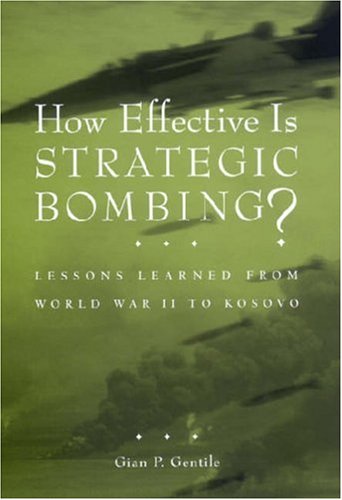
How Effective is Strategic Bombing?: Lessons Learned From World War II to Kosovo 

Colonel Gentile is a historian, a professor at West Point, a combat veteran of Iraq and is the foremost public critic of pop-centric COIN theory around, bar none, which he has translated into a book-length critique that is required reading for the con side of the COIN debate. Gian has also been kind enough to grace the comment section here from time to time as well as participating in the Afghanistan 2050 Roundtable at ChicagoBoyz blog.

Don Vandergriff


Manning the Future Legions of the United States: Finding and Developing Tomorrow’s Centurions 

Spirit, Blood and Treasure: The American Cost of Battle in the 21st Century 

The Path to Victory

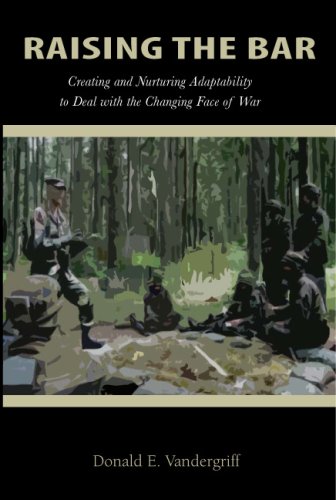
Raising the Bar: Creating and Nurturing Adaptability to Deal with the Changing Face of War 

I have had the pleasure of hearing Don speak and demonstrate some of his adaptive leadership techniques at the Boyd Conferences which I greatly enjoyed and strongly endorse, for those interested in having Vandergriff as a speaker or consultant. His absence this year at Boyd was much regretted but Don was off doing some important work this year overseas. Catch him in print instead.

John Robb 

Brave New War: The Next Stage of Terrorism and the End of Globalization 

I am an unabashed huge fan of John’s work and Global Guerrillas has been on my (very) short list of must read sites for years. This book, like Ronfeldt and Arquilla’s Netwars, is a classic of emerging trends in warfare and strategy that belongs on your shelf.

Review: Mussolini’s Italy: Life under the Fascist Dictatorship 1915-1945 by R.J.B. Bosworth

Wednesday, December 11th, 2013

[by Mark Safranski, a.k.a “zen“]

Mussolini’s Italy: Life Under the Fascist Dictatorship, 1915-1945 by R.J.B. Bosworth 

This book was Fascist Italy not of the newsreels of frenzied Roman crowds cheering bombastic speeches by Mussolini but how fascism’s imperial grandiosity were an ill-fitting facade for an Italy that underneath remained substantially an impoverished, traditionalist, parochial society of peasant squabbles and regional jealousies. Bosworth, one of the world’s top experts on the period takes a granular look at Italy under Fascism and the reader comes away amazed at how Mussolini fooled the great powers into taking his regime seriously for as long as they did.

At 692 pages, including 88 pages of endnotes, Mussolini’s Italy lays out in exhaustive detail how ordinary Italians carried on as best they could under the dictatorship, with the traditional reliance on corruption and the influence of kin and “men of respect” to undermine and ameliorate “totalitarian” rule. Repeatedly the regime sanctions dissidents (usually politically naive -or simply drunken – tradesmen or villagers) to “confino”, internal exile to faraway unpleasant regions only to have the intervention of some Fascist bigwig result in a swift amnesty.The brutality of the regime’s informal sanctions – the beatings, castor oil, kidnappings and murders – carried out by roving Fascist squadrists or at the orders of a local Fascist Ras (boss) like Cremona’s thuggish Roberto Farinacci, were by contrast, real enough.

Outside of the violent hooliganism of blackshirt squadrism there at times seems little to have held Fascism together as a political movement without Mussolini’s tin cult of personality, there was seldom agreement among fascists about such fundamental political issues as the role of the state vs. the party, capitalism vs. autarky, the sanctity of private property, the need for unions, whether Fascism should be antisemitic or the role of the Catholic Church in Italian life? An incoherence that left Mussolini, who was never much of a stickler for consistency, as supreme arbiter. A role he kept secure by arbitrarily moving his preening, intriguing, womanizing and feuding cabal of uniformed henchmen and party apparatchiks from job to job all the way into his bitter gotterdammerung of the Salo Republic, where Mussolini was reduced to being the puppet gauleiter of Lombardy and eventually patheitic victim of popular revenge.

Bosworth does a scholarly take-down of the original Fascist regime, demonstrating the deep propensity for cultural continuity in any society in the long term, even in one under the heavy hand of self-proclaimed revolutionaries and Roman tyrants.

Sunday surprise 11: thinking outside the Amazon box

Sunday, December 8th, 2013

[ by Charles Cameron — since there’s no divine surveillance on this one day of the week, I can safely post something utterly trivial here without fear of The Wrath ]
.

If you’ve ever felt that Amazon mailing boxes were emblematic of the labor of Sysiphus, here’s your proof:

But wait — surely things can’t always be that bad? Next time you receive a box or three from Amazon, consider building a model Japanese temple:

From Brian Ashcraft at Kotaku:

What do you do with your Amazon cardboard boxes? Throw them away? An individual in Japan turned them into a one of Japan’s most famous temples, the Byodoin. The temple is a national treasure in Japan and is featured on the back of ten yen coins. NicoNico Douga user Upuaza Touryou took around five months to complete the sculpture, which is made up of over five thousand cardboard parts. Total cost? 300 yen or about US$3.


Switch to our mobile site