zenpundit.com » IC

Archive for the ‘IC’ Category

Of serpent-bites in logic

Saturday, August 31st, 2013

[ by Charles Cameron — continuing my series on the “serpent bites tail” reflexive form (1, 2, 3, 4) in which analytic gems and other insights may often be easily discovered or succinctly expressed — read this post fast for fun, or reflectively (!!) for the ripples ]
.

I’m going to lead off with this tweet, which seems very timely considering the news this last week or so about Syria…

I thought this was another quite beautiful example of “serpent bites its own tail” phrasing — timely too — uttered by JM Berger in summarizing his Loopcast with Daveed Gartenstein-Ross on the current status of Al-Qaeda, highly recommended, BTW:

And if you want to know about Hezbollah and its global reach, this one refers to the book you need…

**

Okay, having given pride of place to those three, I’d like to catch those of you who are interested up on an entire series of self-referencing tweets I’ve run across since I last posted. I’m really collecting these things because I’d like, one of these days, to do a thorough analysis of what they teach us about our modes of thought, and how we can apply that to pattern-recognition in our own readings, and creative insight in our writings and analytic output… In the meantime, don’t feel obliged to read every last one, just dip in as you feel inclined — think of this as a reference section, okay? Take what you need and leave the rest.

Here’s one that uses the Escher‘s hand draws hand format:

And here’s a pair that needs to stay together:

Continuing… I might as well give you a cluster from Teju Cole, since he’s a master…

Okay, here’s another one with timely reference, this time to the whole NSA business:

Really, this is just such a rich vein of humor and insight:

Let’s go to another wordsmith — they’re often good at this stuff:

Two from philosopher Allen Stairs:

One from quasi-Einstein, via the very bright (non-quasi) Seb Paquet:

**

I’ll close with an example from the “all is nothing” category, this one from Peter J Munson:

NSA: interesting convo, but where to start?

Saturday, August 3rd, 2013

[ by Charles Cameron — I’ll keep this one short and painless, since long would be painful ]
.


Click for video.

**

Problem: the Snowden / NSA business is of interest to me as a human being, but way outside my competence.

Solution: To get NSA wrong, trust @ggreenwald. To get it right, filter GG through @joshuafoust, @20committee, @marcambinder and his book Deep State: Inside the Government Secrecy Industry — then the conversation gets interesting!

On two, one, seven plus or minus, and ten – towards infinity

Monday, July 29th, 2013

[ by Charles Cameron — a few quirky thoughts about graphs and analysis ]
.

Two eyes (heads, ideas, points of view) are better than one.

**

When I worked as senior analyst in a tiny think-shop, my boss would often ask me for an early indicator of some trend. My brain couldn’t handle that — I always needed two data points to see a pattern, and so I coined the mantra for myself, two is the first number. When the American Bankers Association during the Y2K scare wrote and posted a sermon to be delivered in synagogues, churches and mosques counseling trust in the banking system it was a curiosity. When the FBI, in response to the same Y2K scare, put out a manual for chiefs of police in which they provided input on the interpretation of the Book of Revelation, the two together became an indicator: they connected.

My human brain could see that at once — non-religious authority usurps theological function, times two.

For what it’s worth, the Starlight data-visualization system we used back then (1999) couldn’t put these two items together: I could and did.

**

To wax philosophical, in a manner asymptotic to bullshit:

One isn’t a number until there are two, because it’s limitless across all spectra and unique, and because it is its own, only context.

One isn’t a number unless there’s a mind to think of it — in which case it’s already an abstraction within that mind, and thus there are, minimally, two. At which point we are in the numbers game, and there may be many, many more than two — twenty, or plenty, or plenty-three, or the cube root of aleph null, or (ridiculous, I know) infinity-six…

Go, figure.

Two is the first number, because the two can mingle or separate, duel or duet: either way, there’s a connection, a link between them.

Links and connections are where meaning lies — in the edges of our graphs, where two nodes seamlessly integrate, much as two eyes or two ears give us stereoscopic vision or stereophonic sound, not by abstracting one from two by skipping the details that make a difference, but by incorporating the rich fullness of both to present a third which contains them fully via an added dimension of depth.

That’s the fundamental reason that DoubleQuotes are an ideal analytic tool for the human mind to work with: they’re the simplest form of graph — the dyad — populated with rich nodes and optimally rich associations between them.

**

**

Cornelius Castoriades wrote:

Philosophers almost always start by saying: “I want to see what being is, what reality is. Now, here is a table; what does this table show to me as characteristic of a real being?” No philosopher ever started by saying: “I want to see what being is, what reality is. Now, here is my memory of my dream of last night; what does this show me as characteristic of a real being?” No philosopher ever starts by saying “Let the Requiem of Mozart be a paradigm of being”, and seeing in the physical world a deficient mode of being, instead of looking at things the other way around, instead of seeing in the imaginary, i.e., human mode of existence, a deficient or secondary mode of being.

When I specified above “the simplest form of graph — the dyad — populated with rich nodes and optimally rich associations between them” I was offering a Castoriades-style reversal of approach, in which our choice of nodes is determined not by their abstraction — as single data points — but by their humanly intuited significance and rich complexity. Hence: anecdotes, quotes, emblems, graphics, snapshots, statistics — leaning to the qualitative side of things, but not omitting the quantitative. And their connection, intuited for the richness of the parallelisms and oppositions between them.

Often the first rich node will be present in the back of the mind — aviators wanting to learn how to fly a plane, but uninterested in how to land it — when the second falls into place — when a student asks a diving instructor to teach the diving technique, with no interest in learning to avoid the bends while coming back up. And bingo — the thing us understood, the pattern recognized, and an abstraction to “one way tasks” — including “one way tickets” established.

Let’s call that first node a “fly in the subconscious”. I’d love to have been a fly in the subconscious when SecDef Rumsfeld told a Town hall meeting in Baghdad, April 2003:

And unlike many armies in the world, you came not to conquer, not to occupy, but to liberate and the Iraqi people know this.

Because I could have chimed in cheerfully in the very British voice of General Sir Frederick Stanley Maude, in that different yet same Baghdad in 1917:

Our armies do not come into your cities and lands as conquerors or enemies, but as liberators…

Oh, the echo — the reverb!

**

The ideal number of nodes in the kind of graph I’m thinking of is found in terms of the human capacity to hold “seven plus or minus two” items in mind at the same time — thus, with a slight scanning of the eyes, a graph with eight to twelve nodes and twenty or so edges is about the limit of what can be comprehended.

The Kabbalistic Tree of Life, infinitely rich in meaning and instruction, has ten nodes and twenty-two edges. Once taken into the mature human mind, there is no end to it.

The value of a graph composed of such rich nodes and edges lies in the contemplation it affords our human minds and hearts.

**

Two, being the simplest number, will probably give you the richest graphs of all…

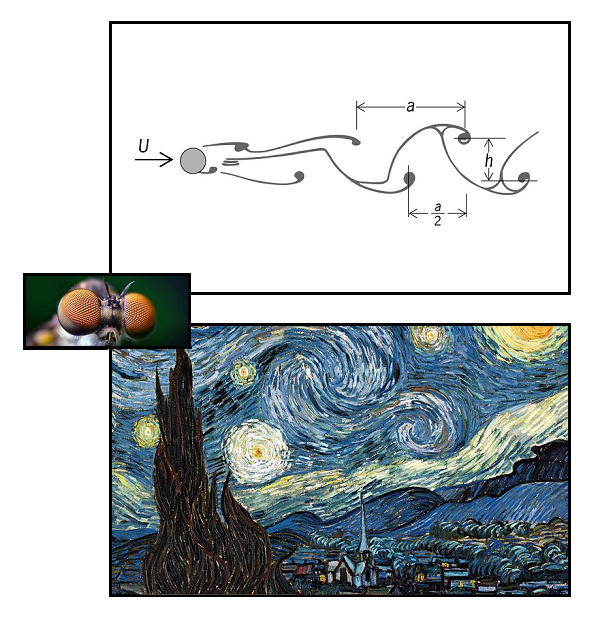
Art, in the person of Vincent Van Gogh, meet science, in the person of Theodore von Kármán.

For the Fourth of July: The Once and Future Republic?

Thursday, July 4th, 2013

Ahem….”I told you so“.

“Congress intended to allow the intelligence communities to access targeted information for specific investigations. How can every call that every American makes or receives be relevant to a specific investigation?”

                                                             – Representative James Sensenbrenner (R-Wisconsin)
                                                                 A primary author of The Patriot Act 

“We have not yet seen any evidence showing that the NSA’s dragnet collection of Americans’ phone records has produced any uniquely valuable intelligence. Gen. Alexander’s testimony yesterday suggested that the NSA’s bulk phone records collection program helped thwart ‘dozens’ of terrorist attacks, but all of the plots that he mentioned appear to have been identified using other collection methods. The public deserves a clear explanation”

                                                                 – Senators Ron Wyden (D- Oregon) and Mark Udall (D- Colorado)

“What I learned from our journalists should alarm everyone in this room and should alarm everyone in this country….The actions of the DoJ against AP are already having an impact beyond the specifics of this particular case. Some of our longtime trusted sources have become nervous and anxious about talking to us, even on stories that aren’t about national security. And in some cases, government employees that we once checked in with regularly will no longer speak to us by phone, and some are reluctant to meet in person. This chilling effect is not just at AP, it’s happening at other news organizations as well”

                                                               – Gary Pruitt, President of the Associated Press 

“The people who are worried about privacy have a legitimate worry….But we live in a complex world where you’re going to have to have a level of security greater than you did back in the olden days, if you will. And our laws and our interpretation of the Constitution, I think, have to change.”

                                                              – Michael Bloomberg, Mayor of New York City 

“One-party autocracy certainly has its drawbacks. But when it is led by a reasonably enlightened group of people, as China is today, it can also have great advantages.”

                                                                -Thomas Friedman, NYT Columnist 

“Toll records, phone records like this, that don’t include any content, are not covered by the fourth amendment because people don’t have a reasonable expectation of privacy in who they called and when they called, that’s something you show to the phone company. That’s something you show to many, many people within the phone company on a regular basis.”

                                                                 – James Cole, Deputy Attorney-General 

“In the abstract you can complain about Big Brother and how this is a program run amok, but when you actually look at the details, I think we’ve struck the right balance.”

                                                                 -Barack Obama, President of the United States 

While we need intelligence services, including the formidable collection capacity of the NSA, we don’t need a mammoth repository of information being continually compiled on every American, held in perpetuity by the US government.

First, the mere existence of so massive a database on the data of all Americans is itself a critical strategic vulnerability and a potential risk to the national security of the United States because it centralizes for any would be spy or hacker not just anything, but virtually *everything* they would want to know about *everyone*. The greatest testament against the strategic wisdom of this scheme from a counterintelligence perspective is the erstwhile Mr. Edward Snowden – breach just one security regime and you walk away with the whole store or as much of the store as you have time and brains to snatch.

How many Snowdens have we *not* heard about because they were quietly fired by a contractor? How many other Snowdens working for foreign intelligence services eluded government detection and got away with who knows what?  Or are still doing it now?

Not exactly a resilient system from a cybersecurity perspective, is it?

What the USG has done here is not dumb. It is fucking dumb with a capital F. Sometimes we get so caught up from a technical viewpoint in what we might be able to do that no one stops and seriously considers if we should do it. From such unasked questions come the unwanted second and third order effects we live to rue.

Unless, of course,  building a draconian comprehensive digital dragnet for a  “leaky system” is what was desired in the first place. If so, bravo gentlemen.

Which brings us to the second point: the surveillance state as currently configured in law with the legal equivalent of string and chewing gum is inimical to the long term survival of the United States as a constitutional Republic. This is not an attack on any particular person or politician or three letter agency. It’s a hard world filled with extremely bad men who would do us lasting harm, so we need our spooks, but the spooks need proper constitutional boundaries set by our elected representatives in which to operate and somewhere in the past decade we have crossed that Rubicon.

The United States of America has had a historically remarkable run of 237 years of good government and in all that time the system failed us only once. That one time cost the lives of approximately 630,000 Americans.

On a level of moral and political legitimacy, we have created a bureaucratic-technological machine, a sleepless cyber  J. Edgar Hoover on steroids that contradicts our deeply held political values that define what America is and aspires to be. There is no way to reconcile cradle-to-grave digital dossiers on the 24/7 life of every American with the provisions of the US. Constitution. Really, an ever-watching state was not in the cards at our Constitutional Convention, even with the delegates like Alexander Hamilton who privately thought George Washington might make a fine King.

On a more pragmatic level, in creating the SIGINT-cyber surveillance state we have made not an idiot-proof system, but an idiot-enabling one that represents an enormous potential reserve of power that will be an unbearable temptation for misuse and abuse. The long, bloody and sordid record of human nature indicates that someone, eventually, will not be able to resist that temptation but will be smart enough to get away with it. If we are greatly fortunate, it will be a lazy person of limited vision looking merely to enrich themselves and their friends. Or a malevolent minor bureaucrat like Lois Lerner looking to punish “the little people” who raised her ire.  If we are unlucky, it will be a gifted figure of ill intent and outsized ambitions, an American Caesar.

Or an American Stalin.

In the long term, our Democracy will not be healthy when the government – that is, the Executive – monitors everyone and stores everything  we do forever. While most of us are not that interesting, reporters, public figures, newspaper publishers, members of Congress, aspiring politicians, their campaign donors,  judges, dissenters, writers and so on are very interesting to people in power. The Congress, for example, cannot do it’s job properly when it’s cloakroom is bugged and their email is read anymore than can the editorial office of the Associated Press. What we have built, if it existed in a foreign country, would be frankly described as a “Deep State.  Nations with deep states are not pleasant places to live and they usually do not work well. At best, they look like Russia and Turkey, at worst they look like Pakistan and Iran.

Rolling the surveillance state back to targeting foreign enemies, it’s proper and constitutional role, instead of every American citizen – yes, we are all, every man, woman and child of every race, creed, color and political persuasion being treated as potential enemies by the Federal government – is up to us and only us.  Tell your Congressman, your Senator and the President what you think in a respectful and thoughtful way – and then make this an issue that decides your vote.

If we do nothing, we have no one to blame but ourselves for what comes next. We can at least console ourselves with pride in the fact that the US had a good go at making freedom work unequaled in world history, but that democracy may had had it’s time.  Others in the distant future, may profit from our example the way we learned from Athens, Rome and Britain. Or we can leave while the door still remains open.

Enjoy your Fourth.

                                                “Well, Doctor, what have we got, a republic or a monarchy?”

                                                                      – Mrs. Powell

                                             ” A Republic, if you can keep it”

                                                                      – Benjamin Franklin
                                                                         Signer of the Declaration of Independence
                                                                         Delegate, Constitutional Convention

Yet More Biographies…..

Monday, June 17th, 2013


Alexander The Great by Robin Lane Fox  

Colonel Roosevelt by Edmund Morris 

Shadow Warrior: William Egan Colby and the CIA  by Randall Woods 

The first, was one of the works cited by Paul Cartledge in his own biography of Alexander the Great. Fox is an eminent historian at Oxford, now emeritus and his biography was a an important work in the field.

The next two were gifts from my own students. Now that I have Colonel Roosevelt, I will have to read the prize-winning trilogy as I have copies of the first two volumes (somewhere). The impression Morris made with his Reagan biography, Dutch, was very strange, but this will probably redeem him.

Not very familiar with Woods, but William Colby was a fascinating, controversial and contradictory DCI whose intelligence career spanned the OSS and much of the Cold War, dying in retirement under mysterious circumstances.

Added to the pile…..


Switch to our mobile site