zenpundit.com » America

Archive for the ‘America’ Category

The Twilight War—a review

Monday, July 23rd, 2012

[by J. Scott Shipman]

The Twilight War, The Secret History of America’s Thirty-year Conflict with Iran, by David Crist

When President Obama made a heartfelt opening, a smug Iranian leadership viewed it as a ruse or the gesture of a weak leader. Iran spurned him. Obama fell back on sanctions and CENTCOM; Iran fell back into its comfortable bed of terrorism and warmongering. Soon it may no longer be twilight; the light is dimming, and night may well be approaching at long last. [emphasis added]

Thus concludes senior government historian David Crist’s The Twilight War, and be assured Crist’s language is not hyperbole. Crist masterfully details the tumult of U.S.-Iranian relations from the Carter administration to present day. Using recently released and unclassified archived data from principals directly involved in shaping and making American foreign policy, Crist provides the reader an up-front view of “how the sausage is made;” and, as with sausage, the view often isn’t pretty for either side. Crist’s access wasn’t limited to U.S. policy makers, as he conducted interviews with principles on the other side as well, for instance, he had secret meetings/interviews with pro-Iranian Lebanese officials in south Beirut. In all, Crist estimated he interviewed over “four hundred individuals in the United States and overseas.”

Crist begins his story with the Shah of Iran in the last days of his leadership, as popular sentiment was turning against both his regime, as well as his American enablers. He reveals the Carter administration’s fleeting notion of military intervention following the fall of the Shah, and includes details how the clerics reigned in professional Iranian military members, purging the “unreconstructed royalists.” From the start, the U.S. learned how difficult, if indeed impossible, relations were going to be with the new Iranian leadership. One State Department report summed up the situation:

It is clear that we are dealing with an outlook that differs fundamentally from our own, and a chaotic internal situation. Our character, our society are based on optimism—a long history of strength and success, the possibility of equality, the protection of institutions, enshrined in a constitution, the belief in our ability to control our own destiny. Iran, on the other hand has a long and painful history of foreign invasions, occupations, and domination. Their outlook is a function of this history and the solace most Iranians have found in Shi’a Islam. They place a premium on survival. They are manipulative, fatalistic, suspicious, and xenophobic.

While I am certain the writer of this report was not intending to be prophetic, as it turns out this paragraph captures the essence of our conflict. Each American president has thought himself equal to the challenge and each has thus far failed.

The Twilight War includes the birth of Hezbollah, accounts of the Marine barracks bombing in 1983 (from the men who were there), and the details of the Kuwaiti request for American protection of their tanker fleet from the Iranians. From this decision, the U.S. committed military force to protect Middle East oil—a difficult and at times, contentious decision. This decision resulted in continued sporadic confrontations between the U.S. and Iranian forces in the Persian Gulf.

Crist’s book is an illustration writ-large of a book previously reviewed here at Zenpundit.com; Derek Leebaert’s Magic and Mayhem, The Delusions of American Foreign Policy—as both “magic” and “mayhem” figure large in our on-going relationship with Iran. Most U.S. administrations when dealing with Iran came to rely on the “magic, ” and often divorced, or worse, ignored the realities.

At 572 pages, the fast paced narrative is a must read for anyone wanting insight into the origins and issues that remain in the ongoing U.S.-Iran conflict. The Twilight War is exhaustively sourced.  Crist says in the Notes his book was twenty-years in the making and it shows. Further, this book comes with excellent maps, so keeping up with the geography is made easier.

Tom Ricks said, “this is the foreign policy book of the year, perhaps many years,” and Ricks may be right. The Twilight War is an important and timely book on a vital topic, and comes with my strongest recommendation.

Postscript:

A copy of The Twilight War was provided to this reviewer by the publisher.

Recommended Reading: dessert

Sunday, July 22nd, 2012

[ by Charles Cameron — of the Naked Breasts of Justice and the Verse of the Sword ]
.

Two more quick notes on the Gunpowder & Lead / Bernard Finel discussion:

The first concerns similarities between a figure — not in this case, Rick Santorum — on the American Christian right and his Iranian counterparts:

These two instances — which if I recall correctly, were reported within a month of one another between Dec 2001 and Feb 2002 — can be used as indicators to illuminate both the similarity and the difference between religiously-influenced thinking as between two nations and two religions. The similarity — a common Puritanism, to give it a name — is immediately apparent: but the difference — that the Christian Ashcroft merely veils the statue, whereas the Iranians grind off the figure’s breasts — surely speaks to a deeper intensity on the part of the Iranian authorities.

**

My second point is by way of counterpoint to my discussion of RJ Rushdoony in Recommended Reading: salad.

A recent COMOPS paper, How Islamic Extremists Quote the Qur’an [.pdf], explores a substantial body of jihadist materials:

Islamist extremists make heavy use of the Qur’an (Islam’s most sacred text) in their strategic communication. This study analyzed the most frequently cited or quoted verses in the Center for Strategic Communication’s database of over 2,000 extremist texts. The texts date from the years 1998 to 2011, and originate primarily from the Middle East and North Africa. Taking this data as a starting point, we provide a qualitative analysis of the historical contexts and core narrative components of the cited passages.

and notes:

The most surprising is the near absence of the well-known “Verse of the Sword” (9:5) from the extremist texts. Widely regarded as the most militant or violent passage of the Qur’an, it is treated as a divine call for offensive warfare on a global scale. It is also regarded as a verse which supersedes over one hundred other verses of the Qur’an that counsel patience, tolerance, and forgiveness.

We conclude that verses extremists cite from the Qur’an do not suggest an aggressive offensive foe seeking domination and conquest of unbelievers, as is commonly assumed. Instead they deal with themes of victimization, dishonor, and retribution. This shows close integration with the rhetorical vision of Islamist extremists.

Based on this analysis we recommend that the West abandon claims that Islamist extremists seek world domination, focus on counteracting or addressing claims of victimage, emphasize alternative means of deliverance, and work to undermine the “champion” image sought by extremists.

That’s a significant insight to chew on. And since we are still in “recommended reading” mode, let me also point you to the COMOPS Qur’an Verses Study: A Response to Our Critics. Different people — as the discussion between Mark Jacobsen and Tim Mathews illustrates — will have different reasons for and levels of interest in these documents, but it is good to have serious scholarship challenging some of our easy (and dubious) assumptions.

When does music become noise?

Tuesday, July 17th, 2012

[ by Charles Cameron — a little rock criticism with military, political and theological overtones ]
.


.

When does music become noise?

  • When it annoys you.
  • Even when it’s Nancy Sinatra.
  • And FWIW, much the same can be said of prayer.

I say this, because there’s currently a battle of the noises in Jerusalem. Or should I call that a battle of rock music vs the call to prayer?

Noise, in any case. That’s what the people who don’t like it call it.

**

It may be that you’ve sought out events with “strobe lights and screamingly loud rock and rap music” — they’re called concerts when you volunteer for them, but torture when you have no choice…

**

The New York Times piece quoted above brings us a legal opinion that the practice at Gitmo constituted torture, and a hint of the playlist:

David Sheffer, a senior State Department human rights official in the Clinton administration who teaches law at George Washington University, said the procedure of shackling prisoners to the floor in a state of undress while playing loud music – the Guantánamo sources said it included the bands Limp Bizkit and Rage Against the Machine, and the rapper Eminem – and lights clearly constituted torture. “I don’t think there’s any question that treatment of that character satisfies the severe pain and suffering requirement, be it physical or mental, that is provided for in the Convention Against Torture,” Mr. Sheffer said.

It also tells us what impact of the “strobe lights and screamingly loud rock and rap music” had on the Gitmo prisoners, who had to put up with it for fourteen hour stretches:

Another person familiar with the procedure who was contacted by The Times said: “They were very wobbly. They came back to their cells and were just completely out of it.”

How does being shackled to the floor compare with being in a compound inside an FBI cordon — how does “Nancy Sinatra songs, shrieks of dying rabbits, Christmas carols and Tibetan monk chants” compare with “strobe lights and screamingly loud rock and rap music”?

I’d say there are significant similarities and significant differences.

**

For one thing, David Koresh, the “sinful messiah” of Waco, was a guitarist-songwriter himself:

How shall I put this? That’s not what I expected…

**

But hey, Manuel Noriega.

You remember him? It is perhaps worth recalling that when Gen. Noriega was holed up at the Panama City residence of the Papal Nuncio — a place where one can imagine the Angelus bell modestly calling the faithful to prayer thrice daily, but I digress — “American troops directed loudspeakers his way in an attempt to blast him out“.

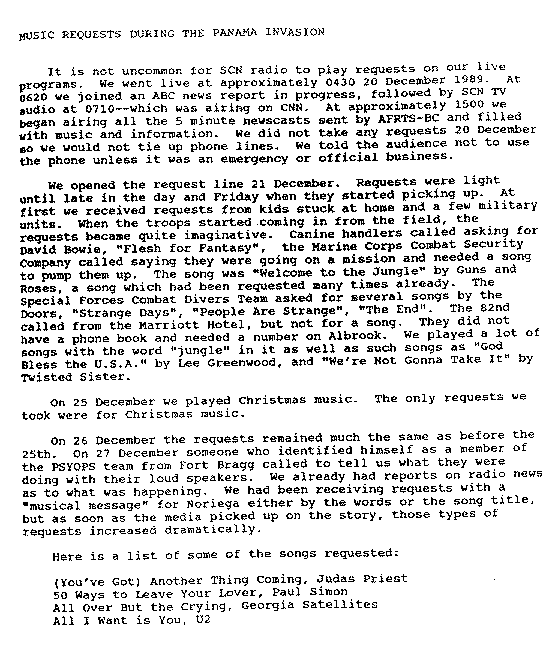
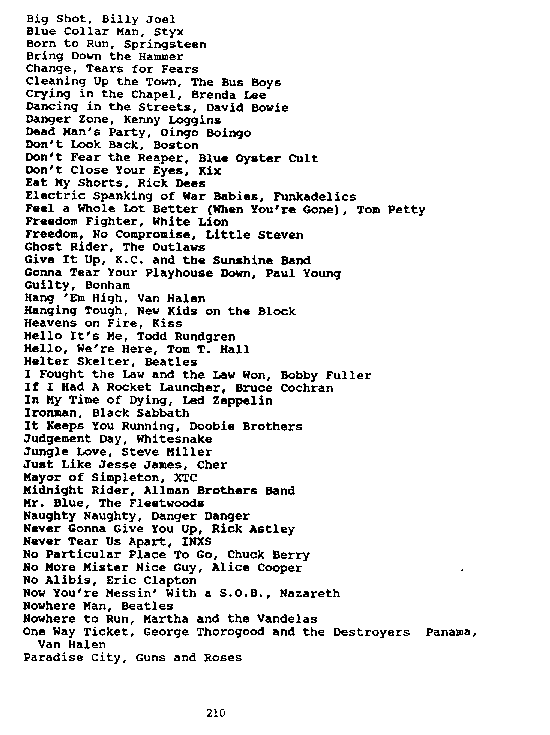
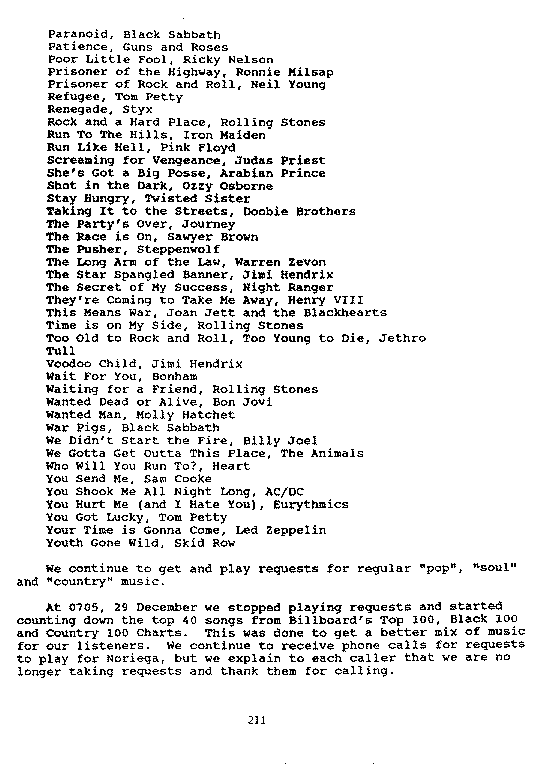
Happily for those of us interested in the musics of siege and torture, the National Security Archive associated with George Washington University has posted a copy of the playlist of songs requested by US troops to regale the General.

One can only imagine how much a man of his discerning taste must have enjoyed listening to Jimi Hendrix’ high-tweakin’ guitar on one of Rolling Stone‘s top 500 songs evah — Voodoo Child:

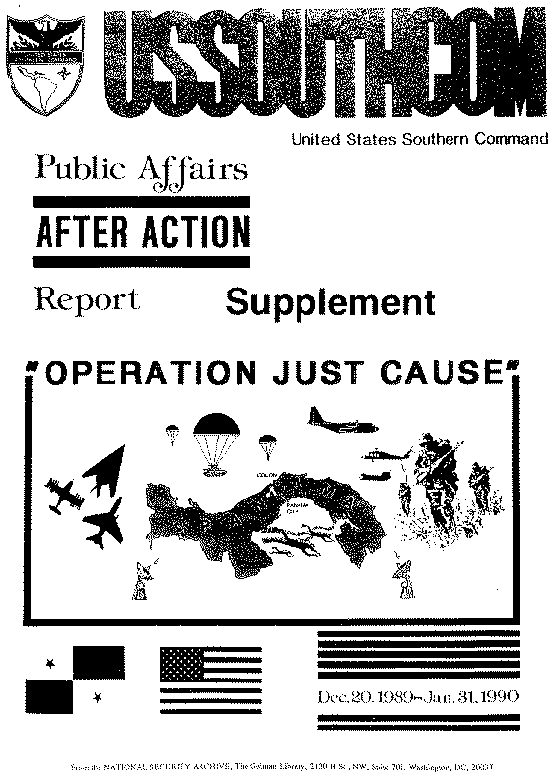
Oh, and so much more besides. For the full playlist, see here and here and here. Those selections are drawn from USSOUTHCOM’s After Action report on Operation Just Cause.

The Papal Nuncio’s residence would in essence be a diplomatic extension of the Vatican, wouldn’t it? Can you imagine the berobed monsignori tapping their feet to Electric Spanking of War Babies by the Funkadelics — or, with subtle religious overtones, War Pigs by Black Sabbath?

**

So, onwards to Jerusalem.

Today’s adhan or call to prayer in Jerusalem / al-Quds would have been sung out by the muezzin at 4:11am (Fajr) and again at 12:47pm, 4:27pm, 7:47pm and 9:17pm.

**

Under the title Mosque’s Loud Prayer Generates Mega-Decibel ‘Battle of the Bands’, the Jewish Press reports:

After the French Hill neighborhood of Jerusalem has decided to play very loud music, in defiance of the volume and disturbance of the sound of the muezzin at the mosque in nearby Al-Issawiya, two additional Jewish neighborhoods, Pisgat Ze’ev and Har Choma, have announced that they, too, will take up a similar approach. French Hill also decided to go with hard rock, and not Mediterranean tunes, as had originally been planned, because, as they put it, hard rock is more likely to deliver the message.

According to Yediot Jerusalem, the French Hill neighborhood has recently approached an amplification company with an order for four huge speakers to be directed at Al-Isawiya. As soon as the village muezzin will start his exceedingly loud prayer, it will be responded to with ear shattering Rock n’ Roll, letting local Arabs understand how disturbing the loud prayers have been to their Jewish neighbors.

French Hill, according to Wikipedia:

French Hill (Hebrew: HaGiv’a HaTzarfatit, Arabic: at-tel al-faransiya), also Giv’at Shapira is a neighborhood in northeastern Jerusalem. It is located on territory occupied during the Six-Day War in 1967, later annexed to Israel under the Jerusalem Law in 1980. The United Nations Security Council declared this law a violation of international law, and states that the Council will not recognize this law, and calls on member states to accept the decision of the council. The International Court of Justice stated in its 2004 Advisory Opinion that the Israeli settlements in the Occupied Palestinian Territory (including East Jerusalem and therefore also in French Hill) have been established in breach of international law. The European Union considers French Hill to be an illegal settlement in East Jerusalem.

**

Noise is in the hearts and minds of the hearers and beholders.

Or beauty, as the case may be.

It Seems the Oligarchs Distrust their own Creepy-state

Tuesday, July 10th, 2012

I previously made note of the emergence of an authoritarian Creepy-state element in American government, enjoying bipartisan popularity with this era’s predominantly Boomer elite politicians, CEOs and academic activists. Largely because this growing surveillance state is directed at controlling the rest of us and eroding the democratic and legal accountability of a self-imagined superclass.

Here’s a new (but unsurprising) wrinkle. The political-bureaucratic folks quietly building this incipient machinery of coercion already distrust and fear the men and women who are employed to run it. Evidently, the Rise of the Praetorian Class theory has been widely read.

US spy agency accused of illegally collecting personal data

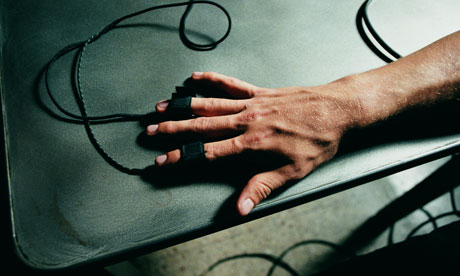
WASHINGTON — One of the nation’s most secretive intelligence agencies is pressuring its polygraphers to obtain intimate details of the private lives of thousands of job applicants and employees, pushing the ethical and legal boundaries of a program that’s designed instead to catch spies and terrorists.

The National Reconnaissance Office is so intent on extracting confessions of personal or illicit behavior that officials have admonished polygraphers who refused to go after them and rewarded those who did, sometimes with cash bonuses, a McClatchy Newspapers investigation found.

The disclosures include a wide range of behavior and private thoughts such as drug use, child abuse, suicide attempts, depression and sexual deviancy. The agency, which oversees the nation’s spy satellites, records the sessions that were required for security clearances and stores them in a database.

Even though it’s aggressively collecting the private disclosures, when people confess to serious crimes such as child molestation they’re not always arrested or prosecuted.

“You’ve got to wonder what the point of all of this is if we’re not even going after child molesters,” said Mark Phillips, a veteran polygrapher who resigned from the agency in late May after, he says, he was retaliated against for resisting abusive techniques. “This is bureaucracy run amok. These practices violate the rights of Americans, and it’s not even for a good reason.”

The agency refused to answer McClatchy’s questions about its practices. However, it’s acknowledged in internal documents that it’s not supposed to directly ask more personal questions but says it legally collects the information when people spontaneously confess, often at the beginning of the polygraph test.

Even though it is against the law as well as internal regulations, the NRO management have given themselves the green light in a self-investigation to keep doing it to their own employees and anybody going through a security clearance background investigation – a vast number of people, many of whom have or will someday have incredibly sensitive positions in the defense, intelligence and national security communities.

After a legal review of Phillips’ assertions, the agency’s assistant general counsel, Mark Land, concluded in April that it did nothing wrong. “My opinion, based on all of the facts, is that management’s action is legally supportable and corrective action is not required,” he wrote.

But McClatchy’s review of hundreds of documents – including internal policy documents, memos and agency emails – indicates that the National Reconnaissance Office is pushing ethical and possibly legal limits by:

-Establishing a system that tracks the number of personal confessions, which then are used in polygraphers’ annual performance reviews.

-Summoning employees and job applicants for multiple polygraph tests to ask about a wide array of personal behavior.

-Altering results of the tests in what some polygraphers say is an effort to justify more probing of employees’ and applicants’ private lives.

Read the rest here.
.
The charitable explanation is that all this is bureaucratic overreach motivated by tiny empire building and budget-padding in the age of  austerity, where cybersecurity is one of the few “growth” areas of discretionary spending for senior bureaucrats to pursue.
.
The cynical explanation is that these are blackmail files being compiled systematically and deliberately; to be used later to compel IC/DoD/DHS/DoJ employees to stick with an agency party line, intimidate and punish whistleblowers or use their official positions to engage in illegal misconduct to benefit politically influential VIPs. Like harassing American citizens or journalists critical of an agency or administration policy or special interests.
.
There’s few good reasons for the government to do this – and those few are all narrowly related to genuine and specific security concerns we have had to live with since WWII – but many bad ones.

On the inforced uniformity of religion

Thursday, July 5th, 2012

[ by Charles Cameron — when religion strongly influences politics — greetings on the Fourth of July ]
.

God and Politics UK


**

At least in the words of the Library of Congress exhibit, Religion and the Founding of the American Republic, the US we know today was conceived as a “Religious Refuge”:

The religious persecution that drove settlers from Europe to the British North American colonies sprang from the conviction, held by Protestants and Catholics alike, that uniformity of religion must exist in any given society. This conviction rested on the belief that there was one true religion and that it was the duty of the civil authorities to impose it, forcibly if necessary, in the interest of saving the souls of all citizens. Nonconformists could expect no mercy and might be executed as heretics. The dominance of the concept, denounced by Roger Williams as “inforced uniformity of religion,” meant majority religious groups who controlled political power punished dissenters in their midst.

Haven’t we had enough wars of religion? There’s much to be said for that idea.

Happy glorious Fourth to all my American friends!

**

The image above of the Palace of Westminster in London looks quite lovely and tranquil, and some of what people hear when they quiet themselves and listen to the “still, small voice” is of inestimable value, beauty and insight. But it is not always so.

As Roger Williams shrewdly observed:

enforced uniformity, sooner or later, is the greatest occasion of civil war, ravishing consciences, persecution of Christ Jesus in His servants, and of the hypocrisy and destruction of millions of souls

**

United Kingdom Come

You will perhaps understand, therefore, why I am less than enthralled by the idea of a particular opinion within Christianity “declaring the plans of heaven” over my country of origin — as suggested in the graphic immediately above this — or any other country, the United States included, and why I hope that, in Williams’ words:

a permission of the most Paganish, Jewish, Turkish or anti-Christian consciences and worship be granted to all men, in all nations and countries; and they are only to be fought against with that sword which is only, in Soul matters able to conquer, to wit; the sword of the Spirit–the Word of God

I wouldn’t mind seeing that idea take hold in Iran or Saudi, either. Yeah!

Consider:

Let there be no compulsion in religion. Truth has been made clear from error. Whoever rejects false worship and believes in Allah has grasped the most trustworthy handhold that never breaks. And Allah hears and knows all things. — Qur’an, 2: 256

If it had been your Lord’s will, all of the people on Earth would have believed. Would you then compel the people so to have them believe? — Qur’an, 10: 99

**

Besides which, having prayed often enough “Thy kingdom come” myself, I have to say I’m less than enthused to find the publicists of this particular outpouring of faith modifying the phrase to read “United Kingdom Come”.

What is this, the Cup Final?


Switch to our mobile site