zenpundit.com » reading

Archive for the ‘reading’ Category

Currently Reading…

Monday, March 14th, 2011

Making an effort this week to finish up books I have picked up or been sent to me by publishers, PR folks and authors, so I can review them….and two books pulled from the ominous antilibrary.

 Here’s what is currently on my desk and nightstand:

Reading and taking notes:


Grand Strategies by Charles Hill
Narcos Over the Border
by Dr. Robert J. Bunker (Ed.)
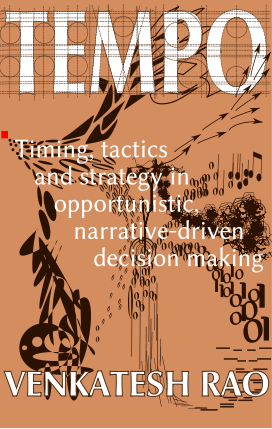
TEMPO
by Dr. Venkat Rao
Mind Wide Open
by Steven Johnson

This would be an interesting group of authors to put on a panel for a strategy-related question, such as – “How can we fix our AfPak policy?” – as you would get a high-level practitioner-policy wonk-cognition expert mix.

TEMPO is not yet available for sale, but Dr. Rao was kind enough to send me a PDF of his manuscript, which I am reading on my iPad along with another author’s manuscript and a screenplay, both of which are embargoed. I’m enjoying them all but reading most of them for review is slower going than just reading one for my own interest. I frequently end up taking detours because the authors bring up so many intriguing points. For example, Charles Hill has a section on Grand Strategies on Montaigne, the brilliant intellectual diplomat of the politically tumultuous French Renaissance and Father of the literary essay. Hill made a number of assertions, so I stopped, pulled a copy of The Essays ( which I have never read) off a shelf, flipped it open to a page, and started reading for and discovered that a) Hill was right and b) it will be a profitable use of my time to go back and read The Essays some day.

Next Up in the Queue:


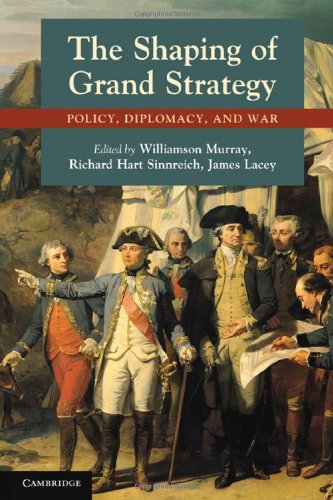
The Shaping of Grand Strategy: Policy, Diplomacy, and War by Drs. Williamson Murray, Richard Hart Sinnreich and James Lacey (Ed.)
Counterinsurgency by Dr. David Kilcullen

The first book I mentioned recently, the second is one I have had sitting unread for quite a while but I need to read for an article I started writing. Among practitioners and policy makers, Colonel Kilcullen is the George Kennan of COIN.

What are you reading?

Marginalia

Sunday, March 6th, 2011


The New York Times, which I read on my iPad, particularly the non-political news sections of the paper where the obnoxious spin is reduced and the content quotient is higher, had an article that I think will ring a bell with ZP readers:

Sam AndersonWhat I Really Want Is Someone Rolling Around in the Text’

One day in college I was trawling the library for a good book to read when I found a book called “How to Read a Book.” I tried to read it, but must have been doing something wrong, because it struck me as old-fashioned and dull, and I could get through only a tiny chunk of it. That chunk, however, contained a statement that changed my reading life forever. The author argued that you didn’t truly own a book (spiritually, intellectually) until you had marked it up.

….All of which means I’ve been feeling antsy over the last five years, as I’ve watched the inexorable rise of e-readers. I sympathize with the recent wave of public teeth-gnashing about the future of marginal notes. The digital book – scentless, pulp-free, antiseptic – seems like a poor home for the humid lushness of old-fashioned marginalia. You can’t even write by hand in an e-book – at least not comfortably, not yet. As John Dickerson recently put it on Slate, describing his attempt to annotate books on an iPad: “It’s like eating candy through a wrapper.” Although I’ve played with Kindles and iPads and Nooks, and I like them all in theory, I haven’t been able to commit to any of them. As readers, they disable the thing that, to me, defines reading itself. And yet I’ve continued to hope that, in some not-too-distant future, e-reading will learn to take marginalia seriously. And it looks as if that might be happening right now.

According to the marginalia scholar H. J. Jackson, the golden age of marginalia lasted from roughly 1700 to 1820. The practice, back then, was surprisingly social – people would mark up books for one another as gifts, or give pointedly annotated novels to potential lovers. Old-school marginalia was – to put it into contemporary cultural terms – a kind of slow-motion, long-form Twitter, or a statusless, meaning-soaked Facebook, or an analog, object-based G-chat. (Nevermind: it was social, is my point.) Samuel Taylor Coleridge, the undisputed all-time champion of marginalia, flourished at the tail end of this period, and his friends were always begging him to mark up their books. He eventually published some of his own marginalia, and in the process even popularized the word “marginalia” – a self-consciously pompous Latinism intended to mock the triviality of the form.

Incidentally, How to Read A Book is by Mortimer J. Adler. A classic 

Marginalia is of critical importance to biographers and historians studying controversial figures. We know far more about such disparate figures as John Adams and Joseph Stalin because they enthusiastically marked up their books and documents with sharp and brutally frank opinions, revealing the true feelings often masked to contemporaries. Stalin, who sometimes used a crayon, would mark certain passages with “ha ha!” which, far from being a sign of the dictator’s amusement indicated rage toward the author – sometimes with lethal consequences. Stalin’s rival and equally deadly disciple, Mao ZeDong scrawled erudite literary, scholarly, sometimes poetical, comments about philosophy and Chinese history that belied his taste for the maniacal ruin of a classical Confucian culture in which he was deeply versed.

Richard Nixon, who clinked toasts of maotais with Mao and Zhou ( mostly Zhou as Mao was seriously ill) during Nixon’s historic visit ran his semi-isolated presidency via marginalia he methodcally wrote on news clippings, memos and yellow legal pads all day long, which he sent to his “Lord High Executioner” H.R. Haldeman, who like Henry Kissinger, discreetly ignored Nixon’s angrier, stranger and more ill-considered notations while carrying out Nixon’s incisive or at least harmless instructions. Harry Truman, known for employing blistering profainity in private, was also capable of the searing marginal commentary favored by John Adams.

It isn’t just e-readers, iPads and PCs that have reduced marginalia. The culture of literacy is in a general decline in America and the “gotcha” nature of modern politics and the criminalization of policy differences have caused political figures to adopt a strategy of eschewing diaries, journals, letters and email on the advice of attorneys. Statesmen are following the old rule of Chicago alderman, “Don’t write it down when you can say it, don’t say it when you can nod, don’t nod when you can wink”. It’s a loss to history. We will know far more about Teddy Roosevelt’s true interior life or Richard Nixon’s than we will of Barack Obama’s. Very little that is recorded will not be, in part, artifice and marginalia is a poor strategy for artifice designed to craft an image or advance an argument.

As part of the diminishing cadre of marginalians, I like to mark up books with colored, ultra fine point, sharpies. Generally lighter hues so it won’t bleed heavily through the page. Occasionally, for especially important passages, maybe one or two a book, a highlighter is used so that in the future, I can lazily pull the book from the shelf and quickly flip to the paragraph in question. I tend to do a lot of underlining and bracketing; when I was younger, I “argued” more with the authors in the margins. Older now, I expand on their points whether I agree with them or not. The Kindle has the capacity to type in notes, but I have not used the function much because most of the books I have read on it are fiction.

What do you do with the margins of your books?

Maybe Shallow, Poorly Supported, Arguments Make Us Stupid?

Thursday, March 3rd, 2011

Nick Carr’s new book gets smacked upside the head in LRB by Jim Holt ( hat tip to Scott Shipman).

Smarter, Happier, More Productive

…This is a seductive model, but the empirical support for Carr’s conclusion is both slim and equivocal. To begin with, there is evidence that web surfing can increase the capacity of working memory. And while some studies have indeed shown that ‘hypertexts’ impede retention – in a 2001 Canadian study, for instance, people who read a version of Elizabeth Bowen’s story ‘The Demon Lover’ festooned with clickable links took longer and reported more confusion about the plot than did those who read it in an old-fashioned ‘linear’ text – others have failed to substantiate this claim. No study has shown that internet use degrades the ability to learn from a book, though that doesn’t stop people feeling that this is so – one medical blogger quoted by Carr laments, ‘I can’t read War and Peace any more.’

….It’s not that the web is making us less intelligent; if anything, the evidence suggests it sharpens more cognitive skills than it dulls. It’s not that the web is making us less happy, although there are certainly those who, like Carr, feel enslaved by its rhythms and cheated by the quality of its pleasures. It’s that the web may be an enemy of creativity. Which is why Woody Allen might be wise in avoiding it altogether.

Meanwhile, futurist Jamais Cascio asks “Is the Alphabet Making Us Stupid?”

Book Review: The Grand Strategy of the Byzantine Empire by Luttwak

Monday, February 14th, 2011

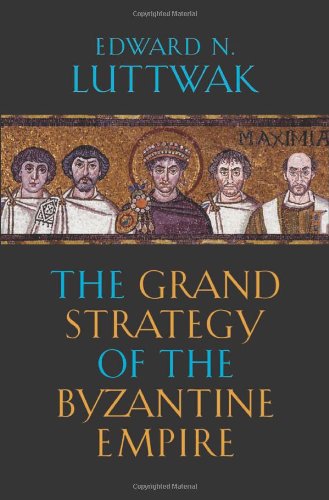
The Grand Strategy of the Byzantine Empire by Edward Luttwak

A quarter century in the making, eminent and controversial strategist Dr. Edward Luttwak has produced a tour de force work of scholarship that illuminates the little known (to laymen)  military and diplomatic vision of the Byzantine Empire while making a case for adopting some of Byzantium’s strategic posture to adapt to the challenges of today. A book intended to provoke as much as inform the reader, Luttwak’s epilogue, “Conclusion:Grand Strategy and the Byzantine ‘Operational Code”, which synthesizes the best elements of leading schools of strategic thought, is so good that it merits a separate printing of it’s own.

Luttwak’s central idea is that the Hellenic and holy Orthodox Byzantines, who forever saw themselves as “the Romans”, abandoned the grand strategic posture of the Roman Empire whose mighty legions were optimized to smash heavy infantry into the enemy, seeking not just a decisive victory, but the total destruction of the enemy. Facing a sophisticated peer rival in Persia and the endless steppes that vomited up unending waves of invading Huns, Avars, Pechnegs, Slavs, Bulghars, Bulgars, Turks and Mongols, eventually menaced by an ideologically motivated Islamic enemy, the Byzantines sought to conserve their strength by avoiding decisive battle.

As the position of the Empire meant that one destroyed enemy might be replaced by a worse successor, the Byzantines crafted a grand strategy that maximized stratregic alternatives to wars of attrition that the small, highly trained, well-armed, tactically versatile and irreplaceably expensive Byzantine army could ill afford. Diplomacy, espionage, bribery, assassination, recruitment of foreign proxies, strategic raiding, naval supremacy, manuver warfare and cunning strategems were all employed in preference to engaging in decisive battle. Today’s enemy might be tomorrow’s ally was a foremost consideration for the Byzantines, who took great care to lay down hard-won military wisdom in handbooks and manuals like The Strategikon or  De Re Strategica.

Strengths and Weaknesses:

Where you sit in reading The Grand Strategy of the Byzantine Empire is likely to determine where you stand on it. 

Luttwak has written a very interesting book about a historical subfield in which he himself is not an expert but has infused it with distillations of professional insight regarding strategy and warfare that no Byzantinist scholar and only very few military historians could have brought to bear. And importantly, never have tried to do so. Luttwak’s commentary on each of the surviving Byzantine military manuals, some only recently translated, for example, while repetitive for a lay reader is an important service for students of war and military strategy.

The empire lasted an exceedingly long period of time, as the Byzantines themselves reckoned it, from the 8th century BC to 1453 when the last Emperor Constantine died heroically fighting the final onslaught of the Ottoman Turks a mere 39 years before Christopher Columbus discovered the New World.  Luttwak is not a historian and makes no attempt to approach the subject as a historian would – something that might require multiple volumes or a very superficial treatment – and makes selections from Byzantine history to illustrate thematic points regarding strategy or, as with the digressions on the composite recurve bow and training of mounted archers, the complex relationship between technology, economics, military tactics and strategy.  To the reader interested in strategy and military history, Luttwak’s approach is efficient and sensible; for those interested in a comprehensive understanding of the Byzantines it makes for a highly idiosyncratic reading.

Nor does Luttwak make any pretense of bowing to rhetorical academic conventions. He does not soften his language anywhere, referring for example to the later wars between the Empire and Arab potentates as “jihad” and “crusade” and draws clear connections between the wars of Byzantium and the wars today with al Qaida, the Taliban and Iraq or the continuity between old  Persia and Ahmadinejad’s Iran. Luttwak freely injects modern terminology into archaic subjects and generally writes as he pleases, meandering whenever details of a topic interest him. His endnotes though, are a rich source of further commentary and observations and the bibliography runs for an additional seventeen pages.

Strongly recommended.

On the Mythic and the Historic

Thursday, February 3rd, 2011

My amigo Sean Meade ponders:

Notes: The Problem with Sparta

So here are some of the ideas and notes, for posterity.The Problem with Sparta (and Greece)

References
300 (original graphic novel by Frank Miller and better-known movie)
Gates of Fire, Steven Pressfield
The Peloponnesian War, Thucydides
A War Like No Other, Victor Davis Hanson
Sailing the Wine-Dark Sea, Thomas Cahill

The fiction glorifies Sparta while the non-fiction is more critical than laudatory. I was struck by how much the fictional Sparta, in three stories I really love, did not match the history I’d been studying.

Did Pressfield make his story more palatable to his readership by soft-pedaling Helot slavery, radical conservatism and aristocracy, oligarchy and homosexuality and pederasty?

We moderns are very critical of the real, historical Sparta. Insofar as it stands in for Greece in the fiction above, it’s an inaccurate portrayal. To say nothing of all the problems with our view of the Golden Age of Athens…

Ah, the tension between history and myth. 

Admiration for ancient Sparta was imprinted into Western culture because Sparta’s Athenian apologists, including Xenophon but above all Plato, left behind a deep intellectual legacy that includes a romantic idealization of Sparta that contrasts sharply with the criticisms leveled by Thucydides against Athens in The Peloponnesian War. The Melian Dialogue remains a searing indictment against Athens 2,500 years later but no equivalent vignette tells the tale of the Helots living under the reign of terror of the Spartan Krypteia. Plato’s Republic upholds oligarchic authoritarianism inspired by Sparta as utopia while Athenian democracy is remembered partly for the political murder of Socrates and the folly of the expedition to Syracuse. Somehow, ancient Athens lost the historical P.R. war to a rival whose xenophobic, cruel, anti-intellectual and at times, genuinely creepy polis struck other Greeks as alien and disturbing, no matter how much Sparta’s superb prowess at arms might be applauded. 

The fact that the vast majority of the ancient classic texts were lost, or as Dave Schuler likes to note, very selectively preserved and edited – at times, invented – by later peoples with agendas, may account for some of the discrepancy.


Switch to our mobile site