zenpundit.com » 2012 » July

Archive for July, 2012

Recommended reading: the meat

Sunday, July 22nd, 2012

[ by Charles Cameron — a couple of courteous debates on topics of considerable interest ]
.

I’d like to draw your attention to two recent conversations:

The first begins with Mark Jacobsen‘s Armed Forces Journal piece, How to teach about Islam, and continues with a guest post from Tim Mathews at Abu Muqawama, Insha’Allah they learn something useful. Mark then responds to Tim at his own blog, Building Peace.

Mark lays out the problem:

Much of the debate now hinges on which voices educators should trust. The question is no longer “What is Islam?” but “Who should teach about Islam?” Government agencies struggle to answer that question, because they often feel compelled to choose between two camps: those who believe extremism is intrinsic to Islam itself, and those who see no relationship whatsoever between Islamic doctrine and extremism. Although much thoughtful and scholarly discussion of Islam does exist, it is these two camps who now dominate the popular conversation.

Government agencies will never escape their dilemma if they continue searching for an authority who can speak for “true” Islam. Islam is a deeply contested religion, even among Muslims, and the arguments of both extremes are shot through with truth, falsehood, exaggerations, omissions and assumptions. Much of the debate about Islam in the United States is intellectually dishonest. Rival voices are less concerned with sincere discussion than with heavy-handed tactics to dominate the conversation, such as efforts to control government classrooms. The only way out of this dilemma is also the most intellectually honest one: to understand the battle for American perceptions of Islam, to map out the topography of the debate and to teach students to critically evaluate rival arguments.

Tim responds:

As should be clear, I agree with problems that the author identifies in the US. However, I fail to see what this has to do with the issue of educating our personnel. We are not training our personnel to be foot soldiers in a culture war fought on cable television and weblogs in the United States. We are training our personnel to conduct operations in foreign countries.

[ … ]

The problem that he identifies is not relevant to preparing our personnel for deployments to conduct, and provide support for, operations in majority-Muslim countries. What the author has advocated is a program to help our educators avoid being pulled into battles of a culture war on US soil and, along the way, educating our personnel. The primary focus should be educating and the secondary focus on mitigating public pressure from fringe organizations.

Mark’s response:

I’m very glad to see your thoughtful response to my article. More than anything, I had hoped to spark some discussion about how Islam is taught in various government agencies, so am glad to see you carrying the discussion forward.

[ … ]

One reason you might disagree with aspects of my article is because you viewed it primarily through the lens of preparing deploying soldiers. That is an important part of what I’m writing about, but I actually intended the article to encompass a much broader range of government needs. Government employees have many different reasons they might need to understand something about Islam. Congressmen and their staffs are trying to make sense of the alleged “shariah threat” and calls for anti-shariah legislation; law enforcement agencies and the FBI need a way to understand and delineate between “moderates” and “extremists”, so they can hone in on real threats while respecting the civil liberties of ordinary Muslims; military commanders concerned with preventing the next Ft. Hood want to know how they can recognize extremist ideology; government agencies involved in any sort of outreach to Muslim communities struggle to find partners they can work with, because the largest American-Islamic organizations that claim to speak for American Muslims are tarnished by alleged links to extremism and terrorism.

All three pieces are worth reading in full — it was hard to pull quotes that did any of them justice, they’re all packed! And FWIW I do think Mark is right in ranging beyond the constraints of “preparing our personnel for deployments” — Tim’s more focused concern — because the war of ideas is won or lost as much in terms of how the US is perceived WRT Islam as it is by the behavior of troops, village by village, “in the field”.

**

The second begins with a David Briggs piece in Huffington Post, Is It Time to Reconsider the Term Islamist?, which leads Daveed Gartenstein-Ross and Lauren Morgan to respond at Gunpowder & Lead with Islamism in the Popular Imagination — which in turn generated Bernard Finel‘s post On Islamists and Rick Santorum. Daveed then comes back with Islamists and Rick Santorum: A Response to Bernard Finel.

I’m not going to quote Briggs, whose piece strikes me as light-weight, except to note that he introduces the question of comparisons between Obama and Rick Santorum (potential “Christianists”) with “Islamists”:

At this year’s National Prayer Breakfast, President Barack Obama said his policies were grounded in his Christian beliefs. In a 2008 speech, former GOP presidential contender Rick Santorum said America was in the middle of a spiritual war in which “Satan has his sights on the United States of America.”

Are Obama and/or Santorum Christianists?

The answers to those questions would depend on how the term is defined. But it is unlikely you will hear any Christian politician or activist referred to in that way.

What American and western audiences are increasingly hearing, however, since the political and social upheaval that accompanied the Arab spring, is the term Islamist.

Daveed and Lauren:

You would be hard pressed to find anything beyond a few fringe commentators who are worried about Islamism because politicians representing this movement refer to Islamic principles in their rhetoric. Rather, it is the specific relationship between religion and state that worries observers. (I mean, really, does Briggs think that Obama will make canon law the law of the land if given a second term?)

Briggs bolsters his case by quoting Mansoor Moaddel, an Eastern Michigan University sociologist, as saying that in his interviews, he found that “‘in some respects, Mr. Santorum is more extremist’ than leading figures of Egypt’s Muslim Brotherhood.” Nor is Briggs the only Western commentator to fatuously compare Santorum to Islamic extremists. To actually approach the claim being made by Briggs and others — that Islamist politicians possess an agenda that is less extreme than that of Rick Santorum — a better approach is to look at the practice in Middle Eastern states, as well as the policies advocated by Islamist politicians with significant audiences (as opposed to mere fringe players). That is what we do in this entry.

And do they indeed do — detailing with bullet points and commentary the practical behaviors of a variety of Islamic nations in respect to apostasy, blasphemy, the rights of women, and gay rights in the rest of their lengthy and instructive piece.

Enter Bernard Finel, who draws a fine distinction:

GR argues convincingly that policies put in place by Islamist parties throughout the Middle East are more extreme than Santorum. And indeed, on issues like religious freedom, women’s rights, and gay rights, GR is quite correct. Islamist regimes are worse than anything Santorum has proposed.

But I’d argue this is an apples to oranges comparison. Santorum’s limits are defined, I think, more by the limits imposed by American institutions rather his ideology per se. In other words, GR is comparing institutionally unconstrained ideological positions with those heavy constrained by institutions. It actually is not at all difficult to find actors on the right who would like to see religious freedom severely curtailed. Indeed, there is even a “Constitutional theory” out there among right wingers than Muslims should not receive First Amendment protections because either Islam is a “cult” or because it was not extant in any significant way in the United States when the Bill of Rights was ratified.

I’ll get into the issue of “actors on the right who would like to see religious freedom severely curtailed” in an follow up to this post — and touch on the usage “Christianist” there also — here, I’ll just say that Finel is articulating something I’ve “felt but not thought” or perhaps “thought but not articulated” myself quite a few times, and while I’m not entirely satisfied with his phrasing about “constraint by institutions” I think there’s a serious point in there, and I’m glad to see it surfaced.

Back to Daveed:

In comparing the relative extremes of Santorum versus those of Islamist parties, we were not trying to offer a moral judgment on the relative righteousness of those two actors (to be clear: we use “actor” in the loosest possible sense here, since Islamist politicians are by no means a unified actor). Rather, we were comparing exactly what we have just specified: the policies Santorum has advocated or implemented versus those that Islamist parties have advocated or implemented. It is true that institutional constraints play a role in defining said policies, but our goal was illuminating policies that are likely to have an impact on anyone’s life, and not judging Santorum’s “heart of hearts.” Hence, it is a direct apples to apples comparison of what policies are advocated by these two different actors. It would only be an apples to oranges comparison if our goal were moral judgment.

Fair enough: then there are at least two kinds of comparisons to be made… one between policies advocated by the respective parties, and one between the political realities constraining those whose ideals may be comparable.

**

Again, with such rich material it is difficult if not impossible to pick quotes without cherry-picking them — and I must repeat that my intention here has not been to summarize these debates so much as to lead you into them…

Finel actually has a further post today in which he characterizes Daveed (and Laurel) as making “an ill-conceived and pointless attempt to haul Rick Santorum into the mix” on the way to another discussion. For the record, it was Briggs, not Daveed and Laurel, who introduced Santorum into the discussion.

I’ll have two follow-ups to this post, one adding a couple of points to the Gunpowder & Leaf / Finel discussion in regard to “Christianism” and the theological underpinnings of a contemporary movement for church-state fusion, the other adding a couple of other intriguing details to the mix.
To be or to do

Sunday, July 22nd, 2012

[ by Charles Cameron — to be or to do: this one’s for Scott ]
.


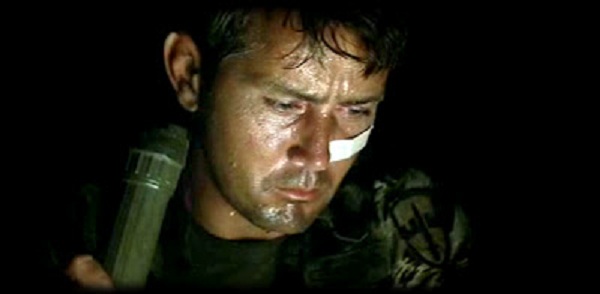
Martin Sheen as Capt. Willard in Francis Ford Coppola’s Apocalypse Now

**

Of course, Col. Kurtz‘ end in the movie is more than a little different from Col. Boyd‘s — but one wonders whether John Milius was aware of the Boyd quote when he wrote that particular scene.

The perils of juxtaposition: Aurora

Saturday, July 21st, 2012

[ cross-posted from SmartMobs – this post is not about the tragic Aurora shooting, but about internet advertising mechanics ]

Our hearts go out to all the bereaved.


.

If you know me & my Hipbone project, you know I’m always on about juxtaposition as a means of generating a sort of stereoscopic depth of understanding from two similar — or opposite — ideas, images etc.

And yes indeed, the juxtaposition of ideas and the creative leaps that juxtaposition generates are at the heart of the Sembl game approach that Cath Styles and I are prototyping.

-- image: board for an iPad Sembl game + detail of single move

But look, you need to have some sense of context.

And neither current algorithms nor remote humans seem to be terribly good at this.

**

aurora-boutique

The Celeb Boutique tweet above was posted when the word Aurora started trending after the recent awful cinema shooting, and was up for an hour before someone realized how inappropriate it was and took it down. In subsequent tweets, the boutique apologized and noted “our PR is NOT US based and had not checked the reason for the trend…”

I think that’s extremely unfortunate, but somewhat understandable: human error, outsourced.

The humans in question should have been as savvy as Paul Coelho, who counseled (just a day earlier, if I’m getting my dates right) as follows:

coelho-google-before-you-tweet

**

Then there was the Christian Science Monitor‘s article, Colorado shooting: A rare glimpse into Mitt Romney’s Mormon faith, which showed up on blog-friend Critt Jarvis‘ monitor with this ad:

Again, that’s unfortunate — but the CSM’s ads are presumably chosen by algorithm, and I wouldn’t know where to send an algorithm to repent if I met one and it was sincerely apologetic…

The CSM website does offer us humans an opportunity to object to ads we find tasteless and inappropriate, however:

The Monitor is committed to showing only those ads that meet our standards for appropriate content. These particular ads are sold by internet advertising partners who share the revenue with The Christian Science Monitor. We have implemented filters with them that are designed to prevent unacceptable advertising from showing on the site. If you feel an inappropriate ad is being displayed, please contact us immediately using the form below. Ads that violate our acceptance standards will be removed from the site and our filters will be adjusted to help prevent a recurrence.

So humans can backtop the algorithms when they play foul… that’s good.

**

But all this just reinforces my appreciation for Cath Stylestweet last week, after she met with Mel from Serena (neat video, btw!):

sembl-turing-test

There’s still no machine substitute for human wit and wisdom.

Two annexes to my post: It’s an abomination!

Saturday, July 21st, 2012

[ by Charles Cameron — finding feedback loops in blindspots, truths in symbols, strength in ideas ]
.

photo credit: Mobile News UK

.

It is in the nature of analogical thinking that it moves sideways, or more precisely, in honeycomb fashion, rather than forwards — and so it is that my just completed post It’s an abomination! leads me to two other considerations:

**

My first is to compare the situation of the Pakistani gentleman preparing and selling flags for burning

The man who dominates much of the supply chain of American flags to religious groups, 30-year-old Mamoon-ur-Rasheed – who’s been publishing anti-American placards and hand-made stars and stripes since his school days, when he was angered by the Clinton administration’s sanctions on Pakistan following its nuclear weapons testing in 1998 – is now remarkably dispassionate about his services, as well as about the short shelf-life of his flammable goods.

“We work hard for our product, and we get paid for our product,” says Rasheed, clad in a camouflage baseball cap and seated behind a desk that takes up most of the space in his eight-by-six-foot office in Gulashan-e-Iqbal, one of the city’s oldest working class neighborhood.

“So what if it burns? The purpose of the flag is to last for an hour. It’s unfortunate, but if the demand is for an hour, then the supplier must meet such demand too,” he says.

— with the no less entrepreneurial fellows in Cambodia who capture birds for the express purpose of selling them to those who wish to set them free:

Merit release — procuring animals that are about to be slaughtered and releasing them back into the wild — is a tradition practiced, to different degrees, by various Buddhist groups each year. It sounds like a good — and yes, meritorious — idea, but you might want to think twice before trying it. Why?

Well, as Conservation Magazine reports, hundreds of thousands of birds are caught in Asia each year just so they can be bought for merit release, putting them through the unnecessary stress of catching them just to be set free again. But there’s more. Many of these birds are infected with avian flu virus and other pathogens, and they can infect other birds, animals and people when they’re released. According to the study, published in Biological Conservation, 10 percent of the Cambodian birds the researchers tested were infected with avian influenza. “The presence of pathogenic viruses and bacteria among birds available for merit release is a concern both to wild bird populations and to humans involved in the trade,” the authors write.

The lesson here being that there are always more things going on than catch the eye, and that feedback loops in your blindspots are liable to getcha

**

My second is to compare Coleridge‘s observation about symbols:

On the other hand, a Symbol is characterized by a translucence of the Special in the Individual or of the General in the Especial or of the Universal in the General. Above all by the translucence of the Eternal through and in the Temporal. It always partakes of the Reality it renders intelligible; and while it enunciates the whole, abides itself as a living part in that Unity, of which it is the representative.

with the quote from Anais Nin that I referenced recently in relationship with Marisa Urgo‘s comment on Zawahiri:

The personal, if it is deep enough, becomes universal, mythical, symbolic…

And here the moral is that words can at times cut deeper than sticks and stones — in the words of that 2006 National Strategy for CT I just quoted, that winning the War on Terror means winning the battle of ideas — or as another poet, Muriel Rukeyser famously put it, that:

The universe is made of stories, not of atoms.

It’s an abomination!

Saturday, July 21st, 2012

[ by Charles Cameron — the perils of adding scriptures to scripture, tearing or burning them — and flags, paper money too ]
.


.

It may be that the last time you used the word abominable it was in relation to a snowman. It’s not a word that’s frequently on my tongue, I have to admit, but an Israeli MK apparently used it — or it’s Hebrew equivalent — to describe the New Testament, which he was in the process of ripping up.
.


.

Shades of Pastor Jones burning a copy of the Quran!

**

The thing is, when you have a sacred scripture it’s delimited, it’s hands-off! And if someone else comes along and adds a slim volume or two, it’s an abomination, almost by definition, sight unseen.

Thus the New Testament is an abomination to Knesset member Michael Ben Ari, according to YNet:

“This abominable book (the New Testament) galvanized the murder of millions of Jews during the Inquisition and during auto da fe instances,” Ben Ari said adding that “Sending the book to MK’s is a provocation. There is no doubt that this book and all it represents belongs in the garbage can of history.”

And please note, I am definitely not suggesting that Ben Ari is representative of all Jews — nor, for that matter, Pastor J. Grant Swank of all Christians. Yet from Swank’s perspective, the Tanakh and New Testament are scriptures, but, and I’m quote him:

Obama’s so-called holy writ is the abominable Koran.

The Qur’an is a later scripture, neh?

And Swank’s tirade gets better. Still speaking of the President of the United States, he continues:

His hope for eternity is unknown; but if he becomes a suicide bomber for Allah, he will be guaranteed pronto a score of virgins for everlasting. His hope for the present seems to be his reliance upon Islam’s Koran furthered by his clandestine support of Islam World Rule via czars and a shadow government given to overthrowing our Republic.

And then on the other side of the political aisle there’s Mitt Romney‘s Latter-day scripture, The Book of Mormon, which bills itself as Another Testament of Jesus Christ. It too has been considered an abomination.

I don’t know if people still use the word much when talking about the Book of Mormon, it’s considerably less controversial these days than the Qur’an — but abominable was what Arthur Cleveland Coxe called it in his 1855 Sermons on doctrine and duty, writing of Joseph Smith:

an obscure and illiterate individual, in our great West, was busily forging the abominable “Book of Mormon,” which, fourteen months later, he foisted into the world…

People really don’t like other people making add-ons to their scriptures, do they?

**

Scriptures — and flags.

Look, I weep for a religion some of whose adherents kill when their scripture is burned or defiled, and I am glad for a religion that condemns such killings. As you might expect, there are tearers and burners in all three Abrahamic religions, and all three religions have those who object to such tearings and burnings.

And yes, the ratios of religiously-provoked modes of destruction vary across religions and across centuries…

**

But what of flags?

I raise the issue because a fellow in Pakistan who manufactures flags for burning, Mamoon-ur-Rasheed, was in the news recently, and made this point:

Isn’t flag burning positive, compared to American atrocities? And also compared to the Taliban? We’re not attacking mosques. … We’re not targeting American embassies. We’re not killing anyone. Nor are we flying drones around, we’re just burning flags, mere pieces of cloth, and then we’re done. It’s over.

Setting aside Rasheed’s political opinion, Matthew Wallin at American Security Project asks the right questions in the security context:

Is it really over after the deed is done? Does anger against the United States dissipate? What do people do after they have gone home after a flag burning?

A key question to answer is: how much of these protests are translating into actual violence? This is an element that must be understood to determine if flag burning is simply a form of protest, or if those involved are planning more sinister actions. We must also seek to understand to what degree these protests endanger traditional diplomacy efforts and the challenges faced by members of the Pakistani government attempting to pursue diplomatic cooperation with the United States. If they are harmless expressions of anger and frustration, we have an obligation to understand this.

But that’s really just the beginning of a much wider-ranging discussion, philosophically speaking, which Rasheed’s comments also address:

what’s the relation of a symbolic object to the reality is symbolizes? If a flag is hurt, does it hurt the United States? If a Bible is burned, does it hurt Christianity? God?

If the word “spider” was an actual, live spider, arachnophobes couldn’t read the rest of this sentence… Is Picasso’s signature on a two dollar check worth as much as his signature on a check for a thousand bucks? Come to that, when paper money goes up in smoke when a house catches fire, where does the value go?

And yet, and yet, we are very attached to our flags, our scriptures — and our money.

**

The poet Coleridge in his Statesman’s Manual suggests:

On the other hand, a Symbol is characterized by a translucence of the Special in the Individual or of the General in the Especial or of the Universal in the General. Above all by the translucence of the Eternal through and in the Temporal. It always partakes of the Reality it renders intelligible; and while it enunciates the whole, abides itself as a living part in that Unity, of which it is the representative.

So. Do we find this translucence in our scriptures, in our flags, in our money, in our fellow humans — in the world around us?


Switch to our mobile site