zenpundit.com

Recommended Reading & Viewing

March 10th, 2013

Top Billing! Scholar’s Stage –The Power of Ideas in Antiquity and What Senator Paul Accomplished 

….Rand Paul is not Daniel Webster. But the comparison is an important one: it gives us a sense of just how far the goal posts have been moved. There was once a time when Senators and Representatives were expected to plead their case before the American people on the House and Senate floors.  Debate and discussion by leading statesmen in public forums was considered an essential part of popular democracy. Through such discussion Congressmen were held accountable and through this forum Congressmen would communicate to their constituents, and at times, to the nation. There is a strong correlation between the decline of popular discourse on the Senate and House floors and the eclipse of the national legislature by the technocrats of a bloated executive branch. 

By bucking all of these sad trends Senator Paul has done our Republic a great favor. This is true even if the critics are correct. Senator Paul may be an unprincipled scally-wag who is using this filibuster purely for personal advantage, but this does not curtail his accomplishment. Senator Paul has proven than a rising politician can publicly declare his opposition to the establishment consensus and not be marginalized by doing so. Indeed, as the massive wave of twittering that accompanied the senator’s stand suggests, Rand Paul has benefited, not suffered, from his decision to take the ruling class consensus head on.

It is good to see T. Greer back after a long hiatus

Small Wars Journal (Octavian Manea) –The American Way of War after COIN’s Waterloo: An Interview with Fred Kaplan 

OM: Can we talk and point to a “Petraeus Generation”? An Accidental Generation? Or by design? I mean most of “the insurgents” (the COINdinistas) shared a common cognitive map or were influenced to some extent by the same “big ideas”: the classic COIN masters (Galula, Thompson, Kitson, Larteguy), classic COIN campaigns (Malaya, Vietnam) or by the “moot-wah” wars of the 1990s.

FK: The key thing is that an entire generation of officers has fought, and trained for, COIN-style wars – and no other kind. This is bound to have some kind of enduring impact. Also the fact that the Soviet Union has since imploded means that, much as some might like to do so, the military can’t go back to the firepower-intensive wars (“the American way of war”; there’s no logical enemy for them. Hard to say.) Some of these officers were influenced by the “big ideas,” but the bigger influence was their experience. As far back as the mid-’80s, when the generals of the day were referring to any conflict smaller than major combat operations as “Military Operations Other Than War” (moot-wah), the junior officers were engaged in precisely those kinds of conflicts (Salvador, Somalia, Bosnia, etc.) – and they sure felt like war to the officers. Iraq and Afghanistan, especially from 2007 on, solidified this sense.

I’m a fan of Octavian’s interview series on COIN – hope he continues.

INTELWIRE.com – Inspire 10: Still Sucks 

I guess I’m never going to get to write a self-congratulatory post about how I got a shout-out in Inspire, because I still don’t have anything much good to say about it.

Issue No. 10 of the English-language vehicle for Al Qaeda in the Arabian Peninsula just came out, and while it’s crawled back from the precipice of copy-editing collapse hinted at in its last issue, it’s still a sad little effort that gets taken awfully seriously.

The “hit list” of targets named by Al Qaeda and friends repeatedly over the years is neither fresh nor surprising. The recycled content remains recycled, the original content remains uninspired. The flashy graphics remain flashy.

The part of the publication that most concerns U.S. counterterrorism officials is, of course, “Open-Source Jihad,” AQAP’s how-to guide for “lone wolf” terrorists. Regular readers will recall that this feature was self-parody from the beginning, and it’s descended further into absurdity with this issue’s advice that Western mujahideen should try to cause traffic accidents and carry out ninja-style assassinations. And no, I’m not joking, that’s really their advice….

The Sophmores of jihad…..

Duck of Minerva – ‘Rodman-gate’ Can ‘Useful Idiots’ please stop shilling for North Korea (Robert Kelly) and Is the Weakness of the Liberal Order Overblown (Josh Busby)

Feral Jundi – Soviet soldier missing for 33 years, found alive in Afghanistan

Not the Singularity (Bob Morris) –Clay Claiborne banned from Daily Kos for Speaking the Truth about Syria 

Eeben Barlow – “The Specialists” 

USNI Blog – Guest Post by LTJG Matthew Hipple: From Epipolae to Cyberwar 

Steven Pressfield Online (Shawn Coyne) –The Difference Between Self-Discipline and Self-Flagellation

Boing Boing – Invisibility Cloak Demoed at TED2013 

The Volokh Conspiracy –En Banc Ninth Circuit Holds That Computer Forensic Searches Are Like “Virtual Strip Searches” And Require Reasonable Suspicion At the Border

The National InterestSpengler’s Ominous Prophecy

WPR (Dr. Steve Metz) –Strategic Horizons: Iraq’s Biggest questions still Unanswered for US 

Aeon (James Palmer) – The Bailinghou 

Scientific American (Heather Pringle) –The Origin of Human Creativity Was Surprisingly Complex 

The Atlantic (Ta-Nehisi Coates) –‘Lucrative Work for Free Oportunity’

Recommended Viewing:
 

Honor, Shame, Scandal and Integrity

March 8th, 2013

[ by Charles Cameron — reflecting on the anthropology of honor – shame, its relevance to cover ups of many kinds, and its potential for impact in our search for a more peaceable modus vivendi ]
.

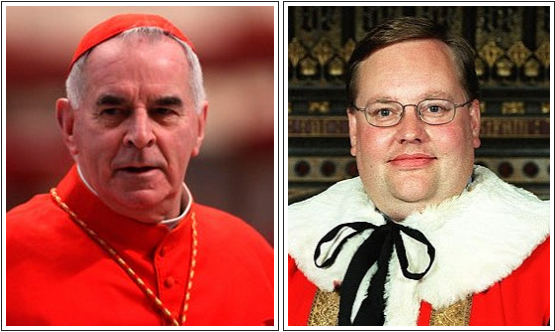
Cardinal O'Brien & Lord Lennard, their images as juxtaposed on the Cranmer blog


**

Recent political news in the United Kingdom, from The Telegraph:

Liberal Democrat leader Nick Clegg has been forced to admit that his office knew for years of claims that a senior party figure might be sexually molesting volunteers and staff.

The Deputy Prime Minister changed tack in a statement on Sunday evening over the sex scandal which is engulfing his party.

He broke into the end of his holiday to admit for the first time that his office had been aware of the allegations surrounding his former chief executive Lord Rennard since 2008. But he said he was personally unaware of the claims.

Nick Clegg admits his office knew of Lord Rennard rumours for five years

**

In today’s Wired, concerning a cover-up in the US Air Force:

A military jury found Lt. Col. James Wilkerson guilty of groping a sleeping woman’s breasts and vagina. But the Air Force wasn’t done with the “superstar” F-16 pilot. It reinstated Wilkerson to active duty and wiped away his conviction — but, to save face, is pledging not to promote him to full colonel.

[ … ]

Now the embarrassed Air Force is looking for a face saving way out of its institutional mess. Its answer thus far, reports Stars & Stripes, is to remove Wilkerson’s name from its promotions list. There’s an opportunity for Wilkerson to appeal the decision.

Air Force Accountability for Sexual Assault: Not Promoting Convicted Officer

**

And concerning Lockheed and China, a short while back from emptywheel:

I’m just wondering out loud here: what if China did more than just steal data on the F-35 when it hacked various contractors, and instead sabotaged the program, inserting engineering flaws into the plane in the same way we inserted flaws in Iran’s centrifuge development via StuxNet?

[ … ]

I don’t know that we would ever know if this clusterfuck was caused with the assistance of China. It’s not like Lockheed would publicize such information, just as it asked for another $100 billion. And I don’t want to underestimate the defense industry’s ability to screw up all by themselves.

What if China Not Just Hacked — But Sabotaged — the F-35?

**

I think one of the least appreciated parts of our human make-up is what anthros call the honor-shame system. It considers the honor of a larger group — the family, the regiment, the city, the nation, the corporation, the church — as of overriding importance, with personal considerations clearly secondary. And by honor I mean the respect with which the rest of society views it.

That’s the system that gives us “honor killings” in a swathe of countries, and in modified western form it’s also at the root of every cover-up, every attempt by hacks and flacks to put a good face on things — and it’s very much something that investigative journalism exists to uncover, just as PR attempts to cover it up.

To my mind, this is one of the big battlefronts in the world today, comparable perhaps to the battle post-Descartes between “enlightenment” and “superstition”. And when there’s murky business to cover up or admit to, corporations are often slower than individuals to ‘fess up — if only because the stock market favors appearances rather than realities. Until the bubble bursts.

And much the same is true for politicians and the electoral market, and for churches and the market in faith.

**

My mentor Richard Landes believes honor-shame is a large part of the battlefront between “the Israelis” and “the Arab world” — he quotes these two definitions:

Politeness is not saying certain things lest there be violence; civility is being able to say those certain things and there won’t be violence.

and writes:

In an honour culture, it is legitimate, expected, even required to shed blood for the sake of honour, to save face, to redeem the dishonoured face. Public criticism is an assault on the very “face” of the person criticised. Thus, people in such cultures are careful to be “polite”; and a genuinely free press is impossible, no matter what the laws proclaim.

Modernity, however, is based on a free public discussion, on civility rather than politeness, but the benefits of this public self-criticism – sharp learning curves, advances in science and technology, economic development, democracy – make that pain worthwhile.

Leaving aside their applicability to the Israeli-Arab issue, are those fair distinctions between two modes of being? How much of the battle between those forces can be found in the world around us, in our politics, our economics situation, and so on?

How much impact did the differences between honor cultures and modernity have, in the wars in Iraq and Afghanistan? Where else might this kind of conflict of values confront our leaders and ourselves?

How can we best handle interfaces between these two ways of experiencing, evaluating and acting in our shared world?

Sixty Years after Stalin

March 6th, 2013

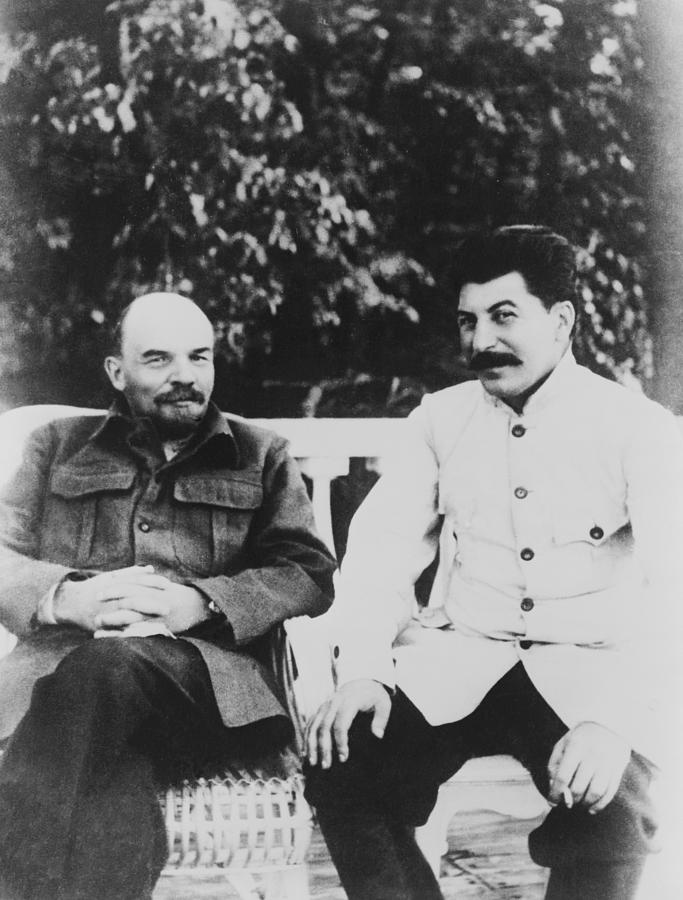
Sixty years ago one of the greatest monsters in history, a mass-murderer of tens of millions many times over, the yellow-eyed, “Kremlin mountaineer”  breathed his last.

We live, deaf to the land beneath us,
Ten steps away no one hears our speeches,
All we hear is the Kremlin mountaineer,
The murderer and peasant-slayer.
His fingers are fat as grubs
And the words, final as lead weights, fall from his lips,
His cockroach whiskers leer
And his boot tops gleam.
Around him a rabble of thin-necked leaders –
fawning half-men for him to play with.
They whinny, purr or whine
As he prates and points a finger,
One by one forging his laws, to be flung
Like horseshoes at the head, to the eye or the groin.
And every killing is a treat
For the broad-chested Ossete.
– Osip Mandelstam

So great was the terror he had inflicted that many of his victims, dazed and bloodied by decades of fear, savage oppression and war, openly wept. The greatest fear of the late dictator’s closest henchmen and accomplices, who had more than likely escaped the conveyor belt of torture, gulag and execution only by their master’s death, was that the people would think that they had murdered their dear vozhd and would storm the Kremlin and tear them to pieces.

The former Georgian seminarian and bank robber Joseph Djugashvilli Stalin did more to shape Russia than any man in history except Peter the Great and Genghis Khan. Ivan the Terrible, the tsar whom Stalin much admired and imitated in killing off his own “boyars”, could not hold a candle to his Bolshevik successor in either cruelty or statesmanship. Stalin entered power as Lenin’s chief clerk in a failed state wracked by civil war and ended it as master of the Communist world, possessor of the atomic bomb and the implacable victor of Berlin.

Stalin sent thirty million of his countrymen to their deaths at the hands of buffoons, sexual sadists and deranged dwarfs, yet was a sensitive and gifted poet of no mean talent who could discuss Clausewitz, the intricacies of Marxist theory or the classics when he chose. Stalin was an avid writer of marginalia in books, making comments one scholar termed “insightful” as well brutal.

An artist of the vendetta, Stalin personally lingered over lengthy death lists, making annotations, sparing one here and drawing out the torment of others there. Some estimates are that he signed some thirty thousand such death lists of prominent Soviet and pre-Revolutionary figures, often consigning their families to arrest, torture and exile. Endless ordinary Soviets accused of “wrecking” or “trotskyite counter-revolutionary activity” or “espionage” went to the Gulag or the grave by quota. Not merely in the terrible year of 1937, but throughout Stalin’s long, grim reign; and after the war, it was the turn of the Eastern Europeans, especially suspected “cosmopolitan” Communists, like Ana Pauker and Rudolf Slansky and the usual litany of “class enemies” and “fascists”.

Stalin’s archenemy in both fact and fevered imagination, Leon Trotsky, received an icepick in his brain from Stalin’s messenger, Ramon Mercader. Then for good measure, Stalin killed Trotsky’s son.

The only man Stalin seemed to fear, was Hitler, near whom he had once briefly lived in 1913 in Vienna when Stalin was a young Bolshevik revolutionary and the future Fuhrer was a struggling “artist” living in a bum’s hostel. They both frequented the Schoenbrunn park and likely, the same cheap coffee hoses and cafes. Stalin’s efforts to appease Hitler the Warlord and mad visionary proved no more successful than had Neville Chamberlain’s; the USSR survived Operation Barbarossa in part because the tyrannical Stalin could force the Russian people to spill an ocean of blood in 1941 the way Tsar Nicholas II could not in 1914.

Twenty million, perhaps more, of the Red Army died on the road to Berlin and victory over Nazism, giving Stalin, who had curried favor with Hitler and allied himself with the Third Reich, mastery over half of Europe. His sycophants called him “Generalissimo” and tried to deify him on his 70th birthday and please him, assuring themselves of safety. It was no use; Stalin ostracized them or arrested their wives or toyed with them cruelly at late night drinking sessions as Stalin’s suspicious mind turned again toward the blackness as it had in the Thirties, when his closest collaborators became dead men talking, disappearing and then reappearing suddenly, gaunt and haunted, to grovel for death at show trials.

Roy Medvedev, Soviet era dissident and Marxist historian wrote of Stalin, “Let history judge“. The judgement it must be said, is in with Russia’s tragic post-Soviet decline. A degradation so severe that even the tough and crafty siloviki ,Vladimir Putin, has been unable to reverse it.

The wounds inflicted by Stalin run too deep.

The Heirs of Stalin

Mute was the marble. Mutely glimmered the glass.
Mute stood the sentries, bronzed by the breeze.
Thin wisps of smoke curled over the coffin.
And breath seeped through the chinks
as they bore him out the mausoleum doors.
Slowly the coffin floated, grazing the fized bayonets.
He also was mute- his embalmed fists, 
just pretending to be dead, he watched from inside.
He wished to fix each pallbearer in his memory: 
young recruits from Ryazan and Kursk, 
so that later he might collect enough strength for a sortie, 
rise from the grave, and reach these unreflecting youths.
He was scheming. Had merely dozed off.
And I, appealing to our government, petition them
to double, and treble, the sentries guarding this slab, 
and stop Stalin from ever rising again
and, with Stalin, the past.
I refer not to the past, so holy and glorious, 
of Turksib, and Magnitka, and the flag raised over Berlin.
By the past, in this case, I mean the neglect
of the people’s good, false charges, the jailing of innocent men.
We sowed our crops honestly.
Honestly we smelted metal, 
and honestly we marched, joining the ranks.
But he feared us. Believing in the great goal, 
he judged all means justified to that great end.
He was far-sighted. Adept in the art of political warfare, 
he left many heirs behind on this globe.
I fancy there’s a telephone in that coffin: 
Stalin instructs Enver Hoxha.
From that coffin where else does the cable go! 
No, Stalin has not given up. He thinks he can cheat death.
We carried him from the mausoleum.
But how remove Stalin’s heirs from Stalin! 
Some of his heirs tend roses in retirement, 
thinking in secret their enforced leisure will not last.
Others, from platforms, even heap abuse on Stalin
but, at night, yearn for the good old days.
No wonder Stalin’s heirs seem to suffer
these days from heart trouble. They, the former henchmen, 
hate this era of emptied prison camps
and auditoriums full of people listening to poets.
The Party discourages me from being smug.
‘Why care? ‘ some say, but I can’t remain inactive.
While Stalin’s heirs walk this earth, 
Stalin, I fancy, still lurks in the mausoleum.

 -Yevgeny Yevtushenko

The Hamburg Cell: close reading

March 5th, 2013

[ by Charles Cameron — a poorly subtitled movie, the ease of misreading & need for mindfulness in information gathering, a real world problem example, full quotation of one verse from the Qur’an, and changes in teaching the concept of jihad in Saudi ]
.

I know, I know: it’s only a movie.

But it also offers us a glimpse into how easily we humans misread or mishear what’s in front of us. In this case, the film — about the cell in Hamburg that brought us Mohamed Atta, Marwan al-Shehhi, Ramzi bin al-Shibh and Ziad Jarrah — gets the soundtrack right, but is misheard by whoever is doing the subtitles. And so the words “our Prophet, Muhammad Ibn Abdullah” are confused by the subtitle writer with the name of the 9/11 facilitator who is being introduced in white text at that point in the film — giving the seriously mangled transcription “our Prophet, Mohammed bin al-Shibh”…

Just a minute or two earlier in the film, the Qur’anic verse (9.5, spoken in the Yusuf Ali translation):

… fight and slay the Pagans wherever ye find them, and seize them, beleaguer them, and lie in wait for them in every stratagem (of war)…

had been clearly enunciated on the soundtrack, and became:

Seize them, believe in them, and lie in wait for them, this is strategy in war.

in the subtitles. Believe in the pagans? Really? In the Qur’an? Or does beleaguer them make just a little more sense?

**

I know, I know: it’s only a movie.

But do you remember the incident I mentioned in January, in a piece on the (needless) bombing of the (historic, not to mention consecrated) Benedictine Abbey of Monte Cassino?

The bombing appears to have been authorized on the basis of a mistranslation. An intelligence intercept of the question “Ist Abt in Kloster?” — “is the Abbot in the Monastery” — was translated by the US as though Abt was short for Abteil, “Is the HQ in the Abbey?” The recorder answer “Ja” then led to the bombing.

As it turned out later, “Until the moment of the destruction of the Monte Cassino abbey there was within the area … neither a German soldier, nor any German weapon, nor any German military installation.”

So here’s my main point:

It takes extraordinary human diligence to give oneself a decent chance to avoid human error…

**

But I’m not done yet.

For what it is worth, the Qur’anic verse 9.5 cited above begins with a qualification that’s applicable only to the world of the Prophet’s time, in which certain months were considered sacred, and warfare prohibited — not only by the Prophet and his Companions, but by all the surrounding tribes.

A literal reading of the text, therefore, gives quite a different and more historically focused and geographically circumscribed impression to the one given by the jihadist instructor in the film:

But when the forbidden months are past, then fight and slay the Pagans wherever ye find them, and seize them, beleaguer them, and lie in wait for them in every stratagem (of war); but if they repent, and establish regular prayers and practise regular charity, then open the way for them: for Allah is Oft-forgiving, Most Merciful.

**

It’s worth noting that Saudi Arabia is about to introduce the concept of jihad, properly understood, to younger (“intermediate level”) school children. The article in Arab News today discussing this change is headed:

Concept of jihad to be made clear to younger students

and begins:

In a move likely to be welcomed by parents and educationists, the Ministry of Education has decided to introduce the concept of jihad in Islamic jurisprudence textbooks at the intermediate school level.

Abdullah Al-Dukhaini, a spokesman for the Education Ministry, told Arab News that the ministry decided to move the teaching of jihad from the high school level to intermediate school because intermediate students are prepared to learn the “correct concept of jihad” before “erroneous concepts” reach them.

One has to read almost of the bottom of the longish piece, though, to find out what this “correct concept of jihad” might be — here’s their version:

Al-Dukhaini said the ministry wants to teach students that jihad is only permissible when defending against aggressors, and with the approval of the country’s ruler and parents.

Textbooks include a warning to pupils that the only one entitled to “raising the banner of Jihad” is the ruler and no one else. No individual Muslim or a Muslim group is permitted to do so.

Once the appropriate textbooks have been published, it will be interesting to see the various translations offered for the relevant passages and the kinds of interpretation they call forth from different points of the compass…

**

h/t for the Saudi education pointer, John Burgess at Crossroads Arabia.

A polyglot agreement — but wrong in point of fact

March 4th, 2013

[ by Charles Cameron — concerning a valid bishop acting in an illicit manner ]
.


.

Whatever language you speak in this era when a polyphony of tongues might indicate Babel (not so good), Pentecost (way better), glossolalia (no comment) or heteroglossia (yowza!), it’s apparently easy enough to label Ralph Napierski (left, black hat, shaking the hand of Cardinal Sergio Sebiastiana, to his right, red skullcap) a non-bishop:

The Queen’s English, Imposter dressed as cardinal sneaks into Vatican ahead of conclave to elect pope and gets as far as synod square before being led away English

English with Australian accent, Fake bishop Ralph Napierski tries to sneak into Vatican

French, un faux évêque s’immisce parmi les cardinaux

Spanish, el falso obispo que se coló en el Vaticano

German, Falscher Bischof mischt sich unter Kardinäle

Portuguese, Falso bispo tenta entrar em pré-conclave de cardeais

or Norwegian, Falsk biskop snek seg inn i Vatikanet

**

Not so fast!

Massimo Introvigne, sociologist of religions, founder of the international Center for Studies on New Religions and Chairman of the Observatory of Religious Liberty set up by the Italian Ministry of Foreign Affairs, monitors religious movements small and large. He commented on a scholarly listserv today, and I quote him with permission:

Some of you may be curious about Bishop Ralph Napierski, who today managed to enter the Vatican with the cardinals preparing the Conclave, and even gave some interviews, before being identified as a non-Catholic «imposter» and thrown out.

Napierski is not a simple prankster dressed as a Bishop. He is one the so called “wandering Bishops” claiming a consecration as a Bishop which from the Catholic point of view is not “lawful” – since lawful consecrations of new Bishops should be approved by the Pope – but nonetheless is “valid” according to the (prevailing) Catholic doctrine, which maintains that a Bishop, even excommunicated, maintains the power to validly consecrate another Bishop, who in turn may consecrate further Bishops. “Validity” means that this “illicit” Bishop, although automatically excommunicated, will have the power to ordain priests who would be “real” priests, i.e. from the Catholic point of view will have the power of converting bread and wine into the body and blood of Jesus Christ in the Eucharist, provided they perform the correct ritual and believe in it.

The greatest manufacturer of wandering Bishops in the 20th century was the former Archbishop of Hué, Vietnam, Pierre-Martin Ngo-Dinh Thuc (1897-1984). Among others he consecrated as a Bishop Clemente Dominguez (1946-2005), later to proclaim himself Pope Gregory XVII for the Catholic Palmarian Church headquartered in Palmar de Troya, Spain. Dominguez consecrated in 1978 his German follower Alfred Seiwert-Fleige, who however in 1980 organized a schism among German members of the Catholic Palmarian Church. And our Napierski was originally consecrated by Seiwert-Fleige for his group.

As many other wandering Bishops, Napierski makes a living by selling titles in bogus Orders of Chivalry and degrees from his Jesus Christ University. He also appears often at LGBT events. He acquired some notoriety years ago by claiming that Dan Brown was right and Jesus did indeed marry Mary Magdalene.

**

The Episcopi Vagantes or Wandering Bishops are a fascinating lot, and given my interest in the byways of Church history I’ve been intrigued by them since I first read Peter Anson‘s Bishops at Large while at Oxford.

My good friend the painter Jan Valentin Saether is a priest in one such succession, that of the Ecclesia Gnostica under Bishop Stephan Hoeller.


Switch to our mobile site