zenpundit.com

Discovering a New Circle of Hell

March 4th, 2013

There is an understandable buzz when a historical event as well known and deeply investigated as  the Holocaust has suddenly been found to have been underestimated by an order of magnitude.

From The New York Times:

The Holocaust Just Got More Shocking 

….As early as 1933, at the start of Hitler’s reign, the Third Reich established about 110 camps specifically designed to imprison some 10,000 political opponents and others, the researchers found. As Germany invaded and began occupying European neighbors, the use of camps and ghettos was expanded to confine and sometimes kill not only Jews but also homosexuals, Gypsies, Poles, Russians and many other ethnic groups in Eastern Europe. The camps and ghettos varied enormously in their mission, organization and size, depending on the Nazis’ needs, the researchers have found.

The biggest site identified is the infamous Warsaw Ghetto, which held about 500,000 people at its height. But as few as a dozen prisoners worked at one of the smallest camps, the München-Schwabing site in Germany. Small groups of prisoners were sent there from the Dachau concentration camp under armed guard. They were reportedly whipped and ordered to do manual labor at the home of a fervent Nazi patron known as “Sister Pia,” cleaning her house, tending her garden and even building children’s toys for her.

When the research began in 2000, Dr. Megargee said he expected to find perhaps 7,000 Nazi camps and ghettos, based on postwar estimates. But the numbers kept climbing — first to 11,500, then 20,000, then 30,000, and now 42,500.

The numbers astound: 30,000 slave labor camps; 1,150 Jewish ghettos; 980 concentration camps; 1,000 prisoner-of-war camps; 500 brothels filled with sex slaves; and thousands of other camps used for euthanizing the elderly and infirm, performing forced abortions, “Germanizing” prisoners or transporting victims to killing centers.

In Berlin alone, researchers have documented some 3,000 camps and so-called Jew houses, while Hamburg held 1,300 sites.

….The lead editors on the project, Geoffrey Megargee and Martin Dean, estimate that 15 million to 20 million people died or were imprisoned in the sites that they have identified as part of a multivolume encyclopedia

Read the rest here.

Perhaps some of you will recall the controversy in the late 1990’s surrounding the release of Hitler’s Willing Executioners by Daniel Goldhagen where Goldhagen argued that Nazi genocide was only possible with the widespread complicity and often enthusiastic participation of “ordinary Germans” who were not themselves Gestapo agents or Nazi fanatics.  One of the primary charges against Goldhagen by academic historians was his generalizing indictment of a generation of Germans for Nazi policy that was, for all intents and purposes, officially a state secret.  After all, the closest thing to a “public” discussion in the Third Reich of the Final Solution was a terrifying speech by SS-Reichsfuhrer Heinrich Himmler at the Posen Conference to an assembly of Gauleiters  and Reichsleiters who constituted the aristocracy of the Nazi Party.

The sheer geographic density and social ubiquity of the Nazi machinery of repression and genocide documented by researchers severely undermines the critics of Goldhagen. While it is well documented that most Germans, unless they were political opponent or social misfits, did not personally feel the heavy hand of the Gestapo in the way Soviet citizens experienced the NKVD, Germans during the war years irrefutably lived cheek by jowl with the miserably wretched slaves of the Reich.

Some of the shock produced by this investigation is due to an artificial “parsing of genocide” by historians into distinct categories of death-dealing instead of looking at Nazi democide as a whole cloth or continuum.

In the immediate aftermath of the war, there was little interest beyond the Nuremberg  Tribunal in delving into the depths of Nazi crimes. Reconstruction of Europe and “getting on with life” or the exigencies of the Cold War and the ominous threat of the Soviets took far greater precedence. Even among Holocaust survivors themselves, there was initially an effort to “move on” from the unimaginable, or to make a anguished pretense of so doing, as expressed in the critically acclaimed Rod Steiger film, The Pawnbroker. When historians began more serious examinations of Nazi crimes in the 1960’s and 1970’s, there was a tendency to separate the Holocaust from related or similar atrocities due in part to the overriding ideological emphasis the most extreme Nazis placed upon the total and absolute elimination of all Jews – every last one – at all costs,. Even over and above winning the war.

However, that genocidal crusade by the SS against the Jews also facilitated the deaths of millions of others – including the Gypsies (marked for nearly complete extermination), the “useless eaters“, some 700,000 Serbs to please the Ustase puppet regime, political opponents who disappeared into the Night and Fog, and a vast democide of Slavic peoples to feed the Third Reich’s inexhaustible need for slave labor. Albert Speer wrote that Himmler coldly planned a further massive reduction of the Russian and Ukranian populations west of the Urals to build a post-war Nazi racial empire in vanquished Russia.

The scale of murder by totalitarian governments in the 20th century approaches the mythic, a phenomena for which the Holocaust has become a totem.

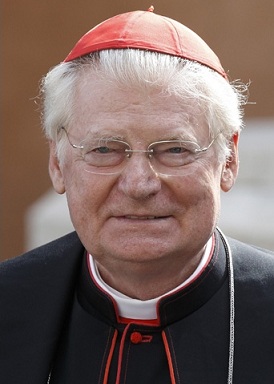
The papabili — and Angelo Cardinal Scola among them

March 3rd, 2013

[ by Charles Cameron — thinking today of the Church in terms of its “foreign policy” and the “Islamic world” ]
.

It’s worth looking at John Allen‘s list of papabili from the most recent conclave, the 2005 conclave that elected Joseph Ratzinger to the papacy, before reading the twelve names he offered CNN for the upcoming election — if only to note that Ratzinger’s own name is conspicuously absent from the list of likely candidates…

It is also worth remembering the response then-Cardinal Ratzinger gave to a reporter in a 1997 interview:

INTERVIEWER: “Your Eminence, you are very familiar with church history and know well what has happened in papal elections. . . . Do you really believe that the Holy Spirit plays a role in the election of the pope?”

RATZINGER: “I would not say so in the sense that the Holy Spirit picks out the pope, because there are too many contrary instances of popes the Holy Spirit would obviously not have picked. I would say that the Spirit does not exactly take control of the affair, but rather like a good educator, as it were, leaves us much space, much freedom, without entirely abandoning us. Thus the Spirit’s role should be understood in a much more elastic sense, not that he dictates the candidate for whom one must vote. Probably the only assurance he offers is that the thing cannot be totally ruined.”

**

Bearing that in mind, and given the current world context in which the issue of reform within the church is receiving the most fervent press attention, I’d like to pause for a moment to consider “foreign affairs” — and more specifically the Church’s relations with the Islamic world, since the next pope has the opportunity here to be a bridge builder, a literal pontifex, a peacemaker if he so chooses — or a divider, an antagonist.

I am therefore particularly interested in the possibility that Angelo Card. Scola might be elected to the papacy, since he has been involved for some time in Catholic-Islamic dialog through his Oasis project:

The ‘mestizaje of civilisations and cultures’. This refers to the ongoing, novel historical process of mixing of peoples and cultures. Hybridization is neither a theory about cultural integration, nor a general notion explaining realty. It is simply an acknowledgment of a situation that we must all face, whether we like or not, individually or collectively, that requires that each one of us to try to influence it for the better. On the basis of this notion the Oasis Centre aims at transcending certain frames of reference and concepts like multiculturalism, integration and reciprocity that are proving increasingly inadequate to explain the increasing interaction of peoples. It is clear that reflecting upon it cannot be done without taking into consideration the contribution of various religions and the way they themselves interact. In particular the Centre’s focus is on the relationship between Christians and Muslims.

Scola is currently the archbishop of Milan, and was previously patriarch of Venice. For a closer look at his work with what he accurately terms “the Islams” see his 2008 op-ed, The Freedom to Convert and interview with John Allen on “popular Islam”.

**

For myself, I was particularly interested in his response to a question from Allen in a 2009 interview on Shi’ite messianism:

ALLEN: What are you hearing from your contacts in Iran these days? Looking down the line, it seems that Shi’a Muslims and Catholics share certain traits: A strong clerical hierarchy, a theology of sacrifice, and deep currents of popular devotion. Does this suggest that Catholicism can play an important role in a dialogue with Iran, where Shi’a Islam is dominant?

SCOLA: Three accents strike me in the Shi’a tradition: the necessity of a continual actualization of revelation in certain physical persons, to the point of overcoming a too-rigid conception of divine transcendence; the lively expectation of eschatological fulfillment; and the reflection on the problem of evil. I have the impression that we’re not well informed on these points, despite the enormous work of study and analysis that’s been done by specialists in recent years. We know Shi’ites better than we know Shi’ism!

The Oasis network really hasn’t arrived yet in Iran, so what I know about what’s happening is what I see and read in the mass media. I don’t doubt, however, that many people in Iran want better relations with the West. We must not forget that Persian culture has shown itself to be extraordinarily fertile and receptive.

The principal problem, if I can put it slightly audaciously, is that Shi’ite messianism, almost unable to bear the weight of the expectations with which it is structurally bound up, has been converted over the centuries, at least in some circles, into a political ideology. We’re talking about a long process that’s not linear, which experience a brusque acceleration with the 1979 revolution. As Westerners, we were caught off guard. We had forgotten that history is also sometimes forged by ‘theological options.’

In any event, all this is reversible.

A comparison of the Shi’ite Ta’zieh “passion plays” mourning the martyrdom of Husayn at Kerbala with the equivalent Catholic play at Oberammergau memorializing the passion of Christ confirms the resemblance Allen suggests between the “theology of sacrifice, and deep currents of popular devotion” in Shi’a Islam and Catholicism respectively.

As for our lack of awareness of the contemporary pull of Islamic eschatology, Scola’s words mirror one of my own concerns to a T:

As Westerners, we were caught off guard. We had forgotten that history is also sometimes forged by ‘theological options.’

Sherlock Holmes, Hannibal Lector and Simonides

March 3rd, 2013

[ by Charles Cameron — the art of memory, with a sidelong glance at swans, typhoid and theodicy ]
.

Thomas Harris (and by extension Hannibal Lector) has been interested in memory palaces for a long time. We can begin to infer this this because Lector describes his hobby in Red Dragon (1981) and again in Silence of the Lambs (1988):

So — church collapses?

**

As you can tell from that last comment in the Silence of the Lambs quote — to my mind the most brilliant presentation of the problem of theodicy for our day — if there’s a God worth defending, it has to be a God who allows sparrows to fall, typhoid to accompany swans in the vast ecology of existence, churches to collapse on worshipers, and “bad things to happen to good people” from time to time.

And such things, specifically including collapses of religious buildings atop worshipers, do indeed happen in fact as well as fiction.

And they don’t only happen to Christians, either… Bon is the shamanistic religious tradition of Tibet, prior to — and later, somewhat assimilated by — Buddhism

**

The thing is, when I read that Hannibal Lector collected church collapses, it not only made me start to take note of them myself, it also made me think of Simonides. As Frances Yates tells us in her book, The Art of Memory:

At a banquet given by a nobleman of Thessaly named Scopas, the poet Simonides of Ceos chanted a lyric poem in honour of his host but including a passage in praise of Castor and Pollux. Scopas meanly told the poet that he would only pay him halfthe sum agreed upon for the panegyric and that he must obtain the balance from the twin gods to whom he had devoted half the poem. A little later, a message was brought in to Simonides that two young men were waiting outside who wished to see him. He rose from the banquet and went out but could find no one. During his absence the roof of the banqueting hall fell in, crushing Scopas and all the guests to death beneath the ruins; the corpses were so mangled that the relatives who came to take them away for burial were unable to identify them. But Simonides remembered the places at which they had been sitting at the table and was therefore able to indicate to the relatives which were their dead. The invisible callers, Castor and Pollux, had handsomely paid for their share in the panegyric by drawing Simonides away from the banquet just before the crash. And this experience suggested to the poet the principles of the art of memory of which he is said to have been the inventor. Noting that it was through his memory of the places at which the guests had been sitting that he had been able to identify the bodies, he realised that orderly arrangement is essential for good memory.

And by way of reinforcing my Lector-Simonides conjecture, Lector certainly had a remarkable interest in memory, as we learn from his dialogue with Clarice Starling:

“Did you do the drawings on your walls, Doctor?”
“Do you think I called in a decorator?”
“The one over the sink is a European city?”
“It’s Florence. That’s the Palazzo Vecchio and the Duomo, seen from the Belvedere.”
“Did you do it from memory, all the detail?”
“Memory, Officer Starling, is what I have instead of a view.”

A belvedere, from the Italian, is “a structure (as a cupola or a summerhouse) designed to command a view” — and a beautiful view at that. Belvedere is also, ironically, the name of the town in Ohio where Buffalo Bill, Lector’s serial killer ex-patient, lives…

**

So it didn’t surprise me to discover that in Hannibal (1999), the book that follows Silence, this brilliant man who as we have seen collects church collapses and has an exquisite memory in place of a view, is revealed as a practitioner of Simonides’ art:

The memory palace was a mnemonic system well known to ancient scholars and much information was preserved in them through the Dark Ages while Vandals burned the books. Like scholars before him, Dr. Lecter stores an enormous amount of information keyed to objects in his thousand rooms, but unlike the ancients, Dr.Lecter has a second purpose for his palace; sometimes he lives there. He has passed years among its exquisite collections, while his body lay bound on a violent ward with screams buzzing the steel bars like hell’s own harp.

Hannibal Lecter’s palace is vast, even by medieval standards. Translated to the tangible world it would rival the Topkapi Palace in Istanbul for size and complexity.

We catch up to him as the swift slippers of his mind pass from the foyer into the Great Hall of the Seasons. The palace is built according to the rules discovered by Simonides of Ceos and elaborated by Cicero four hundred years later; it is airy, high-ceilinged, furnished with objects and tableaux that are vivid, striking, sometimes shocking and absurd, and often beautiful. The displays are well spaced and well lighted like those of a great museum. But the walls are not the neutral colors of museum walls. Like Giotto, Dr. Lecter has frescoed the walls of his mind.

Brilliant. And a delight, years later, to have my hunch connecting the church collapses and prison cell with only memory for a view with Simonides and the Art of Memory confirmed by the third book and film in the series…

You’ll note, btw, that the Lector (caveat lector) of the first two books has now become Lecter in alignment with the films starring Anthony Hopkins.

**

I love symmetries, so let’s move from the most monstrous criminal mind in literature, to the greatest detective…

Sherlock Holmes — in his latest television incarnation — builds memory palaces of a sort, though I’m not sure Simonides would recognize them.

I’m posting the clip from the series here to honor my son Emlyn, with whom I have been watching the series…

**

And then there’s the Jesuit whose use of the Art is explored in Jonathan Spence‘s The Memory Palace of Matteo Ricci:

In 1596 Matteo Ricci taught the Chinese how to build a memory palace. He told them that the size of the palace would depend on how much they wanted to remember: the most ambitious construction would consist of several hundred buildings of all shapes and sizes, “the more there are the better it will be,” said Ricci, thought he added that one did not have to build on a gradiose scale right away. One coul create modest palaces, or one could build less dramatic structures such as a temple compound, a cluster of government offices, a public hostel, or a merchants’s meeting lodge. If one wished to begin on a still smaller scale, then one could erect a simple reception hall, a pavilion, or a studio. And if one wanted an intimate space one could use just the corner of a pavilion, or an altar in a temple, or even such a homely object as a wardrobe or a divan.

You’ll note that in this early example of virtual reality as an pedagogical technology, Ricci doesn’t start with the easy stuff, the single wardrobe or divan — he begins with “the most ambitious construction”…

Enough for now. When I want to talk about in a follow up post is detail… the crucial importance of detail.

Ooh, will there be a [breathless] schism?

March 3rd, 2013

[ by Charles Cameron — of headlines and ice cream headaches ]
.

I’m a tolerant sort of chappie on the whole, but the astounding idiocy of a tweet today from the Huffington Post really caught my attention. It’s in the upper panel of the pair that follows:

I might have been seen the HuffPo tweet, suffered a transient mental glitch and forgotten it immediately — but as fortune would have it, I had also seen the lower of the two tweets earlier in the day, and a tweet in response which pointed Jimmy Sky to Betteridge’s Law of Headlines. I’d been intrigued enough, in fact, to track down Betteridge’s Law on Wikipedia to figure out what the fuss was about.

It’s simple:

Any headline which ends in a question mark can be answered by the word no.

**

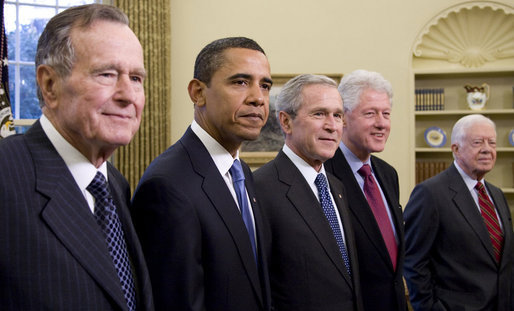
Does the presence of Jimmy Carter, George H. W. Bush, Bill Clinton and George W. Bush in the United States while Barack Obama is sitting president — indeed, even holding a photo op in the same room with him — mean that the United States has split into five distinct and warring nations?

No more does the presence of a “pope emeritus” alongside a newly elected pope in the Vatican imply that there will be a schism in the church.

The idea is pinheaded.

**

As British journalist Andrew Marr wrote in his book, My Trade:

If the headline asks a question, try answering ‘no.’ Is This the True Face of Britain’s Young? (Sensible reader: No.) Have We Found the Cure for AIDS? (No; or you wouldn’t have put the question mark in.) Does This Map Provide the Key for Peace? (Probably not.) A headline with a question mark at the end means, in the vast majority of cases, that the story is tendentious or over-sold. It is often a scare story, or an attempt to elevate some run-of-the-mill piece of reporting into a national controversy and, preferably, a national panic. To a busy journalist hunting for real information a question mark means ‘don’t bother reading this bit’

He’s the one who seems to deserve credit for the idea… but Betteridge uses more colorful language in discussing a story titled Did Last.fm Just Hand Over User Listening Data To the RIAA?

This story is a great demonstration of my maxim that any headline which ends in a question mark can be answered by the word “no.” The reason why journalists use that style of headline is that they know the story is probably bollocks, and don’t actually have the sources and facts to back it up, but still want to run it.

**

Okay. That HuffPo tweet is probably bollocks.

And that’s a case of characteristic British understatement on my part.

The Apple II of 3 D Printing?

February 28th, 2013

It may be 1977 all over again.

Check out the Form 1 Kickstarter page 

The Formlabs home page and their blog.

I recently reviewed Chris Anderson’s book Makers. What 3 D printing needs is the affordable, user-friendly, versatile device to move 3 D printing from the arcane realm of  techno-hobbyist geeks to the general population’s “early adapters”, which will put the next “consumer model” generation on everyone’s office desk; eventually as ubiquitous as cell phones or microwaves.

Formlabs should send one of these to John Robb and Shloky for a product review.

Hat tip to Feral Jundi


Switch to our mobile site