zenpundit.com » politics

Archive for the ‘politics’ Category

A theological look at Bachmann in overdrive

Monday, May 20th, 2013

[ by Charles Cameron — regretting the ways people trample on Christianity if they think they can squeeze political advantage out of it ]
.

Here is Rep. Michele Bachmann, speaking recently:

**

I’m certainly not a “biblical inerrantist” — but I do have a considerable affection for both Christianity and theology, and I appreciate that someone who reads the book of Amos in the New International Version will find the prophet declares at chapter 3 verse 6:

When disaster comes to a city, has not the LORD caused it?

Of course, this was immediately preceded by a comment in the same verse, “When a trumpet sounds in a city, do not the people tremble?” which might give pause to one Richard Waddell next time he’s thinking of playing a trumpet solo at a wedding or funeral in Boston — but as I say, I don’t take scriptures that literally, and I hope the man plays on…

**

Look — if you are a person of influence, and are going to take a theological stand on an issue as grave as whether an entire nation is under divine judgment on the basis of your reading of acts of terror in the skies and riots in the Middle East, you might first want to ponder this advice from Douglas Sukhia in the Journal of the Western Reformed Seminary [WRS Journal 9/1 (February 2002) 1-5]:

Caution Against Rushing to a Conclusion

Although there are negative events that are clearly identified as acts of God’s judgment in Scripture, there are times when “bad things” happen as part of the general consequences of the fall and not due to specific sins. The book of Job, which many consider the oldest book in the Bible, deals with theodicy, i.e., the justice of God’s actions in the world. The book shows that Job’s counselors were wrong in their opinion that Job must have sinned to have experienced such a terrible disaster — i.e., the sudden loss of loved ones, property and health (Job 8:20; 18:5ff; 22:4-11, 21-25, etc.). Jesus corrected that same kind of thinking on the part of the disciples in John 9:1-2. He tells them the man was not blind as a result of his sins. Jesus also makes clear that the tragic deaths of several in a tower collapse and others at the hands of Pilate were not because the victims were especially evil (Luke 13:1-5). Paul and the faithful saints of Hebrews 11 experienced unjust, cruel treatment due to their obedience and faithfulness to God not because they were being judged by God. God often lets the wicked prosper in this world (Ps. 73:2-12; Job 24) and He assigns special trouble to the righteous (2 Tim. 3:12; 1 Pet. 2:19-20). Without special revelation from God I think it is presumptuous to dogmatically conclude that any temporal tragedy is a judgment of God for specific sins. We should humbly admit with the “wise man” that “No one can comprehend what goes on under the sun” (Eccl. 8:17; Dt. 29:29).

**

See?

It’s a little bit subtler than claiming you know at all times whom God is punishing right now — and always somehow in line with your own set of political beliefs and preferences.
Elkus on Mad Dogs and Military History

Friday, May 10th, 2013

Adam Elkus has a lengthy and meaty post at Abu Muqawama, inspired by General Mattis, one that you should really read in full:

The Mattis Book Club

….But while gaining an understanding of the nature of war is useful, there are a lot of things it won’t do. This becomes most apparent in the section of the email where Mattis makes specific claims. Mattis repeatedly states that nothing is new under the sun, makes comparisons across big temporal zones (Alexander the Great in Persian Iraq vs. 2004 iraq), and advances specific analytical arguments about military theories. He does so on the basis of a sweeping generalization that 5,000 years of warfare tells us in aggregate that war has not changed. While this makes for a rousing line, it is also a fairly problematic statement. How do we really know that the nature of war has not changed in 5,000 years?

We should recognize that this is an isolated quote, and strive to not take out of context what was a heartfelt letter to a colleague in need of guidance. But the argument itself—as the cumulative product of a process of self-education in the nature of warfare, does merit some critical analysis. It is part of a humanistic conception of war that stresses the unity of military experience across the ages, and puts the fighting man’s will first. What Mattis dashed off in an email has been repeated by others in journal articles, blog posts, essays, and books. The military historian Brian McAllister Linn, in his seminal study of the Army’s cultures, dubbed it the “heroic” style of war. Linn constrasts this humanistic style this with technocratic Managers, defensive Guardians, and other military tribes with differing values and approaches.

So what do we know about 5,000 years of constant violence?

Often times the answer is that it depends. As my Fuller and Liddell-Hart examples illustrate, the quality of historical accounts is extremely uneven. Military history as a modern discipline only started with Hans Delbruck, a civilian who did some basic math and discovered that many of the most prominent chroniclers of pre-modern warfare were flat-out wrong about ancient history’s greatest battles and campaigns. Anthropologists still argue today about the nature of violence in the evolutionary state of nature and whether it can be mapped to violence in settled states. Second, it may be true that war is war in the Clausewitzian sense. But while it is technically true that Alexander’s Iraqi opponents and Sadrist mobs are both humans seeking to use force to impose their will, this in and of itself is not very useful. There are fairly prominent shifts in the character of politics, the international system, techology, wealth, and society that matter too.  

What constitutes politics is a very important point.

Take for example, the Romans. There was a definite shift between the Early-Middle Republican eras and the Late Republic in elite politics and the socioeconomic conditions upon which Roman assumptions about war and the organization and supply of Legions rested.  Growing inequality of wealth was making it harder for Plebian citizens to afford to muster for a campaign, the need for longserving “professional” Legates to maintain “institutional memory” of the “arts of war” of the Legions expanded even as the highly coveted opportunities for Patricians to command decreased. These trends clashed with what the Romans liked to  believe about themselves and the friction between advocates of reforms (often necessary and practical) and the upholders of  centuries of honored tradition made Roman politics increasingly bitter, dysfunctional and subsequently lethal. The early Romans would have been horrified by Marius and Sulla, to say nothing of Antony and Octavian.

In the end, the politics of the Romans, along with their battlefield experiences, changed how they organized and manned their Legions, why and how they fought the wars as they did and continued to shape Roman warfare as long as the empire lasted. Julius Caesar would have been as startled by Late Antiquity’s semi-barbarian “Roman” Magister Militiums as his own career would have dismayed Decius Mus.

Adam goes on to have some useful things to say about the need for combining historical and quantitative  social science  methodologies and the limitations of each. Delbruck’s overstated skepticism of the ancients aside, sometimes we moderns do not count any better in war or politics – or at times,  even worse

A Brief Note on the Benghazi Hearings

Thursday, May 9th, 2013

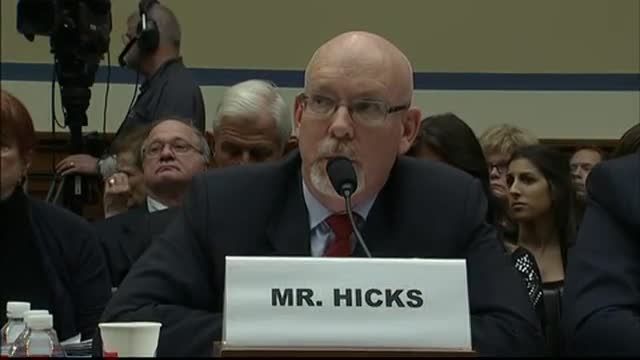
There is legitimate room for debate if there could have been an effective military reaction to the attack in Libya by al Qaida terrorists that killed Ambassador Stevens and other US personnel.  One was apparently never seriously entertained  by senior White House, State Department and Pentagon officials. I think there ought to have been an effort to move heaven and earth and far, far greater willingness to inflict massive casualties on an attacking Libyan mob than existed, but in fairness to the Obama administration, a seat-of-the-pants, unsupported, undermanned response could also have been a replay of Blackhawk Down or Desert One. It’s a tough judgment call for any President.

That’s not why the Obama administration is in trouble today.

Poorly supported security and inept decision making by the State Department in Libya was likewise, disappointing but politically survivable and sadly, unsurprising.. We have seen similar bungling before and after 9/11 by most of our major national security departments and agencies at one time or another. It is a bipartisan phenomenon, albeit one we take far too lightly.

No, as damning testimony today made clear, the Obama administration is in trouble because their poor but not remarkably so handling of Benghazi was shielded by a ridiculous lie told entirely for partisan gain and to protect the overrated reputations and overweening egos of various administration bigwigs, most notably the former Secretary of State, Hillary Clinton.

Is there anyone today – anyone at all – who still believes that Benghazi occurred because of an obscure crackpot’s video on youtube?

Had the administration manfully said “This attack is a terrible tragedy and we dropped the ball but you can believe we won’t make a similar mistake tracking down the people who did this and make them pay” most Americans would have accepted that. No, not rabid partisan Republicans, but most Americans would have wanted to back the President, any President, in the wake of such terrorism which is directed, in the last analysis, at all of us.

They did not – and much of the rest of their reaction indicates that the real concern at State and the White House was and still is with the temerity of their political opponents in daring to demand they account for their actions as if we lived in a Republic or something.

In American politics, it is the self-inflicted wounds that fester and turn gangrenous

The Boston Bombers and Superempowerment

Wednesday, May 1st, 2013

My friend Dave Schuler who blogs at the excellent The Glittering Eye and on foreign policy at Dr. James Joyner’s Outside the Beltway , queried me as to what I thought of the Boston Bombers in light of the concept of the Superempowered Individual.

For those not familiar with the concept, the term “superempowered individual” originated in phrase coined by Thomas Friedman and quickly gained traction and evolved in the .mil/strategy/defense blogosphere and communities of interest after 9/11 turned everyone’s attention to the potential reach of catastrophic terrorism. Many people, including myself have written on the topic and while no single, agreed upon, definition of SEI exists, there is a consensus around an individual having the capacity to multiply the scale of the harm they can cause by leveraging or disrupting complex systems, be they mechanical, social, cyber or some combination. I defined SEI’s this way:

To qualify as a superempowered individual, the actor must be able to initiate a destructive event, fundamentally with their own resources, that cascades systemically on a national, regional or global scale. They must be able to credibly, “declare war on the world”.  

Using that definition, Dzhokhar and Tamerlan Tsarnaev are far from superempowered individuals. They were not “super” anything and rather than being masters of complexity, they ginned up some primitive IEDs  and blundered miserably after their attack on the Boston Marathon. The younger of the two accidentally ran over his own brother with a car, killing him, which gives some idea of the operational amateurism of these culprits. If Islamist terrorism has a Darwin Award, the Brothers Tsarnaev are contenders

Yet the cost of their attack, the Boston bombing, allegedly tops $330 million dollars? Why?

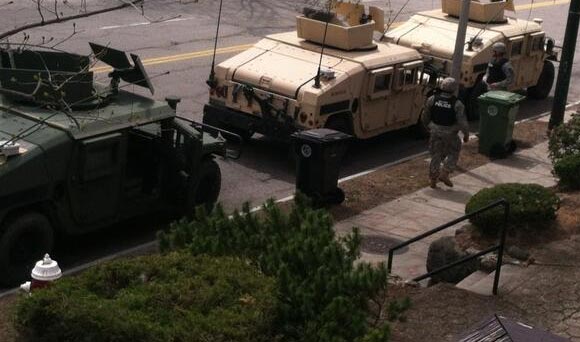
I would argue that the US is systematically “superdisempowering” itself by VASTLY multiplying the costs of any given act of terrorism with absurd and outrageous levels of costly security theater and glitzy paramilitarization of law enforcement that continue to cascade and accumulate long after sorry nitwits like Richard Reid, Dzhokhar Tsarnaev or the amazingly incompetent Underwear Bomber have become obscure historical footnotes. It is incredibly counterproductive in every sense and has overwhelmingly negative effects that only add significantly to the costs of terrorism

Timothy McVeigh, in a much more heinous act of terrorism, blew up a Federal building and killed 168 people and injured 800 others with a massive truck bomb and America did not feel a need to dress our police officers like extras in Starship Troopers or it’s airport security like customs officials from a minor Fascist puppet regime. This is not a criticism of police officers who do a dangerous job with professionalism and bravery but of a national policy of paternalism and creeping authoritarianism that is slowly morphing them into asphalt soldiers.

The attacks on September 11 were thirty times worse and far more spectacular than McVeigh’s bombing, transfixing the attention of the whole world, but somehow we got along without President Bush declaring martial law and closing New York city and sending troops door to door to roust citizens in their homes without warrants or probable cause.

We need to take a healthy step back and put the brakes on our own policy and security responses to terrorism and dial them down to a rational minimum level required for investigative effectiveness. If not because these policies have become dangerously injurious to liberty and American democracy or because they are mostly wasteful government spending then we should do it because we have become so expert at making the costs of any act of terror extremely expensive by our own reaction that we are providing the enemy and itinerant crazies with a tremendous incentive to attack us more.

Seriously.

The only thing superempowered right now is own own lack of strategic sense.

A religious footnote to the pro-life / pro-choice issue

Monday, April 29th, 2013

[ by Charles Cameron — with cites from the Qur’an and Bukhari, together with a concerto by Saint-Saëns ]
.


.

Stephen Hough is a classical pianist of note recording on the Hyperion label, the recipient of a MacArthur Fellowship, and one of twenty living polymaths listed as “Pianist, poet, composer, writer on religion” in a 2009 survey by The Economist’s 2009 Intelligent Life blog.

Hough — a Catholic — blogs at The Telegraph, and today he wrote something that caught my eye in his post Why haven’t you written anything about Gosnell?:

I think that without religious faith it is hard to accept a zygote as equivalent in value to a fully formed child. I can understand that a non-religious person is going to see a scale of development in the nine months of pregnancy.

**

To broaden Hough’s discussion a little, I’d like to gently point out that not all religious faiths perceive these matters in the same way. Islam, for instance, has a Qur’anic passage that’s apposite in Sura 20, The Believers, 12-16:

Man We did create from a quintessence (of clay); Then We placed him as (a drop of) sperm in a place of rest, firmly fixed; Then We made the sperm into a clot of congealed blood; then of that clot We made a (foetus) lump; then we made out of that lump bones and clothed the bones with flesh; then we developed out of it another creature. So blessed be Allah, the best to create! After that, at length ye will die Again, on the Day of Judgment, will ye be raised up.

Getting into more detail, we find these ahadith — the first in Bukhari, Chapter 6, The Book of Menstruation, 312:

It is related from Anas ibn Malik that the Prophet, may Allah bless him and grant him peace, said, “Allah the Mighty and Majestic appoints an angel to every womb who says, ‘O Lord! A sperm drop! O Lord A clot! O Lord! A lump of flesh! ‘ Then if He desires to complete His creation, He does so and the angel asks, ‘Is it to be male or female? Wretched or happy? What is its provision? What is its life-span?’ This is all decreed in the mother’s womb.”

and the second in Bukhari Chapter 63, The Book of the Beginning of Creation, 3036:

It is related that ‘Abdullah said, “The Messenger of Allah, may Allah bless him and grant him peace, who is the truthful confirmed one, said, ‘The way that each of you is created is that you are gathered in your mother’s womb for forty days as a sperm-drop and then for a similar length of time as a blood-clot and then for a similar length of time as a lump of flesh. Then an angel is sent and he breathes the spirit into you and is encharged with four commandments: to write down your provision, your life-span, your actions, and whether you will be wretched or happy.

*

My Sources:

  • Qur’an 20, in the Yusuf Ali rendition
  • Bukhari, Book of Menstruation 312 the Aisha Bewley translation
  • Bukhari, Book of the Beginning of Creation, 3036 also in the Bewley translation
  • **

    Here Stephen Hough plays Camille Saint-Saëns‘ Piano Concerto 2 in G minor Op. 22 with the City of Birmingham Symphony Orchestra, Sakari Oramo conducting:

    blockquote>


    Switch to our mobile site

