zenpundit.com » recommended reading

Archive for the ‘recommended reading’ Category

Syed Saleem Shahzad: AQ, Khorasan and the Mahdi

Thursday, September 15th, 2011

[ by Charles Cameron — Mahdism and Khorasan, strategic implications re Afghanistan, Pakistan, India and the West ]

.
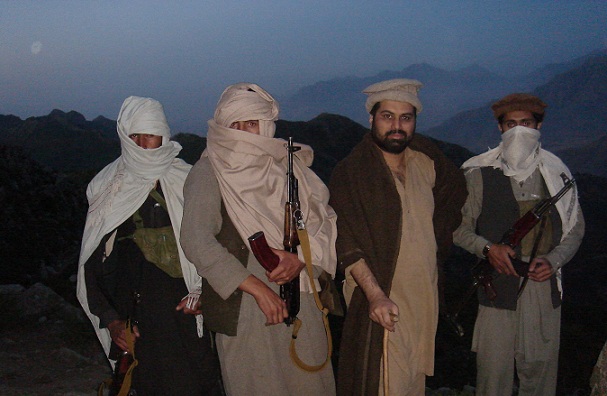
kunar.jpg

photo:  http://www.syedsaleemshahzad.com

Syed Saleem Shahzad, the recently murdered Pakistani reporter (above) profiled by Dexter Filkins in The New Yorker a couple of days ago, recently published a book with Pluto Press titled Inside Al-Qaeda and the Taliban: Beyond bin Laden and 9/11.

Reading the New Yorker piece, I was struck by the explicitly Mahdist tenor of the book’s final paragraph, which Filkins quoted, and a quick glance at pages available on the Amazon site makes it clear that Shazad’s sense of AQ strategy (a) is strongly eschatological, (b) includes India in its scope, and (c) leads from greater Khorasan to Jerusalem.

Since I’ve been harping on (a) and (c) for some while now, and (b) “fits” well enough with a few other loose ends, analytically speaking, I’ll be very interested to read (and hopefully review) the whole thing. For now, I’d just like to draw your attention to the opening and closing paragraphs of the book…

Shahzad begins his Prologue (p. xiii) with these words :

The 9/11 attacks in 2001 aimed to provoke a war in South Asia. The 26/11 Mumbai assaults in 2008 warned that Al-Qaeda was expanding its war to the east, from Central Asian republics to India and Bangladesh, and that many more such actions would follow. In the ideological perspective of Al-Qaeda, this was to be a preparation for the “End of Time” battles which were referred to by the Prophet Muhammad (in what is now known as the Hadith). These pointed to parts of modern-day Iran, Afghanistan, Pakistan, and Central Asia as ancient Khurasan. Khurasan was to be the first battleground for the End of Time battles, before a decisive confrontation against the West, with the last battle being fought in the Middle East for the liberation of Palestine and all occupied Muslim lands.

In the meantime, Al-Qaeda aimed to trap the world’s most powerful states in the impossible terrain of Afghanistan. The aim was to lead them to exhaust their energies there, before the expansion of the theater of war against the West from Central Asia to Bangladesh…

His book closes (pp. 225-26) with these words:

However, the saga of Al-Qaeda’s One Thousand and One Nights tales continues with new strategies and new characters. For Al-Qaeda these are just measures to keep the West running from pillar to post until it exhausts itself and Al-Qaeda can announce victory in Afghanistan. Al-Qaeda next aims to occupy the promised land of ancient Khurasan, with its boundaries stretching all the way from Central Asia to Khyber Paktoonkhwa throiugh Afghanistan, and then expand the theater of war to India.

The promised messiah, the Mahdi, will then rise in the Middle East and Al Qaeda will mobilize its forces from Ancient Khurasan for the liberation of Palestine, where a final victory will guarantee the revival of a Global Muslim Caliphate.

Shahzad was not always the most reliable of reporters by all accounts – but certainly one of the most intrepid, and one with unparalleled contacts among the major players. The fact that he pitches his book along so clear a Mahdist through-line should give us all pause.
The imagery of religion and war

Friday, September 9th, 2011

[ by Charles Cameron — graphical analysis, selling bibles to teenage boys, tge Mass in time of war ]

.

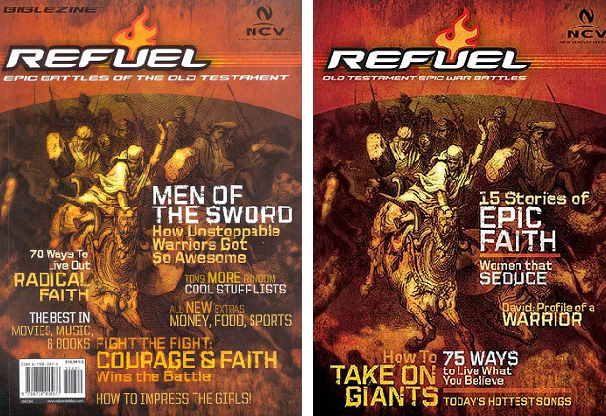
Following on from my post on the work of Al Farrow, and leading towards a series of posts on ritual and ceremonial, I’d like to show you two very different images at the overlap of war and religion.

The first shows two different covers of the books of Joshua, Judges, Ruth, I & II Samuel, I & II Kings, Ezra and Nehemiah, as featured in a “biblezine” edition of the New Century Version of the Bible pitched at teenage testosterone.

double.png

Each of will have our own sense of whether that’s fun, stupid,  Biblical, unBiblical, enticing, disgusting or simply uninteresting — but whatever your aesthetic and/or belief-based response, there’s a powerful lesson there in the choice of subtitles:

how unstoppable warriors got so awesome…
courage and faith wins the battle…
how to impress the girls!
how to take on giants!
women that seduce…
tons more random cool stuff lists…

I’m not a fan of this kind of thing myself, but I picked up a copy when I saw one at the thrift the other day — the one with Men of the Sword on the cover — and as someone who has done a fair amount of copy-editing in my day, was surprised to see “courage and faith wins the battle” (sic) had slipped past the editorial eyes at Nelson Books

The New Testament in the same series is a bit better — the cover still features “dynamic stories of daring men” –but the, ahem, romantic element has been toned down a bit, with the catch phrase “class act: how to attract godly girls” replacing the Old Testament’s “how to impress the girls”.

* * *

Okay, I’m not as young as I once was, and maybe I’ve been mean enough at the expense of these people who want to market the Bible as though it was an invitation to warfare washed down with sex.

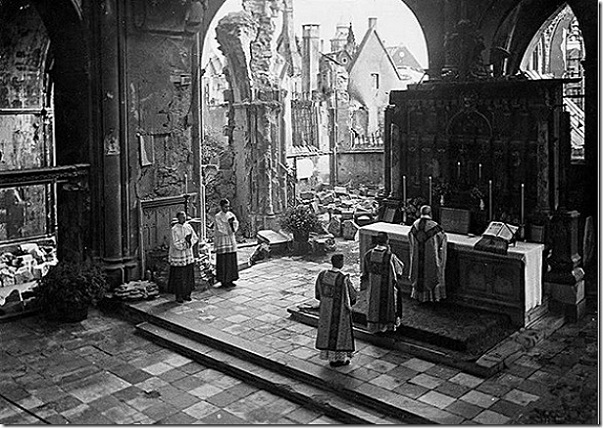
The other image I found recently comes a great deal closer to my own taste, and will serve as an excellent introduction to the idea of religious ceremonial as an oasis of peace in time of war:

missa_thumb3.jpg

Again, I suppose there may be some who will find the idea of religious ritual boring and irrelevant rather than beautiful — but it is its capacity to move us at a deep level — even (and perhaps particularly) when high tides of  circumstance and emotion are breaking over us — that I wish to focus on and, to the extent that it is possible, explore and explain in  some upcoming posts.

In my view, it was this kind of beauty, verging on the austere and the timeless, rather than the snazzy and faddish “impress the girls — draw in the kids” kind, that Pope Benedict XVI had in mind when he said:

Like the rest of Christian Revelation, the liturgy is inherently linked to beauty: it is veritatis splendor. The liturgy is a radiant expression of the paschal mystery, in which Christ draws us to himself and calls us to communion. As Saint Bonaventure would say, in Jesus we contemplate beauty and splendor at their source.

* * *

I am not a Catholic, though my sympathies run in that direction, and my examples of ceremonial will not be drawn only from Catholic or Christian sources — part of what i want to explore is the universal quality of ritual as a powerful source of motivation and inspiration, while another aspect has to do with the interweaving of military, religious and state symbols, but the point I would most like to make in each case is the profound impact that such symbols and rituals can have on the receptive heart.

I hope to touch on a wide range of ritual expressions, from the Requiem for a departed princely Habsburg to the Lakota sweat lodge, and from to the fire-walking ceremonial of the Mt Takei monks of Japan to the Spanish bull-fight, with a close look at the ritual surrounding coronation in my own British tradition.

For those who would like to peer deeper into these matters, I would suggest these four books:

Victor Turner, The Ritual Process
Geoffrey Wainwright, Eucharist and Eschatology
William Cavanaugh, Torture and Eucharist
Josepha Zulaika, Basque Violence: Metaphor and sacrament

The first explains “how ritual works” from an anthropological point of view, the second deals with the purposeful interweaving, accomplished within ritual, of time with the timeless, the third with the way in which sacramental transcendence is the very antithesis of torture, and the fourth with the impact of a sacramental sensibility within terrorism.

Each one is a masterpiece of intelligence and profound feeling.

Recommended Reading to Provoke

Tuesday, September 6th, 2011

Special edition, derived from the always steady stream (at times, geyser) of articles, PDFs and book recs coming through the Warlord Loop:

The Atlantic  Parag Khanna  America’s Non-Grand Strategy

….Grand strategy should be about connecting ends and means on a global scale that transcends administrations and their peculiar obsessions and preoccupations, whether it be Iraq, Afghanistan, or China. It is about more than reacting to immediate events. In the age of globalization, grand strategy must take into account the financial crisis, Middle Eastern instability, Asia’s hunger for commodities, nuclear proliferation, technological disruptions, and trans-regional terrorist networks — all at the same time. Unfortunately, U.S. foreign policy over the last two decades has been characterized more by, to borrow the great historian Arnold Toynbee’s terms, alarmism and reactiveness than the necessary foresight and adaptation. From Afghanistan to Iraq to the Arab Spring, the U.S. has been either over-confident, caught off guard, or behind the curve. In all cases, it still lacks a coherent vision grounded in a realistic grand strategy.

….During the Clinton administration, Henry Kissinger quipped about then-National Security Advisor Sandy Berger, “You can’t expect a trade lawyer to be a grand strategist.” Today again, foreign policy is overseen by lawyers such as Tom Donilon and Hillary Clinton who give advice on specific events and problems but not guidance on the bigger picture. As a result, Obama’s speeches remain mellifluous but no longer really register abroad, other than to frustrate for their lack of clear purpose. As Kissinger wrote, “A statesman’s job is to resolve complexity, not just contemplate it.”

Having been beating the “we don’t  have  a  grand  strategy” drum for some time, I don’t find this to be controversial but opinions vary.

RUSI Anne-Marie Slaughter  The End of Twentieth Century Warfare

….From the vantage point of 2011, however, it is far more likely that historians will see 9/11 as the catalyst for the end of twentieth-century warfare: large-scale, multi-year deployments requiring the conquest, control and long-term stabilisation and reconstruction of foreign territory. The nuclear weapons that ended the Second World War ended great power war. The fall of the Soviet Union ended great power proxy war among current great powers, although Pakistan certainly thinks it is fighting India in the valleys and cities of Afghanistan. The second Iraq war and the war in Afghanistan are ending boots-on-the ground wars of counter-insurgency and regime change. 

The great power wars of the twenty-first century will be fought by special forces: specialised in combat against pirates, terrorists and global criminal networks; in focused search and rescue and search and destroy missions; and in civilian protection units capable of disabling but not destroying an enemy. They will be fought by cyber-warriors, skilled in manipulating unmanned weapons and in deterring and responding to system-wide cyber-attacks. And they will be fought in multilateral coalitions aimed at stopping the wars that criminal governments wage against their own people and bringing individual leaders and their coterie of high-level supporters to justice.

Somewhere…someplace….the head of Colin Gray is exploding. 🙂

The problem here is one of simplifying overstatement, not in getting the trends wrong. Dr. Slaughter is largely correct because currently a) the US lacks a true military peer and is absolutely dominant in a head-on, conventional clash and b) 4GW/irregular warfare is comparatively cheap way to attrit your foe, disrupt their systems and corrupt their OODA Loop.

However, we are very early in the 21st C. to call this trend as lasting for twenty, thirty or fifty years. Deliberately eviscerate America’s conventional warfare assets, as the UK has just done to the Royal Navy and British Army, and the geopolitical calculus will change in a hurry with great power war becoming more probable again and second tier interstate war becoming likely.

AFJ  Bernard Finel  The failed secretary

….Civil-military relations under Gates were more dysfunctional than any time since the early days of the Civil War. Though it may seem hyperbolic to some, the reality is that the accumulated transgressions of civil-military norms by senior military leaders far outstrip the misconduct of Gen. Douglas MacArthur during the Korean War.

During the Gates years, senior military leaders intervened in domestic politics; actively lobbied for policy preferences; waged sophisticated information operations against the American public; blocked the development of alternative options requested by the president and sought to punish those in uniform who were willing to respond to presidential requests; and created command environments in which contempt for civilian leaders was widespread. And Gates was either absent or an accomplice in most of these transgressions.

….The main problem with Gates was his tendency to see his job as that of quartermaster or personnel chief. Instead of providing high-level leadership, he tended to see his job as intervening at lower levels to solve specific problem. Soldiers are killed by improvised explosive devices? He worked to get more MRAPs into theater. Units not having enough time to rest, refit and train between deployments? He signed off on temporary force-size increases. Various programs overbudget or facing technical challenges? Gates was willing to kill them to fund more pressing priorities. But in all of this, where was the strategic leadership we expect from our senior leaders?

The problem is that “winning the wars we’re in” is an appealing mantra. It sounds tough and hands-on. But except in the rare circumstance of total war, the “wars we’re in” must always be balanced against the threats and challenges we may face in the future. This is particularly true when our current conflicts are, essentially, sideshows, wars of choice in strategic backwaters. The notion that American national security strategy ought to be subservient to the short-term demands of Iraq or Afghanistan is obviously flawed. Instead, those conflicts must be waged with an eye to making them consistent with long-term national security requirements. In a fundamental sense, Gates consistently put the tactical/operational cart before the strategic horse. That is an understandable flaw for a theater commander, but it is precisely the sort of mistake we expect a good secretary of defense to avoid.

I am a fan of former SECDEF Robert Gates, Dr. Finel is not and I offer his vigorously argued op-ed in the spirit welcoming contrasting views. Many of the Gates critics seem to be unhappy with his attitude toward the USAF/Navy “Big War” positions and weapons platforms as well as Gates having focused on the wars of today ( the Pentagon is a planning agency for the wars we fight tomorrow).

That’s it.

Carl Prine: recommended reading

Tuesday, August 30th, 2011

[ by Charles Cameron — war, reading lists ]

.

Not exactly delighted by the reading list recently provided by the inbound Chairman of the Joint Chiefs, Carl Prine at Line of Departure will be offering a “weekly discussion about how one might know one’s self” – Sun Tzu suggests that such knowledge is of value to the professional soldier — via texts other than the “middlebrow books of a recent vintage, pulp paperbacks” of the Army’s recommended readings.

Today he opened with an essay on the First World War poet Siegfried Sassoon, and quoted the final paragraph from Sassoon’s Memoirs of a Fox-Hunting Man:

And here I was, with my knobkerrie in my hand, staring across at the enemy I’d never seen. Somewhere out of sight beyond the splintered tree-tops of Hidden Wood a bird had begun to sing. Without knowing why, I remembered that it was Easter Sunday. Standing in that dismal ditch, I could find no consolation in the thought that Christ was risen. I sploshed back to the dug-out to call the others up for “stand-to.”

I could only respond with a passage that I first encountered, likewise, on a blog – Pat Lang‘s Sic Semper Tyrannis – from Sassoon’s friend and fellow poet of the Great War, Wilfred Owen:

For 14 hours yesterday, I was at work-teaching Christ to lift his cross by the numbers, and how to adjust his crown; and not to imagine he thirst until after the last halt. I attended his Supper to see that there were no complaints; and inspected his feet that they should be worthy of the nails. I see to it that he is dumb, and stands mute before his accusers. With a piece of silver I buy him every day, and with maps I make him familiar with the topography of Golgotha.

And I think to myself how much more power there is in either one of those paragraphs, than in that quip about “no atheists in foxholes”.

* * *

It’s not a matter of one of those “God or no God” debates in which some clergyman might triumph over some atheist, or vice versa, on TV or at the town or village hall. It’s a matter of cultural riches, of having a reference base of image and story that’s strong enough to express the horrors of Passchendaele or the Marne in a way that speaks to the hearts of those who were not there — and of those who will find themselves there, all too really, in other times and other lands.

It’s about narrative deep enough to go with you to Golgotha and back. It’s about the words, and about the furnace.

Prine himself puts it like this:

I care only of your soul and how it might be fired in the smithy of this blog and then hammered by your experiences in the coming years.

Our culture is the smithy.

Recommended Reading & Recommended Viewing

Monday, August 29th, 2011

Top Billing! SWJ Blog The Natural Law of Strategy (Wm. J. Olson)

…Perhaps this is because there is a disconnect between policy formulation and strategy, which is meant to bridge the gap between intention and action. If so, then the idea of incorporating „ends? into strategy seems amiss. Strategy, as such, is not about ends, which are provided by another, perhaps mysterious, process and handed off. There is no trinity of ends, ways, and means. All of this may be semantic confusion, since „strategy? is a slippery term that everyone knows the meaning of but doesn?t recognize it when they see it. Or perhaps the distinction lies in the difference between Grand Strategy and strategy, the former concerned primarily with ends the latter mostly with ways and means. In this case, strategy merely restates the ends of Grand Strategy with the intent of now adding ways and means to get the job done. This hardly seems an improvement or a clarification that clarifies.

Grand Strategy, as such, derives its ends from policy. Thus it does not-cannot–provide its own ends. It only reflects them. Perhaps the distinction and the difference lie in the level of detail expected in the respective precincts of activity. Grand Strategy, then, is closest to policy and policy formulation, an intermediate step, and while less abstract than policy it begins the process of translating intent into effort. Strategy, the next step down, then concerns itself with details once the big ideas are set. But again, including ends in strategy, except to note that they have been imported from elsewhere from a process unrelated to strategy, suggests that strategy is really about ways and means.

Thomas P.M. Barnett –  Some serious heavyweights join Wikistrat’s global lineup of strategists

I’ve spent much of August now making pitches to analysts/thinkers/strategists I deeply respect, asking them to join Wikistrat’s community of strategists.

And I’ve got to tell you, we’ve got some real stars coming our way:  Dmitri Trenin from Carnegie Moscow, Daniel Pipes from the Middle East Forum, Robert Kaplan from the Center for a New American Security, and Michael Schueur of “Imperial Hubris” fame. From the blogging world we’ve attracted Lexington Green of Chicago Boyz, Mr. “Anglosphere” James Bennett, James Joyner from Outside the Beltway and this blog’s “neighbor” ZenPundit. We’re also signing up a number of World Politics Review writers like Frida Ghitis and editor-in-chief Judah Grunstein.

Always nice to get a public nod in a group of names like that!

Jamais Cascio –  About Foresight (a minor rant)

Thomas Rid – Quoting URLs in Academic Papers 

Not exactly a super exciting topic, but useful.

Global Guerrillas –JOURNAL: Open Source Education

This fills a useful niche. Breaks down where feedback is required for student mastery or growth ; a brilliant instructor cannot meaningfully respond to questions from 50,000 students (call it the “Robert Scoble on twitter” effect) but where intrisic motivation can do it, this is a great concept.

The Glittering Eye –Alter for the Defense

….Rhetorically, this is called “burden shifting”. The burden of proof is on the affirmative and in this case the affirmative position is that President Obama should be re-elected and it’s up to the president to make his case. The case against him can be observed just by looking around.

Daniel Drezner- Why Libya is not a template for future military statecraft

Drezner takes Zakaria to task.

RECOMMENDED VIEWING:

Wilf Owen on Britain, Israel and the use of force.

I have to say, I am largely in agreement with Wilf here.


Switch to our mobile site

