RICHARDS ON STRATEGIC TRANSFORMATION
Dr. Chet Richards of DNI has posted the introduction to his forthcoming book, If We Can Keep It. From what I have gathered, this book will be an extension of the radical military analysis Richards began with his previous work, Neither Shall the Sword: Conflict in the Years Ahead . An excerpt:
“Three national myths
The first is that “terrorism” poses the most serious threat to our survival and our way of life. In fact, the physical damage that terrorism does is small in comparison to other threats to our national well-being, and there are means available to reduce it even further. The greatest threat of “terrorism” is the damage we do to ourselves in sincere but misguided attempts to deal with it.
The second national misperception is that we still require a military establishment whose cost exceeds not just that of the next most powerful nation or even the next three, but of all the rest of the world, combined. Most of this expense goes into conventional (non-nuclear) forces that are no longer needed or even useful. The reason for this is not that world brotherhood has broken out, as earlier generations of pacifists mistakenly assumed, but that nuclear weapons have made wars between major powers impossible. States that are not nuclear powers, on the other hand, are either U.S. allies or are far too weak to pose any kind of military threat, and our attempts to use military force against non-state opponents, such as the “terrorists” mentioned in the previous paragraph, have not proven particularly successful.
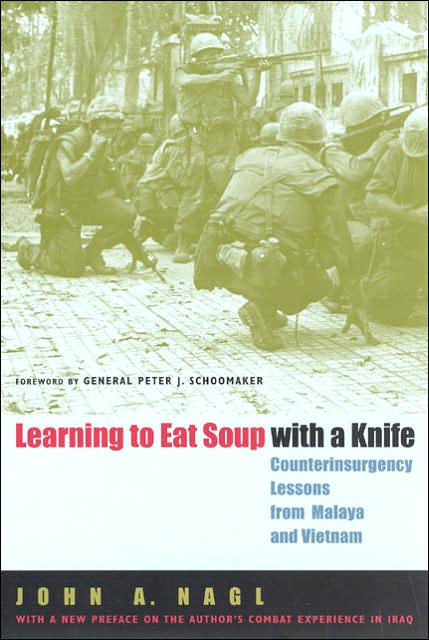
The third, and perhaps the most dangerous because it seduces us into thinking that we can make military force into a normal tool of policy, is the notion of counterinsurgency theory. The problem is not that insurgencies cannot be defeated, but that proponents of this theory sometimes fail to distinguish between different meanings of the term “insurgency.” Several observers, recognizing this limitation, have proposed classifications. Biddle (2006) distinguishes between “people’s wars,” in which groups try to overthrow the government, and “communal civil wars,” where groups are fighting to avoid genocide. Metz (2007) classifies insurgencies based upon whether a legitimate government exists or can be created. These are both valuable and help explain why some insurgencies succeed where others do not.
….In the specific area of national defense policy, I recommend that the Department of Defense be gradually downsized to roughly the current U.S. Marine Corps plus special operations forces and supporting tactical air. This is more than adequate to deal with any future military threat. Concerning strategic – nuclear – forces, 10,000 weapons are more than we need to preserve the proven doctrine of mutually assured destruction (Blair, 2007a). Some reduction in this arsenal is clearly feasible.
Such a reordering of priorities towards our real problems implies a restructuring of the federal government. We should immediately disband the terrorism bureaucracy, particularly the Transportation Security Administration and its parent, the Department of Homeland Security and should review the roles and functions of the other agencies and departments.
Over time, as the Defense Department assumes its natural size, as has already happened with most of our European allies (Bacevich, 2006), intelligence will assume a more important function. Although military operations in the future will be rare, it becomes more important than ever that they be perceived by our friends and allies as justified, and when they do occur, they must be rapid, daring, and successful. Achieving this standard requires a step-function improvement in the integration of intelligence, diplomacy, and operations, so it will make sense to consolidate these functions in a single body where the controlling function is intelligence.”
Read the entire introduction here.
It would appear that Richards, whose analytical framework is deeply rooted in the ideas of John Boyd, is throwing the 4GW hat into the ring of grand strategy, remediating a frequent criticism that 4GW thinkers are focused primarily upon tactical conflict and the destructive rather than constructive levels of strategic thinking. It will no doubt be an interesting and thought-provoking book that will stampede an entire herd of sacred cows beloved by defense intellectuals off of a cliff. That alone will make it a useful read.
My questions ( and Richards may very well answer them in his forthcoming book) raised by If We Can Keep It, would hinge on several variables:
* The utility of nuclear deterrence, upon which Richards’ strategic transformation seems to depend, in an era when significant power (WMD capacity) appears to be devolving to progressively smaller ( and potentially less accountable, predictable and deterrable) substate and non-state networks. The history of nuclear deterrence and accompanying theory represents a large and complex literature with such thinkers as Brodie, Wohlstetter, Kahn, Kissinger and others who never satisfactorily arrived at answers to the conundrum presented by nuclear weapons.
Eisenhower-Dulles ” massive retaliation” and “brinksmanship” put a brake on defense spending ( as Ike intended) but it was a very risky and blunt instrument. The idea that Washington would “trade New York for Paris” with the Soviets was never entirely a credible one. Nor did America’s massive nuclear arsenal prevent Nasser from closing the Suez or Ho Chi Minh from subverting Saigon or even deter Khrushchev from his nuclear gamble in Cuba (in fact, our lopsided nuclear advantage probably was an incentive in Khrushchev’s eyes to gain parity on the cheap).
* Steady-state assumptions about nation-state behavior in the international arena if conventional American power projection capacity was drastically reduced to levels proportionate to Western Europe. This is a major point to consider when offering a non-interventionist alternative to current strategy – American military power is the focal point of most regional security systems ( or opposition to them). To my mind, statesmen calculate their actions and plan their military expenditures based upon assumptions of American hegemony, welcome or not. The inability to even get to the starting block for military competition with the U.S. – we must think not just in terms of annual military budgets but in the colossal sunk costs of establishing a military-industrial base – is inhibiting regional arms races to a degree. Remove American preeminence from the equation and foreign statesmen are going to arrive at different calculations regarding their interests and security.
I look forward to reading it and entertaining Dr. Richards’ argument in full.