My thanks to Aaron Zelin, who suggested that the “Jewish (Bible) scholar” I’d mentioned in the post to which this is an addendum (and who featured beginning around 05.32 on the video) looked like looks Simcha Jacobovici and commented, “he is not a ‘scholar’. He’s a journalist.”
**
Jacobovici is indeed the fellow in question, and after a quick search I was able to find his film, Quest for the Lost Tribes. The section excerpted in the Mahdist video can be viewed via YouTube here:
If you’d like to see the whole thing, you can begin here:
’
And Jacobovici’s opening claims are both striking and decidedly apocalyptic:
In the Bible there’s a prophecy. And that prophecy says that in the end of time, all these people that were exiled, that we call “the Lost Tribes of Israel”, will get up and come back to Israel. And it will start happening all over in the four corners of the world. And they’ll just get up and start moving back.
And what if it was actually happening? Here you have this prophecy, and people are actually getting up, they may be in your own neighborhood. And they’re packing their bags, and to you they’re just somebody else packing their bags and moving. But in actual fact they’re responding to some kind of Biblical “post-hypnotic suggestion”, I’m not talking about a thousand year, I’m talking about twenty seven hundred year old “suggestion”, that they’re responding to now.
And we can actually film these people, and match the prophecy with the events.
And the reason it should matter is that — because once they do what they have to do, they trigger the apocalypse.
**
Jacobovici’s Internet Movie Database [IMDb] page is quite a long one: he’s a journalist, yes, and specifically a documentary filmmaker — and an Emmy winner for “Outstanding Investigative Journalism”.
You may also be able to view the entire film online at his own site…
Finally watched the Academy award -winning Argo the other night and must give it an endorsement.
While the film’s introduction initially made me groan, repeating as it did the popular ahistorical rubbish about Mossadegh and Operation Ajax, the CIA coup that toppled him along with other new inaccuracies, it otherwise did an admirable job capturing the dismal spirit of those times.
Iran was portrayed every inch the chaotic, unpredictably despotic, backward, violently thuggish, theocratic Islamist regime wallowing in ignorance and hatred it remains to this day. Bodies swing from construction cranes, angry mobs burn US flags and chant slogans, burly and bearded Basiji and Revolutionary Guardsmen ride motorcycles, scream and brandish automatic rifles, bullying Iranians and conducting mock executions of American hostages. Sneering revolutionary bureaucrats chain smoke in decrepit, steamy offices and stamp yellowed documents.
The American side has the Carter administration in all it’s ineptitude with a country that is dispirited and visibly decaying – a mood captured perfectly by the visual shots half-demolished state of the Hollywood landmark sign. A weary cynicism and defeatism hangs in the air of the offices of high officials. Cyrus Vance is uncharitably but accurately portrayed as calling the shots on Hostage policy and State favors their plan of sneaking the six escapees hiding in the Canadian ambassador’s residence some bicycles with which to pedal 350 miles to the Turkish border.
In winter.
The CIA is not much better, barring Ben Affleck’s character – exfiltration expert operative Tony Mendez – who defies the orders from the White House or State to stand down and allow the escapees be captured by Iranian security – and his boss who leaps into action to support him and revive the canceled operation.
I won’t give the twists and turns, you can watch those yourself. The film is replete with actual news footage from the time of the American Hostage Crisis and it is just shocking how bad things were back then, which if you lived through it, will jar some memories.
[ by Charles Cameron — a poorly subtitled movie, the ease of misreading & need for mindfulness in information gathering, a real world problem example, full quotation of one verse from the Qur’an, and changes in teaching the concept of jihad in Saudi ]
.
I know, I know: it’s only a movie.
But it also offers us a glimpse into how easily we humans misread or mishear what’s in front of us. In this case, the film — about the cell in Hamburg that brought us Mohamed Atta, Marwan al-Shehhi, Ramzi bin al-Shibh and Ziad Jarrah — gets the soundtrack right, but is misheard by whoever is doing the subtitles. And so the words “our Prophet, Muhammad Ibn Abdullah” are confused by the subtitle writer with the name of the 9/11 facilitator who is being introduced in white text at that point in the film — giving the seriously mangled transcription “our Prophet, Mohammed bin al-Shibh”…
Just a minute or two earlier in the film, the Qur’anic verse (9.5, spoken in the Yusuf Ali translation):
… fight and slay the Pagans wherever ye find them, and seize them, beleaguer them, and lie in wait for them in every stratagem (of war)…
had been clearly enunciated on the soundtrack, and became:
Seize them, believe in them, and lie in wait for them, this is strategy in war.
in the subtitles. Believe in the pagans? Really? In the Qur’an? Or does beleaguer them make just a little more sense?
**
I know, I know: it’s only a movie.
But do you remember the incident I mentioned in January, in a piece on the (needless) bombing of the (historic, not to mention consecrated) Benedictine Abbey of Monte Cassino?
The bombing appears to have been authorized on the basis of a mistranslation. An intelligence intercept of the question “Ist Abt in Kloster?” — “is the Abbot in the Monastery” — was translated by the US as though Abt was short for Abteil, “Is the HQ in the Abbey?” The recorder answer “Ja” then led to the bombing.
As it turned out later, “Until the moment of the destruction of the Monte Cassino abbey there was within the area … neither a German soldier, nor any German weapon, nor any German military installation.”
So here’s my main point:
It takes extraordinary human diligence to give oneself a decent chance to avoid human error…
**
But I’m not done yet.
For what it is worth, the Qur’anic verse 9.5 cited above begins with a qualification that’s applicable only to the world of the Prophet’s time, in which certain months were considered sacred, and warfare prohibited — not only by the Prophet and his Companions, but by all the surrounding tribes.
A literal reading of the text, therefore, gives quite a different and more historically focused and geographically circumscribed impression to the one given by the jihadist instructor in the film:
But when the forbidden months are past, then fight and slay the Pagans wherever ye find them, and seize them, beleaguer them, and lie in wait for them in every stratagem (of war); but if they repent, and establish regular prayers and practise regular charity, then open the way for them: for Allah is Oft-forgiving, Most Merciful.
**
It’s worth noting that Saudi Arabia is about to introduce the concept of jihad, properly understood, to younger (“intermediate level”) school children. The article in Arab News today discussing this change is headed:
Concept of jihad to be made clear to younger students
and begins:
In a move likely to be welcomed by parents and educationists, the Ministry of Education has decided to introduce the concept of jihad in Islamic jurisprudence textbooks at the intermediate school level.
Abdullah Al-Dukhaini, a spokesman for the Education Ministry, told Arab News that the ministry decided to move the teaching of jihad from the high school level to intermediate school because intermediate students are prepared to learn the “correct concept of jihad” before “erroneous concepts” reach them.
One has to read almost of the bottom of the longish piece, though, to find out what this “correct concept of jihad” might be — here’s their version:
Al-Dukhaini said the ministry wants to teach students that jihad is only permissible when defending against aggressors, and with the approval of the country’s ruler and parents.
Textbooks include a warning to pupils that the only one entitled to “raising the banner of Jihad” is the ruler and no one else. No individual Muslim or a Muslim group is permitted to do so.
Once the appropriate textbooks have been published, it will be interesting to see the various translations offered for the relevant passages and the kinds of interpretation they call forth from different points of the compass…
**
h/t for the Saudi education pointer, John Burgess at Crossroads Arabia.
[ by Charles Cameron — the art of memory, with a sidelong glance at swans, typhoid and theodicy ]
.
Thomas Harris (and by extension Hannibal Lector) has been interested in memory palaces for a long time. We can begin to infer this this because Lector describes his hobby in Red Dragon (1981) and again in Silence of the Lambs (1988):
So — church collapses?
**
As you can tell from that last comment in the Silence of the Lambs quote — to my mind the most brilliant presentation of the problem of theodicy for our day — if there’s a God worth defending, it has to be a God who allows sparrows to fall, typhoid to accompany swans in the vast ecology of existence, churches to collapse on worshipers, and “bad things to happen to good people” from time to time.
And such things, specifically including collapses of religious buildings atop worshipers, do indeed happen in fact as well as fiction.
And they don’t only happen to Christians, either… Bon is the shamanistic religious tradition of Tibet, prior to — and later, somewhat assimilated by — Buddhism…
**
The thing is, when I read that Hannibal Lector collected church collapses, it not only made me start to take note of them myself, it also made me think of Simonides. As Frances Yates tells us in her book, The Art of Memory:
At a banquet given by a nobleman of Thessaly named Scopas, the poet Simonides of Ceos chanted a lyric poem in honour of his host but including a passage in praise of Castor and Pollux. Scopas meanly told the poet that he would only pay him halfthe sum agreed upon for the panegyric and that he must obtain the balance from the twin gods to whom he had devoted half the poem. A little later, a message was brought in to Simonides that two young men were waiting outside who wished to see him. He rose from the banquet and went out but could find no one. During his absence the roof of the banqueting hall fell in, crushing Scopas and all the guests to death beneath the ruins; the corpses were so mangled that the relatives who came to take them away for burial were unable to identify them. But Simonides remembered the places at which they had been sitting at the table and was therefore able to indicate to the relatives which were their dead. The invisible callers, Castor and Pollux, had handsomely paid for their share in the panegyric by drawing Simonides away from the banquet just before the crash. And this experience suggested to the poet the principles of the art of memory of which he is said to have been the inventor. Noting that it was through his memory of the places at which the guests had been sitting that he had been able to identify the bodies, he realised that orderly arrangement is essential for good memory.
And by way of reinforcing my Lector-Simonides conjecture, Lector certainly had a remarkable interest in memory, as we learn from his dialogue with Clarice Starling:
“Did you do the drawings on your walls, Doctor?”
“Do you think I called in a decorator?”
“The one over the sink is a European city?”
“It’s Florence. That’s the Palazzo Vecchio and the Duomo, seen from the Belvedere.”
“Did you do it from memory, all the detail?”
“Memory, Officer Starling, is what I have instead of a view.”
A belvedere, from the Italian, is “a structure (as a cupola or a summerhouse) designed to command a view” — and a beautiful view at that. Belvedere is also, ironically, the name of the town in Ohio where Buffalo Bill, Lector’s serial killer ex-patient, lives…
**
So it didn’t surprise me to discover that in Hannibal (1999), the book that follows Silence, this brilliant man who as we have seen collects church collapses and has an exquisite memory in place of a view, is revealed as a practitioner of Simonides’ art:
The memory palace was a mnemonic system well known to ancient scholars and much information was preserved in them through the Dark Ages while Vandals burned the books. Like scholars before him, Dr. Lecter stores an enormous amount of information keyed to objects in his thousand rooms, but unlike the ancients, Dr.Lecter has a second purpose for his palace; sometimes he lives there. He has passed years among its exquisite collections, while his body lay bound on a violent ward with screams buzzing the steel bars like hell’s own harp.
Hannibal Lecter’s palace is vast, even by medieval standards. Translated to the tangible world it would rival the Topkapi Palace in Istanbul for size and complexity.
We catch up to him as the swift slippers of his mind pass from the foyer into the Great Hall of the Seasons. The palace is built according to the rules discovered by Simonides of Ceos and elaborated by Cicero four hundred years later; it is airy, high-ceilinged, furnished with objects and tableaux that are vivid, striking, sometimes shocking and absurd, and often beautiful. The displays are well spaced and well lighted like those of a great museum. But the walls are not the neutral colors of museum walls. Like Giotto, Dr. Lecter has frescoed the walls of his mind.
Brilliant. And a delight, years later, to have my hunch connecting the church collapses and prison cell with only memory for a view with Simonides and the Art of Memory confirmed by the third book and film in the series…
You’ll note, btw, that the Lector (caveat lector) of the first two books has now become Lecter in alignment with the films starring Anthony Hopkins.
**
I love symmetries, so let’s move from the most monstrous criminal mind in literature, to the greatest detective…
Sherlock Holmes — in his latest television incarnation — builds memory palaces of a sort, though I’m not sure Simonides would recognize them.
I’m posting the clip from the series here to honor my son Emlyn, with whom I have been watching the series…
In 1596 Matteo Ricci taught the Chinese how to build a memory palace. He told them that the size of the palace would depend on how much they wanted to remember: the most ambitious construction would consist of several hundred buildings of all shapes and sizes, “the more there are the better it will be,” said Ricci, thought he added that one did not have to build on a gradiose scale right away. One coul create modest palaces, or one could build less dramatic structures such as a temple compound, a cluster of government offices, a public hostel, or a merchants’s meeting lodge. If one wished to begin on a still smaller scale, then one could erect a simple reception hall, a pavilion, or a studio. And if one wanted an intimate space one could use just the corner of a pavilion, or an altar in a temple, or even such a homely object as a wardrobe or a divan.
You’ll note that in this early example of virtual reality as an pedagogical technology, Ricci doesn’t start with the easy stuff, the single wardrobe or divan — he begins with “the most ambitious construction”…
Enough for now. When I want to talk about in a follow up post is detail… the crucial importance of detail.
[ by Charles Cameron — a clever play on words, is all ]
.
.
Headline writers are appallingly fond of puns, but I thought the sting in the tail of this piece from Al Arabiya English was particularly fine:
Bahrain imposes ban on Guy Fawkes masks
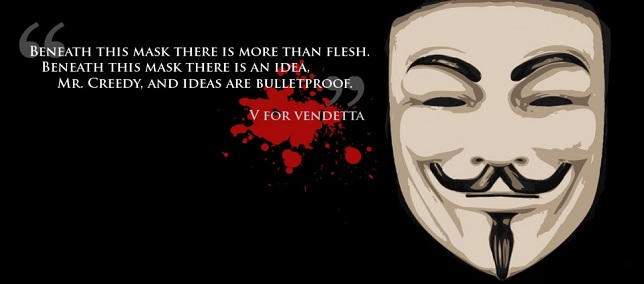
In an unusual move, the Bahraini government has banned the imports of something most people would find to be innocent, the Guy Fawkes mask, worn in the 2005 Hollywood movie ‘V’ for vendetta because it was seen as symbol of an uprising against the country’s rulers.
The Gulf Kingdom’s Industry and Commerce Minister, Hassan Fakhro, ordered a block on importing the facial garb, and anyone found importing could be put in detention. This is all due to the fact that anti-government protestors have been using them to remain anonymous.
The historical mask has been used in street demonstrations around the world, from the Occupy Wall street movement in the United States and UK to the Arab Spring revolutions that toppled strongmen in the likes of Muammar Qaddafi and Hosni Mubarak.
To many this may sound like a strange move given the fact that it is just a mask. At the end of the day the Minister may be able to put it on the black list but questions remain as to whether the government will be able to control production within the country.
Can the ban of this costume piece mask the deep set political issues in Bahrain?
That shift from “mask” the noun to “mask” the verb is quite delightful.
Zenpundit is a blog dedicated to exploring the intersections of foreign policy, history, military theory, national security,strategic thinking, futurism, cognition and a number of other esoteric pursuits.