zenpundit.com » book

Archive for the ‘book’ Category

Sunday surprise 1: next of kin on Netflix

Sunday, August 9th, 2015

[ by Charles Cameron — a trifling coincidence on Netfix and three recommended books ]
.

Trevor Howard (from Margate, Kent) played Windwalker, “a Cheyenne warrior returning from the dead to defend his family,” in the 1980 film of the same name, whereas Adam Beach (of the Saulteaux, not of the Dine, but arguably closer) played the Navajo Ben Yazzie in the 2002 film, Windtalkers:

SPEC DQ netflix flix

I mention these facts becauze Netflix offered me these two flix side by side today, and it struck me that the Navaho Code Talkers were among the ones who truly walked their talk.

**

In my library, unpacked yesterday and gto be shelved today, a treasure of a book..

  • James C. Faris, The Nightway: A History and a History of Documentation of a Navajo Ceremonial
  • valued for its exposition of ‘Sa’ah naaghéi, Bik’eh hózhówalking in beauty, in old age wandering..

  • John R. Farella, The Main Stalk: A Synthesis of Navajo Philosophy
  • and hoped for, but likely sold long since to pay the rent, one of the loveliest books I have ever had the privilege to hold & behold..

  • Mary C Wheelwright, Hail Chant and Water Chant
  • A Bit of Summer Reading

    Tuesday, July 28th, 2015

    [by J. Scott Shipman]
    dead wakestraight to hellGhost Fleet

    The Fate of a ManBachCalvin Coolidge


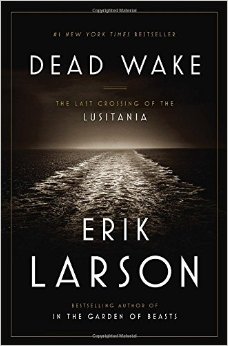
    Dead Wake, The Last Crossing of the Lusitania, by Erik Larson

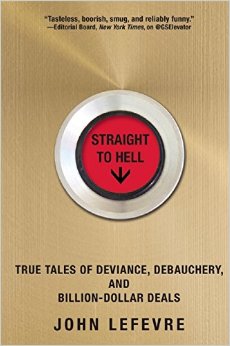
    Straight to Hell, True Tales of Deviance, Debauchery and Billion Dollar Deals, by John Lefevre

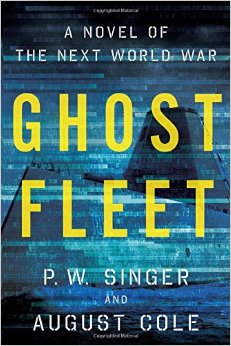
    Ghost Fleet, A Novel of The Next Work War, by P.W. Singer & August Cole

    The Fate of a Man, by Mikhail Sholokhov

    BACH, Music in the Castle of Heaven, by Sir John Eliot Gardiner

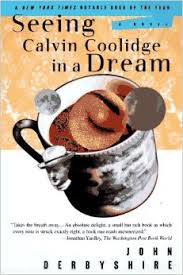
    Seeing Calvin Coolidge in a Dream, by John Derbyshire

    The summer of 2015 for me is becoming memorable for the diversity of the books making it into my queue through unexpected circumstances. Larson’s Dead Wake was an surprise gift from a neighbor familiar with my professional pursuits. I read “Wake” in two sittings and it is superb. Larson puts faces on the victims, and highlights the politics from both sides of the Atlantic, to include the German U-boat commander responsible for the sinking. This tragedy reads like a novel and is wicked good.

    Last year my son turned me on to the feed of @GSElevator on Twitter. I would have never read this book  had I not become a fan of Mr. Lefevre’s decidedly politically incorrect sense of humor. With over 700k followers on Twitter he created an instant potential market and I bit. Straight to Hell is an entertaining irreverent look at the top of the banking profession, and is not for the faint of heart—and very funny.

    Ghost Fleet is one of the most anticipated techno-thrillers in recent memory. Singer and Cole have spun a good yarn of how a future world war between the USA and China/Russia. While the book is a page turner, the authors thankfully sourced their technology assertions in 22 pages of notes! A great resource for a very good book. One could quibble over lack of character development, but this book is driven more by technological wizardry and is a fun and instructive read.

    Fate of Man was recommended either at a blog or in blog comments—I don’t remember. This tiny but poignant book (it is more a bound short story) provides the reader with a glimpse of the hardships and sacrifices in Russia post WWII. Torture and suffering on a scale foreign to 99.9% of those living in the modern Western world.

    BACH was a birthday gift, and I would like to report I have finished Gardiner’s masterpiece, but that may take some time (I’m at page 330). Gardiner shares insights on JS Bach’s life and music, and while I have over forty Bach recordings in my iTunes account, this lovely book is introducing a massive body of Bach’s cantata work—over 200 and I’m unfamiliar with most. My method has been to read Gardiner’s description of the piece, then find a recording on YouTube. Unfortunately, Gardiner does not discuss one of my all-time favorite Bach Cantatas Ascension Oratorio BWV-11 (the last five minutes are simply divine).

    Finally, the Calvin Coolidge book came to me via CDR Salamander in a Facebook thread. As a fan of Coolidge and Derbyshire, I grabbed a copy and I’m glad I did. Derbyshire has written a sweet and insightful story of love, betrayal, and redemption, all the while providing the reader a frightening description of China’s cultural revolution.

    My China study continues, adding Edward Rice’s Mao’s Way, along with CAPT Peter Haynes’ Towards a New Maritime Strategy: American Naval Thinking on the Post-Cold War Era—-both are thus far very good. Also thanks to a friend, I recently spent some quality time with the late master naval strategist, Herbert Rosinski’s The Development of Naval Thought. This is my third or fourth pass through a very good little book.  If naval strategy holds any interest, this little book is not to be missed.

    Are you reading any unusual titles?

    New Books

    Monday, July 13th, 2015

    [by Mark Safranski, a.k.a. “zen“]

    Hit Half-Price Books recently….


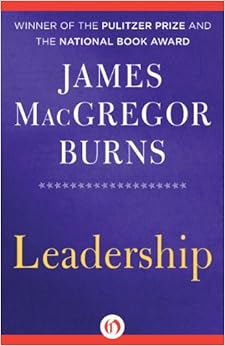
    Leadership by James MacGregor Burns
    How to Create a Mind by Ray Kurzweil
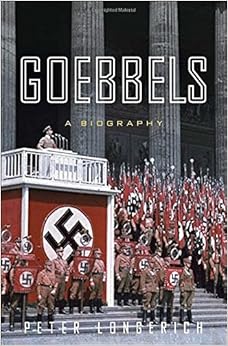
    Goebbels by Peter Longerich
    I Will Bear Witness by Victor Klemperer
    The Red Baron (Autobiography)
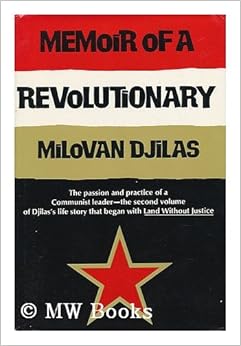
    Memoir of a Revolutionary by Milovan Djilas
    The Haunted Wood by Alexander Vassiliev and Allen Weinstein
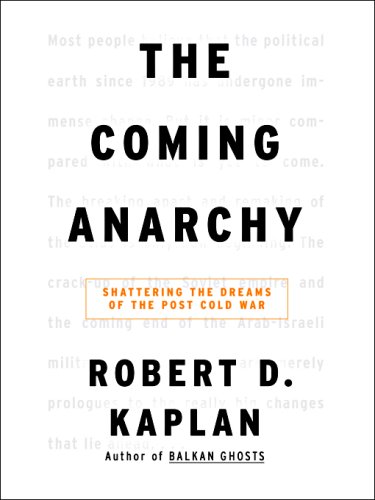
    The Coming Anarchy by Robert Kaplan
    The Signal and the Noise: The Art and Science of Prediction by Nate Silver

    The Haunted Wood was once groundbreaking and provocative and is now a classic of Cold War studies. Allen Weinstein, the former Archivist of the United States, died a month ago but he was better known as one of the historians who exposed that Alger Hiss was indeed the Soviet spy, traitor and secret Communist inside the Roosevelt administration State Department that Whittaker Chambers and Richard Nixon said he was, an achievement that did not endear Weinstein to the dwindling band of hardcore leftist Hiss apologists at The Nation magazine.

    Milovan Djilas was a man who epitomized the same conflict as the Hiss-Chambers trial.  The right hand to Tito in the Yugoslav Communist Party, Djilas was the highest ranking Communist official to become a dissident and critic, moving politically from convinced Stalinist to an advocate of free elections and liberal democracy. Djilas shrewdly analyzed the Communist nomenklatura as an oppressive and parasitic oligarchy in The New Class.

    What are you reading?


    Two Mini Reviews

    Monday, June 29th, 2015

    [by Mark Safranski, a.k.a. “zen“]

    I have a tremendous backlog of good books to review that I have read in recent months and I am facing the fact that it is dubious that I will ever to get to feature most of them here.  As a stopgap, I am going to try a few mini-reviews instead of the more noteworthy, or at least interesting, titles. Here are two:

    1. Stalin: Volume I Paradoxes of Power

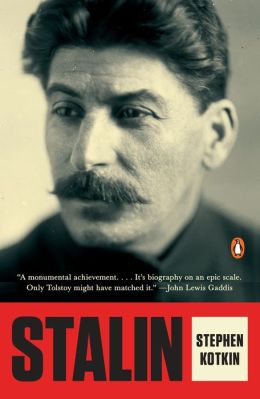
    Stalin: Vol. 1: Paradoxes of Power 1878-1928  by Stephen Kotkin

    Eminent diplomatic historian John Lewis Gaddis praises Princeton’s Stephen Kotkin for his new biography, calling it “A monumental achievement”. This is certainly correct. Kotkin has done more than break new ground with Stalin: Paradoxes of Power; in my view it is arguably the best book on Joseph Stalin ever written.

    Admittedly this is high praise. It is true, that Kotkin is not in the same literary class as Simon Sebag Montefiore, who demonstrated his great prose skill with masterfully written and deeply researched biographies of Stalin, but Kotkin is always a clear, effective and always forceful writer. Where Kotkin excels is in the granularity of his biographical narrative, unearthing aspects of Stalin’s childhood and early revolutionary days, the intra-party rivalries with leading Bolshevik personalities, especially Stalin’s complicated relationship with Vladimir Lenin and Stalin’s skill as a politician and grand strategist. The narrative is accompanied with Kotkin’s piercing psychological analysis of Stalin’s criminal psychopathology emerging from a combination of complex rational political calculation and a bottomless well of narcissistic self-pity that ate away at Stalin’s soul.

    If volume 2 equals the first book, Kotkin will have written the definitive work of Stalin for years to come.

    II. Salinger

    Salinger by David Shields and Shane Salerno

    The book that accompanied the documentary of the same name, David Shields and Shane Salerno have put together a remarkable page turner that explains the mystifying author behind one of America’s most iconic literary works.

    “Don’t worry if all of the first wave of you are killed, We shall simply pass over your bodies with more and more men” 

    J.D. Salinger’s counterintelligence unit spearheaded the landing of the 4th Division on Utah Beach on D-Day, Salinger participated in five major battles in the European theater including the deadly Hurtgen Forest where his regiment suffered 200% casualties and GI’s fighting in summer uniforms without blankets or winter coats froze to death in foxholes. A CIC field interrogator, Salinger operated with great freedom and authority and after participating in the liberation of the concentration camp complex known to history as Dachau, he checked himself into a mental hospital. To paraphrase Shields and Salerno, J.D. Salinger carried six chapters of The Catcher in the Rye in to battle with him, a book that took him ten years to write and which he then regretted for the rest of his life.

    Salinger the Documentary

    Heads up: two keepers on terrorism for later review

    Sunday, May 31st, 2015

    [ by Charles Cameron — for global perspective ]
    .

    Hoffman Ganor 602

    **

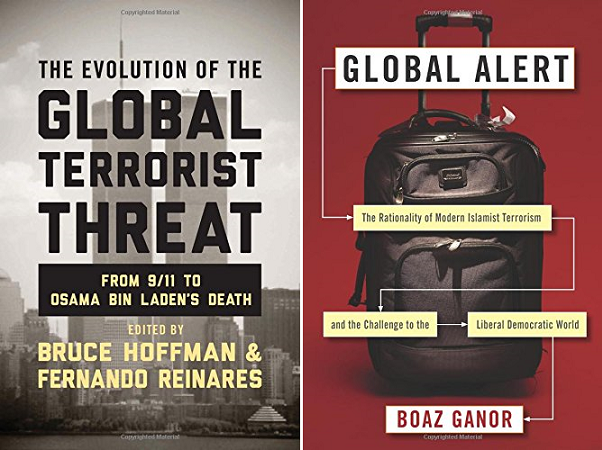
    Hoffman and ReinaresThe Evolution of the Global Terrorist Threat: From 9/11 to Osama bin Laden’s Death offers 700 pages of densely-packed information about global, ans they do mean global, terrorism since 9-11. Contributors include Peter Neumann, Paul Cruickshank, J-P Filiu, Seth Jones, Rohan Gunaranta, Ami Pedahzur, Thomas Hegghammer, C Christine Fair.

    Ganor BoazGlobal Alert, which I just received, appears to offer its own definition of the topic, then take a refreshingly clean, unsentimental look at the field.

    Both are recommended.


    Switch to our mobile site