zenpundit.com » book

Archive for the ‘book’ Category

New Books

Saturday, April 4th, 2015

[by Mark Safranski, a.k.a. “zen“]


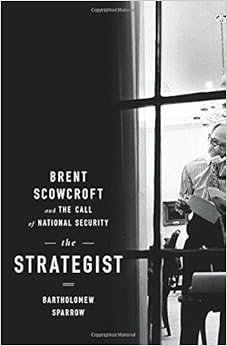
The Strategist: Brent Scowcroft ad the Call of National Security by Bartholomew Sparrow

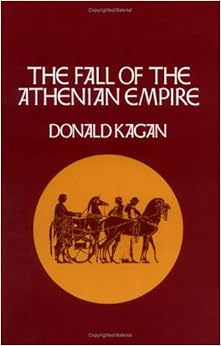
The Fall of the Athenian Empire by Donald Kagan

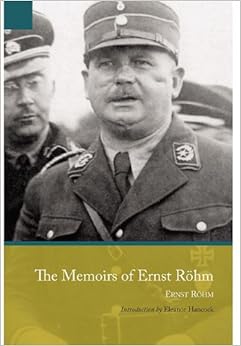
The Memoirs of Ernst Rohm by Ernst Rohm

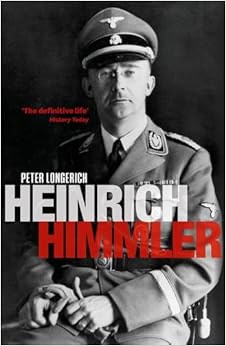
Heinrich Himmler by Peter Longerich 

The Origins of the Final Solution by Christopher Browning

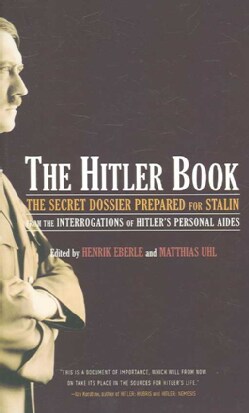
The Hitler Book: The Secret Dossier Prepared for Stalin by Henrik Eberle

Some new books….

The bio of Brent Scowcroft, if my impressions from picking up and opening to two random sections are valid, is going to be very. very good (they were on Scowcroft’s estimation of the working relationship of Henry Kissinger and Richard Nixon and Scowcroft’s strategic adice to the first President Bush during German reunification). I was very impressed both with Sparrow’s prose and his ability to let Scowcroft’s voice shine through the text.

I’m a fan of the pessimistic Donald Kagan and recommend his Yale Open Courseware series on Ancient Greece from time to time to my own students who show an interest in the Classical world. One of Kagan’s students, now an academic nautical archaeologist, John R. Hale, also produced a fine history of the Athenian navy and the intertwining of thalassocracy, empire and the Radical Democracy and I recommend that book to my students as well.

The next three books are related.  Last year I read the frequently useful, but also at times turgidly tedious, I Knew Hitler, by Kurt G. W. Ludecke. The cause of Ludecke’s downfall with his semi-friend Adolf Hitler was the former’s constant embrace and enthusiastic promotion of the populist roughneck, leftist and “idealist” figures in the Nazi Party, like Ernst Rohm, the Strasser brothers and Alfred Rosenberg and Ludecke’s belief that the “movement” came before the Fuhrer. Ludecke dedicated his massive memoir to the memory of Rohm, who was the catalyst between the old Freikorps paramilitarism of the old German nationalist Right and its hideous and radicalized offspring, National Socialism. Rohm is a key figure in the development of Nazism and a complicated one, being one of the few early Nazi leaders to have been on familiar (“Du”) terms with Adolf Hitler and his sudden fall had wider implications than were realized at the time – including inspiring Stalin to reshape Soviet society with terror and murder  (“Hitler, he shows us how to deal with political opponents!”). Rohm’s memoir has been partially translated into English and deals with the early years when the Nazis were but one extremist party in an ecosystem of radical right German politics.

Peter Longerich is one of the top German experts on the Holocaust and it is fitting that he has completed a monumental biography of Rohm’s former deputy, Heinrich Himmler, Reichsfuhrer-SS and the chief implementer of the Holocaust of European Jewry. Chris Browning, another expert on the Holocaust also has much to say on the role of Himmler and competing Nazi functionaries in the evolution of genocide as a state policy of the Third Reich. Finally, The Hitler Book was an NKVD/MGB top secret analysis put together by Soviet intelligence for Josef Stalin, mirroring, to a small extent, the OSS psychological profiling of Hitler and top Nazi leaders during the war.

Recently, T. Greer of Scholar’s Stage blog asked me how many of the strategy related books on my shelves had been read vs. being in the antilibrary. The answer was “most”. My antilibrary tends toward history and biography where I buy books more quickly than I can read them, while more instrumental books are bought and read shortly thereafter. I also trend toward “collecting” in Soviet studies, classical antiquity, Second and Third Reich Germany, US diplomatic history and books related to the Nixon administration.

What are you reading and buying these days?
Definitely my “Best Book” of 2014

Monday, February 23rd, 2015

[ by Charles Cameron — I’m posting this not just to recommend Brown’s book, but also to make a significant excerpt from it readily available on the net ]
.

Misquoting Muhammad cover

**

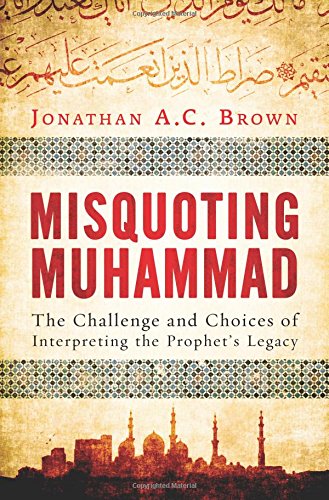
One book I received this year has given me a greater depth of understanding than any other by a wide margin. That book is Professor Jonathan AC Brown‘s book, Misquoting Muhammad: The Challenge and Choices of Interpreting the Prophet’s Legacy.

Brown is a Muslim, a professor at Georgetown, and author of Hadith: Muhammad’s Legacy in the Medieval and Modern World. His book Misquoting Muhammad — not his choice of title, btw — lays open the varieties of interpretive possibility in dealing with the Qur’an and ahadith with comprehensive scholarship and clarity. In light of the upsurge in interest in Islamic and Islamist religious teachings occasioned by Graeme Wood‘s recent Atlantic article, I asked Prof. Brown’s permission to reproduce here the section of his book dealing with abrogation and the rules of war.

Here then, with his permission, is an extract from Misquoting Muhammad. I hope it will prove of use both here and to others beyond the circle of Zenpundit readers. Spread the word!

The whole book is worth reading, the whole of this extract is worth reading — but the section within the extract that I particularly recommend is the passage which begins with “Abrogation brought into sharp contrast” (p.100) and ends with “but were those who died not also my servants?” (p. 103).

**

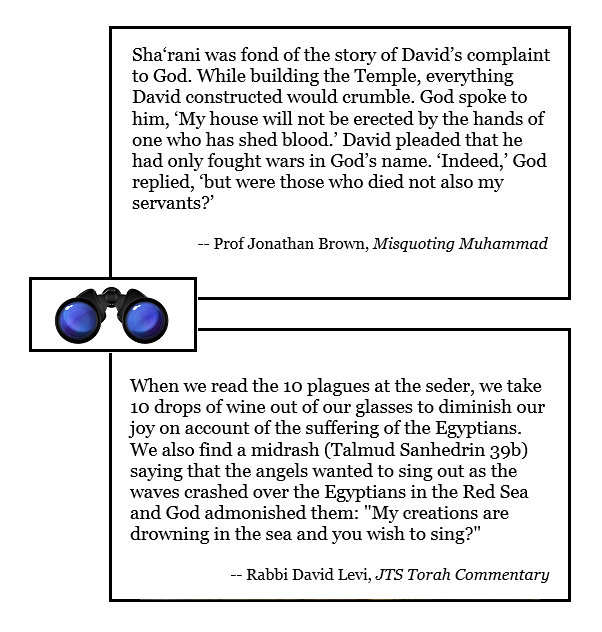
By way of a bonus, here’s a related DoubleQuote:

SPEC DQ hadith & midrash

Midrash Source:

  • Rabbi David Levi, JTS Torah Commentary
  • Life imitates art: the eavesdropping TV

    Monday, February 9th, 2015

    [ by Charles Cameron — an excellent example of a DoubleQuote in the Wild ]
    .

    Excellent use of a DoubleQuote in the Wild from Parker Higgins:

    However: I don’t believe Orwell was recommending the kind of future he depicted. Neither does Parker Higgins, and neither do you.

    So why are we rushing headlong into Orwell’s dystopia?

    Early Endorsement

    Thursday, February 5th, 2015

    [by Mark Safranski, a.k.a “zen“]

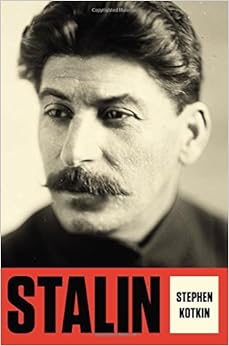
    Stalin: Volume I. Paradoxes of Power 1878-1928 by Stephen Kotkin

    I’ve read quite a bit about old Uncle Joe.

    Most of the major biographies of Stalin sit on my shelf, including those from Adam Ulam, Roy Medvedev, Robert Tucker, Simon Sebag Montefiore, Dimitri Volkogonov and other historians more obscure. I’ve read extensive commentaries about the Kremlin Mountaineer from Robert Conquest, Richard Pipes, Aleksandr Solzhenitsyn,  Milovan Djilas, George Kennan, Nikita Krushchev, Leon Trotskii, Amy Knight, Vyacheslav Molotov, Anton Antonov-Oveseenko, Al Resis, Pavel Sudoplatov, Walter Bedell Smith, Eric Hobsbawm, Herbert von Dirksen, Anatoly Dobrynin and various biographers of Churchill, Truman, FDR, Hitler and Mao. I’m not a Soviet expert, but for a layman, I can throw down rather well on Josef Stalin and his Soviet system.

    So, with that in mind, if you are a Russian history buff or Soviet studies person you need to run, not walk, to get yourself a copy of Stalin: Volume I. by Princeton historian Stephen Kotkin.

    It is simply that good!

    Theory and Practice, Ideal and Real, War and Peace

    Monday, January 26th, 2015

    [ by Charles Cameron — hoping to introduce my many friends in the peace and light camp to my many friends in the carry a big stick camp, with a view to furthering mutual understanding ]
    .

    A confluence in my infostream this morning:
    .

    cantilever
    .

    Let’s start with this brilliant example of theory (the diagram of the cantilever principle, above) and practice (the human demonstration, below). In the above instance, at least, the theory works out in practice. BTW, I think this image qualifies as a DoubleQuote in the Wild.

    **

    There’s a problem when things just don’t work out that way, however, and Cardinal Richelieu nails it:
    .

    Richelieu quote
    .

    I’m afraid the recently past century amply bears out Richelieu’s point.

    Theory is often too simple to match practice, and attempts to fit the real world into a crippling procrustean box of its own devising.

    **

    I might not have taken an interest in these two tweets, if I hadn’t also read Ahmed Humayun‘s post, The Politics of Barbarism, on 3 Quarks Daily today, and blog-friend Omar Ali‘s comments in particular.

    Humayun’s piece is essentially a precis and analysis of Abu Bakr Naji‘s The Management of Savagery, a book, incidentally, which has as much to do with management as it does with savagery.

    But to get to the point which interests me, one Raza Husain commented that in place of recent wars in Afghanistan and Iraq:

    A trillion dollars on development work, schools, hospitals, roads, power plants, would have been money better spent and possibly just as helpful to the American economy if not to the arms industry in particular.

    to which Omar responded:

    A trillion dollars spent through what state apparatus? protected by what army? under which laws? (not saying it cannot be done, but those questions need answers first, otherwise how will the money actually get spent where you want it spent?)

    And that’s it, right there.

    **

    Richard Grenier paraphrased George Orwell nicely when he wrote:

    people sleep peacefully in their beds at night only because rough men stand ready to do violence on their behalf

    If I was to DoubleQuote that, my pairing quote would be from John Adams:

    I must study Politicks and War that my sons may have liberty to study Mathematicks and Philosophy. My sons ought to study mathematics and Philosophy, Geography, natural History, naval Architecture, navigation, Commerce and Agriculature, in order to give their Children a right to study Painting, Poetry, Musick, Architecture, Statuary, Tapestry and Porcelaine.

    **

    The Ideal and Real are, respectively, Theory and Practice, and we need, we are constituted to need both — and yet our discourse all too often promotes one (shorthand: peace) or the other (shorthand: war), without looking at how each can serve and illuminate the other.

    For my purposes, it is essentially peace that is the objective, and war that should (where and when needed) serve it: but it is justice, as in peace with justice, that is the necessary third term bringing peace and war (to include revolution?) into their constantly shifting alignment.

    **

    If one group of people chants peace, peace, while another prepares for, and makes, war — without justice rather than profit being its central motivation and the arbiter of its outcomes — there’s little chance of mutual understanding. The peaceables will think the warlikes lack “moral” sense, the warlikes will think the peaceables lack “common” sense, each side will seem senseless to the other — and the wheel will continue to turn.

    What I would like to see — to foster — is deliberation, debate, discourse between these two camps, the idealists and the realists (and I use those terms without their technical senses as terms of art), those who would seek peace and those who would protect them from violence.

    Because humanity is half-angelic, half-bestial, and the question is how the angelic can best deploy against the bestial. Or as Naji has it, against Savagery.

    **

    There are two distinct scenarions that I try to bear in mind, in one of which an archipelago of islands is seen in a seascape, while the other shows a number of lakes in a lanscape of mountains, hills and valleys.

    The only difference between them, as I envision them, is the water level.

    Raise the water level, and the lakes join to become a sea in which the isolated remaining hill and mountain tops have become islands — lower the water level, and the islands become the hills and mountain tops of a landscape, with the sea now diminished to a congeries of lakes and pools in its valleys.

    The quest, here, by analogy, is for optimal levels of protective violence to obtain and sustain a widespread and liveable landscape of peace.

    Your thoughts?

    **

    Image sources:

  • Cantilever, via BoingBoing
  • Richelieu, via the Economist

  • Switch to our mobile site