zenpundit.com » book

Archive for the ‘book’ Category

“Friends of Zenpundit.com who Wrote Books” Post #2: Poetry, War & Business

Wednesday, December 4th, 2013

As the holiday season is here, I thought it would be amusing between now and Christmas to do a series of posts on books by people who have, in some fashion, been friends of ZP by supporting us with links, guest-posts, friendly comments and other intuitive gestures of online association. One keyboard washes the other.

The second installment focuses on Poetry, War and Business:
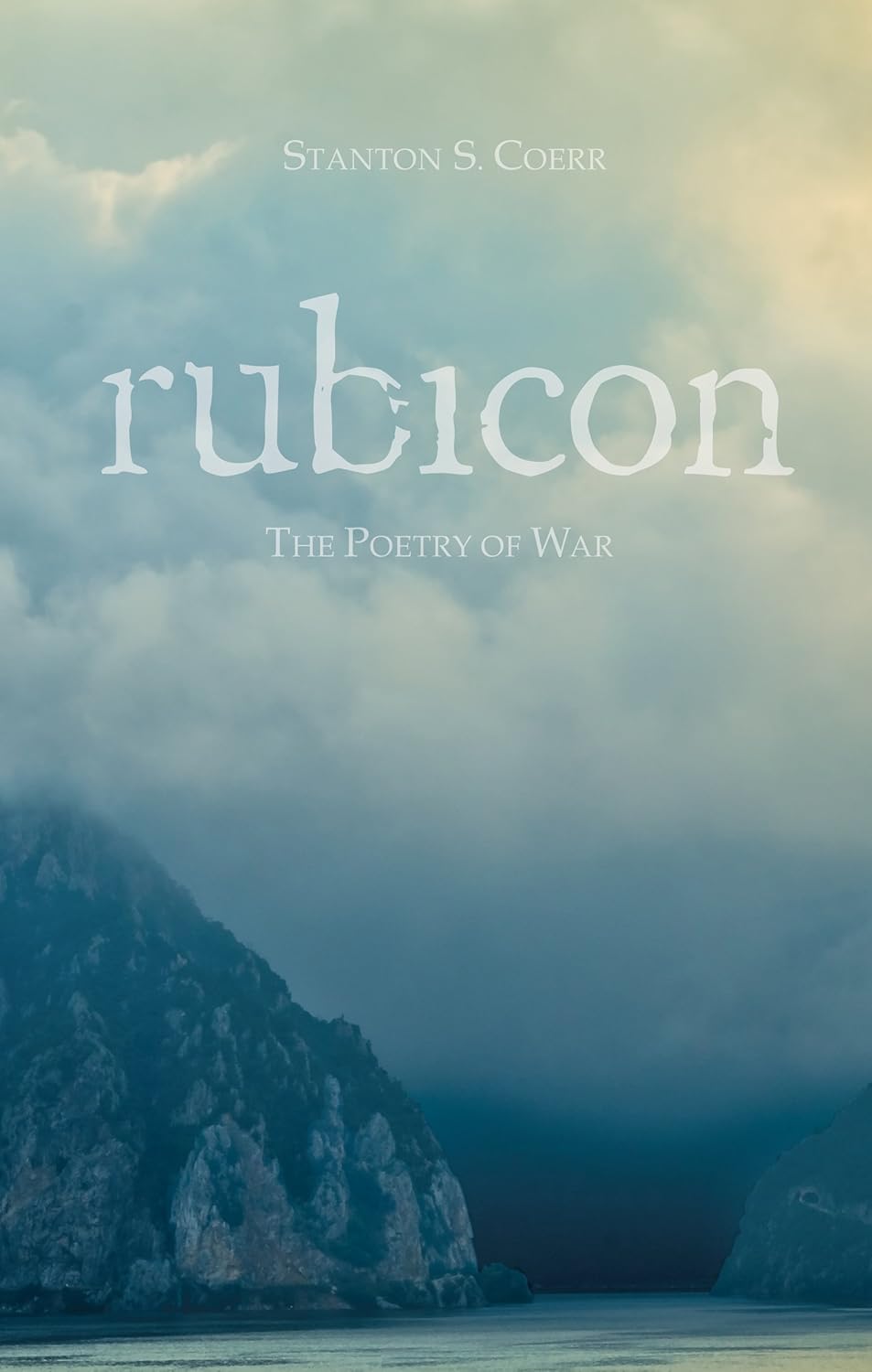
Stanton Coerr

Rubicon: The Poetry of War 

Colonel Stan Coerr is a combat vet (USMC) of Iraq, a naval aviator, poet and a key organizer of the Boyd & Beyond Conference. He is also intent on becoming a historian, to which I give a hearty thumb’s up!

Terry Barnhart

Creating a Lean R&D System: Lean Principles and Approaches for Pharmaceutical and Research-Based Organizations

Scientist and organizational consultant, Dr. Terry Barnhart, is the originator of “fast learning” strategies for organizational excellence and problem solving. I personally use Terry’s “Critical Question Mapping” strategy with students and elicited amazing results each time.

James Frayne

Cover of Meet the People by James Frayne

Meet the People: Why businesses must engage with public opinion to manage and enhance their reputations

Across the pond, James Frayne is a leading British political and media strategy consultant and former government official. Some of you may remember James from his excellent ( now defunct) political strategy blog Campaign War Room and from his participation in the Reagan Roundtable at Chicago Boyz.

More to come…..

ADDENDUM:

The previous post in the series has been pulled temporarily due to emerging scripting execution errors – it will be restored in a few days

New Books and Reading

Thursday, October 31st, 2013

[by Mark Safranski, a.k.a “zen“]
 

Strategy: A History by Sir Lawrence Freedman  
Out of the Mountains by David Kilcullen

As I promised Professor Freedman a few weeks ago in the comments section, I ordered his book, Strategy: A History and it arrived yesterday, so I am bumping it to the top of my very large and disorderly book pile ( now a desk high stack) and will begin reading it immediately. I believe Scott Shipman is already reading it too, so perhaps when I review it we can have a mini-round table with other people posting or guest posting their impressions, maybe end of November.

Out of the Mountains will be the third book by COIN guru David Kilcullen that I have read. I think he is on the right track here, in big picture terms. If guerrillas need, like fish, to swim in the sea of people, densely packed urban areas, megacities, are needed to thwart aerial surveillance and inhibit freely administered “death from the skies” delivered by drones.  Bombing a hamlet in FATA is a different kettle of fish from taking out a Land Rover speeding on an 8 lane highway outside LA with a Hellfire missile  or targeting a shopping mall in a ritzy Chicago suburb on the Lake.

I am also reading the following books:


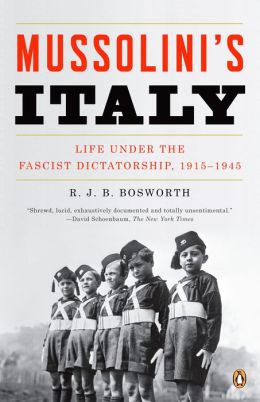
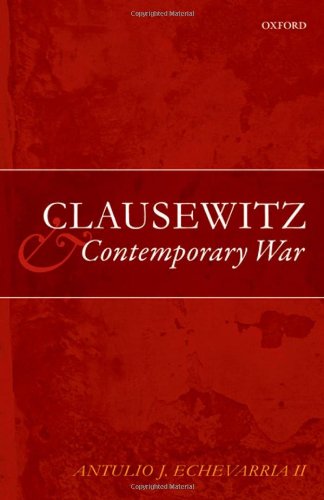
The former is giving me a granular view of Fascism in its original form with a social historian’s perspective. I’m 250 pages in and I’m not half finished. Echevarria is always a good read with clear arguments.

This past year, I have not read enough or read seriously with attending marginalia comments and I am feeling the absence. Too many things have been permitted to distract me; while this was not always within my control, honesty compels me to admit that my self-discipline slackened this year. It is time to rectify that – evidence for which will be more frequent book review here.

What are you reading?

New Article up at Pragati: Lethal Ideas & Insurgent Memories – Review of The Violent Image

Friday, October 25th, 2013

[by Mark Safranski, a.k.a. “zen“]


The Violent Image by Neville Bolt 

I have a new book review up at Pragati this morning:

Lethal ideas and insurgent memory 

….One expert who does acknowledge a paradigmatic shift and posits a powerful explanatory model for the behavior of what he terms “the new revolutionaries” is Dr Neville Bolt of the War Studies Department of King’s College, London and author of The Violent Image: Insurgent Propaganda and the New Revolutionaries. Taking a constructivist view of irregular military conflict as the means by which insurgents weave an enduring political narrative of mythic power and shape historical memory, Bolt eschews some cherished strategic tenets of realists and Clausewitzians. The ecology of social media, powered by decentralised, instant communication platforms and the breakdown of formerly autarkic or regulated polities under the corrosive effects of capitalist market expansion, have been, in Bolt’s view, strategic game changers “creating room to maneuver” in a new “cognitive battlespace” for “complex insurgencies”.  Violent “Propaganda of the Deed”, once the nihilistic signature of 19th century Anarchist-terrorist groups like the People’s Will, has reemerged in the 21stcentury’s continuous media attention environment as a critical tool for insurgents to compress time and space through “…a dramatic crisis that must be provoked”.

As a book The Violent Image sits at the very verge of war and politics where ideas become weapons and serve as a catalyst for turning grievance into physical aggression and violence. Running two hundred and sixty-nine heavily footnoted pages and an extensive bibliography that demonstrates Bolt’s impressive depth of research. While Bolt at times slips into academic style, for the most part his prose is clear, forceful and therefore useful and accessible to the practitioner or policy maker. Particularly for the latter, are Bolt’s investigations into violent action by modern terrorists as a metaphor impacting time (thus, decision cycles) across a multiplicity of audiences.  This capacity for harvesting strategic effect from terrorist events was something lacking in the 19th and early 20thcentury followers of Bakunin and Lenin (in his dalliances with terrorism); or in Bolt’s view, the anarchists “failed to evoke a coherent understanding in the population” or a “sustained message”.

Read the rest here.


Charles Hill on Freedman’s Strategy: A History

Thursday, October 3rd, 2013

[by Mark Safranski, a.k.a. “zen“]


Charles Hill pens a favorable but also fairly critical review of Sir Lawrence Freedman’s tome-like, Strategy: A History.

The snares of strategizing

.…Sir Lawrence Freedman’s 750-page magnum opus, Strategy: A History, is encyclopedic, although not alphabetical, a pleasure to dip into here and there to get a carefully considered summary briefing on the strategy of the Hebrew Bible, the 1815 Congress of Vienna, Jane Addams, Black Power, or the strange array of social science attempts to redefine human behavior as a contribution to strategy. Everybody talks about strategy, but no one seems to know what it is. But now there are no excuses; it’s all here, at least in chronological array. As with my childhood set of Compton’s, I read it straight through for its several-thousand-years’-long narrative arc; it only remains to try to make sense of the whole thing as one big idea.

Freedman begins by admitting that there is no agreed-upon definition of strategy. When one encounters the word applied to battle plans, political campaigns, and business deals, “not to mention means of coping with the stresses of everyday life,” the concept may begin to seem meaningless. But not so for Sir Lawrence, a most distinguished professor of war studies at King’s College, London, who unapologetically focuses his modern section on American approaches because “the United States has been not only the most powerful but also the most intellectually innovative country in recent times.”

The “origins” of strategy run from David and Goliath to Machiavelli to Milton’s Paradise Lost, a vast stretch of time covered, for this big book, in a relatively short space, as though the author is hurrying to get to strategy in our modern age. All the old warhorses are here. Thucydides is analyzed as the start of “real” strategy and the distortions of language as a cause of Athens’ fall is featured. Plato’s Republic is taken seriously as a “strategic coup” by which philosophy defeats strategy. (I am one of those who read Plato’s Socrates as ironic, playing along with an overnight concoction of a perfect polity—which turns out horribly—as the most effective way of showing us what not to do when thinking strategically.) Sun Tzu is properly portrayed not so much as a strategist as a master of stratagems, a subset of the art in full: To do the opposite of what is expected is not enough to qualify as strategy. Overall, the centuries of “Origins” analyzed here could be characterized as “a series of footnotes to Homer,” a running debate between advocates of force (Achilles) and those who prefer guile (Odysseus). The Trojan Horse was guile personified; it worked, but thereafter could be scorned as a despicable trick unworthy of heroes. The strategic approach of Milton’s Satan to his own demonic team, as well as toward Adam and Eve, was all seductive guile and still seems to be working….

The book comes across as being rather unwieldy in size, scope and definition of strategy, though informative. I disagree with Hill’s interpretation of Sun Tzu as well as Plato ( Socrates was an ironist, Plato? Well, he wandered quite far from his master’s teachings in the fullness of time). Nevertheless, worth a read.

Brief Note and New Books

Monday, September 30th, 2013

[by Mark Safranski, a.k.a. “zen“]

Working on a number of things, top priority among which is a cross-post for Nuclear Diner about the Myhrvold Report that Cheryl Rofer decisively shredded here last week. Cheryl and I have done some point-counterpoint and blogging  round tables together in the past but, this time I have been handicapped in my response by being largely in agreement 🙂  I will try to hit the report from a somewhat different angle but like Cheryl I have some serious reservations.

Picked up a few new reads this weekend that should be interesting to the readership:


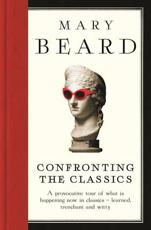
Confronting the Classics by Mary Beard

Dirty Wars by Jeremy Scahill 

Mary Beard is a British celebrity classicist from King’s College, an eminent figure in the field and extremely active in the social media realm where her blog, A Don’s Life and her twitter account are highly popular. She seems somewhat leftish anti-American in her politics, but does not appear to be under what Popper termed “the spell of Plato” and regards Socrates as a radical and subversive ( which he was, though not quite in the modern sense of those words).  Here is a sample of Beard’s prose:

Marcus Tullius Cicero was murdered on 7 December 43 BC: Rome’s most famous orator, off-and-on defender of Republican liberty and thundering critic of autocracy. He was finally hunted down by lackeys of Mark Antony, a member of Rome’s ruling junta and principal victim of Cicero’s dazzling swansong of invective: more than a dozen speeches called the Philippics, after Demosthenes almost equally nasty attacks on Philip of Macedon, three centuries earlier.

Cicero of course shared the fate of Demosthenes, dying less ignobly than Pompey but much less impressively to his fellow Romans than did the fanatical Cato. As a result, Cato has an equally uncompromising libertarian think tank named in his honor while America’s gift to Cicero’s posterity is only a mafia-infested Chicago suburb.

Scahill is much better known figure than Beard. I frankly disagree in principle with his take on drones and al Qaida targets – unless they are hors d’ combat or attempting to surrender, as combatants *all* AQ members are legitimate military targets under the laws of war, period – but I wanted to see what his argument was at it’s most expansive and fully documented. Should be an interesting read.


Switch to our mobile site