Archive for the ‘media’ Category
Trackback: from Kenya to Cromwell?
Friday, April 6th, 2012[ by Charles Cameron — Kenyan jihadist mag, and the morphing of a quote from grenades to planes to maybe swords? ]
.
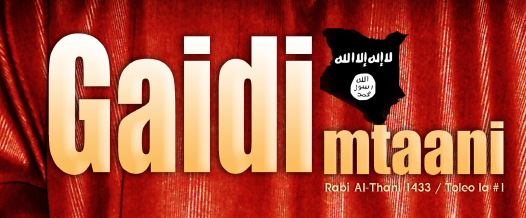
Grenades:
If our words could have reached you by mouth, then they would not have been sent by grenades.
Abu-Usama in Gaidi Mtaani, the new Swahili jihadist magazine, issue #1 p. 14 — h/t Aaron Zelin
Planes:
If our messages had been able to reach you through words, we wouldn’t have been delivering them through planes.
Osama bin Laden, quoted in WaPo, Jan 2010.
Swords:
Well, Oliver, when men run out of words, they reach for their swords.
Oliver Cromwell to his son, in Cromwell (1970)

But that’s absurd!
Saturday, March 31st, 2012[ by Charles Cameron — truth or consequences? ]
.

Okay, you can’t always trust intelligence agencies: some of what they do is necessarily clandestine.
And you can’t always trust the media: some of what they do is allegedly fair and balanced.
Then there are folks like Michael Ruppert, who holds VP Dick Cheney at least partially responsible for 9/11…
And now Robert Spencer thinks Al-Qaida maybe runs CIA counterterrorism?
Unh?
So who can you trust?
Jihad for all Seasons: Review of Storming the World Stage (in PRAGATI)
Thursday, November 10th, 2011
Storming the World Stage: The Story of Lashkar-e-Taiba by Stephen Tankel
PRAGATI, India’s National Interest Review magazine has published my review of Dr. Stephen Tankel’s book on Lashkar-e-Taiba, titled Storming the World Stage. The article is not yet online (I will add the link when it is released) but the issue digest PDF version is below:
pragati-issue56-nov2011-communityed.pdf
“Jihad for all seasons”
….Carnegie and RAND scholar Stephen Tankel has endeavored to demystify and deconstruct LeT in his meticulously researched book, Storming The World Stage: The Story of Lashkar-e-Taiba and bring into the light the complex relationships that entwine LeT with the Pakistani state and the subterranean universe of radical jihadi politics. Conducting extensive interviews with Islamist militants, Western and Indian intelligence officials, Pakistani politicians and ISI officers and buttressing his narrative with sixty-three pages of end-notes, Tankel has produced a portrait of Lashkar-e-Taiba that is accessible to the layman while remaining a methodical work of scholarship.
…. An organisation that, like Hezbollah, is state-sponsored but not controlled, Lashkar-e-Taiba is suited for waging what military analyst Frank Hoffman terms “Hybrid War”, but how LeT would play that role in an Indo-Pakistani War is left to the reader’s inference. LeT also demonstrated in Mumbai a fluid tactical excellence in its use of off-the-shelf technology, small arms and mobility to reap an enormous return-on-investment by attacking soft targets, much along the asymmetric lines advocated by warfare theorist John Robb. Tactics that are a critical threat to any open society by forcing it to take preventive measures which are ruinously expensive and contraindicated to keeping society free and democratic….
Will update post as matters develop.
Steve Jobs by Walter Isaacson, a review
Thursday, October 27th, 2011[by J. Scott Shipman]
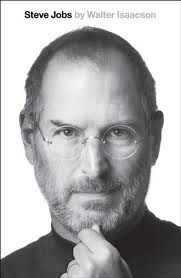
Walter Isaacson, the acclaimed author of biographies of Benjamin Franklin and Albert Einstein, has produced a definitive and up-close biography of Steve Jobs. The book is a very readable 571 pages that took only a couple of days to read. Jobs approached Isaacson to write his bio in 2004, but Isaacson resisted until 2009 when Jobs’ wife Laurene Powell “said bluntly, “If you’re ever going to do a book on Steve, you’d better do it now.”” Isaacson insists no restrictions were placed on him, in fact, Jobs and his wife facilitated access to many people who do did not hold Jobs in high regard—the man excited passions good and bad. I found it ironic that Jobs, a man who obsessed with control would willingly relinquish control in what will probably be the definitive biography of his life.
Isaacson offered early that his book is really about innovation. He offers: “At a time when the United States is seeking ways to sustain its innovative edge, and when societies around the world are trying to build creative digital-age economies, Jobs stands as the ultimate icon of inventiveness, imagination, and sustained innovation.” Given Apple’s growth, his point is well taken.
Isaacson clearly admires Jobs, but he does not spare the reader of Jobs volatile and brutal out-bursts directed at just about anyone he considered a “bozo” or worse. From the beginning, Jobs was a very difficult person to work with. He did not tolerate mediocrity and punished what he thought was mediocre thinking, often publicly. Isaacson offers some insights and ideas as to the cause of Jobs distinctly caustic personality, but most ring hollow. Jobs was a driven and passionate man, with very little empathy—even for family members. Isaacson suggests “people who were not crushed ended up being stronger” and many of the folks interviewed agreed—Jobs drove people to do things they didn’t know they could do. As one of Jobs colleagues Debi Coleman said, “You did the impossible, because you didn’t realize it was impossible.” So the folks he didn’t scare off, appear to have been inspired. Tim Cook, Jobs’ successor offered, “What I learned about Steve was that people mistook some of his comments as ranting or negativism, but it was really just the way he showed passion. So that’s how I processed it, and I never took issue personally.”
My favorite parts of the book were Isaacson’s liberal use of quotes from Jobs. Some quotes bristle with passion, and a few were profound. This one appealed to my notions on pattern cognition:
Your thoughts construct patterns like scaffolding in your mind. You are really etching chemical patterns. In most cases, people get stuck in those patterns, just like grooves in a record, and they never get out of them.
Isaacson covers Jobs journey at Apple, NeXT, Pixar, and his triumphant return to Apple. I did not know much about Jobs at Pixar and found it interesting that Jobs was CEO at both companies simultaneously—and both companies had a “different” versions of Jobs. Isaacson says, “Pixar was a haven where Jobs could escape the intensity of Cupertino. At Apple, the managers often excitable and exhausted, Jobs tended to be volatile, and people felt nervous about where they stood with him….It was a Pixar that he learned to let other creative people flourish and take the lead.” Jobs was more hands-on at Apple I sense because he considered it his creation—essentially an extension of his person. I suspect Jobs viewed his role at Pixar as more that of a steward in comparison.
Jobs hated slide presentations (I agree—one great thing about Boyd & Beyond is the general ban on PowerPoint) and said, “People who know what they’re talking about don’t need PowerPoint.” There is a poignant passage towards the end where Jobs was meeting with his team of doctors and the doctor had a PowerPoint presentation. Jobs gently suggested the Apple Keynote program was better.
Jobs, despite his bristly exterior, reached deep in his Zen training and life experience (particularly after his cancer diagnosis) when he spoke at the 2005 Stanford commencement:
Remembering that I’ll be dead soon is the most important tool I’ve ever encountered to help me make the big choices of life. Because almost everything—all external expectations, all pride, all fear of embarrassment or failure—these things just fall away in the face of death, leaving only what is truly important. Remembering that you are going to die is the best way I know to avoid the trap of thinking you have something to lose. You are already naked. There is no reason not to follow your heart.
We are a Apple/MacBook Pro family, we have iPhones, iPods, and the iPad on our wish list. Isaacson discusses one thing I’ve noticed with every Apple purchase; the thought put into packaging of the product. Apple packaging is patented and it shows. Jobs alter ego and head Apple designer Jonathan Ive, said, “Steve and I spend a lot of time on the packaging…I love the process of unpacking something. You design a ritual of unpacking to make the product feel special. Packaging can be theater, it can create a story.” I believe we have kept every box our Apple products arrived in—they are works of art.
This book will elicit the spectrum of emotions, there are parts where I was embarrassed or appalled at Jobs poor behavior, there were tender moments towards the end of his storied life that brought a tear to my eye. Isaacson has given us a valuable portrait of a man mathematician Mark Kac “called a magician genius, someone whose insights came out of the blue and require intuition more than mere mental processing power.”
Isaacson’s Steve Jobs comes with my highest recommendation.
NOTE: This is admittedly a different book review for this site. I’ll admit up front that I’m a fan of Jobs and his products—and I know many people hate him passionately and with good reason. I’m sharing this review because Jobs was an iconoclast very similar to John Boyd: people either loved him or hated him. Both men were driven, had poor people skills, and both left rich legacies in completely different areas, and are eminently interesting figures.



