zenpundit.com » historians

Archive for the ‘historians’ Category

D’Este on Churchill at HNN

Saturday, January 31st, 2009

Military historian Carlo D’Este had an inspiring piece up at HNN last week on Sir Winston Churchill, drawn from his book Warlord: A Life of Winston Churchill at War, 1874-1945:

The Power of Oratory: Why Churchill is Still Relevant

….From the time he became prime minister, until December 1941, when Pearl Harbor brought the United States into the war, Churchill’s strongest weapon was oratory. As a young army officer stationed in India in 1897 he wrote that: “Of all the talents bestowed upon men, none is so precious as the gift of oratory.”

His speeches of 1940 become legendary, not only for their magnetism but more importantly for their effect on public morale. To counter both the disastrous news in France and to put to rest any notion that Britain might capitulate, Churchill delivered one of his many patriotic speeches to Parliament on June 18 that was also broadcast by the BBC. He made no effort to sugarcoat the extent of the dire situation Britain faced. The struggle that lay ahead from the air and likely from invasion would be met with every means and would be rebuffed. Of Hitler and the nations now under the Nazi jackboot, he said, “If we can stand up to him, all Europe may be free . . . But if we fail, then the whole world, including the United States . . . will sink into the abyss of a new Dark Age … Let us therefore brace ourselves to our duties, and so bear ourselves that, if the British Empire and Commonwealth last for a thousand years, men will say, ‘This was their finest hour.’

Read the rest here.

Churchill was an inordinately creative military leader, deeply interested in all facets of warfare from intelligence to technological innovations in armaments ( famously a proponent of the development of the tank in WWI) to military tactics. The amphibious landing at Gallipoli was a disaster but Normandy a generation later, despite Churchill’s misgivings, was a providential success. When in political disgrace – mostly undeserved – as a result of Gallipoli, Churchill did not retire to the shadows but donned a uniform and went to the Western Front ! Moreover he demonstrated there exemplary bravery under fire.

Can anyone imagine a politician doing that today? Or the public expecting him to do so ?

In the Second World War, in 1940 -1941, Churchill was the  indomitible rock upon which Western civilization rested. A lesser man as Prime Minister would have taken easy terms from Hitler and made Great Britain a satellite empire of the Greater German Reich, akin to the Phonecians’ relationship to ancient Persia. Few people alive today realize how dire the situation was in the Spring of 1941 and how close liberal democracy came to vanishing from history. 

Thanks to Churchill and the bravery of the RAF, the West had a chance to catch it’s breath.

Cartledge on Alexander

Friday, December 26th, 2008

I just picked up the eminently readable biography,  Alexander the Great by Cambridge professor and classical historian Paul Cartledge . I’ve previously enjoyed Cartledge on his explanations of Spartan culture and history and the first few chapters of Alexander are just as clear and enjoyable.

Addendum:

“Go, tell the Spartans!”

Recommended…Reads.

Sunday, December 21st, 2008

              boydbook.jpg       

 Need a last minute gift idea for….yourself?  Some highly recommended books that I’ve perused in the past year or so:
Great Powers: America and the World After Bush by Thomas P.M. Barnett 

Having read an advanced copy, this is easily Tom’s best work, surpassing his bestselling The Pentagon’s New Map in sweep and historical depth. A book with a provocative analysis that is definitely going to challenge the comfortable assumptions of the defense and foreign policy establishments and enrage not a few partisans. I will have a full review in mid-January after I see the “final edit” version.

Caesar: Life of a Colossus by Adrian Goldsworthy

Goldsworthy, a British military historian, gives Julius Caesar the same comprehensive and magisterial treatment that Alan Schom rendered with his landmark biography of Napoleon (Napoleon Bonaparte, incidentally, was an admirer of Hannibal, not Caesar) A biography and work of military history that is a page turner.

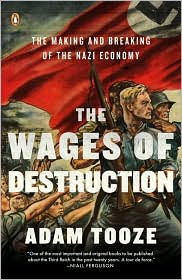
The Wages of Destruction: The Making and Breaking of the Nazi Economy by Adam Tooze

Dan from Madison at Chicago Boyz has reviewed Wages of Destruction, which led me to pick up a copy recently and start reading. Like Niall Ferguson, Tooze puts economic history into a dramatic explanatory context. If you have doubts, pick up a copy and flip to the chapter entitled “The Grand Strategy of Racial War” and read. You’ll walk out of the store with it.

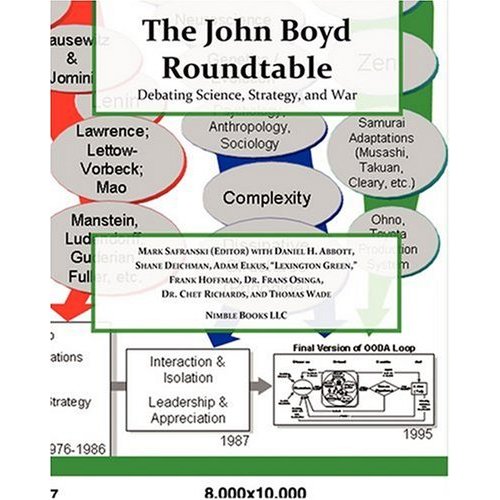
The John Boyd Roundtable: Debating Science, Strategy, and War by Mark Safranski, Daniel Abbott, Chet Richards, Shane Deichman, Thomas Wade, Frans Osinga, Adam Elkus and Frank Hoffman. Foreword by Thomas P.M. Barnett

A refinement and extension of the online roundtable at Chicago Boyz dedicated to reviewing Science, Strategy and War by Col. Frans Osinga (see below) and debating the ideas of the late strategic theorist Colonel John Boyd. Great for both the “Boyd expert” and those wanting a quick primer before tackling Osinga’s monumental work of strategic studies and intellectual history [ Full Disclosure: for newer readers who may not be aware, I was the editor and I’m shamelessly self-promoting here  🙂 ] 

Science, Strategy and War: The Strategic Theory of John Boyd (Strategy and History)  by Frans Osinga

Dr.Osinga has delivered a meticulously researched tome that William Lind called “the book Boyd would have written” that explains Colonel John Boyd as “the first postmodern strategist”. Osinga walks the reader through Boyd’s intellectual journey into fields as far removed from classical military studies as cybernetics, knowledge theory and the work of mathematician Kurt Godel and explains how Boyd distilled a strategic worldview on the nature of conflict and competition.


The Culture of War by Martin van Creveld

Eminent and controversial Dutch-Israeli military historian Martin van Creveld expands upon his body of work that is often described as “prophetic” these days in order to argue the intrinsic cultural value of war.

The Black Swan: The Impact of the Highly Improbable by Nassim Nicholas Taleb

This was the “must read” book of the blogosphere in 2007- 2008, widely cited (though perhaps first by John Robb) for the Black Swan concept itself. Taleb is an idiosyncratic, wide-ranging, writer interested in counterintuitive perspectives and is deeply skeptical of the validity of existing epistemological methodologies. Parts of the book will be of interest only to those with advanced backgrounds in probabalistic analysis and mathematics but there is much else that is intriguing and entertaining along the way while Taleb explains the characteristics of Extremistan and Mediocristan. A friend who moves among quite a few “thought leaders” described Taleb to me as “arrogant” but with something of value to say. Agreed.

On War (Oxford World’s Classics) by Carl von Clausewitz

Pick up a copy and join us during the Clausewitz Roundtable in January!!

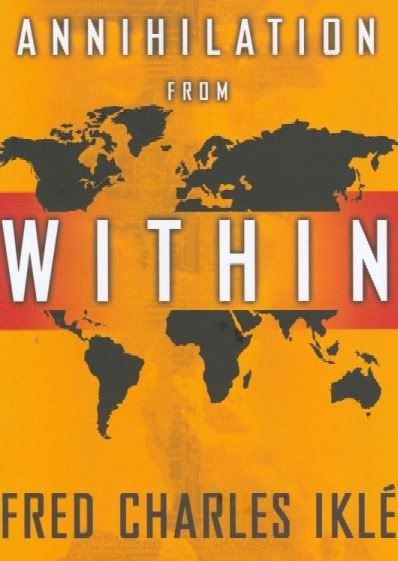
Annihilation from Within: The Ultimate Threat to Nations by Fred C. Ikle

Ikle, a senior Defense Department official in the Reagan administration tackles apocalyptic threat scenarios including the one coming from our own best efforts to avoid them. A gloomy but thought-provoking read.

The Cold War: A New History by John Lewis Gaddis

Gaddis intended to write a book for the college undergraduate or layman that concisely explains the Cold War and the “why ?” of the victory of the West and generally does a superb job of it.  The undercurrent or background that may not be obvious to the layman is that Gaddis is sticking a thumb in the collective eye of the revisionist diplomatic historians of the New Left – notably Walter LaFeber, Lloyd Gardner, Gabriel Kolko and Robert Buzzanco and others descending at least vaguely from the school of thought founded by William Appleman Williams.

Stalin: The Court of the Red Tsar by Simon Sebag Montefiore

A brilliant example of Soviet studies scholarship. I’ve read innumerable books on Stalin and the USSR and I still learned things from  Montefiore. Highly recommended.

The Third Reich in Power, 1933-1939 by Richard J. Evans

The second book in his trilogy on the history of Nazism, Evans looks at the Nazi state and party apparatus and German society during the years of peace. Evans, along with Michael Burleigh, Ian Kershaw and Adam Tooze are revising our understanding of the Third Reich and illuminating that as evil as Hitler’s regime was in fact, it ultimately was intended to be several orders of magnitude worse had Germany won the Second World War.

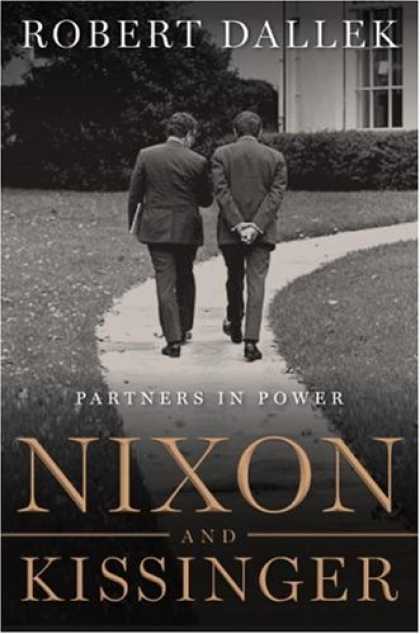
Nixon and Kissinger: Partners in Power by Robert Dallek

A deeply partisan work of history, Dallek makes little effort to be fair (especially in the first half of the text) to either Richard Nixon or Henry Kissinger, both whom he characterizes as mentally and emotionally unstable, if highly intelligent, personalities and makes an argument that Nixon’s mental state during the Watergate crisis required his removal from office under the 25th amendment. It’s difficult to imagine Dallek treating Bill Clinton or LBJ in similar fashion, regardless of their personal behavior or abuses of power because seldom does Nixon ever get the benefit of the doubt ( in comparison Richard Reeves’ devastating profile, Nixon: Alone in the White House is a work of hagiography).

Why read Nixon and Kissinger then ? Because Dallek, despite his biases, has done an outstanding job in presenting new sources and evidence and his delving into the China Opening and Nixon and Kissinger’s very complicated personal relationship, remains a first-rate work of scholarship. Therefore, I say “Read it” ( just do not let it be the only book you read on Richard Nixon).

That’s it!


More on 2025

Wednesday, November 26th, 2008

A follow up with some good commentary on Global Trends 2025.

Dave Schuler writing at Outside the Beltway:

…This idea goes gack to Thomas Carlyle. It’s the “Great Man” theory of history and I think it’s a load of bull. While individual historical figures, e. g. Julius Caesar, Napoleon, Mao, may bring color and texture to the fabric of history that fabric is formed by economics, demographics, and social structures. Gaius Julius Caesar might have elected never to cross the Rubicon into the precincts of Rome, fomenting the collapse of the Republic and the rise of the Empire. Rome would still have been expansionist and there would still have been an empire. Rome’s location, population, and way of life demanded it. We’d just have used some other word for monarch than Kaiser or tsar.

France was loaded for bear after the French Revolution. Even without Napoleon’s military genius it still would have spread the Revolution all over Europe. It might not have invaded Russia but it most certainly would have invaded Italy.

And so on. The ghastly thing about that pronouncement in this document is that it has nothing whatever to do with the meat of the document at all. Nowhere do the authors demonstrate how the choices of individual leaders will influence the world of 2025. If they’re saying that the world of 2025 is completely unpredictable because it will be so completely formed by the decisions of unpredictable leaders in that world they could have stopped this 120 page report at page 25.

There is a repeated confusion of absolute growth with relative growth. While emphasizing the significance of the latter they don’t seem to appreciate that it’s absolute power, strength, and wealth that’s important not relative power, strength, and wealth. China is powerful because of its enormous size not just because of its relative growth, however dramatic that might be. The U. S.’s continued absolute power, strength, and wealth despite the relative change in power, strength, and wealth insures U. S. pre-eminence for the foreseeable future, even with our present economic downturn. Were it otherwise Luxembourg would be the most important country in the world.

Read the rest here

There’s a synergy between great men and their times. Without Adolf Hitler, WWII is a localized, limited, war over the degree to which France and Britain  were going to accept Germany politically dominating the smaller states of Eastern Europe (Germany’s economic domination was inevitable). Without Germany’s defeat in WWI, Versailles and the Depression there would have been no Hitler as Fuhrer of a Nazi regime.

Dave is right that the document is very weak and in need of systems thinkers from the hard and soft sciences and experts on cultural touchstones. Except for a distinct minority, most professional historians shy away from that kind of extrapolation and speculation due to their methodology regarding evidence, or at least they limit the scope of such activities. Historians and futurists are not the same thing, though the two should engage with one another.

Historians as a group tend to excel at going deep on particular subjects with only secondary concern how that subject relates to everything else.  I’ve never been content to accept that, seeing historical knowledge as a platform or scaffold upon which to build new ideas. When I began my first master’s degree, I proposed doing a comparison of the development of the American Populist movement with the Russian Narodniki and People’s Will of the same period. The professor smiled wryly and said that topic was interesting but of a suitable size to be better left for a magnum opus to close out my career.

Analysis is enriched by consilience.

Kagan on the Greeks at Open Yale

Saturday, October 18th, 2008

“He was basileus who became tyrannos….” 

Via Ian , here is a link to eminent classicist and historian Donald Kagan’s introductory course to Ancient Greek History at Open Yale courses. Right now I’m listening to a lecture where Kagan is distinguishing between the Greek views of monarchy and tyranny, something I happen to be teaching my own students via the writings of Polybius.

A hundred plus years ago, when most Americans did not finish their elemntary school education, much less go on to high school, philanthropists like Andrew Carnegie liked to build public libraries because they were the university of the poor man. Today when the overwhelming percentage of Americans graduate high school, however marginal the actual competence of the grads might be and a significant plurality have at least some college, platforms like Yale Open courses and Stanford iTunes let anyone with an internet connection access the best education available on mainstream subjects on their own time, their own pace and for free.

 A state of affairs that could be leveraged fairly easily to systemically enrich other levels of education, public and private.


Switch to our mobile site