zenpundit.com » war

Archive for the ‘war’ Category

Gentile: COIN is Dead, Long Live Strategy!

Tuesday, November 22nd, 2011

 

Will COIN go Gentile into that good night?

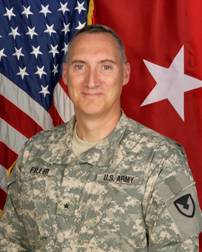
Colonel Gian Gentile at WPR argues that the US Army must put away tactical things of counterinsurgency and assume the responsibilities of strategy:

COIN is Dead: U.S. Army Must Put Strategy Over Tactics

There is perhaps no better measure of the failure of American strategy over the past decade than the fact that in both Iraq and Afghanistan, tactical objectives have been used to define victory. In particular, both wars have been characterized by an all-encompassing obsession with the methods and tactics of counterinsurgency. To be sure, the tactics of counterinsurgency require political and cultural acumen to build host-nation governments and economies. But understanding the political aspects of counterinsurgency tactics is fundamentally different from understanding core American political objectives and then defining a cost-effective strategy to achieve them. If it is to avoid repeating the mistakes of the past decade, American strategic thinking must regain the ability to link cost-effective operational campaigns to core policy objectives, while taking into consideration American political and popular will….

Dr. Gentile is spot on here, but with a caveat that a serving officer cannot readily state: the political class and civilian leadership
of the USG are failing to provide the American military with the appropriate grand strategic and policy guidance
with which to build the strategic bridge between policy and operational art. This is not a small problem.

The military cannot – and more importantly should not  under our constitutional system – be the sole arbiters or enunciators of American strategy. The proper role of the senior military leadership are as junior partners working hand in glove with policy makers and elected officials to fit the use of military force or coercive threat of force with our other levers of national power to advance American interests at acceptable costs to the American people. If the military’s civilian superiors cannot or do not take the lead here in crafting strategy, the US military is unable to step into that inherently political vacuum and it would be an usurpation for them to try. Operational art is as far as they can go on their own authority while remaining on safe constitutional ground.

Rather than seeing the past 10 years of combat in Iraq and Afghanistan as a potent reminder of war’s complexity and, more importantly, of the limits to what it can accomplish, the American military has embraced the idea that better tactics can overcome serious shortcomings in strategy and policy. The ancient Chinese strategist Sun Tzu said thousands of years ago that “strategy without tactics is the slow road to victory,” but “tactics without strategy is the noise before defeat.” Though still relevant, Sun Tzu’s brilliant formulation of the relationship between tactics and strategy is nowhere to be found in current American strategic thinking.

I fear the real stumbling block is that a coherent and effective national strategy is viewed suspiciously in some quarters as a constraint on the tactical political freedom of action of policy makers and politicians to react in their own self-interest to transient domestic political pressures. This view is correct – adopting a strategy, while an iterative process – involves opportunity costs, foreclosing some choices in order to pursue others. Having a realistic strategy to acheive specific ends with reasonable methods and affordable costs is generally incompatible with “keeping all options open”.

Even on purely domestic issues, which politicians have greater familiarity and expertise than foreign and military affairs, the debacle with the borrowing limit and the “supercommittee” demonstrate we have a political class in Washington that is virtually allergic to making choices or assessing costs clearly and honestly. They see even less well in matters of war and peace.

….Future threats for U.S. ground forces promise to be quite lethal, ranging from state-on-state warfare to hybrid warfare to low-end guerilla warfare. Constabulary forces based on light infantry and optimized for wars like Iraq and Afghanistan will be highly vulnerable and open to catastrophic destruction in this lethal, future environment. Instead, future land battlefields demand a ground force built around the pillars of firepower, protection and mobility. Moreover, this future ground force needs to be able to move and fight in dispersed, distributed operations in an age where the accessibility of weapons of mass destruction makes a ground force that concentrates vulnerable to annihilation. Much will have to change in order to transform the Army and Marines to ground formations of this type, but that transformation is critical, and it will not be accomplished if military thinkers remain obsessed with counterinsurgency tactics.

To build American ground formations for an unpredictable future, counterinsurgency operations in Iraq and Afghanistan offer very few strategic guideposts. To argue otherwise is to commit the U.S. Army and Marines to strategic irrelevance in the years and decades ahead.

I would guarantee that the US will be plagued with irregular warfare for as long as we have to co-exist with the rest of the world. What is probable, in my view, is that we are quite likely to face several different kinds of serious security threats at the same time  – say, a terror-insurgency spilling over from Mexico coinciding with a possible conventional war with a regional power while also defending against a run on the dollar if China tries to “Suez” the US during a third country crisis. The luxury of different threats in convenient sequence is unlikely to happen and American military capabilities must be broad and adaptive.

Hat tip SWJ Blog

ADDENDUM:
The Post-COIN Era is Here

Is COIN Dead?

The Human Face of War, a second review

Wednesday, November 16th, 2011

[by J. Scott Shipman]

images-1.jpeg

The Human Face of War by Jim Storr 

[Zen reviewed this book earlier here. I had forgotten that I wrote a rather long review at Amazon after finishing in January 2010. Perhaps Storr will gain a wider audience as a result.]

Mr. Storr’s The Human Face of War will be I predict, a book studied by military professionals (and smart policy makers) for years to come. Using straightforward prose, Mr. Storr seeks to provide a philosophical approach to war—as he says, “In practice we are concerned so much with war as with waging it.” Storr goes on to differentiate between war and warfare; where war is an “issue” with history and warfare dedicated to methods/methodology. Storr rejects notion that war is art or science, and prefers instead to embrace pragmatism and limited empiricism. He points out correctly: “Pragmatism has obvious application to warfare. A significant aspect of warfare is `a process of trial and error; seeing what wins and exploiting it.” Storr continues that “empiricism is not just trial and error: it is a logical process based on structuring observed facts.” What “works” will suggest a way ahead. 

Storr uses broad themes of what has worked and what has not worked in military history by explaining the nature of combat and tools and models available to the practitioner. He uses Clausewitz’s “dialectic of aims and means” in conjunction with Systems Theory to describe the holistic nature of military units; where effective/efficient output is dependent on input—where a good outcome is “winning” (as Storr repeatedly observes throughout the book, armies aren’t paid to come in second). Hence, organization of military units is fundamental; efficient/effective organizations are more likely to succeed. He observes: “Cohesion and collective performance indicate the whole is greater than the sum of the parts. There is a systemic effect, and we should see armed forces as systems.” 

Storr is a proponent of forcing decision making to the folks on the ground using brief and succinct communications. His chapter on Commanding the Battle is excellent. Storr advocates lean command staff’s and dispersed decision making. “We should employ the best brains in small groups, rather than try to assemble a collective brain.” He points out that “when staff numbers are reduced, the effectiveness of HQ improves.” “Reducing staff numbers would increase speed with which they could get things done.” [Amazingly, Storr quotes a work from 1998 that reports a typical Western division commander has 600 people supporting!—and that number has, I’m sure increased in 10 years.] He concludes this excellent chapter making a distinction between technology and the human factor: “…the future is not digital: it’s human. What is needed is things that bind talents together as a team, not more bandwidth…given time, resources, open minds and not much money we could revolutionize land tactical command. The key problems are human, cultural and institutional.” 

Storr asserts that successful modern commanders are most likely intuitive thinkers and possess the ability to learn from experience. He suggests further the “tendency to learn is more critical. It implies a tendency to reflect on experience and to learn from it, to maximize the benefit of the experience.” This tendency is key to the development of “skills”. He encourages a “permissive man-management regime that allows those who can learn rapidly from their experience to do so.” At the opposite end, Storr makes clear the unsuitability of many leaders who use bullying tactics and fear to motivate. 

Storr concludes by observing that “institutional conservatism” inhibits armed forces from improving significantly during times of peace; that “the current size and shape of Western armies reflect issues that are not primarily related to warfighting effectiveness.” He insists that doctrine should be explicit, relevant,(descriptive and where appropriate, prescriptive), coherent, and practical. The short tours common in western armies harm team integrity—which is “huge”. Innovation is vital, and in many cases military members aren’t with a unit long enough to have the experience necessary to truly innovate. Storr advocates “experience is the best way to achieve practical coordination and overcome the fog of war, as long as the experience gained is positive.” He discourages the common use of lieutenant-colonels in jobs where a captain or major could function/thrive/learn; as these junior officers will have less experience when they are promoted and will have probably developed the habit of “referring decisions upwards, and hence develop little initiative.” 

According the Storr, the “human” aspect of war should take prevalence over technology. He acknowledges the utility of technology, but asks the reader to “…pause and look for a moment at the Vietnam War, which suggests that superior technology is not always the deciding factor.” [9-11 is illustrative of this point on the “terror” side; determination and box cutters wreaked havoc.] 

My review does not do justice to the wealth of information, insight, and counsel in Storr’s book and I quote him frequently because his style is better than a summary. This book was aimed at a narrow audience, hence the high price. When I began, I was concerned about Storr’ opinions concerning John Boyd’s OODA loop; but in late 2009 I rejected Boyd’s deterministic underpinnings of OODA—Storr’s pragmatic and partial empiricism makes more sense. OODA remains, in my humble opinion, a valuable and versatile methodology in both the military/law enforcement and business arenas. 

This book is highly recommended; particularly for junior officers and NCO’s—the price is high, but what you will gain will be worth the cost.

UPDATE 11.17.2011: Jim Storr contacted me and confirmed the issue of a paperback for about $40.

Major General Fuller is Right

Saturday, November 5th, 2011

Major General Peter Fuller lost it yesterday and committed an unpardonable political sin – spontaneously telling the truth to reporters:

US general fired from Afghan training job

….Referring to Karzai’s recent assertion that Afghanistan would side with Pakistan if Pakistan got into a war with the U.S., Fuller was quoted as calling the comments “erratic,” adding, “Why don’t you just poke me in the eye with a needle! You’ve got to be kidding me . I’m sorry, we just gave you $11.6 billion and now you’re telling me, I don’t really care?”

Fuller said the Afghans have at times made unreasonable requests for U.S. assistance.

“You can teach a man how to fish, or you can give them a fish,” Fuller was quoted as saying. “We’re giving them fish while they’re learning, and they want more fish! (They say,) ‘I like swordfish, how come you’re giving me cod?’ Guess what? Cod’s on the menu today.”

Fuller also said the Afghans don’t understand the extent to which the U.S. is in economic distress or the “sacrifices that America is making to provide for their security.” He said the Afghans are “isolated from reality.”

Allen said the “unfortunate comments” don’t represent the solid U.S. relationship with the Afghan government….

 The relationship of the Karzai’s regime to the United States is a lot like that of a 32 year-old drug-addict living in his parent’s basement. The parents keep muddling through life, hoping their son will suddenly wake up one morning and decide to clean up his act, get a job, move out, get married and have 2.5 kids, a dog and a house with a white picket fence. The parents cling to that hope and cherish it but the reality is that the son staggers out of bed every day, sometime in the afternoon, only to go find their dealer, score some heroin and get high.

Karzai’s egime has less chance of governing Afghanistan effectively than the average heroin addict does of kicking their habit. And the reason is a) far and away Hamid Karzai and, secondarily b) Most Afghans fear a strong central government. The US has managed to do two things at the strategic level that a nation should never do in fighting a counterinsurgency war – support a government  that will not take sensible measures even in the interest of it’s own survival and permit insurgents a sanctuary and third country sponsorship.

General Fuller’s career is now effectively over. Too bad we cannot say the same for Mr. Karzai.

STRATFOR on Anonymous vs. The Zetas

Thursday, November 3rd, 2011

I don’t think of STRATFOR as a cyber shop, generally, but this is worth a look.

On War as an Unfinished Symphony

Thursday, November 3rd, 2011

cvcforming.jpg

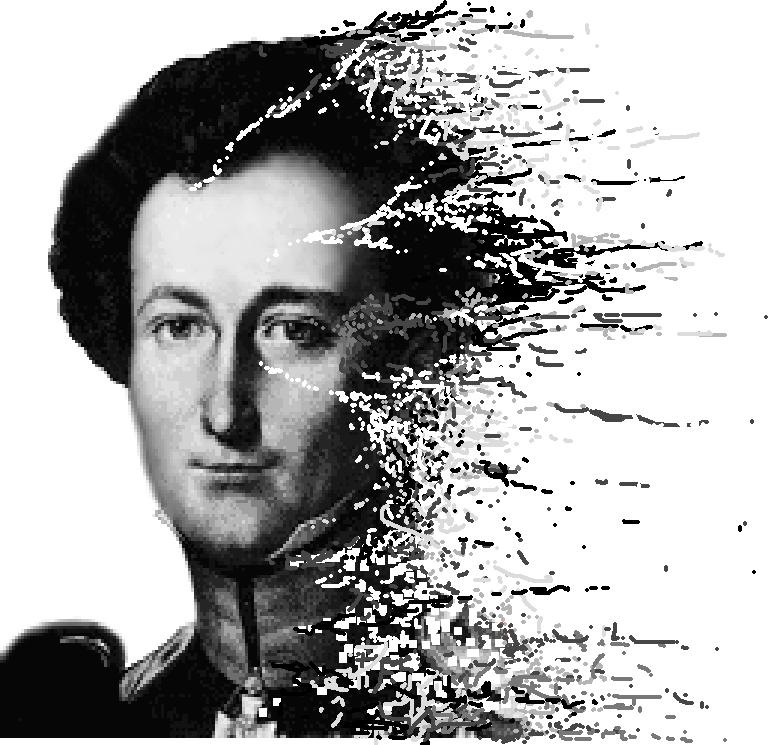
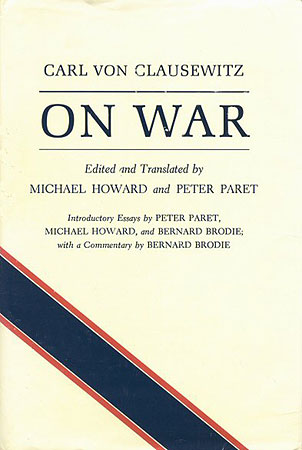
On War by Carl von Clausewitz has been the most influential book on strategy and war of all time.

We can say this because On War is the standard by which all other works of strategy are measured and only a few compared – notably Sun Tzu’s Art of War and The Peloponnesian War by Thucydides. The odd thing is that we can say this despite the fact that On War is more frequently shelved, cited or understood secondhand rather than read, even by military professionals. And furthermore, within the narrow demographic that reads Clausewitz seriously and critically, there can be heated dispute over what he meant, due to the difficulty of the text. Then there are the secondary effects, historical and military, of Clausewitz having been misunderstood, forgotten, ignored or at times, his strategic philosphy consciously rejected.

The shadow cast by On War is all the more remarkable given it’s circumstances of publication. Clausewitz died in 1831, at fifty-one, of cholera, having finally risen to a military post his talents merited. He had been writing On War since 1816 and it was far from completed or refined to his satisfaction and it is highly unlikely, in my view, that Clausewitz would have consented to it’s publication in the condition in which he left it. His determined and intellectually formidible widow, Marie von Clausewitz, further shaped the manuscript of On War, guided by her intimate knowledge of her husband’s ideas and was likely the best editor Clausewitz could have posthumously had.


Nevertheless, to my mind On War remains a magnificent unfinished symphony.

What would On War have looked like if Clausewitz had lived another twenty-five or thirty some years? Assuming continued good health, Clausewitz would have seen, perhaps commanded in, the First Schleswig War and at least studied the Crimean War from afar. He would have had another quarter-century of reading and mature reflection on his subject. Clausewitz, who had a keen understanding of history, would have also witnessed the grand European upheaval of liberal revolution in 1848 that rocked the Hohenzollern monarchy to it’s core. What new insights might Clausewitz have gleaned or expanded upon? Would his later chapters On War have evolved to equal the first?

Having outlived Marie (who died in 1836), would Clausewitz have become a deeply changed man?

What I find it difficult to believe is that Clausewitz, with his creatively driven and philosophically exacting mind,  would have been content to let the manuscript of On War rest where it stood in 1831. Or that we read today what Carl von Clausewitz ultimately intended.


Switch to our mobile site