zenpundit.com » recommended reading

Archive for the ‘recommended reading’ Category

Recommended Reading

Monday, March 22nd, 2010

Top Billing! It’s the Tribes, Stupid! – Downrange: An Informal Report on a trip to Afghanistan with Marine Gen. James N. Mattis Part I., Part II., Part III., Part IV.

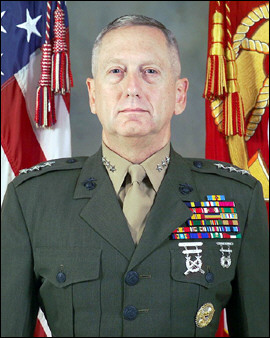
Steve Pressfield was invited to accompany General Mattis, USMC Commander of JFCOM, on the latter’s fact-finding mission in Afghanistan and blogged a colorful four part series that mixes policy observations with travelogue:

[Part Four of Four]

COIN doctrine, counter-insurgency theory, says “protect the people” comes before “kill the enemy.” In meeting after meeting we heard all the right things from officers and civilian leaders who were earnest, brave, well-intentioned, smart, sincere, hard-working and absolutely decent and ethical.  We heard about construction projects and rules of engagement and mitigating civilian casualties, about liaising with tribal elders and managing escalation of force and irrigation and extracting resources and using local people, defeating the corruption of the Karzai regime, delivering good governance, etc.  But I didn’t see any Afghans in the rooms.  I didn’t see any in the PRT sessions (the meetings with the Provincial Reconstruction Teams.)

….Maybe Vietnam is the culprit-the U.S.’s last unhappy experience with a conscripted army. Maybe blame can be localized to whatever forces or events turned the U.S. electorate off to the idea that every citizen owes service to his country-and decreed that 100% of the burden for defending our nation be borne by 5% of its citizenry.  The all-volunteer military is probably the most highly functioning sector in American society and the only one in which the public still places full faith. But our troops are out here alone in space. They can hack it. In their own way they relish it.  But that’s a lot of weight on their shoulders-and lot on Gen. McChrystal’s. “Today in America,” says Navy Capt. Kevin Sweeney, Gen. Mattis’ executive assistant, “if you don’t have a son or husband or a neighbor who’s in the military, you don’t even know there’s a war on. You see film on the news but the fight seems a million miles away, and you don’t want to hear about it anyway. It’s someone else’s problem. I don’t blame people. Who wants to ruin their dinner, hearing about civilian casualties and suicide bombers? But it’s happening. We’re here and this is a real fight and somebody ought to know about it.”
Foreign Policy (Robert Haddick) –This Week at War: Is This the Week Mexico Lost the Drug War?

Hmmm….to use the Iraq War analogy, it might be approaching 2006 in Mexico. Hat tip SWJ Blog.

American Diplomacy (Dr. David Robinson) – Chinese Expansion and Western Influence in 21st Century Africa

Despite advanced case of clientitis, the article has some useful information on emerging Sino-African relationships.

Lawyers, Guns & Money (Dr. Charli Carpenter)How to Run a Maritime Militia

Dr. Charli reduces piracy to a business model.

Project White Horse (Dr. Chet Richards)Crisis Management: Operating Inside Their OODA Loops

PPT presentation by Dr. Richards

The Glittering EyeThe Elephant and Using Education As a Model for Healthcare

Dave Schuler’s common sense take on Health Care.

MetamodernIs ???? doing science? (aka BGI)

Science DailyTV Ads May Be More Effective If We Pay Less Attention

….The sting in the tail is that by paying less attention, we are less able to counter-argue what the ad is communicating. In effect we let our guard down and leave ourselves more open to the advertiser’s message.

“This has serious implications for certain categories of ads, particularly ads for products that can be harmful to our health, and products aimed at children.

“The findings suggest that if you don’t want an ad to affect you in this way, you should watch it more closely.”

RECOMMENDED VIEWING:

John Seely Brown on “Teaching 2.0 – Doing More with Less”
 

Recommended Reading

Monday, March 1st, 2010

Top Billing! “Strategy Wars” – Something must be in the water. A flame war has broken out between different strategic camps…..

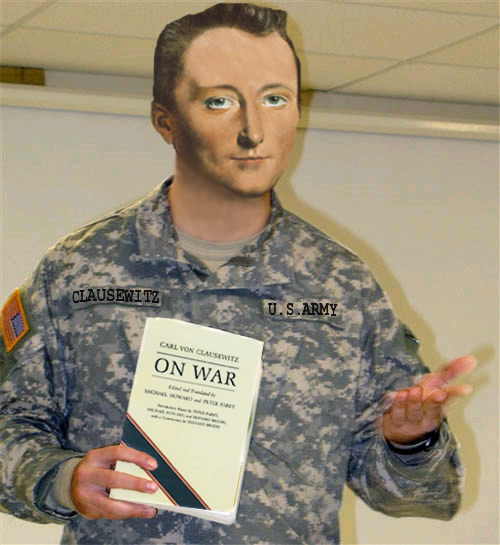
In addition to the two Journal of Strategic Studies “Neo-COIN” articles on which I began commenting last week and Thomas P.M. Barnett explains today Why I largely ignore the in-the-weeds COIN debate,  LTC. William Astore, USAF (ret.) wrote  a completely incoherent and confused, slash-and-burn, attack, “The U.S. Military’s German Fetish” for TomDispatch.com, on a basket of strategic concepts from a variety of sources that he erroneously attributes to the influence of Carl von Clausewitz on the US military. 

At Milpub, seydlitz89 correctly eviscerates Astore’s weird jihad against Clausewitz in A Reflection of the State of US Strategic Thought? but then launches a strange volley of his own, essentially blaming Col. John Boyd for George W.Bush’s invasion of Iraq (which would come as news to most of Boyd’s acolytes, almost all of whom have been militant and vocal critics of the Iraq War). Fabius Maximus, his site in re-launch,  goes after Dr. John Nagl with Another sad little bit of agitprop, this time from John Nagl and is joined by Dr. Bernard Finel with The Incoherence of COIN Advocates: John Nagl Edition  and Visions of Empire with Ventriloquizing Clausewitz.  

Not content to allow the ground-pounders to have all of the attention, Gene Myers in Fifth sense  for AFJ, bemoans the impact of COIN and ground support missions on the future intermediate range and strategic long-range capabilities of the USAF and Galrahn wonders in AirSea Battle “if the final product becomes anything more a new wine in old barrels?”. On a humorous note, Joseph Fouche, asserts that military historian Martin van Creveld would run over a kitten with his car.

TDAXP – who loves counterintuitive titles for his posts, has When Stalinism is a Good Thing:

….The Scientific management of the economy was a breakthrough, new way of organizing a country, in which a rational allocation of resources would lead to economic growth. Public education rapidly spread this method, and by the early twentieth centuries the bureaucratic power needed to fix this solution had become ingrained in the United States, United Kingdom, France, Spain, Germany, Italy, Russia, and (through educated and westernized bureaucratic elites) most countries in the world. New Deal Liberalism, Socialism, Fascism, Aryanism, and Communism were all modern ideologies that assumed a scientific approach toward growth.

The last significant attempt to turn back this tide began in 1966, during Mao’s launch of the Great Proletarian Cultural Revolution (GPCR),  in which he purposefully destroyed the Party and State apparati which gave him scientific control over his country, and tried to turn back the hands of history.

John Hagel–  Reinventing the Sacred:

Stuart Kauffman’s book “Reinventing the Sacred” really got me thinking about creativity and the sacred. The book is an impressive stroll by a deeply thoughtful scientist through many domains from the microscopic to the cosmic, with a particular focus on the common patterns emerging in the universe, the biosphere and human culture. Kauffman observes:

“We live in a universe, biosphere, and human culture that are not only emergent but radically creative. We live in a world whose unfolding we often cannot prevision, prestate, or predict – a world of explosive creativity on all sides.  This is a central part of the new scientific worldview.”

Throughout the book he offers a sustained critique of reductionism. Instead, he stresses the importance of emergence as a way to begin to understand the dynamics that we shape – and that in turn shape us. He is also deeply skeptical of universal laws, focusing instead on understanding the situatedness of the objects under discussion.  I found it refreshing that, in discussing situatedness, he puts equal emphasis on context, the surroundings at any point in time, and history, the trajectories that have been traveled by the object.

David RonfeldtIncidentals (1st of 5): apropos definitions of “tribes” (and TIMN) and Incidentals (2nd of 5): apropos tribes vis à vis the other TIMN forms:

….While wondering about such matters earlier in November 2009, I spotted a post at an unfamiliar blog, Strategic Social, that aspired to define a “tribe” as “any group of people united by their recognition of organizational hierarchy within their group, who share a cultural identity and make up a unique speech community.” At least this blog was trying to raise attention to the significance of tribes in various areas of society. But this definition of the concept seemed misguided, and I blurted as much:

As one who’s interested in concepts about tribes, occasionally scouts the Net to see what others are saying, and finds myself here for a change, I’d like to offer a quick passing comment:

I like the fact you recognize that tribes are a modern as well as ancient form of organization. But in my view, it’s not wise to start a definition of tribes with a reference to organizational hierarchy. That’s not what’s most important about tribes. Tribes may or may not have much hierarchy; hierarchical institutions are a later form to arise from social evolution. I’d suggest moving the other parts of your definition up front. I’d also suggest broadening the “speech” part, maybe make it “symbolic” instead.

That’s it!

Recommended Reading

Monday, February 22nd, 2010

Top Billing! Instapundit & Fabius Maximus – First, Glenn Reynolds 

 SO HERE’S A QUESTION: Would a default on Treasuries accomplish what the Balanced Budget Amendment was supposed to achieve, by forcing the government to spend no more than it takes in? With more collateral damage, of course. . . .

Then Fabius Maximus responds with this very important post:

Would a default by the US government help America?

….There are no easy or certain solutions.  We have to work our problems carefully,  in the correct sequence, aware of trade-offs.   I believe a default – in any form – is not necessary at this time.  Nor will it be if we act quickly and wisely.  The costs of default would be large and avoidable if feasible.

The chief problem we face today is a weak economy, and the risk of a double-dip recession (historically quite common).  In the third year of this recession the reserves at all levels are drained – households, businesses, and governments.  We are weak, as was the world in a physical sense after WWI – vulnerable to the 1918  influenza.   Another downturn might be worse than the first.   Should the economy weaken from here, failure to promptly enact another stimulus program might have cataclysmic – even historic – consequences

Too often, discussions of foreign policy and military strategy are divorced from economic realities. Debt financing deternines the current outlier of using American power. This could change if we change our fiscal and monetary policies, but right now, operations are largely debt-financed, like government spending in general.

ShlokyLara M. Dadkhah On CAS = FAIL

Lara M. Dadkhah, a graduate student in Security Studies at Georgetown University’s School of Foreign Service, has written the most brain-dead op-ed I’ve read on the war in Afghanistan in years. It’s an infantile perspective on a complex dynamic. Lots of cheerleading, no insight.

An epic slam, and quite deserved. There was a lot of online speculation as to who the author was, given the minimal available info online about “Lara M. Dadkah”, but I have seen a highly credible person vouch for her as his former student, so she was not a “sock puppet” or a character with a hidden agenda. It was simply a mediocre op-ed by an employee of Booz Allen.

WSJ (Evgeny Morozov)- The Digital Dictatorship (hat tip Adam Elkus)

….It’s easy to see why a world in which young Iranians embrace the latest technology funded by venture capitalists from Silicon Valley, while American diplomats sit back, sip tea and shovel the winter snow on a break from work, sounds so appealing. But is such a world achievable? Will Twitter and Facebook come to the rescue and fill in the void left by more conventional tools of diplomacy? Will the oppressed masses in authoritarian states join the barricades once they get unfettered access to Wikipedia and Twitter?

This seems quite unlikely. In fact, our debate about the Internet’s role in democratization-increasingly dominated by techno-utopianism-is in dire need of moderation, for there are at least as many reasons to be skeptical. Ironically, the role that the Internet played in the recent events in Iran shows us why: Revolutionary change that can topple strong authoritarian regimes requires a high degree of centralization among their opponents. The Internet does not always help here. One can have “organizing without organizations”-the phrase is in the subtitle of “Here Comes Everybody,” Clay Shirky’s best-selling 2008 book about the power of social media-but one can’t have revolutions without revolutionaries.

FuturejackedSocionomic Trendspotting 2010 – The Gritty Reboot

….Rest assured, the mob, whether led by NY Attorney General Cuomo, some upstart in Congress that we have not yet heard much of or some Federal DA, will get back to the bankers. The end result will not be pretty. People will want scalps and these jokers are the most blind scions of privilege seen strutting and preening on the world stage since the French Revolution.

SWJ Blog (William McCallister)The Men Who Would Govern Marjah

….While simple cause and effect narratives make for good reading, cultural complexity is inseparable from the study of cause and effect, especially in a place like Marjah. We continually espouse what we believe ought to happen but rarely how a given political or economic initiative might actually play itself out within a given cultural context. What might the Afghan approach to gaining a foothold in Marjah look like? How might the landowners, merchants and farmers, civil administrators, leaders of the Afghan National Army (ANA), local police, local fighters, and allies of the Taliban interact with one another? How might the imposition of government authority in Marjah play itself out? How might elements of the ANA and police support government administrators in imposing a central authority?

Chicago Boyz (Joseph Fouche) –  Razzia III: The Finel Solution ( also see Razzia II: The Finel Countdown and Razzia)

New Atlanticist (Dr. James Joyner) – The (New) German Question

Steven Pressfield – Writing Wednesdays #27: “Help!”

Metamodern Chemists deserve more credit: Atoms, Einstein, and the Matthew Effect

Don VandergriffSun Tzu and America’s Way of War

Scholar’s StageMusings – How We Ought To Think About History

That’s it!

Recommended Reading – China Special Edition

Tuesday, February 16th, 2010


Top Billing! Steve ClemonsIf You Could See America Through China’s Eyes

Clemons sheds light on a hardheaded, quasi-official, Chinese analysis of the strategic direction of American power. A must read piece.

Several years ago, I met with the Deputy Director of the Policy Planning staff of China’s Ministry of Foreign Affairs, and I asked him what he was working on — and what China’s grand strategy was.

His reply: “We are trying to figure out how to keep you Americans distracted in small Middle Eastern countries.”

It’s pretty memorable when one can joke and be truthful at the same time. China has had opportunities throughout the world open up to it easily — mostly because of systemic American inattention to much else beyond its war slogs. The Obama administration, which in its first year in office, has managed high level presidential and cabinet level face time with leaders around Asia, Africa, Latin America, and the Middle East has done a lot to correct the impression from the G.W. Bush years that America has completely checked out from the rest of the world — but there still is a sense that American pretensions in the world are more veneer than real.

Now read in full (on the extended page) a short, brilliantly written report titled “Strategic Contraction Replaces Arrogance: Chinese Analysis of the Quadrennial Defense Review” by Li Shuisheng at China’s Academy of Military Science on the Pentagon’s recently released Quadrennial Defense Review.

This is a very sobering “offshore perspective” on American power.

openSecurity (Aziz Hakimi)Af-Pak: what strategic depth?

This is the sole exception to the topical focus on China today. A brutally frank examination of our core problem with Pakistan’s elite.

….General Kayani admitted that Pakistan’s objective of supporting the former Taliban regime in Afghanistan was to gain a ‘strategic depth’ in Afghanistan, which he hoped that now ‘a peaceful and friend Afghanistan’ would provide it.   His comments indicate that Pakistan’s policy makers are still interested in the old policy of gaining strategic depth in Afghanistan, which may influence their approach to Afghanistan and related issues such as fighting the Taliban and participating in regional cooperation.

….Meanwhile, Serajuddin Haqqani, the leader of the network, in an interview with Aljazeera TV claimed the responsibility for the attacks on the heart of Kabul on 18 January.  Afghan Police investigations and arrests following the attack also confirm that the Haqqani network was behind the raid which left 5 killed and 17 injured.

It is also important to note that General Parvez Musharraf as well as General Ashfaq Kayani had described Haqqani network leaders as Pakistan’s “strategic assests”.

Thomas P.M. Barnett –  A Bad Time to Wreck Our Relationship with China 

Dr. Barnett puts the geoeconomics into the geopolitics and security of the Sino-American relationship….

…..But middle-class doubt and vulnerability have now coalesced into populist anger. And in responding to it, the Obama-Biden team seems dangerously intent on re-vectoring a foreign policy anchor of Bush-Cheney — namely, the bilateral relationship with China. Ironically, the Bush administration’s policy toward China was arguably its smartest and most sophisticated endeavor. A century from now, our nation’s interventions in Iraq and Afghanistan will be mere historical footnotes, whereas our decision to accommodate China’s rise to the rank of global superpower will undoubtedly rank as the single most important decision made in this era by any state.

….Such strategic patience, however, is hard for any president to maintain — especially in these days of profound economic angst. Critics predictably claim the White House has given up on human rights, surrendered to authoritarian capitalism, and accepted our nation’s inevitable decline. None of this is true, of course, and yet all these hyperbolic charges carry with them the air of deep-seated grievances: Americans increasingly feel that globalization — which we created, nurtured and defended — is no longer to be trusted. Despite the fact that our share of global GDP has held amazingly steady since 1975 (26.3 percent then, compared to 26.7 percent last year), many Americans continue to assume China’s rise comes at our expense.

HG’s world –  China On The Verge of 4708, But Still a Teen in the Real World

HistoryGuy99 is recently returned from China, which he has visited many times, and reflects judiciously on the contradictions of China’s status as an ancient country but a “young” great power

Minxin PeiThe Real Lessons from the Google-China Spat

….Although recent events might tempt many to tell Google ‘I told you so,’ the company has still garnered sympathy around the world for standing up to Beijing. And anyone who cherishes the wealth of information generated by unfettered Google searches and hates the idea that secret police might have access to the keys to their e-mail boxes should indeed wish Google luck.Yet, regardless of the outcome of this contest between a politically vengeful autocratic government and a technologically savvy US firm, the Google episode will likely remain a crucial moment in China’s relations with the West in general, and with Western companies doing business in China in particular.

Coming Anarchy (Ferguson)A Sobering Look at the Rise of China and Asia 

….The Chinese leadership appears to accept at least a nascent version of this wind of change, as it were and are flexing the new found confidence of an emerging power. China’s belligerence during the Copenhagen Climate Conference, staunch opposition to sanctions on Iran, loud protests of a US/Taiwan arms deal and the subsequent threat of sanctions on US firms selling those weapons suggest a state looking to call attention to its own considerable might. Indeed a recent poll suggested that a majority of Chinese foresee a “cold war” with the United States, suggesting the specter of another global bi-polar century

The Committee of Public Safety –  How to Bugger With the United States ( Hat tip T. Greer)

How China can manipulate America’s distorted political decision-making process for strategic benefit.

TDAXPReview of “Stilwell and the American Expeirence in China, 1911-1945,” by Barbara Tuchman and “The Generalissimo: Chiang Kai-shek and the Struggle for Modern China” by Jay Taylor

Great review by Dan of TDAXP. I too read the Tayor book and second Dan’s recommendation.

Foreign Policy.com (John Lee)Big Trouble With Big China

Trademark FP quickie taxonomic treatment of Sino-American relations.

Foreign Affairs (Yang Yao) – The End of the Beijing Consensus

An optimistic view of China on the path to middle-class political liberalization.

The Glittering EyeSinophobia and China’s time bombs

Two well-considered posts from 2009 and 2005 respectively by Dave Schuler who has been a China-watcher for decades.

SWJ BlogChina’s grand strategy – past, present and future

From 2009 – and with this post, Recommended Reading comes full circle.

That’s it!

The Watcher’s Council has Spoken!

Tuesday, February 2nd, 2010

Very cool! I am the proud recipient of a winning non-member post award from The Watcher’s Council:

Rock Stars and Pariahs

…..There are many trains of thought on this issue and it is one of the challenges that we must consider in light of the changing political landscape of the United States and the nature of the enemy jihadist that doesn’t share the same values as Americans. For a counterinsurgency strategy to succeed we need to get serious about that reality and consider it within the scope of a global jihad. This requires an understanding that we are not simply faced with local insurgency. Our strategy needs to be adjusted within that context in Afghanistan and Iraq. Otherwise we will continue to suffer the unnecessary loss of American life and civilian casualties without realizing the long term goal of winning the war against terror on all fronts.

Here is the full list of contending bloggers in the member and non-member divisions:

Winning Council Submissions

Winning Non-Council Submissions

Thank you to The Watcher’s Council and to Dave Schuler for nominating me!


Switch to our mobile site