zenpundit.com » al qaida

Archive for the ‘al qaida’ Category

The Black Banners of Blackwater

Wednesday, September 21st, 2011

[ by Charles Cameron — minor, curious post on apocalyptic, conspiracism, jihad, graphics ]

.

blackwater-black-banner.jpg

There’s a long, conspiracist post on the “wake up project” that (among other things) declares that President Ahmadinejad is the “flag bearer of Imam Madhi’s army, insha’allah” andquotes a hadith of Imam Ali (with present-day comment in parens):

He that meets with Al Hashimi (i.e Hasan Nasrullah of Hezbollah)
with the Black Banners at his front is Shuayb, the son of Salih
who will engage As-Sufyani at the Gate of Istakhr —

and with a footnote that declares, “President Ahmadinejad is also the Tamimi Youth, al Mansur and the disputed Abdullah of the hadiths.”

So there’s something of a Shi’a perspective here, no?

What caught my eye, however, focused as I am on this black banner business, is the distinction the writer makes between two sets of black banners, the first of which apparently feature Blackwater:

“Before your treasure, three will kill each other —
all of them are sons of a different caliph but none will be the recipient.
Then the Black Banners will appear from the East
and they will kill you in a way that has never before been done by a nation.”

IT IS THE FIRST SET OF BLACK BANNERS (I.E BLACKWATER/XE) WHO WILL COME OUT FROM AFGHANISTAN AND THE HADITH SAYS THEY WILL KILL YOU LIKE NO ONE ELSE HAVE KILLED YOU BEFORE.

And in case we’re in any doubt, there’s a helpful link to the Blackwater/Xe banner (see at top of this post).

Thus more or less confirming the link between the Dajjal / Antichrist and Blackwater / Xe made in the Urdu book, Dajjal ka Lashkar – Blackwater / The Army of Antichrist: Blackwater to which Ibn Siqilli pointed us in 2009:

blackwater-anti-christ-ibn-siqilli.JPG

Ali Soufan: AQ, Khorasan and the Black Banners

Saturday, September 17th, 2011

[ by Charles Cameron — yet more black banners, Khorasan, Jerusalem and Armageddon, with the usual strategic implications ]
.
soufan-book-cover.jpg
.

It’s beginning to be embarrassing how obvious the Khorasan / black banner / Mahdism meme is getting these days.  Earlier this week I pointed it out as the basic through-line of Syed Saleem Shahzad‘s Inside Al-Qaeda and the Taliban: Beyond bin Laden and 9/11. Today it’s Ali Soufan‘s turn.

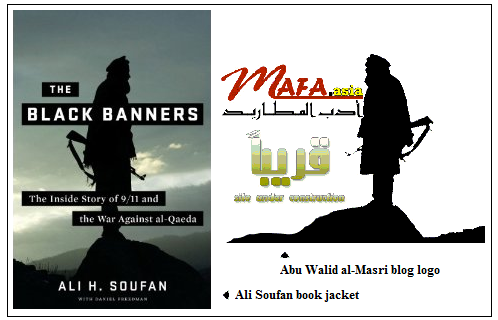
In his book, The Black Banners: The Inside Story of 9/11 and the War Against Al-Qaeda — which I hope to review here — Soufan too makes the apocalyptic significance of AQ’s jihad painfully apparent. Take his title, for instance

Black banners, eh?

Those would presumably be the ones mentioned to Soufan by Abu Jandal, who began to quote the hadith:

If you see the black banners coming from Khurasan, join that army, even if you have to crawl over ice; no power will be able to stop them —

at which point Soufan broke in and completed the hadith for him:

— and they will finally read Baitul Maqdis [Jerusalem], where they will erect their flags.

And in case you missed it, that’s an explicitly end-times, Mahdist hadith, as you can see from (eg) this Hizb-ut-Tahrir-associated site:

Messenger of Allah said: “If you see the Black Banners coming from Khurasan go to them immediately, even if you must crawl over ice, because indeed amongst them is the Caliph, Al Mahdi.” [Narrated on authority of Ibn Majah, Al-Hakim, Ahmad]

Soufan goes on to say:

I was to hear that reputed hadith from many al-Qaeda members I interrogated. It was one of al-Qaeda’s favorites.

Khurasan is a term for a historical region spanning northeastern and eastern Iran and parts of Turkmenistan, Uzbekistan, Tajikistan, Afghanistan, and northwestern Pakistan. Because of the hadith, jihadists believe that this is the region from which they will inflict a major defeat against their enemies — in the Islamic version of Armageddon. Bin Laden’s 1996 declaration of war against the United States – a main text for al-Qaeda members – ends with the dateline “Friday, August 23, 1996, in the Hindu Kush, Afghanistan.” It’s not a coincidence that bin Laden made al-Qaeda’s flag black; he also regularly cited the hadith and referenced Khurasan when recruiting, motivating, and fundraising. Al-Qaeda operatives I interrogated were often convinced that, by joining al-Qaeda, they were fulfilling the words of the Prophet.

It is an indication of how imperfectly we know our enemy that to most people in the West, and even among supposed al-Qaeda experts, the image of the black banners means little…

I could go on, but that’s surely enough.

*

And by the way, who is that man on the cover, anyway?

banners-mafa-juxtaposed.png

Syed Saleem Shahzad: AQ, Khorasan and the Mahdi

Thursday, September 15th, 2011

[ by Charles Cameron — Mahdism and Khorasan, strategic implications re Afghanistan, Pakistan, India and the West ]

.

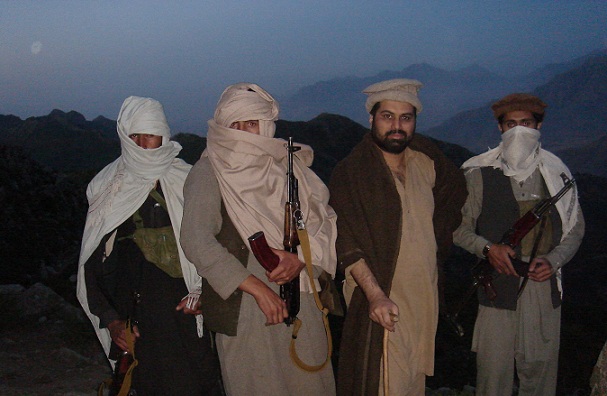
kunar.jpg

photo:  http://www.syedsaleemshahzad.com

Syed Saleem Shahzad, the recently murdered Pakistani reporter (above) profiled by Dexter Filkins in The New Yorker a couple of days ago, recently published a book with Pluto Press titled Inside Al-Qaeda and the Taliban: Beyond bin Laden and 9/11.

Reading the New Yorker piece, I was struck by the explicitly Mahdist tenor of the book’s final paragraph, which Filkins quoted, and a quick glance at pages available on the Amazon site makes it clear that Shazad’s sense of AQ strategy (a) is strongly eschatological, (b) includes India in its scope, and (c) leads from greater Khorasan to Jerusalem.

Since I’ve been harping on (a) and (c) for some while now, and (b) “fits” well enough with a few other loose ends, analytically speaking, I’ll be very interested to read (and hopefully review) the whole thing. For now, I’d just like to draw your attention to the opening and closing paragraphs of the book…

Shahzad begins his Prologue (p. xiii) with these words :

The 9/11 attacks in 2001 aimed to provoke a war in South Asia. The 26/11 Mumbai assaults in 2008 warned that Al-Qaeda was expanding its war to the east, from Central Asian republics to India and Bangladesh, and that many more such actions would follow. In the ideological perspective of Al-Qaeda, this was to be a preparation for the “End of Time” battles which were referred to by the Prophet Muhammad (in what is now known as the Hadith). These pointed to parts of modern-day Iran, Afghanistan, Pakistan, and Central Asia as ancient Khurasan. Khurasan was to be the first battleground for the End of Time battles, before a decisive confrontation against the West, with the last battle being fought in the Middle East for the liberation of Palestine and all occupied Muslim lands.

In the meantime, Al-Qaeda aimed to trap the world’s most powerful states in the impossible terrain of Afghanistan. The aim was to lead them to exhaust their energies there, before the expansion of the theater of war against the West from Central Asia to Bangladesh…

His book closes (pp. 225-26) with these words:

However, the saga of Al-Qaeda’s One Thousand and One Nights tales continues with new strategies and new characters. For Al-Qaeda these are just measures to keep the West running from pillar to post until it exhausts itself and Al-Qaeda can announce victory in Afghanistan. Al-Qaeda next aims to occupy the promised land of ancient Khurasan, with its boundaries stretching all the way from Central Asia to Khyber Paktoonkhwa throiugh Afghanistan, and then expand the theater of war to India.

The promised messiah, the Mahdi, will then rise in the Middle East and Al Qaeda will mobilize its forces from Ancient Khurasan for the liberation of Palestine, where a final victory will guarantee the revival of a Global Muslim Caliphate.

Shahzad was not always the most reliable of reporters by all accounts – but certainly one of the most intrepid, and one with unparalleled contacts among the major players. The fact that he pitches his book along so clear a Mahdist through-line should give us all pause.

Jihad culture: its music, poetry, rituals and dreams

Monday, September 12th, 2011

[  by Charles Cameron – jihadist studies, Hegghammer, culture and influence ]

.

It is the evening of the tenth anniversary: the day is almost over.

*

In an engaging interview with Abu Muqawama posted today, terrorism and violent Islamism expert Thomas Hegghammer discusses his new project about jihad culture, or “the things jihadis do when they don’t fight”.

It is inspired by the observation that militants in the underground spend a lot of time doing things that appear to serve no immediate military purpose, like singing songs, reciting poetry, or discussing dreams. They also do unexpected things like weep on a regular basis, notably when reciting the Qur’an. The infamous Abu Mus‘ab al-Zarqawi, for example, was known among fellow militants as both “the butcher” (al-dhabbah) and “a weeper” (baki). All this “soft matter” of jihadism remains virtually unstudied; one reason, I think, is that it has been considered less consequential than the hard stuff of terror, such as attacks, resources, organizational structures and the like. My hypothesis is that jihad culture is not inconsequential at all; instead I think it may shed important new light on the processes by which jihadi groups recruit, exercise organizational control and make tactical decisions. I am sure that the military men and women reading this blog will find all this rather intuitive, because they have experienced the important role of music and rituals in their own organization.

As a first step in the inquiry, I am currently working with a great team of scholars on an edited volume that will explore various dimensions of jihad culture. I have recruited subject specialists – including a musicologist, an Arabic poetry expert, and an anthropologist of dreams – to help document and decipher al-Qaida’s internal culture.

I hope the book will cover miracle stories and the odor of sanctity, too…

*

Hegghammer is co-author of the forthcoming Meccan Rebellion (Amal 2011), which I very much hope to review here on Zenpundit, and which is likely to be the definitive work on the Mahdist takeover of the Grand Mosque in Mecca in 1979.

Needless to say, I’m delighted at the news of Hegghammer’s upcoming project.

The Nine Eleven Century?

Sunday, September 11th, 2011

nineleven2.jpg

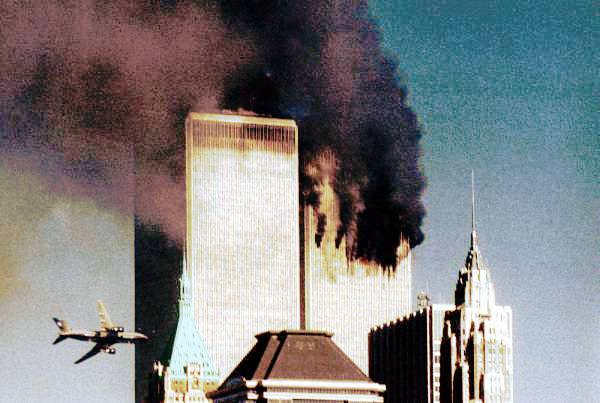
Ten years ago to this day, almost to the hour of which I am writing, commercial jetliners were highjacked by al Qaida teams armed with boxcutters, under the direction of Mohammed Atta, were flown into the towers of the World Trade Center and the Pentagon. A fourth plane, United Airlines Flight 93, believed to be headed to the US Capitol building, crashed in Pennsylvania when passengers led by Todd Beamer heroically attempted to stop the highjackers. The whole world watched – most with horror but some with public glee – on live television as people jumped out of smoke-engulfed windows, holding hands, to their deaths. Then, the towers fell.

From this day flowed terrible consequences that are still unfolding like the rippling shockwave of a bomb.

We look back, sometimes on the History Channel or some other educational program, at the grainy, too fast moving, sepia motion pictures of the start of World War I. The crowds wildly cheered troops with strangely antiquarian uniforms that looked reminiscent of Napoleon’s day, march proudly off to the war that gave Europe the Somme, Gallipoli, Passchendaele and Verdun. And the Russian Revolution.

After the armistice, the victors had a brief chance to reset the geopolitical, strategic and economic patterns the war had wrought and in which they were enmeshed. The statesmen could not rise to that occasion, failing so badly that it was understood even at the time, by John Maynard Keynes and many others, that things were being made worse. World War I. became the historical template for the short but infinitely bloody 20th century of 1914-1991, which historians in future centuries may simply describe as “the long war” or a “civil war of western civilization”.

There is a serious danger, in my view, of September 11 becoming such a template for the 21st century and for the United States.

On the tenth anniversary of 9/11, as we remember the fallen and the many members of the armed services of the United States who have served for ten years of war, heroically, at great sacrifice and seldom with complaint, we also need to recall that we should not move through history as sleepwalkers. We owe it to our veterans and to ourselves not to continue to blindly walk the path of the trajectory of 9/11, but to pause and reflect on what changes in the last ten years have been for the good and which require reassessment. Or repeal. To reassert ourselves, as Americans, as masters of our own destiny rather than reacting blindly to events while carelessly ceding more and more control over our lives and our livelihoods to the whims of others and a theatric quest for perfect security. America needs to regain the initiative, remember our strengths and do a much better job of minding the store at home.

The next ninety years being molded by the last ten is not a future I care to leave to my children. I can think of no better way to honor the dead and refute the current sense of decline than for America to collectively step back from immersion in moment by moment events and start to chart a course for the long term.


Switch to our mobile site