zenpundit.com » culture

Archive for the ‘culture’ Category

Family Time

Thursday, August 20th, 2009

2watches.jpg

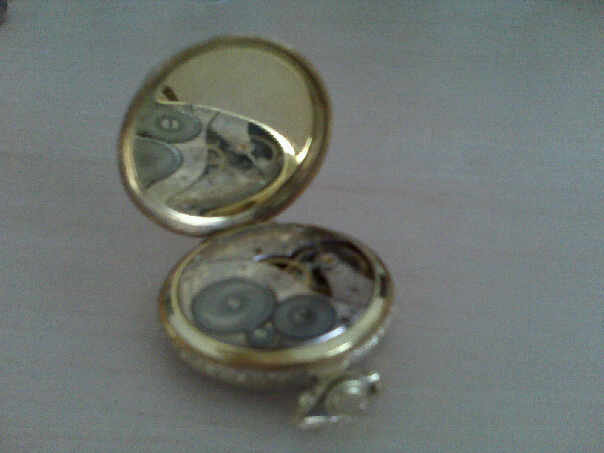
I was rooting around for my passport today and in the course of opening a strongbox I came across one of my grandfather’s old pocket watches, the kind men once wore with three piece suits on a chain with a fob. My father had given them to me around twenty years ago during one of his moves ( pocket watches were not in style then and have not been since) saying they had belonged to my grandfather but were probably broken. I put the everyday watch (on the left with the chain) in a box of knicknacks. The gold watch (on the right) came with a display stand and it sat gathering dust during my twenties and thirties.

Curious, I began fiddling with a watch and found that it still worked, so I wound it and found that the gold watch was also functional. My grandfather, who died of pancreatic cancer when I was still a child, had been a very successful corporate tax attorney who had graduated from DePaul Law School in 1932. He was extremely conservative and had worked for the FBI for a time before settling into tax law and he did not travel or indulge in many extravagances. However, he did like to live well – my grandparents frequently entertained ( they had a full bar downstairs) and my grandfather liked good cigars, good food and dressing stylishly – the pocket watches were part of “the look” that a man at a certain level of success had in those days.

The everyday watch was made by Gruen, which went out of business in 1958. It is a Verithin model where the numerals show an edge of art deco while the hands have an older, gothic, style and it requires winding about twice a day. The gold watch, which was monogrammed and has decorative inlay on the case was made by Elgin National Watch Company, which once produced half of all the watches used in the United States and closed its’ original factory in 1964 and sold the rights to the name, which is now owned by a Chinese concern. The long abandoned  factory in Elgin, Illinois was converted into trendy “loft” condos sometime in the last decade. I opened the back panel and the inside is still as polished as a mirror. The parts are paper thin metal and show a precision of mechanical design that no longer is associated with the United States – at least in consumer items of this kind.
elginwatch.jpg

I like to think my grandfather took some pleasure in owning these watches. He certainly took care of them; the Gruen watch may date back to the thirties and they both have a heavy, masculine quality. The watches feel “solid” in the palm of your hand and give a sense of a different, calmer, era. At some point, I will pass them on to my own children when they are mature enough to value such things, and with some luck, they will continue the tradition.

“Time is what we want most, but… what we use worst”  – William Penn

The Other Prince of Darkness

Wednesday, August 19th, 2009

Robert D. Novak, 1931 -2009

During the Reagan era, two conservatives shared the title “the Prince of Darkness” as an epithet from liberal Democrats and Washington insiders. The first was nominal Democrat turned Reagan administration assistant secretary of Defense Richard Perle, a neoconservative activist who was castigated for his ultra-hardline anti-Soviet views and skepticism about the value of arms control. The second was veteran Chicago Sun-Times reporter and columnist Robert “Bob” Novak, who passed away today at age 78.

While Novak shared many of Perle’s foreign policy views regarding the malevolence of the Soviet Union and Henry Kissinger and was (with Jude Wanniski) a firey media advocate for the emerging school of  Supply-Side economics, what made him and the Evans & Novak column a political force to be reckoned with was that Bob Novak was a dogged, old-fashioned, working reporter who regularly unearthed new information from his vast collection of sources. Most people under thirty only know of Bob Novak from the Valerie Plame affair, which began in Novak’s column,but Robert Novak had been creating havoc for politicians, and not just liberal ones, for decades:

The fact is that Novak, as he would disclose in his autobiography, actually admired very few politicians. He wrote that he found the first politicians he covered less impressive than the athletic coaches he had covered as a young reporter — “an impression of the political class that did not change appreciably in a half-century of sustained contact.”But then, many big-time politicians didn’t like Novak. Pat Buchanan relates a priceless story of being with Richard Nixon in the mid-’60s in a high-school gym in Indiana. Nixon peeked through the stage curtain, finding Novak in the first row of the press section. “Look at him,” Nixon commanded. “That’s Bob Novak. That’s the enemy.”

Not only did I read Novak growing up ( later I realized that Novak would shoehorn his pet theories on to the facts he uncovered regardless of whether it made any sense, the facts though, were always useful) but I watched him pioneer the Left vs. Right shoutfest template on CNN’s “Crossfire”, first sparring with Tom Braden then, more famously, with Michael Kinsley. When Novak did it, the concept was refreshing because the whole idea of a show that actually had political balance by including conservatives on equal terms with liberal talking heads was revolutionary at the time. Unfortunately, when Crossfire went from a clever niche on a feisty cable news station to a transmogrified, dumbed-down, infotainment as an industry standard, a lot of damage was done to public discourse and reportedly, Novak shared that view to an extent ( though he also cashed the checks – CNN helped make Robert Novak exceptionally wealthy).

Robert Novak represented the last of a generation of hard-nosed reporters who learned journalism as a craft rather than as a product of graduate school theories, who could come from any ( but usually modest) background rather than having a distinctly “bicoastal” cultural worldview and a ranking system based on what “good school” you attended. The news business, I note, has not prospered from becoming more insular.

The media could use more Robert Novaks.

ADDENDUM:

I see Lexington Green beat me to the punch with his obit post.

How Rome Fell

Monday, August 10th, 2009

How Rome Fell: Death of a Superpower by Adrian Goldsworthy

For those readers with a deep interest in classical antiquity – I know there are a number of you out there.

I’m 125 pages in to this latest tome by British historian and classicist Adrian Goldsworthy and I can say it is truly excellent; better, in fact than his acclaimed biography of Julius Caesar, Caesar: Life of a Colossus. Where Goldsworthy was more closely tied to his primary sources in his earlier work, How Rome Fell gives him greater scope for both synthesis and analysis as Goldsworthy draws on his knowledge of the subject to evaluate theories of causation as well as to entertain and inform the reader.
Will review when finished.

The First Genocide?

Thursday, July 23rd, 2009

Or perhaps the analogy of Cain and Abel?

Remains Show Human Killed Neanderthal

Newly analyzed remains suggest that a modern human killed a Neanderthal man in what is now Iraq between 50,000 and 75,000 years ago. The finding is scant but tantalizing evidence for a theory that modern humans helped to kill off the Neanderthals. The probable weapon of choice: A thrown spear.

The evidence: A lethal wound on the remains of a Neanderthal skeleton. The victim: A 40- to 50-year-old male, now called Shanidar 3, with signs of arthritis and a sharp, deep slice in his left ninth rib. “What we’ve got is a rib injury, with any number of scenarios that could explain it,” said study researcher Steven Churchill, an associate professor of evolutionary anthropology at Duke University in North Carolina. “We’re not suggesting there was a blitzkrieg, with modern humans marching across the land and executing the Neandertals [aka Neanderthals]. I want to say that loud and clear.” But he added, “We think the best explanation for this injury is a projectile weapon, and given who had those and who didn’t, that implies at least one act of inter-species aggression.”

What is interesting about the disappearance of the Neanderthal is that it is hard to explain simply in terms of competition for resources with early Homo Sapiens, given that the global human population was astronomically low. The Neanderthal too, would have had many physical advantages, given their more robust physiology, over their evolutionary cousins. Speculation has ranged from climate change, to immunological differences to the cognitive and cultural.

Could a key cultural difference have been a propensity of Homo Sapiens to make war? To seek out, rather than avoid conflict?

Cantigny Museum

Wednesday, July 22nd, 2009

tank.jpg

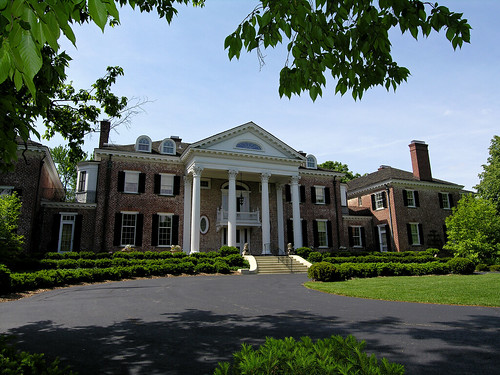
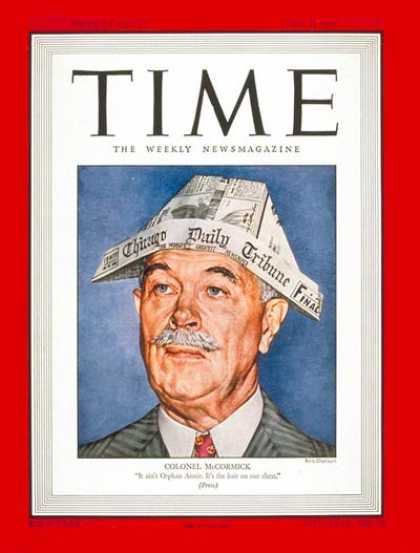
Spent a pleasant afternoon at Cantigny, the estate of legendary Chicago Tribune publisher, broadcast pioneer and ardent isolationist,  Colonel Robert McCormick. After his death in 1955, McCormick had willed that the 500 acre grounds located in Wheaton, Illinois,  be turned into a memorial to the 1st Infantry Division of the US Army, in which he had served ( McCormick was a veteran of the Mexican Expedition and the Great War). Operated by the McCormick Foundation, a charitable and educational trust with an endowment that rivals that of Yale or Harvard universities, Cantigny now is home to an opulent garden, golf course, mansion museum, several restaurants, a greenhouse, a tank and artillery park, a children’s playground, visitor’s center and the Museum of the First Division.

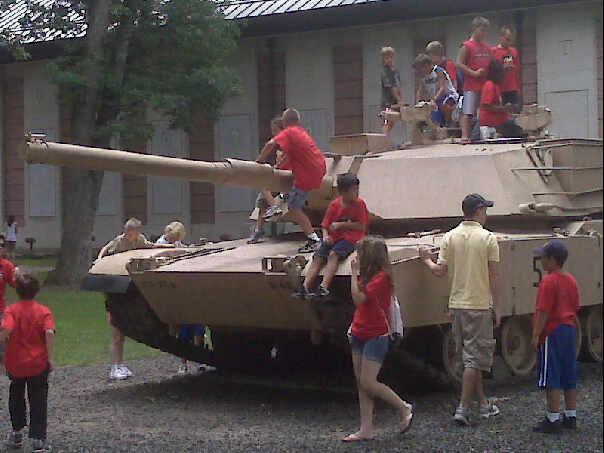
The grounds contain an array of armor on display for the tank aficianado, including the Sheridan, Sherman and variations of the Patton series up to the M-1 Abrams, including several “experimental” models plus a selection or artillery pieces going back well before WWI. Just added was a fully restored D-Day landing craft (still being unloaded from the trailer).  Aside from children’s tours and families present, I saw not a few veterans today, some very elderly and in wheelchairs, reminiscing together quietly by particular tanks or displays.

The museum has a collection of artifacts that run the gamut from the Revolutionary War to the Iraq War but the major sections are concerned with the two World Wars and the Vietnam War. Museum staff are friendly and helpful but unobtrusive and the basement contains a military library and archive that is open to the public for research.

The grounds are very extensive and the landscaped garden, which covers many acres,  is a world class feature in itself. The fee for admission is a mere $ 5 to park – the amenities and facilities (except the golf course and restaurants) are all free of charge.


Switch to our mobile site