zenpundit.com » IC

Archive for the ‘IC’ Category

Dems Proposing Bad Covert Ops Oversight Rules to Make Leaking Easier

Saturday, July 11th, 2009

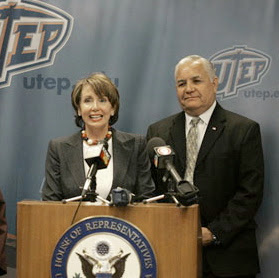
The left wing of the left wing of the Democratic Party has long been hostile to America’s intelligence community, a position that goes back to the Cold war and is rooted in political opposition to American foreign policy, particularly anticommunist policies. The latest feuding between Speaker Nancy Pelosi and the CIA are the distracting and meaningless atmospherics that cover the substantive manuvering that goes on behind closed doors over the direction of American foreign policy.

Democrats are now moving, through the use of proposed changes to the technical language on the statute governing executive branch notification of covert operations, to tie the hands of the president and move that power to every member of the two intelligence committees ( vastly enlarging the number of people who know the details of highly sensitive, ongoing, covert operations). This proposal was initiated by Chairman of the House Permanent Select Committee, Rep. Silvestre Reyes (D-TX), a close political ally of Speaker Pelosi: 
Sensitive Covert Action Notifications: Oversight Options for Congress

Legislation enacted in 1980 gave the executive branch authority to limit advance notification of especially sensitive covert actions to eight Members of Congress-the “Gang of Eight”-when the President determines that it is essential to limit prior notice in order to meet extraordinary circumstances affecting U.S. vital interests. In such cases, the executive branch is permitted by statute to limit notification to the chairmen and ranking minority members of the two congressional intelligence committees, the Speaker and minority leader of the House, and Senate majority and minority leaders, rather than to notify the full intelligence committees, as is required in cases involving covert actions determined to be less sensitive.In approving this new procedure in 1980, during the Iran hostage crisis, Congress said it intended to preserve operational secrecy in those “rare” cases involving especially sensitive covert actions while providing the President with advance consultation with the leaders in Congress and the leadership of the intelligence committees who have special expertise and responsibility in intelligence matters. The intent appeared to some to be to provide the President, on a short-term basis, a greater degree of operational security as long as sensitive operations were underway. In 1991, in a further elaboration of its intent following the Iran-Contra Affair, Congressional report language stated that limiting notification to the Gang of Eight should occur only in situations involving covert actions of such extraordinary sensitivity or risk to life that knowledge of such activity should be restricted to as few individuals as possible.In its mark-up of the FY2010 Intelligence Authorization Act, the House Permanent Select Committee on Intelligence (HPSCI) eliminated the Gang of Eight statutory provision, adopting instead a statutory requirement that each of the intelligence committees establish written procedures to govern such notifications. According to Committee report language, the adopted provision vests the authority to limit such briefings with the committees, rather than the President. In approving the provision, the Committee rejected an amendment that would have authorized the Committee Chairman and Ranking Member to decide whether to comply with a presidential request to limit access to certain intelligence information, including covert actions. The rejected provision stipulated that if the Chairman and Ranking Member of each of the intelligence committees were unable to agree on whether or how to limit such access, access would be limited if the President so requested. (Emphasis added by AT)

With Congress considering a possible change, this memorandum describes the statutory provision authorizing Gang of Eight notifications, reviews the legislative history of the provision, and examines both the impact of such notifications on congressional oversight as well as options that Congress might consider to possibly improve oversight.

[emphasis mine] 

The point behind this move is to deter the executive branch from using overt ops in the first place, which suits the objectives of members of Congress philosophically opposed to the IC and historic US foreign policy, but it does not actually *improve* Congressional oversight of the IC. The recent and future loud charges by House Democrats against the CIA are designed to justify this quiet power grab.

These proposed changes are designed to create a situation of arbitrary, conflict-ridden, uncertain yet expanded oversight of covert operations as the House and Senate Committees are likely to write different rules for their members and to disagree on breadth of notification. More people would have knowledge of very sensitive operations (we have to add staffers and key aides told by MoC against disclosure rules) with far less of the accountability for leaks by keeping notification to the “gang of eight”.

It will be much easier for any one member to kill any operation they disapprove of by leaking it with little fear of being caught and needing to make a political defense of their position on the covert operation. Even if a member of Congress is identified as having leaked information about a secret intelligence operation, the chances of being disciplined by the House or Senate are minimal unless the member is highly unpopular with their own party leaders or is enmeshed in another scandal and, thus, disposable. Forget being prosecuted, that will never happen.

No good intentions here, which is why this change was shrouded in committee obscurity by liberal Democratic House leaders rather than shouted by them at a high profile press conference.

Hat tip to AnalyticType.
Now Using the POINT of the Spear….

Thursday, May 21st, 2009

My esteemed colleague, Michael Tanji, goes knuckles over Think Tank 2.0.

Tanji has my 100 % endorsement.

CIA Clandestine Operatives: Horizontal Thinkers or Just in Need of Ritalin?

Friday, March 20th, 2009

Jeff Stein of Spy Talk had a fascinating interview with Dr. David Charney, a CIA psychiatrist specializing in treating professional spooks. The whole article is interesting but the following caught my eye:

….But for case officers at the tip of the CIA’s spear, he said, the problem tends to be A.D.D., Adult Attention Deficit Disorder
“They seem to be highly functional A.D.D.’s,” Charney said. “You might think a person with ADD can’t tie their shoelaces, but quite the opposite.” To them, “boredom equals death,” 
Charney says, not really joking. 

“They’re energetic, restless, people who have to physically keep moving. Lock them to a desk, and they can’t deal with it. They can’t stand to be bored…” 

But A.D.D. can be an asset, too.  “They have the ability to absorb things from 360 degrees,” Charney marvels. 

“Contrast that with people who are linear, like your book-keeper or accountant, who chug along in a channel and get things done by going from one thing to another. But A.D.D. minds tend to be very synthetic. They reach out and pull things out of the air, or through other persons who are not linked in any way. They see patterns that other people don’t see. They can gather together unusual elements and bring them together into a whole that is a brilliant synthesis of things that would be lost on other people.  

“They have a sensitivity to ambient thoughts going on that a good case officer needs to pick up, little nuances, little hues, little things said that let you know if the agent you’ve recruited is telling the truth, or which is partly the truth … which buttons to push to manage the person, how to absorb material and put it into a whole. And the good ones have that ability.”

This is classic horizontal thinking with an emphasis on connections, patterns and synthesis driven by an internal “restlessness” – the kind of persona seen in such disparate occupations as fighter pilots, inventors, physicists and artists. There has long been a comparative and to an extent correlative association of ADHD or “hyperactivity” with creativity, high levels of intelligence and depression though of course not everyone with ADHD is creative, intellectually gifted, depressed or working for an intelligence agency. The correlation though has also been noted in MRI brain scan studies of children so it would appear to have a physiological basis that might explain why the CIA needs to have its own psychiatrists for reasons beyond the stress generated by a career in intelligence work – self-selection bias in people who apply to become employees.

(Hat tip to….one of my twitteramigos….I can’t find the tweet, damn it!) 

Why the NSC Structure Matters – and When it Does Not

Tuesday, February 10th, 2009

J. at Armchair Generalist gets a big hat tip for his post Reforming the National Security Council that pointed to this WaPo article on the interview of National Security Adviser, Gen. James Jones.  The new APNSA opines on the coming of a “strong” NSC process for the Obama administration:

….The result will be a “dramatically different” NSC from that of the Bush administration or any of its predecessors since the forum was established after World War II to advise the president on diplomatic and military matters, according to national security adviser James L. Jones, who described the changes in an interview. “The world that we live in has changed so dramatically in this decade that organizations that were created to meet a certain set of criteria no longer are terribly useful,” he said.

….”The whole concept of what constitutes the membership of the national security community — which, historically has been, let’s face it, the Defense Department, the NSC itself and a little bit of the State Department, to the exclusion perhaps of the Energy Department, Commerce Department and Treasury, all the law enforcement agencies, the Drug Enforcement Administration, all of those things — especially in the moment we’re currently in, has got to embrace a broader membership,” he said

New NSC directorates will deal with such department-spanning 21st-century issues as cybersecurity, energy, climate change, nation-building and infrastructure. Many of the functions of the Homeland Security Council, established as a separate White House entity by President Bush after the terrorist attacks of Sept. 11, 2001, may be subsumed into the expanded NSC, although it is still undetermined whether elements of the HSC will remain as a separate body within the White House.

Presidents rarely get the national security process they want but they usually get what they deserve by default of their own unwillingness to  police their subordinates when they stray from the blueprint laid out in their first NSC-drafted executive order – usually titled PDD-1 or NSDD-1 ( “Presidential Decision Directive”, “National Security Decision Directive”). When a Henry Kissinger, or a Zbigniew Brzezinski or a Dick Cheney “grab power” from whomever is supposed to have it, you can be certain that these coups have implicit presidential approval.

 It is unusual that such a directive has not already been issued by the Obama administration, if the WaPo article is correct. Normally, this is a new president’s first (or one of the first) executive order that the transition team prepares in case the administration begins with a national security crisis. If that has not happened yet it’s a troublesome sign but I will give the Obama administration credit for attempting to create a new structure outside conventional Cold War and statutory arrangements for the NSC. That is long overdue, as is some hard thinking about what role the NSC should play in crafting national strategy and policy.

Presidents need an NSC Adviser and staff to do three things, not all of which are compatible:

1. Be an “honest broker” and coordinator between State, Defense and the IC on behalf of the POTUS ( Scowcroft Model).

2. Critically evaluate the policy options provided to the POTUS by Cabinet bureaucracies and offer creative alternatives (Kissinger Model).

3. Act as the “enforcer” and monitor to make certain presidential policy is being implemented and identify those who are obstacles, free-lancers and bureaucratic sabotuers for reprimand or removal (Sherman Adams/H.R. Haldeman* Model).

* Adams and Haldeman were WH Chiefs of Staff who were the designated and much feared “enforcers” of their administrations. One of Reagan’s numerous APNSAs, Judge Clark, was concerned with enforcing Reagan’s ideological line in foreign policy but he is too obscure a figure and his tenure too short to serve as an effective example.


One is easy. Two are difficult but common enough. Success at three is virtually unknown.

A president who is himself a product of the establishment consensus – a George Bush, Sr. or a Dwight Eisenhower– is looking for a National Security Adviser who is an honest broker and staffs his NSC with military and foreign service officers, with a sprinkling of CIA and DIA veterans. They will expect obedience from State and the Pentagon but as their policy choices coincide with Beltway conventional wisdom, they get it most of the time anyway.

A president who comes to Washington as an “outsider” in some fashion or as a “change agent” – a Richard Nixon, Jimmy Carter, Ronald Reagan or Bill Clinton– will pick a National Security Adviser who will build a staff of what one national security scholar has called a “team of academic superstars” who will aid the president in taking control of American foreign policy. Clashes between the White House and the career bureaucracy will be frequent and increasingly vicious, particularly with State, though in the Bush II administration that role was played by the senior managers of the CIA.

Some presidents have a dysfunctional NSC process – a category that includes John F. KennedyRonald Reagan, Bill Clinton and George W. Bush – where the inmates take over the asylum and free-lancing by deputy assistant secretaries reigns supreme. Both Kennedy and Clinton strongly resisted a formal NSC decision making structure for their administration that would inhibit their ability to “pop in” to offices, chat up whomever and issue snap decisions. While this stance flowed from their desire to keep their options open and remain free of “handling” by their own staffers, it ultimately led to chaos and dangerously amateurish improvising during crisis moments.  Reagan and Bush II by contrast had formal structures in place but undermined them overtly ( Reagan in NSDD-2) or covertly ( Bush in letting his Vice-President operate a shadow mini-me NSC of his own). In Reagan’s case, this was aggravated by an unwillingness to fire anyone, no matter how much the rat-bastard deserved it, and a general distaste for confrontation.

Unless a president supports his NSC adviser down the line, the bureaucracies will do as they please to the point of making his administration’s top officials into laughingstocks. While you might not know it from the State Department’s current broken down condition, it was historically amongst the very worst offenders in this regard ( though both the Pentagon and Langley could rise to the occasion), regularly abusing the interagency process and blatantly defying presidential instructions. Give Foggy Bottom strategic planning, USAID or Public Diplomacy and they will let these nascent “competitors” wither on the vine.

The problem largely is that the State Department is filled with bright and talented but fairly insular individuals who imagine themselves more capable and informed and ultimately deserving of authority than the guy actually sitting in the Oval Office who was elected by the American people or any of his appointees. They need a strong hand at SecState and consistent follow-up by the NSC; and if given these conditions, State can perform amazing feats of diplomacy for a president. Absent that, State can create great friction for an administration.

The Obama administration is setting itself up for a very “strong” NSC process. Jones and Chief of Staff Emanuel are a potent combination and Defense, State and the CIA all have been given major political heavyweights as principals. Moreover, Jones appears to be in sync with Robert Gates as to the need for imaginative “new thinking” in national security affairs ( maybe we should send him this). However all the potential on paper in the world, at this stage of the game, means nothing.

It ultimately comes down to the President of the United States. What does he want ?

Op-Ed at Pajamas Media: Panetta and the CIA

Thursday, January 8th, 2009

Here’s the PJM piece I mentioned yesterday:

Why Leon Panetta May Be The Right Man For CIA Chief

Given the extent to which President-elect Barack Obama previously positioned himself on the left wing of the Democratic Party, his appointments in the areas of national security and defense have been remarkable in the degree to which the worst fears of conservatives have not come to pass. Robert Gates as secretary of defense would have been a dream pick for a McCain administration and former commandant of the Marine Corps Gen. James Jones is someone I wish President Bush had chosen as his wartime national security adviser. The immediate howls of protest from liberal Senate Intelligence Committee members and chairmen that greeted Leon Panetta’s nomination to head the CIA are genuine in their rage. For many reasons, conservatives and advocates of a reinvigorated, reinvented, depoliticized CIA may end up being quite happy with the tenure of Director Panetta

….The truth is that the CIA has been in an existential crisis since at least 1991 that has waxed and waned, but it never recovered the competence in clandestinity or the esprit de corps it enjoyed in its glory years under Allen Dulles or the brief revival ushered in by William Casey and Ronald Reagan in the 1980s. The CIA now bleeds talent to better-paying private military companies like CACI or Blackwater and engages in domestic political intrigue and gross waste like any other government agency. Post-9/11 “intelligence reforms” badly battered the CIA as an institution without building up its original core mission of HUMINT collection and strategic influence operations to a robust and dynamic capacity

Read the whole thing here.

There are of course, respected bloggers and experts with views of their own on Panetta’s appointment. Here is a sample:

The Glittering Eye:

…As I’ve noted before the incoming administration’s managerial experience is extremely limited and, frankly, I think they’re underestimating its importance. Now it may well be that lawyers and politicians are the best possible picks for these important roles to achieve the confidence of the departments they’ll head, the American people’s, and President Obama’s. If that’s right, we’ll be in for an interesting ride with the new administration. If it’s wrong, the downside risk is probably minimized by the civil bureaucracy.

Steve Coll:

As to the Panetta appointment itself, it is unconvincing. The C.I.A. directorship is a diminished post, no longer in charge of the full intelligence community and subordinate to the Director of National Intelligence (who will apparently be Dennis Blair, a retired admiral.) Still, the C.I.A. director has four important jobs: manage the White House relationship; manage Congress, particularly to obtain budgetary favor; manage the agency’s workforce and daily operations; and manage liaisons with other spy chiefs, friendly and unfriendly. Panetta is thoroughly qualified for the first two functions but unqualified for the latter two. He seems to have been selected as a kind of political auditor and consensus builder. He will make sure the White House is protected from surprises or risks emanating from C.I.A. operations; he will ensure that interrogation and detention practices change, and that the Democratic Congress is satisfied by those changes; he will ensure that all of this occurs with a minimum of disruptive bloodletting. All good, but it is not enough

Dr. Ron Radosh

…The point I was trying to make about the Panetta appointment was that although his hands are not tainted by any acceptance of torture, that alone is hardly a sufficient reason to appoint him. I have learned that our fellow blogger and my friend Michael Ledeen has said Panetta is a good choice, as have Richard Perle and Douglas Feith. Their arguments, that he is a good manager and can possibly clean up a highly ineffective and politicized CIA, hopefully has merit. Counterpoints, however, have been effectively made by J.G. Thayer, who writing on the Commentary magazine’s Contentions, blog…


Switch to our mobile site
