zenpundit.com » 4GW

Archive for the ‘4GW’ Category

Wednesday, October 3rd, 2007

TRYING TO REOPEN A QUESTION SETTLED IN 1865

American political extremists try to bridge an ideological gulf to hammer out an agenda for secession:

“Tired of foreign wars and what they consider right-wing courts, the Middlebury Institute wants liberal states like Vermont to be able to secede peacefully.

That sounds just fine to the League of the South, a conservative group that refuses to give up on Southern independence.

“We believe that an independent South, or Hawaii, Alaska, or Vermont would be better able to serve the interest of everybody, regardless of race or ethnicity,” said Michael Hill of Killen, Ala., president of the League of the South.

Separated by hundreds of miles and divergent political philosophies, the Middlebury Institute and the League of the South are hosting a two-day Secessionist Convention starting Wednesday in Chattanooga.

They expect to attract supporters from California, Alaska and Hawaii, inviting anyone who wants to dissolve the Union so states can save themselves from an overbearing federal government”

One of the major barriers to gaining momentum toward serious consideration of secession is the inherent lack of political attractiveness of the two groups pushing the idea. They wish a regional audience where their implicit political agenda is less marginalized than the current national one where their philosophy and motives are suspect as…well…tin-foil hat wearing wingnuts.

That being said, most separatist movements probably start that way – with groups trying to leverage relatively greater local acceptance as a wedge to accrue legitimacy vs. the state. For example, the wacky, chauvinistic, quasi-fascist, Pamyat parlayed minor grievances of the Russian majority population into a Russian nationalist wave against the USSR ( and Jews various other ethnic minorities)in the late 1980’s.

Pebbles and avalanches.

Monday, October 1st, 2007

5GW: LOOKING FOR DIFFERENCES OF KIND, NOT DEGREE

William Lind had an interesting piece on the weaknesses inherent in decentralized, 4GW insurgencies ( hat tip John Robb). Which in turn, led me to ask myself a question:

How do we know the difference from a state military that has adapted sufficiently to fight 4GW-style warfare effectively from a state military that has moved into waging 5GW decisively ? Where is the demarcation point ?

Monday, September 24th, 2007

ON WAR, COMPREHENSION AND PERSUASION


One end of the continuum: Ruth Benedict’s classic The Chrysanthemum and the Sword was a groundbreaking effort by the USG at attempting to understand the mass psychology of an enemy in wartime.

There must be something in the water lately as I have been getting an upsurge of inquiries and public comments regarding information operations, public diplomacy, “soft power” agents of influence, 5GW and similar matters. There are other blogs I can recommend as being better on this score – Beacon, MountainRunner, Kent’s Imperative, Swedish Meatballs Confidential and Whirledview to name but a few. Also, I would suggest that interested readers search the archives of Studies in Intelligence, PARAMETERS, The Strategic Studies Institute, Combined Arms Research Library and the threads at The Small Wars Council. Genuine expertise may be found there and for discussions of theory and emerging trends, I recommend Dreaming 5GW.

That being said, I will offer my two cents anyway.

One point of agreement across the political spectrum and that of informed opinion is that the USG has not done a particularly good job of managing “the war of ideas” in the conflict with Islamist terrorism. Or against state adversaries. Or with persuading neutrals and even our own allies to our point of view. When you are having difficulty drawing even in a global popularity contest with a crowd of bearded fanatics who put beheading videos on the internet, it’s time to admit there’s a problem.

Our difficulty did not start with the Bush administration, they simply ramped up a negative dynamic that began in the 1990’s with the budgetary dismantling of USG public diplomacy, information agencies and CIA clandestine operations, in order to “reinvent government” or to save “Peace Dividend” pennies for pork barrel expenditures. Official America’s withdrawal from the information playing field also happened to coincide with the rise of baby boom, New Left, ’68 er’s as the managing editors, producers and shapers of opinion in European media, as well is in places like South Korea, that had it’s own veteran cadres of dissenters against the ROK’s old military regimes.

Harboring relatively critical and anti-American views from the outset, this generational class interpreted clumsy, abrasive and at times deliberately antagonistic rhetoric from the second Bush administration through their own negative political lens. It was a particularly unfortunate combination as far as American interests in foreign policy were concerned. Nor has there been much interest or competence applied subsequently by Bush administration officials in order to make their ongoing global communication more effective.

Ironically, strategic communication was once a field in which Americans in the private and public sectors excelled. The First World War brought the management of news and propaganda through the Committee on Public Information under journalist George Creel, who had the help of two brilliant men who became giants in the field of influencing public opinion, Walter Lippmann and Edward Bernays. After WWI, Lippmann had a long career as an adviser to presidents and consensus-builder for the Eastern Establishment ( playing the role of America’s ur-Pundit) while Bernays virtually created the field of public relations, applying principles of mass and Freudian psychology to commercial advertising.


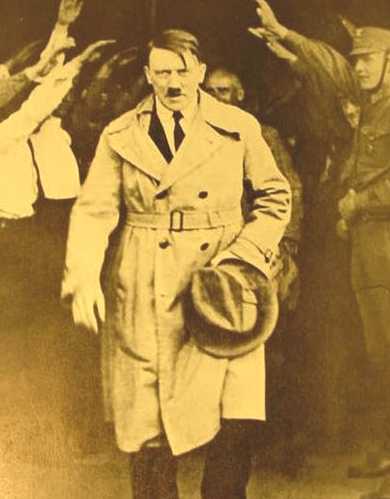
Psychoanalyst Walter C. Langer’s psychological profile of Nazi dictator Adolf Hitler, written for the OSS during WWII, represented a second major analytical departure for the USG.

Lippmann’s focus upon the elite and Bernays manipulation of the crowd represent two poles of communication with and comprehension of, an audience. In their case, the audience was primarily a domestic one while the exigencies of WWII and the Cold War forced American policymakers to look overseas and try to grasp the perspective of foreign worldviews boasting complex and alien ideologies of a militant character. Again, the dichotomy of examining elite leaders and the mass-society were followed in the respective landmark studies by Ruth Benedict and Walter C. Langer.

Benedict, a disciple of Franz Boas, carried out a cultural anthropological analysis of the Meiji-Taisho-Showa era Japanese mind, culminating in her book The Chrysanthemum and the Sword. Benedict characterized the Japanese people as “debtors to the ages” and explained the apparently suicidal fanaticism of the Imperial Army soldier as a psychological legacy of the “On-Giri” honor and debt social traditions of Japanese society. This technique of cultural analysis, which is also visible in Raphael’s Patai’s The Arab Mind, elevates deep-set cultural behavior patterns ( though it can also lead to distorting exaggerations and a misplaced attempt to apply aggregate stereotypes to explain individual behavior).

Langer and his team of psychoanalysts, likewise made their study from a distance and began the field of pychological profiling with their study of Adolf Hitler and other top Nazi leaders. While Benedict’s effort was explanatory, Langer’s was also intended to be predictive. In both instances, their work was available to high level policy makers for the making of strategy, propaganda and operations that were termed for the first time, “psychological warfare“. The integration of social science expertise into official and “black” USG communications and diplomacy would continue to evolve during the Cold War until the Vietnam War brought a serious break between the academic community and the CIA and Pentagon, that continues, for the most part, until this day.

While our political appointees, diplomats, CIA officers, military IO and PSYOPS specialists are getting a beating (often deserved) in the MSM and the blogosphere for the poor state of affairs in which they labor, fairness requires the observation that their task today is immeasurably more complex than that of their forerunners. This is a point that cannot at present time be overstressed. Set aside the deficit of trained linguists in “hard” languages, the paucity of firsthand HUMINT with which to work, the normal interagency obstructionism and bureaucratic warfare and the frustrations of out-of-touch management. Those are tactical and organizational difficulties which could be remediated.

Here are the daunting structural and strategic challenges faced in crafting a unified and persuasive “American message” in the war of ideas:

The cultural multiplicity of the global audience, which is/are:

– Tiered from real-time postmodern transnational elites down to pre-modern tribal villagers still relying upon an oral tradition who receive their information flow hours, days, weeks or later.

– Viewing events from worldviews based upon five or more major civilizational traditions and many times that number of major subnational or subcultural traditions .

– Often times the audience is locked into a feedback loop with relatively sophisticated and influential (or impoverished and alienated) expatriate communities in the West and United States.

A multiplicity of information platforms which are:

– Spreading access to information with increasing rates of economic efficiency in a way that leapfrogs people over Gutenberg and directly into the World Wide Web.

– Are evolving technologically both in terms of processing power and parameters of expression that defy linear trend predictions (there are really more usable app ideas than ever get fully developed for reasons of return on investment and IP issues).

– Are evolving at a speed beyond which bureaucratic acquisition and budgetary schedules can adjust in order to keep USG employees in line with the tech capabilities of the private sector.

A multiplicity of information messages in a net volume that:

– Creates sheer “Attention scarcity” problems in target audiences -usually elite – which have begun to operate psychologically under the dictates of the “attention economy“.

– Creates a deafeningWhite Noise” through which critical messages to the target audience can neither be seen nor heard nor reinforced with reliability or be perceived in the proportion or perspective desired.

– Ratchets up the Darwinian velocity of the marketplace of ideas to snuff out or mutate memes faster than IO planners can adjust while also trying to bring along the portion of the audience still processing at much slower rates of comprehension.

What is to be done? I fear that I have no silver bullet solution. Reader Dominic C. suggested yesterday in the comment section:

“On 4GW front, there is a constant debate about why “public diplomacy” and “information war” / propaganda is poor. Surely the basic reason is that there are very few top quality marketing professionals who understand psychology and the few who exist do not work for the govt/mil. To the extent they are involved in politics, they usually roll in for elections and roll out.


If I were in charge of a 4GW campaign, I wd integrate professionals like Cialdini in my comms structure. There is an abyss between (a) the subjects studied in traditional politics, history, military etc and (b) marketing, psychology, cog sci, evolutionary bio etc.

America plus allies needs a 21st Century version of Moltke’s Prussian General Staff that combines these two branches into a training system so that politicians and soldiers have inter-dsciplinary skills”

This seems quite sensible as a first step to gaining a strategic grasp over what is really an “information ecosystem as a battlespace”.

Wednesday, September 19th, 2007

A LEGITIMATE QUESTION: 4GW AND POLITICAL LEGITIMACY

The enigmatic M-1 of the lively IO/PSYOPS blog Swedish Meatballs Confidential graced the comment section of the previous post and posed an excellent question:

“Q: Can there per definition exist legitimate* 4GW entities? If so, could you please, at your convenience,name any number of them.”

I can attest, from some years of studying diplomatic history, that “Legitimacy” in international relations is a lot like obscenity – hard to define but everybody knows it when they see it. The problem is that scholars, diplomats, jurists and intellectuals tend to see legitimacy most clearly when it happens to accord with their own interests.

For example, Neo-Realist IR theorists, Islamists, Marxist-Leninists, Burkean Conservatives, Lockean classical liberals and Liberal Internationalists will all construct arguments that appeal to the legitimacy, or argue the lack thereof, in certain regimes or institutions. Their premises differ as to the origin of legitimacy but the concept itself is regarded as sound across a wide political spectrum – excepting perhaps the fringe of Gramiscian -postmodernist-deconstructionistic radicals, whose tireless efforts to de-legitimize and dismiss nearly everything in the Western intellectual tradition only emphasizes the importance they really attach to legitimacy (At this point, I’d like to invite Dr. Daniel Nexon of The Duck of Minerva to add anything on academic perceptions of legitimacy, disagree with me or generally put in his well-informed two cents).

That being said, as average people are not afflicted with the abstruse theories of intellectuals, I think the Lockean concept of “consent of the governed” is most useful here in addressing M-1’s question. Most people stuck in a conflict zone are going to be pragmatists, interested in the restoration of peace on the best terms possible for themselves. It is for their affinity that the 4GW game is played.

Consent does not require democratic elections. Elections make popular consent visible, quantified and, where society operates under the rule of law, elections are a regular, contractual, but temporary grant of authority from the people to their government. Authority can also be granted implicitly by consensual, popular, deference as with homage given to Shiite maarjas, the King of Thailand, the Pope, the Emperor of Japan and the Supreme Court of the United States, whose powerful judicial role is formidibly augmented by the widespread acceptance of it’s moral authority as the legitimate arbiter of the meaning of the Constitution.

4GW entities, like states, can acquire ( and lose) moral authority and thus, political legitimacy, through their actions. We may not find this to be logical or objectively factual when Hezbollah or al Qaida are measured against a theoretical ideal. That however, is irrelevant to most the audience in the conflict zone. What matters is what you are measuring the 4GW entity against in the real world. A corrupt, incompetent, oligarchy? A vibrant, prosperous, liberal democracy? A constitutional monarchy backed by long tradition? A Communist regime? A hated dictator ? A foreign army? What ?

Much like time, legitimacy is entirely relative. The people might yearn for steak but if one side is providing nothing but crumbs and the other promises chicken – and can come across with a drumstick now and again – the side with the chicken wins.

ADDENDUM:

Soob weighs in as well with an appropriately timed taxonomy.

Monday, September 17th, 2007

THE 4GW ANTI-STATE


“al Qaidastan” Rising

Fourth Generation Warfare, according to it’s leading theorists, is designed to challenge the legitimacy of the state. It’s “kinetic” attacks are really a form of ju-jitsu designed to strike the enemy society at the mental and moral levels and thereby cripple the state apparatus through which modern nation-states govern themselves.

Repeated successful mitary forays by 4GW entities, perhaps in alliance with local ethnic and criminal organizations, can create a “TAZ” or temporary autonomous zone, outside the rule of law. “Temporary” is a useful descriptor because, frequently, police, paramilitary or Army units are able to “re-take” the TAZ from 4GW control because these decentralized forces melt away, go underground or shift to a less direct form of conflict such as system disruption or the use of IED type munitions.

However, there are now enough examples of recent vintage to tentatively answer the question of what happens when a TAZ under the domination of a 4GW group slides toward permanency? Al Qaida, is now doing so for the second time in it’s history, as detailed by Pramit Pal Chaudhuri:

Confederation of Terror

On September 6 the Islamic Emirate of Waziristan marked the first anniversary of its de facto recognition. On that day last year, the Taliban used the name when it signed a ceasefire agreement with the Pakistani government. The ceasefire is in tatters, but the terror trail of the recent plots in Germany and Denmark indicates that the Emirate is doing fine.

The Emirate’s writ is spreading among the mountainous areas that make up the Federally Administered Tribal Areas (FATA) that run along the Pakistan-Afghan border. Going by trends, the Emirate is more than just a safe haven: It is on a nightmare path of nation-building. Osama bin Laden will be its sultan; Mullah Omar its spiritual leader; heroin and smuggling its economic drivers; and terrorism its primary export. “Al Qaeda is building a mini-state, an enclave, in the FATA,” says Rohan Gunaratna, author of Inside al Qaeda.

Besides the heartland of South and North Waziristan, “al Qaedastan” also encompasses a belt of tribal land going up to Mohmand and Bajaur areas. Its sphere of violent influence, says a former member of the Afghan National Security Council, includes bordering Afghan provinces like Loya Paktia and, increasingly, Nangarhar…

…The malik, a local chief who helped keep the peace since the British Raj, and represented an older secular Pashtun nationalism, has been marginalized. The mullah now holds sway. “The Durrani tribal maliki that once dominated these areas is being physically eradicated,” says Michael Shaikh of the International Crisis Group.

Some argue this is nothing more than Durrani nobility being replaced by an upstart subtribe, the Ghilzai. But the spread of Islamicism is blurring tribal distinctions. “Today’s Taliban are fighting for an extremist ideology, not for Ghilzai supremacy,” says an Afghan official. An example of how this ideology is taking root is how it has ended the centuries-old feuds between the Waziri and Mehsud subtribes.

The “al Qaedaization” of the Taliban can be seen in their use of suicide bombing, human shields and bloodier kidnappings, practices abhorrent in traditional Pashtun culture. The Afghan government has no doubt this represents foreign tutelage. Says the Afghan ambassador to the U.S., Said Tayeb Jawad: “Al Qaeda is the commander, the Taliban the foot soldier. Al Qaeda provides strategic guidance

William Lind, during the Israeli-Hezbollah War, suggested that after having attained a critical mass of legitimacy through sustained political-military success, 4GW organizations faced a choice of “To Be or Not To Be, a State“. Lind argued that statehood was equivalent with vulnerable “targetability” and that Westphalian-era mummery was something that 4GW forces could best do without.

To an extent, Lind was correct. Neither Hezbollah, nor the Islamic Courts Union, HAMAS, al Qaida or even the Taliban during the period of their rule of Afghanistan, have ever formed a proper and recognized state apparatus. Nor have they, when enjoying longer-term territorial control, remained covert guerilla-terrorist networks either. Instead, they have tried to lock in their comparative advantages with an Anti-State model existing alongside or symbiotically integrated with, the sovereign state.

The 4GW Anti-State has certain recognizable characteristics or tendencies:

*Corporative: The 4GW organization openly lives by it’s own codes, not the state’s, with final authority for enforcement. The 4GW entity may impose these codes on the people over whom they exist (Taliban), or apply them primarily to their own membership (HAMAS) but the state has de facto ceded that prerogative.

*Post-Westphalian: The borders and claims of the nation-state are irrelevant, whether we are discussing a Pushtunistan-based “al Qaidastan” that crosses the Durand Line or a Transnational Criminal Organization network like a Russian mafiya clan with cells under discipline from Novgorod to Brighton Beach to Budapest to Tel Aviv. The 4GW Anti-State can be geographic or virtual as the primary loyalty attachment for the membership is a psychological and social one.

*Hegemonic Governance: The 4GW entity frequently, as HAMAS and Hezbollah have amply demonstrated, provide a sophisticated array of public goods and other services, often free of charge, in order to cultivate political legitimacy among the larger population. They do not accept all of the de jure responsibilities for the local population that are normally traditional for a rcognized sovereign and suppress rival authorities or independent-minded individuals with arbitrary force. In matters outside of the interests of the 4GW entity, residents are left to their own devices ( or the mercy of smaller predators) so that resources are conserved.

*Symbiotic Coexistence: The 4GW group is shielded, to a degree, from international intervention by coexisting within the confines of a recognized and sovereign nation-state that is unwilling (Sudan, Iran) or unable (Afghanistan, Pakistan, Lebanon, Iraq) to bring them to heel and even more unwilling to let outsiders do so. Like a parasite, a 4GW entity, if unchecked, is capable of hijacking it’s host nation-state to serve it’s own needs as al Qaida did in Afghanistan before 9/11.

The Anti-State model is useful for 4GW forces at a certain threshold of magnitude because it offers some of the defensive advantages of statehood with far fewer of the responsibilities or liabilities with running a state.

UPDATE:

John Robb was kind enough to link and had this comment:

“Mark, over at ZenPundit, has an excellent (!) post on the virtual-state (not sure that 4GW, as a description of a form of warfare, works as a label for this). “

Thanks, John! I’m not sure it works either – LOL! An explanation though:

I used “4GW” primarily because I was interested in how such movements are developing semi-permanent, alternative, forms of governance to the nation-state. Bobbitt’s “Virtual-State” could work well in many instances for what 4GW forces are in a structural or behavioral sense but the term also has broader application.

Then there is also the issue where 4GW entity is overlapping pre-modern (at times, ancient), subnational, territorial/tribal identities that are the very antithesis of “the state”. A schizoid hybrid, if you will. The analogy can be misleading because these phenomena have aspects that are very unlike the state of Max Weber, despite usurping some of the functions, so I used ” Anti-State”. I’m not wedded to the term yet as the whole issue needs more fleshing out and discussion (and as Fabius noted in the comments, empirical investigation).


Switch to our mobile site
