zenpundit.com » europe

Archive for the ‘europe’ Category

Emptiness and Hezbollah

Friday, July 26th, 2013

[ by Charles Cameron — food for thought, or empty calories? ]
.

Sources:

  • Heart Sutra
  • Hezbollah
  • **

    Pondering.

    There’s definitely a form here, a commutative form, and the Buddhist part is interesting because it asserts some kind of commutation is possible between a datum and its own absence — as though the “created” world of Genesis could be viewed as exactly mirroring the “ex nihilo” from which it arises.

    But the Hezbollah identity? That should be of interest to the Europeans who just made a point of distinguishing between political and military versions of Hezbollah!

    Beyond that, pondering.

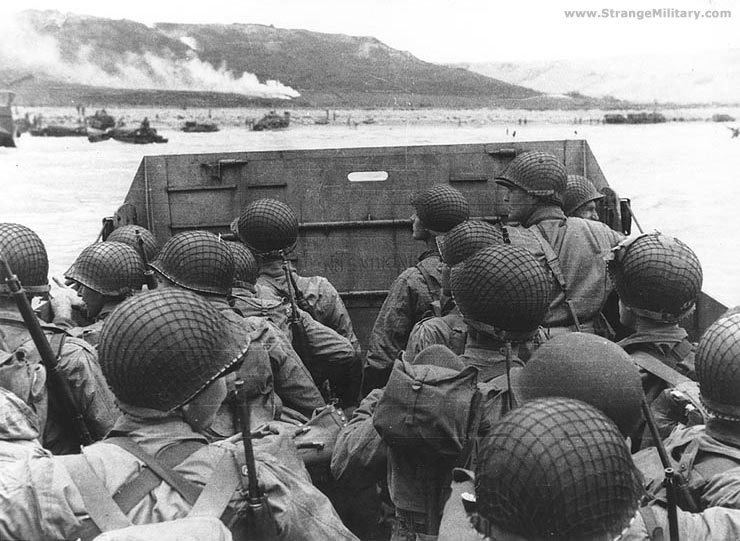
    D-DAY, June 6, 1944

    Thursday, June 6th, 2013

    “Soldiers, Sailors and Airmen of the Allied Expeditionary Force! You are about to embark upon a great crusade, toward which we have striven these many months. The eyes of the world are upon you. The hopes and prayers of liberty loving people everywhere march with you. In company with our brave Allies and brothers in arms on other fronts, you will bring about the destruction of the German war machine, the elimination of Nazi tyranny over the oppressed peoples of Europe, and security for ourselves in a free world.

    Your task will not be an easy one. Your enemy is well trained, well equipped and battle hardened, he will fight savagely.

    But this is the year 1944! Much has happened since the Nazi triumphs of 1940-41. The United Nations have inflicted upon the Germans great defeats, in open battle, man to man. Our air offensive has seriously reduced their strength in the air and their capacity to wage war on the ground. Our home fronts have given us an overwhelming superiority in weapons and munitions of war, and placed at our disposal great reserves of trained fighting men. The tide has turned! The free men of the world are marching together to victory!

    I have full confidence in your courage, devotion to duty and skill in battle. We will accept nothing less than full victory!

    Good Luck! And let us all beseech the blessings of Almighty God upon this great and noble undertaking.

    — Gen. Dwight D. Eisenhower “

    Sixty-nine years ago over 9,000 American men, some hardly older than boys, laid down their lives on the beaches of Normandy in the greatest military operation in the history of the world. The white crosses stand row upon row in Colleville-sur-Mer,  in silent testimony of their supreme sacrifice.

    Others who scrambled ashore on bloody Omaha Beach, or who climbed the rocky cliffs of Pointe du Hoc or who parachuted behind enemy lines with the 82nd and 101st Airborne lived to fight their away across France and across the Rhine into the heartland of Germany to break the power of the Third Reich forever. Others who survived the terrible ordeal of D-Day and fought on were not so lucky and did not come home.

    The median age of WWII veterans now stands at 92. The “Greatest Generation” is receding into history in increasing numbers with each passing year but their deeds are destined to become legend.

    ….The men of Normandy had faith that what they were doing was right, faith that they fought for all humanity, faith that a just God would grant them mercy on this beachhead, or on the next. It was the deep knowledge – and pray God we have not lost it – that there is a profound moral difference between the use of force for liberation and the use of force for conquest. You were here to liberate, not to conquer, and so you and those others did not doubt your cause. And you were right not to doubt.

    You all knew that some things are worth dying for. One’s country is worth dying for, and democracy is worth dying for, because it’s the most deeply honorable form of government ever devised by man. All of you loved liberty. All of you were willing to fight tyranny, and you knew the people of your countries were behind you.

    The Americans who fought here that morning knew word of the invasion was spreading through the darkness back home. They fought – or felt in their hearts, though they couldn’t know in fact, that in Georgia they were filling the churches at 4:00 am. In Kansas they were kneeling on their porches and praying. And in Philadelphia they were ringing the Liberty Bell.

    Something else helped the men of D-day; their rock-hard belief that Providence would have a great hand in the events that would unfold here; that God was an ally in this great cause. And so, the night before the invasion, when Colonel Wolverton asked his parachute troops to kneel with him in prayer, he told them: “Do not bow your heads, but look up so you can see God and ask His blessing in what we’re about to do.” Also, that night, General Matthew Ridgway on his cot, listening in the darkness for the promise God made to Joshua: “I will not fail thee nor forsake thee.”

    …..Here, in this place where the West held together, let us make a vow to our dead. Let us show them by our actions that we understand what they died for. Let our actions say to them the words for which Matthew Ridgway listened: “I will not fail thee nor forsake thee.”

    Strengthened by their courage and heartened by their value [valor] and borne by their memory, let us continue to stand for the ideals for which they lived and died.

    Thank you very much, and God bless you all. ”

    – Ronald Wilson Reagan, President of the United States, June 6, 1984

    E.O. Wilson on the Evolutionary Origin of Creativity and Art

    Thursday, April 4th, 2013

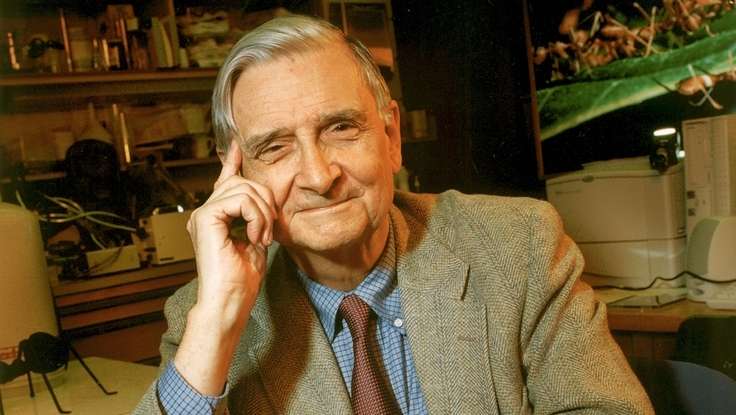
    E.O. Wilson 

    Last summer, eminent sociobiologist E.O. Wilson published an article in Harvard Magazine:

    On the Origins of the Arts 

    ….By using this power in addition to examine human history, we can gain insights into the origin and nature of aesthetic judgment. For example, neurobiological monitoring, in particular measurements of the damping of alpha waves during perceptions of abstract designs, have shown that the brain is most aroused by patterns in which there is about a 20 percent redundancy of elements or, put roughly, the amount of complexity found in a simple maze, or two turns of a logarithmic spiral, or an asymmetric cross. It may be coincidence (although I think not) that about the same degree of complexity is shared by a great deal of the art in friezes, grillwork, colophons, logographs, and flag designs. It crops up again in the glyphs of the ancient Middle East and Mesoamerica, as well in the pictographs and letters of modern Asian languages. The same level of complexity characterizes part of what is considered attractive in primitive art and modern abstract art and design. The source of the principle may be that this amount of complexity is the most that the brain can process in a single glance, in the same way that seven is the highest number of objects that can be counted at a single glance. When a picture is more complex, the eye grasps its content by the eye’s saccade or consciously reflective travel from one sector to the next. A quality of great art is its ability to guide attention from one of its parts to another in a manner that pleases, informs, and provokes

    This is fascinating.  My first question would be how we could determine if the pattern of degree of complexity is the result of cognitive structural limits (a cap on our thinking) or if it represents a sufficient visual sensory catalyst in terms of numbers of elements to cause an excitory response (neurons firing, release of dopamine, acetylcholine etc. ) and a subsequent feedback loop. Great art, or just sometimes interesting designs exhibiting novelty can hold us with a mysterious, absorbing fascination

    Later, Wilson writes:

    ….If ever there was a reason for bringing the humanities and science closer together, it is the need to understand the true nature of the human sensory world, as contrasted with that seen by the rest of life. But there is another, even more important reason to move toward consilience among the great branches of learning. Substantial evidence now exists that human social behavior arose genetically by multilevel evolution. If this interpretation is correct, and a growing number of evolutionary biologists and anthropologists believe it is, we can expect a continuing conflict between components of behavior favored by individual selection and those favored by group selection. Selection at the individual level tends to create competitiveness and selfish behavior among group members—in status, mating, and the securing of resources. In opposition, selection between groups tends to create selfless behavior, expressed in
    greater generosity and altruism, which in turn promote stronger cohesion and strength of the group as a whole 

    Very interesting.

    First, while I am in no way qualified to argue evolution with E.O. Wilson, I am dimly aware that some biological scientists might be apt to take issue with Wilson’s primacy of multilevel evolution. As a matter of common sense, it seems likely to me that biological systems might have a point where they experience emergent evolutionary effects – the system itself has to be able to adapt to the larger environmental context – how do we know what level of “multilevel” will be the significant driver of natural selection and under what conditions? Or does one level have a rough sort of “hegemony” over the evolutionary process with the rest as “tweaking” influences? Or is there more randomness here than process?

    That part is way beyond my ken and readers are welcome to weigh in here.

    The second part, given Wilson’s assumptions are more graspable. Creativity often is a matter of individual insights becoming elaborated and exploited, but also has strong collaborative and social aspects. That kind of cooperation may not even be purposeful or ends-driven by both parties, it may simply be behaviors that incidentally  help create an environment or social space where creative innovation becomes more likely to flourish – such as the advent of writing and the spread of literacy giving birth to a literary cultural explosion of ideas and invention – and battles over credit and more tangible rewards.

    Need to ponder this some more.

    Sixty Years after Stalin

    Wednesday, March 6th, 2013

    Sixty years ago one of the greatest monsters in history, a mass-murderer of tens of millions many times over, the yellow-eyed, “Kremlin mountaineer”  breathed his last.

    We live, deaf to the land beneath us,
    Ten steps away no one hears our speeches,
    All we hear is the Kremlin mountaineer,
    The murderer and peasant-slayer.
    His fingers are fat as grubs
    And the words, final as lead weights, fall from his lips,
    His cockroach whiskers leer
    And his boot tops gleam.
    Around him a rabble of thin-necked leaders –
    fawning half-men for him to play with.
    They whinny, purr or whine
    As he prates and points a finger,
    One by one forging his laws, to be flung
    Like horseshoes at the head, to the eye or the groin.
    And every killing is a treat
    For the broad-chested Ossete.
    – Osip Mandelstam

    So great was the terror he had inflicted that many of his victims, dazed and bloodied by decades of fear, savage oppression and war, openly wept. The greatest fear of the late dictator’s closest henchmen and accomplices, who had more than likely escaped the conveyor belt of torture, gulag and execution only by their master’s death, was that the people would think that they had murdered their dear vozhd and would storm the Kremlin and tear them to pieces.

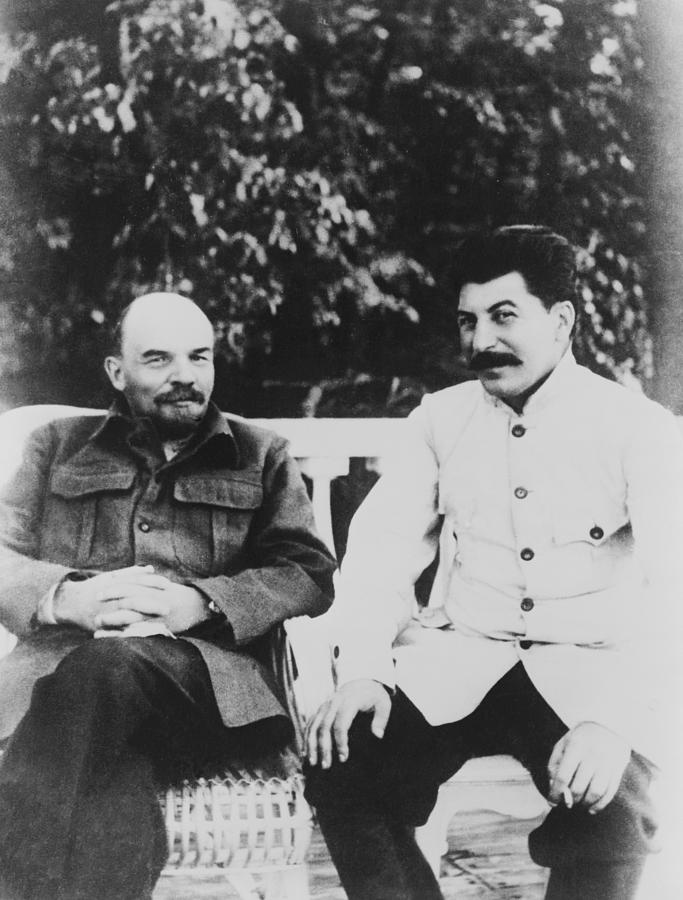
    The former Georgian seminarian and bank robber Joseph Djugashvilli Stalin did more to shape Russia than any man in history except Peter the Great and Genghis Khan. Ivan the Terrible, the tsar whom Stalin much admired and imitated in killing off his own “boyars”, could not hold a candle to his Bolshevik successor in either cruelty or statesmanship. Stalin entered power as Lenin’s chief clerk in a failed state wracked by civil war and ended it as master of the Communist world, possessor of the atomic bomb and the implacable victor of Berlin.

    Stalin sent thirty million of his countrymen to their deaths at the hands of buffoons, sexual sadists and deranged dwarfs, yet was a sensitive and gifted poet of no mean talent who could discuss Clausewitz, the intricacies of Marxist theory or the classics when he chose. Stalin was an avid writer of marginalia in books, making comments one scholar termed “insightful” as well brutal.

    An artist of the vendetta, Stalin personally lingered over lengthy death lists, making annotations, sparing one here and drawing out the torment of others there. Some estimates are that he signed some thirty thousand such death lists of prominent Soviet and pre-Revolutionary figures, often consigning their families to arrest, torture and exile. Endless ordinary Soviets accused of “wrecking” or “trotskyite counter-revolutionary activity” or “espionage” went to the Gulag or the grave by quota. Not merely in the terrible year of 1937, but throughout Stalin’s long, grim reign; and after the war, it was the turn of the Eastern Europeans, especially suspected “cosmopolitan” Communists, like Ana Pauker and Rudolf Slansky and the usual litany of “class enemies” and “fascists”.

    Stalin’s archenemy in both fact and fevered imagination, Leon Trotsky, received an icepick in his brain from Stalin’s messenger, Ramon Mercader. Then for good measure, Stalin killed Trotsky’s son.

    The only man Stalin seemed to fear, was Hitler, near whom he had once briefly lived in 1913 in Vienna when Stalin was a young Bolshevik revolutionary and the future Fuhrer was a struggling “artist” living in a bum’s hostel. They both frequented the Schoenbrunn park and likely, the same cheap coffee hoses and cafes. Stalin’s efforts to appease Hitler the Warlord and mad visionary proved no more successful than had Neville Chamberlain’s; the USSR survived Operation Barbarossa in part because the tyrannical Stalin could force the Russian people to spill an ocean of blood in 1941 the way Tsar Nicholas II could not in 1914.

    Twenty million, perhaps more, of the Red Army died on the road to Berlin and victory over Nazism, giving Stalin, who had curried favor with Hitler and allied himself with the Third Reich, mastery over half of Europe. His sycophants called him “Generalissimo” and tried to deify him on his 70th birthday and please him, assuring themselves of safety. It was no use; Stalin ostracized them or arrested their wives or toyed with them cruelly at late night drinking sessions as Stalin’s suspicious mind turned again toward the blackness as it had in the Thirties, when his closest collaborators became dead men talking, disappearing and then reappearing suddenly, gaunt and haunted, to grovel for death at show trials.

    Roy Medvedev, Soviet era dissident and Marxist historian wrote of Stalin, “Let history judge“. The judgement it must be said, is in with Russia’s tragic post-Soviet decline. A degradation so severe that even the tough and crafty siloviki ,Vladimir Putin, has been unable to reverse it.

    The wounds inflicted by Stalin run too deep.

    The Heirs of Stalin

    Mute was the marble. Mutely glimmered the glass.
    Mute stood the sentries, bronzed by the breeze.
    Thin wisps of smoke curled over the coffin.
    And breath seeped through the chinks
    as they bore him out the mausoleum doors.
    Slowly the coffin floated, grazing the fized bayonets.
    He also was mute- his embalmed fists, 
    just pretending to be dead, he watched from inside.
    He wished to fix each pallbearer in his memory: 
    young recruits from Ryazan and Kursk, 
    so that later he might collect enough strength for a sortie, 
    rise from the grave, and reach these unreflecting youths.
    He was scheming. Had merely dozed off.
    And I, appealing to our government, petition them
    to double, and treble, the sentries guarding this slab, 
    and stop Stalin from ever rising again
    and, with Stalin, the past.
    I refer not to the past, so holy and glorious, 
    of Turksib, and Magnitka, and the flag raised over Berlin.
    By the past, in this case, I mean the neglect
    of the people’s good, false charges, the jailing of innocent men.
    We sowed our crops honestly.
    Honestly we smelted metal, 
    and honestly we marched, joining the ranks.
    But he feared us. Believing in the great goal, 
    he judged all means justified to that great end.
    He was far-sighted. Adept in the art of political warfare, 
    he left many heirs behind on this globe.
    I fancy there’s a telephone in that coffin: 
    Stalin instructs Enver Hoxha.
    From that coffin where else does the cable go! 
    No, Stalin has not given up. He thinks he can cheat death.
    We carried him from the mausoleum.
    But how remove Stalin’s heirs from Stalin! 
    Some of his heirs tend roses in retirement, 
    thinking in secret their enforced leisure will not last.
    Others, from platforms, even heap abuse on Stalin
    but, at night, yearn for the good old days.
    No wonder Stalin’s heirs seem to suffer
    these days from heart trouble. They, the former henchmen, 
    hate this era of emptied prison camps
    and auditoriums full of people listening to poets.
    The Party discourages me from being smug.
    ‘Why care? ‘ some say, but I can’t remain inactive.
    While Stalin’s heirs walk this earth, 
    Stalin, I fancy, still lurks in the mausoleum.

     -Yevgeny Yevtushenko

    Discovering a New Circle of Hell

    Monday, March 4th, 2013

    There is an understandable buzz when a historical event as well known and deeply investigated as  the Holocaust has suddenly been found to have been underestimated by an order of magnitude.

    From The New York Times:

    The Holocaust Just Got More Shocking 

    ….As early as 1933, at the start of Hitler’s reign, the Third Reich established about 110 camps specifically designed to imprison some 10,000 political opponents and others, the researchers found. As Germany invaded and began occupying European neighbors, the use of camps and ghettos was expanded to confine and sometimes kill not only Jews but also homosexuals, Gypsies, Poles, Russians and many other ethnic groups in Eastern Europe. The camps and ghettos varied enormously in their mission, organization and size, depending on the Nazis’ needs, the researchers have found.

    The biggest site identified is the infamous Warsaw Ghetto, which held about 500,000 people at its height. But as few as a dozen prisoners worked at one of the smallest camps, the München-Schwabing site in Germany. Small groups of prisoners were sent there from the Dachau concentration camp under armed guard. They were reportedly whipped and ordered to do manual labor at the home of a fervent Nazi patron known as “Sister Pia,” cleaning her house, tending her garden and even building children’s toys for her.

    When the research began in 2000, Dr. Megargee said he expected to find perhaps 7,000 Nazi camps and ghettos, based on postwar estimates. But the numbers kept climbing — first to 11,500, then 20,000, then 30,000, and now 42,500.

    The numbers astound: 30,000 slave labor camps; 1,150 Jewish ghettos; 980 concentration camps; 1,000 prisoner-of-war camps; 500 brothels filled with sex slaves; and thousands of other camps used for euthanizing the elderly and infirm, performing forced abortions, “Germanizing” prisoners or transporting victims to killing centers.

    In Berlin alone, researchers have documented some 3,000 camps and so-called Jew houses, while Hamburg held 1,300 sites.

    ….The lead editors on the project, Geoffrey Megargee and Martin Dean, estimate that 15 million to 20 million people died or were imprisoned in the sites that they have identified as part of a multivolume encyclopedia

    Read the rest here.

    Perhaps some of you will recall the controversy in the late 1990’s surrounding the release of Hitler’s Willing Executioners by Daniel Goldhagen where Goldhagen argued that Nazi genocide was only possible with the widespread complicity and often enthusiastic participation of “ordinary Germans” who were not themselves Gestapo agents or Nazi fanatics.  One of the primary charges against Goldhagen by academic historians was his generalizing indictment of a generation of Germans for Nazi policy that was, for all intents and purposes, officially a state secret.  After all, the closest thing to a “public” discussion in the Third Reich of the Final Solution was a terrifying speech by SS-Reichsfuhrer Heinrich Himmler at the Posen Conference to an assembly of Gauleiters  and Reichsleiters who constituted the aristocracy of the Nazi Party.

    The sheer geographic density and social ubiquity of the Nazi machinery of repression and genocide documented by researchers severely undermines the critics of Goldhagen. While it is well documented that most Germans, unless they were political opponent or social misfits, did not personally feel the heavy hand of the Gestapo in the way Soviet citizens experienced the NKVD, Germans during the war years irrefutably lived cheek by jowl with the miserably wretched slaves of the Reich.

    Some of the shock produced by this investigation is due to an artificial “parsing of genocide” by historians into distinct categories of death-dealing instead of looking at Nazi democide as a whole cloth or continuum.

    In the immediate aftermath of the war, there was little interest beyond the Nuremberg  Tribunal in delving into the depths of Nazi crimes. Reconstruction of Europe and “getting on with life” or the exigencies of the Cold War and the ominous threat of the Soviets took far greater precedence. Even among Holocaust survivors themselves, there was initially an effort to “move on” from the unimaginable, or to make a anguished pretense of so doing, as expressed in the critically acclaimed Rod Steiger film, The Pawnbroker. When historians began more serious examinations of Nazi crimes in the 1960’s and 1970’s, there was a tendency to separate the Holocaust from related or similar atrocities due in part to the overriding ideological emphasis the most extreme Nazis placed upon the total and absolute elimination of all Jews – every last one – at all costs,. Even over and above winning the war.

    However, that genocidal crusade by the SS against the Jews also facilitated the deaths of millions of others – including the Gypsies (marked for nearly complete extermination), the “useless eaters“, some 700,000 Serbs to please the Ustase puppet regime, political opponents who disappeared into the Night and Fog, and a vast democide of Slavic peoples to feed the Third Reich’s inexhaustible need for slave labor. Albert Speer wrote that Himmler coldly planned a further massive reduction of the Russian and Ukranian populations west of the Urals to build a post-war Nazi racial empire in vanquished Russia.

    The scale of murder by totalitarian governments in the 20th century approaches the mythic, a phenomena for which the Holocaust has become a totem.


    Switch to our mobile site