Veteran’s Day
Tuesday, November 11th, 2008


Briefly, here is a juxtaposition of posts worth looking at that portray war through the lens of the social scientist:
Rethinking Security – The Study of War as A Social Science
…Rather, it would be better to re-concieve the study of strategic affairs as a multi-disciplinary social science major combining sociology, international relations, philosophy, political science, cognitive science, economics, history, and “pure” military theory. This would be intellectually rigorous enough to banish forever the stereotype of the armchair general and the wargamer.
I see learning about strategy in itself as the key aim of such a curriculum–the goal would be to produce a student able to either apply his or her learnings in a think-tank or government, join the armed forces, come up with reasonable anti-war critiques as an activist, resolve conflict as a humanitarian, or apply strategy in the corporate world.
War as a social science akin to sociology or economics would bring empirical and quantitative rigor into the study of military history and affairs on the undergraduate level as well as a focus on the mechanics of war (tactics, operational art, strategy, and grand strategy) rarely seen outside of a Professional Military Education (PME).
SWJ Blog – The Genetic Roots of the War on Terrorism
….In the article, titled “A Natural History of Peace,” Stanford Professor Robert M. Sapolsky compares and contrasts human aggressive tendencies with well-documented propensities for violence among several species of primates, and develops a case suggesting that human aggression of the kind that produces warfare mainly stems from the genetic impulses rooted in humans as primates (not a new suggestion of itself). But more significantly, he offers proof extracted from a now robust body of field work that even strong genetic tendencies for violence in certain species of primates can be mitigated by exposure to the equivalent of “cultural” forces. He singles out from the body of such observations the case history of one group of baboons (a particularly aggressive and violent species of primate) that he calls the Forest Troop, the intensely aggressive behavior of which was ameliorated after exposure to the more peaceful and tolerant “mores” of another baboon troop of an identical species with which the Forest Troop had come in contact. He concludes by asserting that “some primate species can make peace despite violent traits that seem built into their natures.” He goes on to muse, “The challenge now is to figure out under what conditions that can happen, and whether humans can manage the trick themselves.”
Sapolsky’s argument frames the issues associated with the current global conflict in which the United States is now engaged in a potentially very useful light: as a biological problem best understood and dealt with using means specifically tailored to deal with human genetic tendencies in order to promote cooperation and tolerance instead of competitive violence. This stands in contrast to the current approach which appears to assume that the conflict mainly results from a combination of cultural and economic factors that can be dealt with by a strategy that combines selected violence, targeted monetary investments mixed, and cross cultural messages through so called strategic communications.
The Social Sciences are a powerful but fractionating, reifying lens. Individually, they unearth certain aspects of large and highly complex phenomena albeit at the cost, at times, of distorting the proportional importance to the whole of the aspect that the social scientist chooses to study. The sociobiological perspective is a radical and controversial one but it is a position that is far more open to empirical investgation in a scientific sense than are many traditional components of strategic theorizing. At Rethinking Security, Adam wisely tries to balance the heavy load of quantitative methods in his proposed program with at least a few qualitative disciplines; input from military practitioners and security experts would also be helpful to the prospective student in this regard as well.
Recently, I’ve seen Dr. Chris Bassford’s site, Clausewitz.com mentioned at the Small Wars Council and then one of my co-authors, A.E. of Rethinking Security, favorably cited a link to Clausewitz.com on a social networking platform. Intrigued, I wandered over and read for a while. I’m glad that I did.
On War was a book I read as an undergraduate for a class that focused on German intellectual history and was included by the prof more or less as an afterthought, along with works by Kant, Marx, Nietzsche and a few others. I recall that I was not terribly 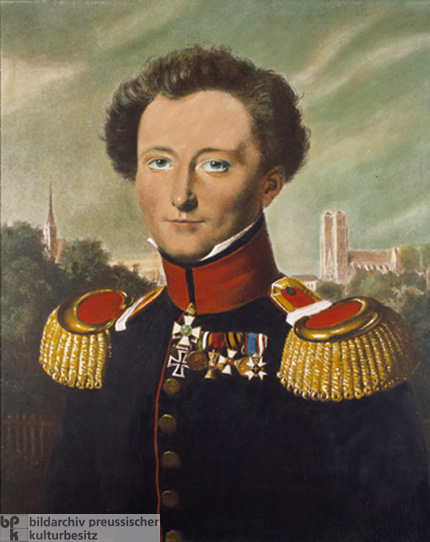 impressed at the time by On War; my real interest then was Cold War diplomatic history and I paid far greater attention to Marx. To me, Clausewitz was a turgid writer, another Germanic pedant, though an important one for his contribution to strategy. I never developed any particular dislike for him either, since military affairs wasn’t a priority and I stuck Clausewitz on my shelf and ceased to give him much consideration thereafter. Other philosophers and thinkers seemed to be more relevant.
While reading at Clausewitz.com, I came across Bassford’s critique of various translations of On War and he panned one in particular:
7. Penguin Edition (1968). AVOID. The most widely available version of the Graham/Maude translation (see #4 above) is the weirdly edited and seriously misleading Penguin edition (still reprinted and sold today), put together by Anatol Rapoport in 1968. Rapoport was a biologist and musician-indeed, he was something of a renaissance man and later made some interesting contributions to game theory. However, he was extremely hostile to the state system and to the alleged “neo-Clausewitzian,” Henry Kissinger. He severely and misleadingly abridged Clausewitz’s own writings, partly, of course, for reasons of space in a small paperback. Nonetheless-for reasons that surpasseth understanding-he retained Maude’s extraneous introduction, commentary, and notes, then used Maude’s errors to condemn Clausewitzian theory. Between Graham’s awkward and obsolete translation, Maude’s sometimes bizarre intrusions, and Rapoport’s hostility (aimed more at the world in general, and at Kissinger in particular, than at Clausewitz personally), the Penguin edition is badly misleading as to Clausewitz’s own ideas. The influential modern military journalist/historian John Keegan apparently derives much of his otherwise unique misunderstanding of Clausewitz from Rapoport’s long, hostile introduction-necessarily so, since he has obviously never read Clausewitz’s own writings, not even the rest of the text of this strange edition. If you have any version of the Graham or Graham/Maude translation, but especially this twisted Penguin version, we advise you to get the modern Howard/Paret edition (discussed above).
Curious, I went over to a bookcase and pulled my copy of On War. Sure enough, it was the “twisted” Rapoprt version that I had read . I don’t know if the backstory Bassford gives about Rapoport and Henry Kissinger is true or not but it is certainly a plausible one. Kissinger, for all his intellectual abilities and charm was, in his heyday, a highly aggravating and insecure personality who made a legion of enemies with abrasive, dismissive and derogatory remarks and machiavellian conduct. I’ve seen scholars tilt at windmills for stranger reasons than that. My own mentor in diplomatic history had consuming hatreds for Alexander Hamilton and Arthur Schlesinger, Jr. to which I could never relate.
As a result of reading Bassford’s comments, I picked up a Paret translation of On War yesterday and a cursory flipping through told me that he was correct in his assessment. I had read an edition that was both mediocre and weird in college. So I bought the copy and look forward to getting acquainted with a much more accurate presentation of Carl von Clausewitz’s ideas.
ADDENDUM:
As it happens, SWJ Blog has a related post- Between Clausewitz and Mao.
Danger Room was most excellent today. Two items here worthy of attention:
Michael Tanji, my CTLab colleague, put in an appearance at Danger Room with How to Fix the Spooks’ New ‘Vision’:
The Office of the Director of National Intelligence recently released their new vision for the future of the spooks and spies community. And, shockingly enough, it’s actually pretty smart — sparking a bit of optimism for those who think serious change is too long in coming. It’s a more far-reaching document than I have seen come out of the IC (Intelligence Community) in the past. The parts about supplying intelligence to everyone from the Departments of Health and Human Services to international organizations to private sector and non-governmental organizations were especially heartening.
That said, it still doesn’t reach far enough. Everyone in the IC likes to say that we’re in a period of unprecedented and extensive change. If that’s the case, I’d expect the response to match the challenge. Some suggestions:
They’re good ones. Go read them!
Next, Noah Shachtman brings us some official Pentagon futurism pried loose by Justin Elliott of Mother Jones magazine with a FOIA request, Military Study Looked to Rome for Lessons:
The Pentagon’s legendary Office of Net Assessment is known for peering into the future of conflict — at subjects like wartime biotech, fighting robots, networked battles, and the military in space. The office’s head, Andrew Marshall, has been called the Pentagon’s “futurist-in-chief.” But for one study, concluded in 2002, Net Assessment-funded researchers looked back, to the empires of Alexander the Great, Imperial Rome, Genghis Khan, and Napoleonic France.
Military Advantage in History (PDF) is a fascinating read but very quirky in it’s historical interpretation. I base this assessment on a spot check of the Roman section where some elements are correct but some variables are underplayed – the political dynamics of proconsular authority begetting Roman aggressiveness and adaptiveness in the field or the resilience of the Roman state for example. The rush to try and synthesize such a vast scope of history in a few paragraphs will inevitably create distortions ( Napoleon or Alexander are far more manageable subjects for such abstraction – but they influenced rather than institutionalized in the long run).
A part of a comment from Jay@Soob:
“This was likely compounded by the chronological assignment (that Mao was the first to conceptualize 4GW is an assertion that Ethan Allen might have something to swear and swing fists about)”
The frequent and casual association of Chairman Mao with 4GW is something that has always puzzled me as well ( though, if memory serves, William Lind was always careful to explain that 4GW isn’t simply guerilla warfare). I think it can be attributed to the likelihood that most people who are somewhat familiar with 4GW theory tend to think first of guerillas and Mao is regarded as a great innovator there. However, is there merit in placing Mao in the “4GW pantheon” (if there is such a thing)?
In the ” yes” column I’d offer the following observations:
Mao, whose actual positive leadership contribution to Communist victory in the civil war was primarily political and strategic rather than operational and tactical ( his military command decisions were often the cause of disaster, retreat and defeat for Communist armies) had a perfect genius – I think that word would be an accurate description here – for operating at the mental and moral levels of warfare.  Partly this was skillful playing of a weak hand on Mao’s part; the Communists were not a match on the battlefield for the better Nationalist divisions until the last year or so of the long civil war but Mao regularly outclassed Chiang Kai-shek in propaganda and diplomacy – turning military defeats at Chiang’s hands into moral victories and portraying Communist inaction in the face of Japanese invasion as revolutionary heroism. Yenan might have be a weird, totalitarian, nightmare fiefdom but Mao made certain that foreign journalists, emissaries and intelligence liasons reported fairy tales to the rest of the world.
In the “maybe” column:
Regardless of one’s opinion of Mao ZeDong, China’s civil war, running from the collapse of the Q’ing dynasty in 1911 to the proclamation of the People’s Republic in 1949, is a historical laboratory for 4GW and COIN theory. The complexity of China in this era was akin to that of Lebanon’s worst years in the 1980’s but it lasted for decades. In a given province of China ( many of which were as large or larger than major European nations) then there might have been operating simultaneously: several warlord armies, Communist guerillas, Nationalist armies, the Green Gang syndicate, White Russian mercenaries, Mongol Bannermen, rival Kuomintang factions, common bandit groups and military forces of European states, Japan and the United States. Disorder and ever-shifting alliances and fighting was the norm and Mao was the ultimate victor in this era.
In the “no ” column:
Mao ZeDong, whatever his contributions to the art of guerilla warfare, intended, quite firmly, to build a strong state in China, albeit a Communist one in his own image. He was never interested in carving out a sphere of influence or an autonomous zone in China except as a stepping stone to final victory. Moreover, the Red Army’s lack of conventional fighting ability for most of the civil war related to a lack of means, not motive on Mao’s part. When material was available, particularly after 1945, when Stalin turned over equipment from the defeated Kwangtung army and began supplying a more generous amount of Soviet military aid to the Chinese Communists, Mao tried to shift to conventional warfare. When in power, he sent the PLA’s 5-6 crack divisions into the Korean War to face American troops in 2GW-style attrition warfare, not guerilla infiltrators behind MacArthur’s lines.
Finally, Mao’s personal political philosophy of governance, taken from Marxism-Leninism and Qin dynasty Legalism, are about as radically hierarchical and alien to 4GW thinking as it is possible to be.
In sum, Mao is and should be regarded as a major figure in the history of the 20th century and that century’s military history but he isn’t the grandfather of fourth generation warfare.
ADDENDUM:
Congratulations to 4GW theorist and blogger Fabius Maximus for being picked up by the BBC.

Zenpundit is a blog dedicated to exploring the intersections of foreign policy, history, military theory, national security,strategic thinking, futurism, cognition and a number of other esoteric pursuits.
Customized Web Site & Blog Design


