zenpundit.com » intelligence

Archive for the ‘intelligence’ Category

The Clown Prince of the Unthinkable

Wednesday, February 6th, 2008

Herman Kahn was the “shock jock” of America’s Cold War nuclear strategists, who used irreverence and comedic gesture to hook America into deep thinking about the implications of thermonuclear war (something the editors of Scientific American, his bitterest critics, have yet to forgive Kahn). Wiggins at Opposed Systems Design recently pointed to a fantastic post on Kahn by a fellow Wohlstetterian blogger, Robert Zarate , “Kahn and Mann’s “Ten Common Pitfalls” (1957)”. Zarate commented:

Less known, though, are Kahn’s reports and memos, many of which are available on the RAND Corporation’s website. In my mind, one stands out:

Herman Kahn and Irwin Mann, Ten Common Pitfalls, RM-1937 (Santa Monica, CA: RAND Corporation, July 17, 1957).

This research memorandum (hence its designation as “RM-1937”) was intended to be a very preliminary draft of a chapter in Kahn and Mann’s planned, but never completed, book, Military Planning in an Uncertain World. RM-1937 offers the book’s provisional table of contents.

Ten Common Pitalls examines a series of methodological problems that often hamper or distort the work of policy analysts. Kahn and Mann’s examination, however, is intended to be descriptive rather than analytical. In the introduction, they write that they hope RM-1937 will serve “as a sort of checklist” for analysts, or at least alert them “to the things to look for in an analysis.” As a bonus, the research memorandum illustrated (literally) each pitfall with a drawing by Kahn. These drawing, reproduced below, are quite humorous and give a sparkling sense of Kahn’s own wit and personality.

It’s interesting to me that both Kahn and John Boyd ( see the current Roundtable on Science, Strategy and War at Chicago Boyz) were intrigued by the implications of systemic, deep uncertainty, on military strategy and human cognition, with Kahn preceding Boyd in that regard by approximately a decade and a half. Both men frustrated and amazed their peers and were dedicated briefers who evolved their thinking through study, reflection, presentation and discussion who had difficulty getting their ideas into a final book format. Kahn less so than Boyd, as he is best known for On Thermonuclear War but there are many “unfinished symphonies” in Kahn’s intellectual legacy; important ideas, arguments and projections that were never developed to their full potential.

A Great Find For Intel Buffs

Tuesday, January 29th, 2008

Kudos to the “Imperating Kents for their pointing to the digital archive of the private papers of Allen Dulles, the OSS spymaster and seminal DCI whose tenure was responsible for much of the CIA’s later cultural mystique. KI had it right when they declared:

It is thus with great interest we note that Princeton University has opened a digital archive of the private papers belonging to former DCI Allen Dulles. The variety and volume of materials is simply extraordinary, and although it is organized by librarians (rather than intelligence professionals or modern search engine experts) it is well worth the time to explore these virtual stacks. Given that the gentleman’s 1963 text The Craft of Intelligence, is still reprinted for use as a basic text at many university level programs, these further materials are both substantively illuminating and historically invaluable. Of particular interest are the French and German language items, which may never have been previously referenced in depth during intelligence studies research on the matter.

Eisenhower’s role as a decisive voice in IC operations during his administration has been frequently underestimated by historians, with the consequent inflating of the role played by Allen Dulles. In reality, Dulles was deeply influential, given Ike’s high level of interest in intelligence matters and his brother John Foster Dulles as SecState and sister Eleanor also in several consequential bureaucratic position at Foggy Bottom, including a stint in State’s intelligence bureau, creating a formidible familial troika. But Dulles was not a free-lance operator in any sense of the word. That was something a hot-tempered President Eisenhower would never have tolerated for an instant, despite cultivating a public image of genial, grandfatherly, disconnection; nor was it in Dulles’ character to personally micromanage operations to the extent that being a “rogue” DCI would require.

Dulles might have been America’s master spy but as DCI he carried out the orders of his political masters – to both great success and global scandal.

Thinking in an Alternate Scale

Sunday, January 20th, 2008

Dave Davison at Thoughts Illustrated recently featured the “Powers of 10” video by IBM; by today’s hyperkinetic attention span, it might be considered “long” but the impression it makes is very powerful, particularly on those not well acquainted with physics.  Dave justly called it “9 Minutes of video you will never forget”. Here it is:

One of the themes that I stress with my students, when we are trying to analyze a primary source, is the danger of relying upon one’s own habitual perspective and frame of reference. An important element of a mental perspective is scale and the general tendency of people to visualize new concepts only in terms of the scale in which they go about their daily lives without any comprehension of alternate orders of magnitude leads to serious logical errors. The distortion becomes still worse, when matters of science or economic policy or planning are involved and the person trying to analyze is equally unable to conceive of using different time frames.

Cameron on Knowledge

Wednesday, January 9th, 2008

Blogfriend Charles Cameron left the following comment on my knowledge expertise post but I’m promoting it here ( while I munch a quick bite to eat and digest his remarks) because it will resonate with the interests of a number of my other readers.

I’ll update later tonight with a response:

“I’d like to propose that the reason, as you say, that “a space in which people from diverse fields of expertise can get together to exchange ideas” is so powerful isn’t because the more “people” the merrier – its because the more “diverse fields” the merrier.

Each new expert, if expert in one field, brings one new family of “frames” together, and it is the viewing of the known facts (and occasional anomalies) in new frames that provides the unexpected glimpses.  So that in fact the most useful expertise would be in (almost content free) frames – in knowing a wide variety of angles from which to look at each situation.

But I’d like to take this farther, and then deeper.

I’m speaking of frames, but those are fairly easily gathered by a decent collector, since they don’t on the whole challenge people’s existing emotions – the assumptions which exemplify our worldviews, to which we tend to be emotionally attached, are harder to get at – and deeper still there the archetypes in which our entire sense of reality is anchored, shifts in which, like psychedelic drug experiences, shake us to the foundations.

For a practical minded child of the enlightenment to question some position proposed by John Cain or Hillary Clinton is not too difficult. To admit one’s own foolishness after offering unwanted though well-intentioned advice to a confirmed alcoholic is harder. But to question the law of cause and effect as commonly understood seems, well, suicidal.

And yet that’s what, for instance, al-Ghazali did, and the Islamic world is still halfway of the opinion that he is right.  As an author under the pseudonym Spengler put it in a recent article for Asia Times:

There are no intermediate causes, in the sense of laws of nature. Mars traverses an ellipse around the sun not because God has instituted laws of motion that require Mars to traverse an ellipse, but because Allah at every instant directs the angular velocity of Mars. … Allah is everywhere doing everything at all times. He sets the spin on every electron, measures the jump of every flea, the frequency of every sneeze.

That’s a hard one for us to swallow, as is the neo-Platonist view – popular with Marcilio Ficino, the leading light of the Platonic Academy in Medici Florence – expressed here by Plotinus, (and echoed by Shakespeare in a familiar phrase):

Men directing their weapons against each other- under doom of death yet neatly lined up to fight as in the pyrrhic sword-dances of their sport – this is enough to tell us that all human intentions are but play, that death is nothing terrible, that to die in a war or in a fight is but to taste a little beforehand what old age has in store, to go away earlier and come back the sooner. … Murders, death in all its guises, the reduction and sacking of cities, all must be to us just such a spectacle as the changing scenes of a play; all is but the varied incident of a plot, costume on and off, acted grief and lament. For on earth, in all the succession of life, it is not the Soul within but the Shadow outside of the authentic man, that grieves and complains and acts out the plot on this world stage which men have dotted with stages of their own constructing.

These views – that all the world’s a play, that each sparrow falling, each arrow or bullet fired, each airplane tilted towards a distant tower is held between the fingers of a God – they seem unnatural to us, they are foreign, medieval we c all them, archaic even – and yet the hold some terrible compulsion for us, they are the stuff of dreams, and for those whose “niveau mentale” is less firmly fixed in the twenty-first century and its certainties, they can unleash a fervor we find it hard to understand.

My point in quoting al-Ghazali and Plotinus is to show, as Erich Auerbach showed in his Mimesis: The Representation of Reality in Western Literature, that realities at odds with what seems like reality to us have significant histories and can inspire powerful emotions and impassioned acts that leave our western speculative imaginations standing in their dust.

The warfare of the Aztecs, the berserkers seeking Valhalla, and most significantly today, the Islamists seeking martyrdom – these are not “rational actors” in a sense that tweaking our Prisoners Dilemma tables will not address.

To know them, we must think not merely our of the box but out of boxes, take not just the road less traveled but a path so overgrown a machete is required to cut it, and no one can say whether it was a path before, or is new found land, a haunt of owls or badgers, or an habitation of ghosts… a trackless track as zen might call it, crossing the Cartesian rift between brain and mind, passing between real and imaginal, fact and myth, story and history as easily as we might pass between Colorado and Wyoming.

All this requires a sort of intellectual courage … and a poetic / archaic cast of mind.

Well, that’s one end of an Ariadne’s thread…

I hope to follow the thread deeper into the labyrinth in upcoming posts.”

Knowledge Expertise as a Springboard instead of a Cage

Saturday, January 5th, 2008

Steve DeAngelis had an excellent and timely post on the cognitive diversity involved in the creative process of innovation, working off an article in The New York Times, Innovative Minds Don’t Think Alike:
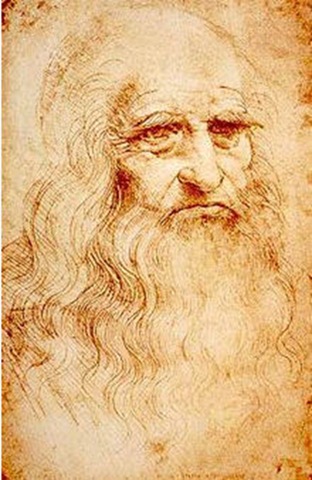
The Curse of Knowledge

“There is a lot of denial when it comes to the curse of knowledge. Nobody likes to admit that they are incapable of thinking out of the box. Entrepreneurs pride themselves on being able to envision the “next big thing.” Designers and inventors are always looking for better ways to do things. The good ones have learned tricks that help them break down the walls of knowledge. According to Rae-Dupree psychologists have conducted experiments that demonstrate that a person’s first instinct is to think about old things rather than new things. That’s not really surprising since we can only think about what we know.

‘Elizabeth Newton, a psychologist, conducted an experiment on the curse of knowledge while working on her doctorate at Stanford in 1990. She gave one set of people, called ‘tappers,’ a list of commonly known songs from which to choose. Their task was to rap their knuckles on a tabletop to the rhythm of the chosen tune as they thought about it in their heads. A second set of people, called ‘listeners,’ were asked to name the songs. Before the experiment began, the tappers were asked how often they believed that the listeners would name the songs correctly. On average, tappers expected listeners to get it right about half the time. In the end, however, listeners guessed only 3 of 120 songs tapped out, or 2.5 percent. The tappers were astounded. The song was so clear in their minds; how could the listeners not ‘hear’ it in their taps?’

….Rae-Dupree notes that there are ways to “exorcise the curse.” I have written about one of those ways before. Frans Johansson calls it “The Medici Effect” in his book of the same name. He argues in favor of creating a space in which people from diverse fields of expertise can get together to exchange ideas. The Medici’s, of course, were a wealthy and powerful Italian family who played an important role in the Renaissance. The family’s wealth permitted it to support artists, philosophers, theologians, and scientists, whose combined intellect helped burst the historical pall known as the Dark Ages. Getting people with different knowledge bases together means that none of them can remain within the walls of their own knowledge domain for long. As a result, good ideas normally emerge”

Read the rest here.

Acquiring disciplinary expertise typically takes approximately a minimum of 7-10 years for the student to master enough depth of knowledge and requisite skill-sets to become an expert practitioner. In many fields, notably pure mathematics, theoretical physics and musical composition, this period of early mastery is often the most fruitful in terms of significant contributions of new discoveries or the kinds of innovations that Mihaly Csikszentmihalyi and Howard Gardner consider to be “Big C” creativity. Einstein’s papers on Relativity or Newton’s early exposition of the Laws of Motion being the great historical examples of paradigm-shifting innovators. If a practitioner remains entirely in that field for their career, cultivating an ever greater and rarefied depth of knowledge ( and thus having fewer true peers and more disciples) further contributions are likely to be of the “tweaking” and “critiquing” variety. Useful but not nearly as satisfying as the grand “breakthrough” moment.

I suspect that the reason for this decline in major creativity has to do with two realities of expertise:

First, the analytical-reductionist emphasis on vertical thinking; cognitively, for an acknowledged expert, there is a great deal more time spent on mere data retrieval, interpretation within accepted frames and scanning patterns for consistency than there is original problem solving, questioning premises, speculating, imaginative brainstorming, analyzing anomalies and thinking analogically. The latter are too often the tools of the novice, the student, the child, the layman trying to grasp in the process of learning what  they do not yet fully understand. Too often these powerful ( though tiring and time consuming) cognitive skills are set aside in favor of operating on “autopilot” once the student has achieved mastery. Unless consciously practiced, the hard thinking tends to stop when one is constantly confronted by the routine.

Secondly, disciplinary fields, like all forms of collective human endeavor generate their own cultures with accepted norms, rituals, in-group terminology, orthodoxies, implicit and explicit rule-sets, authoritative hierarchies, politics, and peer presssures. As one gains seniority it becomes harder and harder to rock the boat because challenging one’s peers brings professional risk, social ostracism and conflict while validating the community’s beliefs yields rewards, advancement and praise. A phenomenon of human nature that has been observed by thinkers as disparate as Thorstein Veblen, Thomas Kuhn and Howard Bloom. Vested interests are irrational in their own defense. It is here that knowledge can be come a “curse” and expertise a form of incompetency or blindness to the larger picture ( “educated incapacity” in Herman Kahn’s terminology).

The answer to this problem requires actively determining how we will think about our knowledge. Steve pointed to cultivating “the Medici Effect” of multidisciplinary interaction in his post, a highly effective practice for organizations who want a work force rich in “intellectual catalysts”. To this, I would add another important set of variables: freedom and time. Seemingly non-productive activities, when we are “fooling around” appear to permit an indirect processing of information that leads to a burst of insight about the problem we have failed to consciously solve ( the “idea came to me in the shower” effect). Time needs to be set aside to explore possibilities with acceptance that not all on them are going to pan out ( Frans Johnansson covers these points at length in The Medici Effect). Permitting employees autonomy strikes at the power and culture of American middle-level management, which is why inculcating such practices often founder, even when introduced support of organizational leaders ( “leadership” and “management” are entirely different outlooks) due to the passive or active resistance of those whose position or status in the organization depends upon exercising control.

On the individual level, novelty is an important stimulus toward horizontal thinking. New concepts and experiences stoke our curiousity and “wake” our brains out of the usual, habitual, patterns in which we operate. Attention levels increase as we begin to operate at the beginning of the learning curve and start to recognize parallels and connections between old and new knowledge. We can also make deliberate choices to think “outside the box’ by voluntarily changing our position, perspective and scale, reversing our premises, engaging in counterfactual thought experiments and other lateral thinking exercises. In this way, we are more likely to be behaving metacognitively, aware of both our own thinking and more alert to the nature of the information that we are receiving.

We have something of a paradoxical situation. An untrained mind, looking at a field with “new eyes” is the one most likely to notice that which has eluded the expert of great experience but is least able to make use of, or even assess critically, the importance of their insights. A trained, disciplinary, mind has the capacity to extrapolate/interpolate, practically apply new insights or think consiliently with great effect but is the mind least likely to have any insights that could conflict with the major tenets of their disciplinary worldview.

Having the best of both worlds means avoiding either-or choices in cognition in favor of both. Analytical-reductionism and Synthesis-consilience have to be regarded by serious thinkers as tools of equal value. Imagination and vision should be as important to the genetic microbiologist or physical chemist as it is to the artist but they should be regarded as a complement to the scientific method and logical, critical, analysis, not as a substitute. Looking for alternative choices to a course of action should be valued as highly as correctly identifying the likeliest outcome of the action. We can embrace intellectual curiousity and shun “paralysis by analysis”.

Crossposted at Chicago Boyz.


Switch to our mobile site

