Forensic Paleo-Anthropology and the Last Man
Tuesday, May 5th, 2009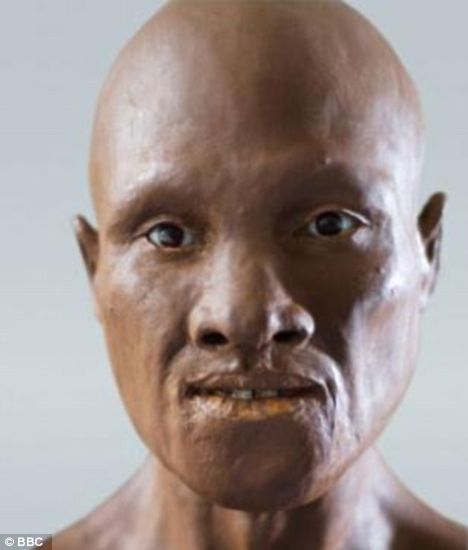
THE FIRST EUROPEAN – NOT ENTIRELY HOMO SAPIENS SAPIENS – 35,000 BC
A British forensic scientist, Dr. Richard Neaves, has recreated the head of one of the earliest modern human ( some differences in brain case and teeth) hunter-gathers from fossil remains, in the same manner of reconstructing the identity of homicide victims.
His recreation offers a tantalising glimpse into life before the dawn of civilisation. It also shows the close links between the first European settlers and their immediate African ancestors. To sculpt the head, Mr Neave called on his years of experience recreating the appearance of murder victims as well as using careful measurements of bone. It was made for the BBC2 series The Incredible Human Journey. This will follow the evolution of humans from the cradle
of Africa to the waves of migrations that saw Homo sapiens colonise the globe.
….’Richard creates skulls of much more recent humans and he’s used to looking at differences between populations. ‘He said the skull doesn’t look European or Asian or African. It looks like a mixture of all of them. ‘That’s probably what you’d expect of someone among the earliest populations to come to Europe
As with the example of Kennewick Man, efforts at forensic paleo-anthropogy shatter modern racial assumptions regarding our earliest ancestors, regardless of whether those assumptions emanate from archaic stereotypes or modern PC ideology. Kennewick Man bore little or no resemblance to Amerinidian tribal groups that he long preceded, and Native American activists responded to the startling archaeological find by attempting to have the remains seized, scientific analysis of them banned and the site bulldozed. The “First European”in turn, looks nothing like the Aryan mythology of the Nazis or 19th century European racialist agitators. Instead, he appears somewhat like an Africanized Yul Brynner.
These reconstructions demolish our casual, self-referentially anachronistic, projections of our own demographic groups backward in time. We want to see ourselves in the people “back then” just like we wish to imagine that kind of continuity in a far-flung future. I’m dubous that we will look like “us” 100,00 or 250,00 years in the future and wonder if such a people will even acknowledge their kinship with us any more than we do with Homo Habilis.