zenpundit.com » Afghanistan

Archive for the ‘Afghanistan’ Category

On wearing blinders

Thursday, September 6th, 2012

[ by Charles Cameron — that neither excited hope nor fear nor fixed opinion is a workable basis for sound judgment ]
.

For some reason, this two-year-old tale popped up in my twitter-stream today.

Here’s what Leon Panetta said in response to the CIA report on how the Jordanian AQ operative Dr. Humam al-Balawi managed to get himself invited into the Camp Chapman base in Khost, Afghanistan — despite warning from Jordanian intelligence — where he blew himself up, claiming the lives of seven CIA agents:


.

Isn’t that a bit like saying “The chocolate cake itself may have clouded some of the judgments made here”? You mean, their emotions clouded their judgment, don’t you, Mr Panetta?

On this occasion, the chocolate cake was al-Balawi’s indication that he could lead the CIA to Ayman al-Zawahiri

Links:

Officer Failed to Warn C.I.A. Before Attack
Intelligence: Where Everyone Gets a Trophy

**

And now here’s a companion piece, from today’s publication of a Classified CIA Mea Culpa on Iraq:

Analysts tended to focus on what was most important to us — the hunt for WMD — and less on what would be most important for a paranoid dictatorship to protect. Viewed through an Iraqi prism, their reputation, their security, their overall technological capabilities, and their status needed to be preserved. Deceptions were perpetrated and detected, but the reasons for those deceptions were misread.

**

Intelligence is least intelligent when it’s blindsided by hopes, fears, and unquestioning assumptions.

What are our current blinders?

Kelly Vlahos Spoons John Nagl Over COIN

Monday, September 3rd, 2012

There is quite a buzz going in mil and defense blogger circles over the recent op-ed savaging in The American Conservative by Kelley Vlahos regarding Dr. John Nagl and COIN. Unfortunately for Vlahos, little of it that I have seen online or privately is favorable – including from some people who I know are less than well-disposed toward COIN or the COINdinistas.

Speaking as someone who was one of the earlier voices to remark that the political moment of pop-centric COIN had passed, I found Vlahos’ post to largely be ill-tempered, context-distorting, schadenfreude.

But hey, judge for yourself. My comments will be in normal text:

Learning to Eat Soup with a Spoon 

….Then Tom Ricks, Washington Post correspondent-court scribe, conducted a full-blown high school popularity contest, literally ranking the “brains behind counterinsurgency’s rise from forgotten doctrine to the centerpiece of the world’s most powerful military.” In this cringe-worthy “top ten” published in Foreign Policy in December 2009, Ricks places “King David” Petraeus at Number 1, and then Nagl, whose Oxford dissertation-turned-Barnes-and-Noble-bestseller Learning to Eat Soup with a Knife made him a counterinsurgency “scholar,” among other bright lights of the time. Nagl, Ricks predicted, would be “in a top Pentagon slot within a year or two.”

That was just three years ago. Today, there is no better symbol for the dramatic failure of COIN, the fading of the COINdinistas and the loss that is U.S war policy in Afghanistan than this week’s news that Nagl is leaving Washington to be the headmaster of The Haverford School, a rich preparatory school (grades k-12) for boys on Philadelphia’s Main Line.

Hmmmm. I guess General Petraeus as CIA Director and General Mattis as Combatant Commander of CENTCOM are therefore examples of a rare form of career failure.

And really, only a subpar military officer would involve himself in educating young people. Shame on you, John Nagl, for joining such a shady group of misfits.

….That’s right — Nagl, once called the Johnny Appleseed of COIN, who reveled in his role as face man, tutoring reporters with practiced bookish charm on the “the new way of war,”  and burnishing his personal story to convince everyone that he was a counter-insurgent before his time — a modern T.E. Lawrence — is packing up for good. Turns out that despite all the high hopes, the COINdinistas hit the brass ceiling with a smack, especially once it became clear that the magic they sold was a bag of beans….

Again, most of the COINdinistas, so-called, have not hit some kind of brass ceiling  nor are they secretly running the Army or the administration. Most are  in perfectly respectable but unremarkable ranks, institutional positions or jobs in the private sector. HR McMaster is now a brigadier major general, Con Crane is a director at the US Army Military History Institute, Kalev Sepp is a lecturer at the Naval Postgraduate School, Montgomery McFate holds the Minerva Chair at NWC,  General Jack Keane sits on several corporate boards, Fred Kagan is still at AEI,  Andrew Exum is at CNAS, David Kilcullen is the  CEO at Caerus Associates and so on.

By Washington standards, this is a relatively modest level of policy influence or promotion (Petraeus and Mattis excepted). If you want to look at rapid advancement through political connections, consider Al Haig rising like a rocket from LTC to full general and NATO Supreme Commander due to his proximity to Richard Nixon and Henry Kissinger. Or the unusually gilded career path of Colin Powell.

That said, there are many grounds, theoretical and practical, to find fault with pop-centric COIN theory and FM 3-24, from an anti-empirical legacy assumption of a Maoist model of insurgency, to a fundamental confusion of tactics and operational art with strategy to the hardening of COIN from a fairly flexible emergent doctrine in Iraq into a rigid, micromanaging, ROE dogma in Afghanistan. COIN is ripe for revision, not excision and substantive, informed, critiques of the wars of the past decade are sorely needed by scholars, military officers and defense intellectuals. Irregular conflict is never going away any more than war will go away.

Unfortunately, Vlahos was too busy with gossipy smears on Nagl’s character to make any substantive points of that nature which would have made her column something more than ad hominem rubbish.

So many browser tabs, so little time

Thursday, August 16th, 2012

[ by Charles Cameron — Hindutva vs Ghazwa-e-Hind, India vs Pakistan, battle of the girl orators, flags flying in the other guy’s capital, Zaid Hamid, erased from the map, what have I missed? ]
.

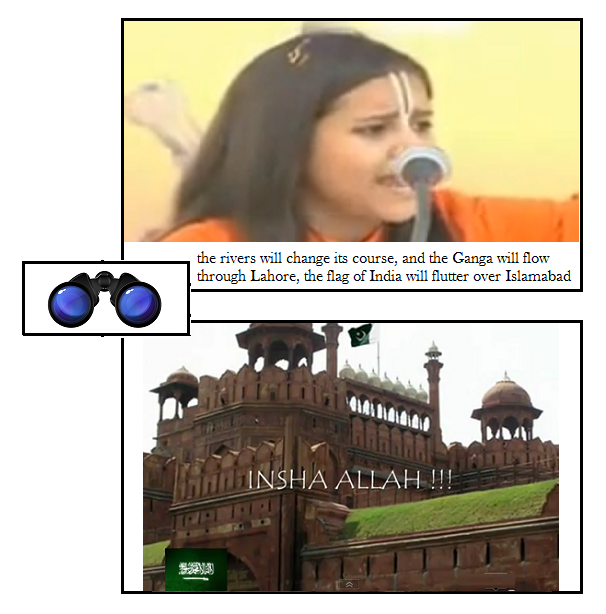
For starters, when I saw the blurry headlines under 13-year-old Sadhwi Balika Saraswati‘s speech to a Vishwa Hindu Parishad gathering, I wasn’t sure whether to pair her speech with Zaid Hamid‘s image of the Pakistani flag flying over Delhi’s Red Fort:

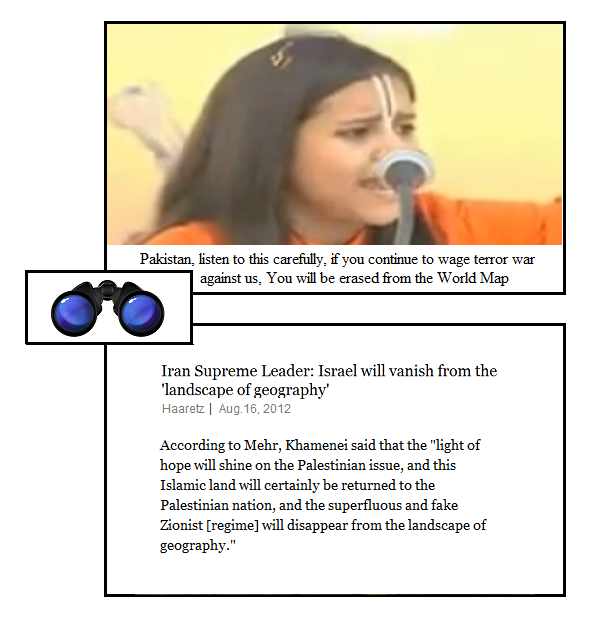
or with the Ayatollah Khamenei‘s recent statement about the “fake” Zionist regime disappearing from the “landscape of geography”:

I mean, there are parallels there, and differences, in each case.

**

And then, when I did a little more digging, all hell broke metaphorically loose, and I couldn’t get enough tabs on my browser to hold all the videos I seemed to want to check out.

I’ve combed through my history and sorted things out now, so I can point you, for starters, to:

13 yr old Hindu girl speaks out against Anti-India forces at a VHP rally — a Youtube video of the relevant part of her speech with English subtitles. You can read a transcript of the speech — missing all the excitement — here. And to give you an idea of its (relative) popularity, one YouTube version of this speech without subtitles, has had 410,535 views, with 1,503 likes and 1,589 dislikes, while another has had 200,964 views, with 801 likes and 491 dislikes… Bear in mind, though, that the Indian population exceeds one billion.

A Pakistani girl replies to 13 yr old Hindu girl who spoke against pakistan — sadly, no subtitles here, but at least it’s a response from someone of roughly equivalent age..

Reply to bajrangdal’s girl by Zaid Hamid which is also interesting, as he’s the spokes-guy for the Ghazwa-e-Hind idea…

**

Which in turn brought me back to thinking once again about the Ghazwa, and:

Ghazwa-e-Hind is our destiny — Zaid Hamid himself addressing the topic (posted this month) — “and we invite the Muslims from Afghanistan, Iran, Turkey and the rest of the Muslim world to come and join us in the fulfilment of this most fascinating destiny which awaits us now: recapturing of India.”

Ghazwa-e-Hind Hadith Explaination — the picture is very blurry , is that our old friend Sheikh Imran Hosein, perhaps? — and

Ghazwa-e-Hind By Dr Israr Ahmed

**

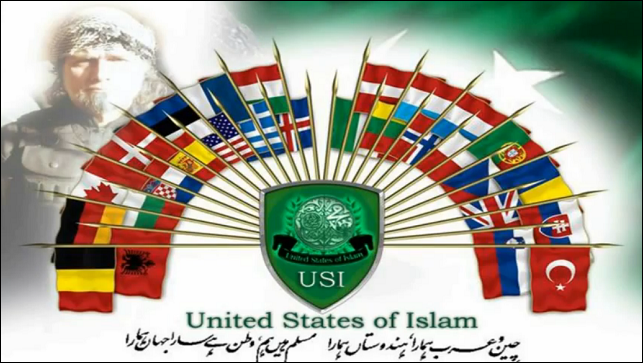
I’m afraid Zaid Hamid wouldn’t be satisfied with India alone, though:

That’s him, top left, overseeing everything.

Oh, and for good measure, here’s a humorous response to Hamid, zaid hamid latest about india — featuring a barking dog.

**

Look, I don’t think Pakistan is about to capture India, or vice versa, any time soon.

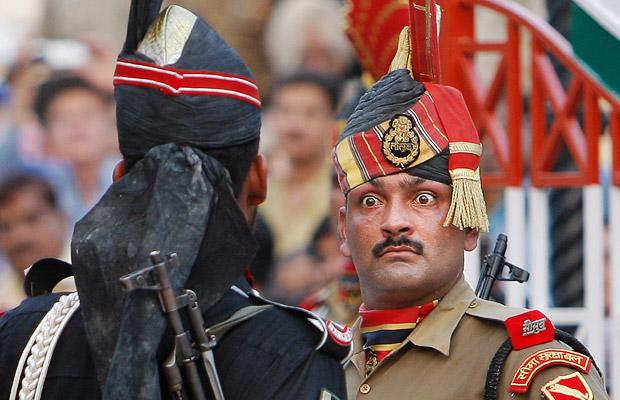
If the two countries feel the need to face off, I hope they will limit themselves to a little ritual drama and some fierce stares, and they do every day in the border ceremonial at Wagah:

Beyond that, I’m an advocate for conflict-resolution and peace-making.

What I do think is that undercurrents of the kind found in the incendiary rhetoric of both sides are worth the attention of analysts.

Pew on the prevalence of Mahdism — take heed!

Sunday, August 12th, 2012

[ by Charles “told you so” Cameron — Pew figures for Mahdist expectation, also the Second Coming, Israel, and the potential influence of apocalyptic ideation on foreign policy ]
.

The World’s Muslims: Unity and Diversity, p. 65

.

I am Qualit, not Quant by nature, really much more interested in the workings of the imagination that in the aggregates of poll responses, so it’s a bit like pulling teeth for me to report on a Pew report — but in this case I can legitimately say “I told you so”, which massively outweighs the reluctance I might otherwise feel…

**

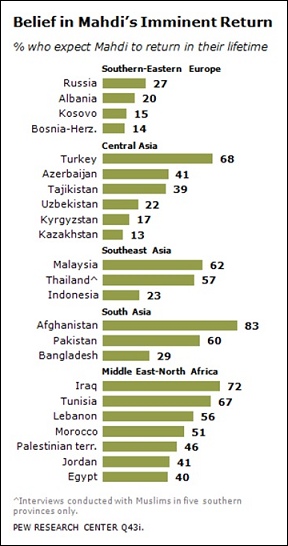
Recently, Pew has been including questions about the expectation of the Mahdi in some of its reports, and even Tim Furnish — who wrote the book on Mahdist movements and has long been saying we neglect them at our peril — even Tim was surprised at how widespread Mahdist expectation is, as reported in their just released The World’s Muslims: Unity and Diversity. In a post aptly titled Don’t Leave a Live (or Occulted) Mahdi Out of Your Calculations, Tim says the report contains “The most notable — indeed, strikingly important — news” in the form of “fascinating — and disturbing — data on belief in the Mahdi’s imminent (in one’s lifetime) return.”

See graphic above.

I recommend you read Tim’s analysis for the full range of his points — I won’t, for instance, be touching on what he says about Turkey — here I am going to select a couple of his key issues, and make just a point or two of my own.

**

Furnish:

Of the 23 countries whose Muslim citizens were polled, nine have majorities which expect the Mahdi in their lifetimes, with the overall average percentage at 41.8% … it is safe to extrapolate this percentage to Islam as a whole; ergo, 42% of 1.6 billion = 672 million Muslims who believe in the Mahdi’s imminent return! This is FAR greater than I had supposed.

Furnish also notes that Iran, the world’s most intensely Shi’ite nation and the one whose President has been speaking openly of Mahdist expectation, is not even included among the 23 countries Pew sampled.

Simply put, we have been blind to a very real phenomenon, and now we have a statistical alarm call to wake us up.

More subtly: there’s a difference between answering yes to the question “do you expect the Coming of X in your lifetime” and being on the edge of your seat, viewing every week as threshhold. Damian Thompson is very good on this in his book, Waiting for the Antichrist, and Stephen O’Leary in Arguing the Apocalypse suggests there’s an optimal “arousal” period — if you believe the Coming is too far away, you won’t be motivated to prepare for it quite yet, and if it’s too close it may be too late for you to do much to spread the word…

So, Pew — next time, ask a question with the opinions “in the next five to ten years” and “in my lifetime” — okay? The distinction is important, and a shift towards the shorter time-span would be highly significant.

**

Furnish again:

Despite the conventional wisdom (repeated even by Pew, in the face of their own data) that Mahdism is primarily the province of Shi`is, note that three of the four countries with the highest percentage expecting the Mahdi are majority-Sunni ones: Afghanistan (83%), Turkey (68%) and Tunisia (67%). This has ramifications, respectively, for: US policy in a country we are currently occupying; the only NATO Muslim-majority nation; and the vanguard state of the “Arab Spring.”

In his Conclusions, Furnish says:

The usual State/Defense departments’ “rational actor” approach to international relations might be quite simply irrelevant, if almost half the world’s Muslims expect the imminent return of their eschatological deliverer.

So there you have it. I discussed the “rational actor” versus Scott Atran‘s “devoted actor” in a recent post. And yes indeed, there are “ramifications for U.S. policy”…

Notably with regard to Afghanistan …

**

Here’s Furnish again:

Afghanistan is so rife with Islamic messianism because the 80% of the population that is Sunni and the 20% that is Shi`i (albeit Sevener/Isma’ili, as well as Twelver) both are in the middle of a war and occupation by a “Christian” power — which tends to ratchet up such expectations …

And again, in his Conclusions:

Afghanistan is a lost cause: over eight in ten of its people expect the Mahdi in their lifetime, and no amount of roads and clinics and girls’ schools built by the infidels will change that.

I don’t want to argue that second point in detail, although I think there’s a great deal more to life that Mahdist expectation for many who would answer “yes” to Pew’s question about expecting the Mahdi in one’s lifetime — see my comment on Damian’s book above. But how can I put it? A background Mahdist expectation can become a passionate involvement in a Mahdist movement if the right trigger comes along.

But what I find most striking here is that Afghanistan should be the country with the strongest Mahdist current out of all those Pew selected. And I’m struck not because Afghanistan has been a battlefield for so much of recent history — indeed, for so much of its history, period. I am struck because, in Al-Qaida’s recruitment narrative, supported by a number of ahadith, Afghanistan as Khorasan is the very locus from which the Mahdi’s victorious army will sweep out to conquer (finally) Jerusalem. And this too I have been posting about, eg in my discussions of Ali Soufan‘s The Black Banners and Syed Saleem Shahzad‘s Inside Al-Qaeda and the Taliban.

So the highest level of Mahdist expectation also happens to be found in an area with a potentially major role to play in an end times scenario…

**

There’s at least one earlier report in which Pew raised the question of Mahdist expectation — this time tied in with both the expectation of the Caliphate, and Christian hope of the Second Coming — their 2010 report Tolerance and Tension: Islam and Christianity in Sub-Saharan Africa.

Here, for instance, we learn:

Both Christians and Muslims believe they are living in a time that will undergo momentous religious events. For example, at least half of Christians in every country with large enough samples of Christians to analyze believe that Jesus will return to earth during their lifetime, including nearly seven-in-ten Christians in the Democratic Republic of the Congo (69%).

And at least half of Muslims in 10 of the 15 countries with large enough Muslim populations to analyze say they believe that the caliphate, the golden era of Islamic rule, will be re-established in their lifetime; this belief is most common among respondents in Mozambique (69%). And in 12 of these 15 countries, roughly six-in-ten or more Muslims believe in the return of the Mahdi, the guided one who will initiate the final period before the day of resurrection and judgment, though the survey did not ask respondents whether they expect this to occur during their lifetime.

And here is the relevant data on sub-Saharan Mahdist belief. In Q51 of this poll, Muslims were asked whether they believe “in the return of the Mahdi, the guided one who will initiate the final period before the Day of Resurrection and Judgment? Here’s the table of responses:

Given the “religious fault line” of mixed conflict and amicable coexistence between Christians and Muslims running across Africa from (so to speak) Nigeria to Somalia, with Boko Haram and Al-Shabaab among the less delightful participants, keeping an eye out for signs of Mahdist “semiotic arousal” would be important here, too.

**

And “semiotic arousal” — that reminds me. Richard Landes, who coined the term, has the definitive, encyclopedic book out about all the many forms of apocalyptic, and why they’re important: Heaven on Earth: The Varieties of the Millennial Experience Essential reading, if you ask me, on a hugely neglected and no less critically important subject.

**

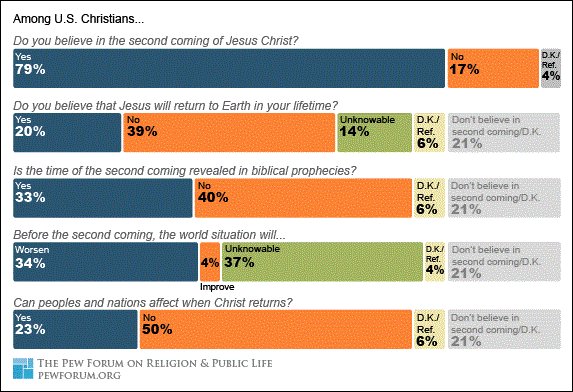
Finally, here’s yet another Pew graphic

— to be viewed in conjunction with this one, illustrating the ways in which belief in the Second Coming of Christ correlate with opinions about scriptures and the State of Israel:

**

Prophecy has impact, both on public opinion and on believing leaders. Jews with an expectation of the Messianic era, Christians expecting the soon Coming of Christ, and Muslims with Mahdist expectations each have their own apocalyptic scenarios, and in each case those scenarios exert some influence on policies relating to the Middle East and the Israeli-Palestinian situation in particular.

The bottom line?

Scriptural interpretation — and prophetic eschatology in particular — can no longer be assumed to be a quiet backwater topic for rabbinic students, seminarians and future mullahs to study, each in terms of their own tradition. It is now a series of conflicting drivers of current affairs — of war and peace.

Review: Poetry of the Taliban

Friday, July 20th, 2012

[ by Charles Cameron — poetry, humanity, dehumanizing, enmity and amity, image and likeness ]
.

I wrote this review-essay for Books & Culture: A Christian Review — the book review site associated with Christianity Today — where it was published earlier today. I am grateful to my old friend John Wilson for permission to cross-post it here.

I posted a reading of a single poem from the same anthology here on ZP in May: Change: a poem from The Poetry of the Taliban

Poetry of the Taliban (Columbia/Hurst)

Columbia University Press, 2012
176 pp., $24.50Buy Now


CHARLES CAMERON

Poetry of the Taliban

Regarding the image and likeness.

Which heart’s voice is this that directly enters into my heart?
Which brute’s ears are these that are deaf to this?
Which sigh of the defenceless is shaking God’s domain?

The poet is Dr. Faizullah Saqib, and the poem is taken from an anthology of poetry written by the Taliban, our enemies. Could it not have been written when an earlier generation of mujaheddin, resisting the Soviet occupation, were our friends? What is this thing, enmity?

Poetry is not simply another weapon the Taliban have decided to use for wartime purposes. Poetry is integral to Afghan culture, and while there are “official” Taliban poems, the flourishing “unofficial” poetry of the Taliban is the place where their Afghan love of poetry takes flight, and the varied aspects of war have been woven into it in much the same way that helicopters have been woven into Afghan carpets: as part of the pattern. There’s an interesting quote on the Textile Museum of Canada website, in fact, relating to Afghan war rugs: “On their rugs flowers turned into cluster bombs, birds turned into airplanes.”

War changes us, war changes everything. Most significantly, I’d suggest, war changes the nature of those we label enemies. We do this anti-sacramental thing, we de-humanize them. As Samiullah Khalid Sahak writes in a poem in this volume,

They don’t accept us as humans,
They don’t accept us as animals either.
And, as they would say,
Humans have two dimensions.
Humanity and animality,
We are out of both of them today.

We are not animals,
I say this with certainty.
But,
Humanity has been forgotten by us,
And I don’t know when it will come back.
May Allah give it to us,
and decorate us with this jewellery,
the jewellery of humanity,
For now it’s only in our imagination.

War tends to do this; it strips people of their humanity—and the stripping tends to boomerang. As Archbishop Desmond Tutu put it,

when we dehumanize someone, whether you like it or not, in that process you are dehumanized. A person is a person through other persons. If we want to enhance our personhood, one of the best ways of doing it is enhancing the personhood of the other.

I said we “do this anti-sacramental thing, we de-humanize’ those we identify as the enemy. And there are really two significant points here, one to do with dehumanizing the other and its impact on us, while the other has to do with the sacramental—with humanizing and loving the other.

Brigadier General S. L. A Marshall, later the official historian of the European theater in World War II for the US Army, found by asking soldiers in the field that “out of an average of one hundred men along the line of fire only fifteen men … would take any part with the weapons.” As a Guardianarticle put it much later,

Marshall’s astonishing contention, debated vigorously ever since, was that about 75% of second world war combat troops were unable to fire their weapons on the enemy. Guns were discharged, but they would be deliberately aimed over the heads of the enemy. The vast majority of soldiers couldn’t actually kill. And, in the midst of combat, they became de facto conscientious objectors.

Marshall’s conclusion, contained in his 1947 book Men Against Fire, was that:

It is therefore reasonable to believe that the average and healthy individual—the man who can endure the mental and physical stress of combat—still has such an inner and usually unrealized resistance towards killing a fellow man that he will not of his own volition take life if it is possible to turn away from that responsibility.

And the result of this?

Lt. Col. Dave Grossman, a former Ranger who has taught psychology at West Point, wrote in 2007, “Since World War II, a new era has quietly dawned in modern warfare: an era of psychological warfare, conducted not upon the enemy, but upon one’s own troops.” That too is a sort of boomerang effect: we now find ourselves needing not only to dehumanize the enemy, but to desensitize (and how different is that?) ourselves.

Grossman, whose book On Killing: The Psychological Cost of Learning to Kill in War is another major contribution to our understanding here, goes on to describe the “triad of methods used to enable men to overcome their innate resistance to killing” as including “desensitization, classical and operant conditioning, and denial defense mechanisms”:

During the Vietnam era millions of American adolescents were conditioned to engage in an act against which they had a powerful resistance. This conditioning is a necessary part of allowing a soldier to succeed and survive in the environment where society has placed him. If we accept that we need an army, then we must accept that it has to be as capable of surviving as we can make it.

But if society prepares a soldier to overcome his resistance to killing and places him in an environment in which he will kill, then that society has an obligation to deal forthrightly, intelligently, and morally with the psychological repercussions upon the soldier and the society. Largely through an ignorance of the processes and implications involved, this did not happen for Vietnam veterans—a mistake we risk making again as the war in Iraq becomes increasingly deadly and unpopular.

And what’s the basis for this? Sebastian Junger hung out for the better part of a year with troops in one of the most heavily contested parts of Afghanistan’s Korengal Valley, describing what he saw there in the bookWar and the film Restrepo, which he directed. Junger commented not so long ago in the Washington Post:

I can’t imagine that there was a time in human history when enemy dead were not desecrated. Achilles dragged Hector around the walls of Troy from the back of a chariot because he was so enraged by Hector’s killing of his best friend. Three millennia later, Somali fighters dragged a U.S. soldier through the streets of Mogadishu after shooting down a Black Hawk helicopter and killing 17 other Americans …. Clearly, the impulse to desecrate the enemy comes from a very dark and primal place in the human psyche. Once in a while, those impulses are going to break through.

And:

They are very clear about the fact that society trains them to kill, orders them to kill and then balks at anything that suggests they have dehumanized the enemy they have killed.

But of course they have dehumanized the enemy—otherwise they would have to face the enormous guilt and anguish of killing other human beings …. It doesn’t work …, but it gets them through the moment; it gets them through the rest of the patrol.

People who fight wars find it easier to kill people they have dehumanized. Perhaps, as Junger suggests, it makes it easier to handle, for a while, the burden of having killed. But then comes the post-traumatic stress, the label “PTSD,” the rising tide of military suicides.

It’s almost easier for me to go to the sacramental side.

All terror is sacramental, Joseba Zulaika suggests in Terror and Taboo: The Follies, Fables, and Faces of Terrorism—an “outward and visible sign of an inward and spiritual grace,” as evidenced by the stories of miracles recounted by bin Laden’s mentor Abdullah Azzam in his book, The Signs of the Merciful in the Jihad of Afghanistan.

It is with sacramental eyes, then, that we must understand and oppose terror, as William Cavanaugh in Torture and Eucharist suggests we should the “disappearances” and torture under the Pinochet regime in Chile. The issue, again, is that of personhood, of humanity, of the image and likeness.

Of which the poets Samiullah Khalid Sahak and Faizullah Saqib speak.

Sun Tzu in The Art of War advises us to know our enemy. Christ goes further, and instructs us to love. He instructs us in loving:

But I say unto you, Love your enemies, bless them that curse you, do good to them that hate you, and pray for them which despitefully use you, and persecute you.

Somehow, we are to understand a new relationship of enmity with amity.

Perhaps the poetry of the Taliban can show us something of our enemy’s humanity, brutal and angelic by turns, as is that humanity with which we ourselves contend:

Like those who have been killed by the infidels,
I counted my heart as one of the martyrs.
It might have been the wine of your memory
that made my heart drunk five times.
The more I kept the secret of my love,
This simple ghazal spoke more of my secrets.
—Khairkhwa

Charles Cameron is a writer, teacher, and game designer.


Switch to our mobile site