zenpundit.com » Strategy and War

Archive for the ‘Strategy and War’ Category

Towards Computational Strategy (Part I)

Sunday, December 8th, 2013

(by Adam Elkus)

As Zenpundit readers may know from my previous entry, I am a PhD student in Computational Social Science at George Mason University. Though I am learning the technical craft of computer modeling of social processes, I have had a longstanding interest in future war and technology. I grew up in California, and in an environment very much shaped by the technology industry. This was diluted by the fact that I grew up in Southern California and also have had a mostly liberal arts education heavy on arts, (military and strategic) history, and social science. My own struggle these days is — having spent so long developing the humanities side of myself — to think more like an engineer in developing computational and quantitative approaches to studying social science.  You can see some of my notes on this process at my own personal research journal.

My term project for my CSS 600 class is a very, very crude and simple agent-based model of military mobilization. I’m also working on an equally crude model of strategic learning and a very crude simulation of strategic effectiveness in alliances. I don’t like them, and am on the fence about whether I’ll want to post them on Github after all — though I am definitely going to post the alliance effectiveness model (which relies on an interesting optimization algorithm) to a larger audience.

That is OK. Though I began practicing Python and NetLogo all the way back in early spring, learning to program from scratch takes time and effort. Through my classes, tutoring, and plenty of sleepless nights I bootstrapped my way to being able to make computational models in Python, NetLogo, and Java. And this winter I will be practicing Java and Lisp in preparation for spring classes. I could probably, with more time and less distractions (readers who know me in person will know that I unfortunately have had to devote a lot more attention this semester to resolving some logistical problems outside of academics) have done better than the models I’m making for my classes. So I chose easier and simpler for my first models. However, I have grander ambitions in the long term.

This post is the first of a series that I am constructing from notes I have scribbled throughout this semester, my first at GMU. I have, over the last year, relentlessly explored and narrowed down my idea of my research agenda. Aaron Frank, Jay Ulfelder, Mark Safranski, A.E. Stahl, David Masad, Russell Thomas, Lynn Rees, Dan tdaxp, Daniel Trombly, Joshua Foust, Trey Causey, Alex Hanna, Sina K., Anton Strezhnez, Nick Prime, Daniel Bilar, Sam Liles, W.K. Winecoff, H. Lucien Gauthier III, Dave Lyle, Daniel Solomon, Jon Jeckell, Alex Olesker, Brett Fujioka, Robert Caruso, the mysterious Dr. Kypt3ia, and many others too numerous to mention have served as sounding boards for a successive array of both promising ideas and also half and even quarter-baked “dry holes.”

I have a gigantic array of TextEdit files, Moleskine journals, and even theories scribbled in pseudocode in my Sublime Text 2 text editor. So as I turn them into coherent posts, I will space them out individually. This series concerns the concept of “computational strategy,” which I am shaping my own studies around. For example, I will be taking a survey artificial intelligence class next semester — one of two survey courses that computer science majors (which I am not  — I will have the same relationship with CS that political science has with probability and statistics in that I’ll try to borrow as much as I can but also will never be as good as an actual CS student) must take to survey breadth and depth of AI. I will also be taking a course on cognitive programming for computer models.

It will consist of the following posts:

(I) My own journey as a PhD student up to this point

(II) Contrasting generative social science with theoretical computer science — and their deficits when applied to strategy

(III) From “killer robots” to “robot historian” and computation as a universal language

(IV) Towards a preliminary research agenda for computational approaches for studying strategic theory

We begin with (I):

Between A Dead Prussian And Kenneth Waltz

Since my friend Aaron Frank convinced me to switch from International Relations to my current PhD program in Computational Social Science, I have experienced something of an identity crisis. Though I have an BA in Diplomacy in World Affairs, and two semesters’ of graduate coursework in International Relations, my largest substantive base of expertise is in military-strategic theory and history and War Studies. I am both self-taught in this subject (endless library hours in my BA) and have a MA in Security Studies from Georgetown with a concentration in Military Operations. Unfortunately, this has ensured that for most of my time in higher education I have been caught between various disciplinary boxes. International Relations and Political Science has been a home for strategic thinkers like Richard BettsMichael Horowitz, and Eliot Cohen. But on the whole, International Relations and Strategy have diverged since the high point of the 1960s nuclear theorists (Brodie, Schelling, and others).

As A.E. Stahl wrote, IR’s interest usually stops (with few exceptions) once the war begins. This is actually mirrored by the state of military history itself, which increasingly shies away from the study of strategy, battle, and tactics. Comparative politics, ironically, has picked up the slack. Quantitative comparative politics has some of the most valuable research on sub-state violence and civil war, but it is not connected to the larger strategic picture. The danger in studying one part of warfare in isolation from the whole of war and strategy is that it is easy to begin to think that your field has rules somehow distinct from the larger picture. Counterinsurgency, as Colin Gray wrote, has different particulars but on the whole does not have a separate logic from war as a whole.

To make matters worse, there is also a disciplinary disconnect in the study of strategy between a number of different camps. Game theorists — from the classical variety to more exotic subtypes like algorithmic game theory and evolutionary game theory — explore strategic interaction with mathematical models. Business strategists explore strategy and innovation from an organizational standpoint. And military strategists examine topics from a qualitative-historical mindset derived from Carl von Clausewitz’s philosophy of “critical analysis.” Though all of these perspectives have value, few attempt to bring them together (and of those who do, few are successful). This does not have to be the case. Mid 20th century strategists like Thomas SchellingJohn Boyd, and J.C. Wylie combined a set of eclectic influences. Lawrence Freedman’s new book, as I’ve been told (haven’t got a chance to read) — also takes an holistic view of strategy that manages to also throw in the Marxist social movement strategic thinking of foundational radicals (Lenin and Gramsci to Hardt/Negri). And applications of complexity science to the study of strategy have been congruent with classical strategic theory.

Strategic Schizophrenia 

Given the problems I have had finding places where I could study strategy freely, I could have aimed to do my PhD in War Studies, like my friend Nick Prime. However, the PhD program he is in is best suited to those with a very concrete and well-formed plan of study. I did not have one when I was applying for my PhD. And I also am both a product of the American political science tradition and the classical strategy school. I thought I could combine the two in my PhD at an International Relations department.

After I switched to Computational Social Science, I briefly abandoned the thought of doing something on strategy and decided I was going to look at risk and complexity. This coincided with my own sense of uncertainty over what I would do after graduation. I had always thought I was getting my PhD so I could teach at a military institution or work in military research. But with sequestration devastating many places I wanted to work, I began to radically hedge. I thought to myself, “maybe I would be happy selling widgets with computer models and writing about strategy on the side.” But as I went through intensively pushing myself through remedial mathematics, programming, and computer science I began to fear going down a million complexity-theoretic rabbit roles without a strong anchor that would guide me at least through my PhD program.

Mathematics, code, and programs are after all only just formal languages. One must first know what they seek to say before they start talking. And I also simply could not get past the basic fact that I had devoted 7 years of my life (BA up until now) to studying war and strategy. I could either use my existing base of expertise as a source of research questions and subject matter knowledge, or force myself to develop entirely new bases of social science expertise. To reduce my own sense of schizophrenia, drift, and confusion I began to think about how I could make my new studies fit my interests.

To be continued.

Manea interviews Kilcullen at SWJ

Tuesday, November 26th, 2013

[by Mark Safranski, a.k.a. “zen“]

Octavian Manea, the interviewer par excellence of Small Wars Journal, steps up with an interview with COIN guru and former USG senior adviser Dr. David Kilcullen:

Future of Warfare in a Post-COIN Conflict Climate

[….]

SWJ: Should we expect that when we see all these clustered elements conflict is more likely, the societal environment more conflict prone?

David Kilcullen: There are two different ways to look at this set of relations. If we look at this from the standpoint of the military or law-enforcement, then it is pretty clear that we really need to get comfortable with operating in a very littoral, very urban and very highly networked environment because that is where the bulk of the people on the planet are going to live in the next generation. If you are not comfortable operating in such an environment you are not going to be effective. But this doesn’t mean that the solution to this problem is a military one. Seen from the perspective of the city in itself, it is pretty clear that the solution is not to bring the hawk cops in, and apply hard power tools to stabilize the environment. This is often a recipe for disaster. The paradox is that, on the one hand, there are no military solutions, but at the same time there are no solutions at all without security. Someone will provide that security and it is better for it to be the locals, but if the locals cannot do it, then history suggests that we will be drawn into this kind of conflict with about the same frequency as in the past.    

SWJ: You emphasized in your book, and also at the New America Foundation launching event that in the future we will face operational continuity and environmental discontinuity. What if the environmental discontinuity can in itself be a variable able to change the operational continuity?

David Kilcullen: That’s possible, to the extent that we have data — information based on historical patterns. On one hand, it seems that there is a lot of unwillingness on behalf of the American politicians to contemplate future engagements like Afghanistan and Iraq. Congress has no appetite as we’ve seen in the case of Syria for further military activity overseas. The military leadership is very reluctant to recommend that kind of operation. But going back to the 19th century we see a cyclical pattern in American military history where we repeatedly have leaders coming out with this kind of statement and yet we end up doing these kinds of operations anyway, on about the same frequency. There are deep structures about the way the US is connected to the international community that lead to this kind of behavior. It is possible that we won’t do this in the future, but it is not the way to bet. If you are going to bet on what is likely to happen, the pattern suggests that we are going to see a specific “conflict climate” (shaped by population growth, urbanization, littoralization and connectedness) within which wars will arise.

Read the rest here.

Two from the Comments Section on Wylie

Thursday, November 21st, 2013


Grip, the post by Lynn Rees generated comments linking to two further posts on the topic of Rear Admiral Joseph Caldwell  (J.C.) Wylie, Jr. and his  Military Strategy: A General Theory of Power Control which I suspect are of interest to many readers here:

Seydlitz89 – Towards a General Theory of Strategy: A Review of Admiral JC Wylie’s “Military Strategy” 

….I will introduce and discuss six specific areas of Wylie’s book. The first regards the nature of strategy itself including his view of what strategy should be able to accomplish and the nature of strategic theory. Second is his actual definition of strategy and some of the assumptions behind it. Third is the methods of studying strategy including his comments on cumulative and sequential strategies. The fourth is one aspect of his commentary in regards to Mao, and the fifth pertains to his second assumption in regards to “control over the enemy” and the final point regards his overall view of a general theory of strategy which ties all the points together. 

One of Wylie’s most valid points is that military and naval officers who command and plan our military operations use certain patterns of thought which are essentially strategic without even them being aware of it:

An idea is a very powerful thing, and political ideas or religious ideas or economic ideas have always affected and often controlled the courses of man’s destinies. That we understand and accept. So also have strategic ideas influenced or controlled man’s destinies, but too few men, including the men who had them, have recognized the controlling strategic concepts and theories hidden behind the glamor or the stench or the vivid, active drama of the war itself.(page 9)
Not only that, but a soldier, a sailor and an airman look at the same operation in very different ways, the airman especially “stands apart in basic principle from them both”. For this reason Wylie sees a general theory of strategy necessary in order to bring these different perspectives together in a way that makes sense of the whole: “what is necessary is that the whole of the thing, all of war, be studied” (p 12). The project he takes on is daunting in that “the intellectual framework is not clearly defined, and its vocabulary is almost non-existent” (p 11).

NerveAgent – J.C. Wylie: American Clausewitz? 

….To formulate his own theory, Wylie starts from four guiding assumptions:

1. There may be a war, despite all efforts to prevent it. The reasoning behind this point should be self-explanatory, but alas, liberal internationalists consistently fail to grasp it.

2. The aim of war is some measure of control over the enemy. This is one of Wylie’s most important points. With it, he explains the strategic object of war itself, above the operational focus of the Clausewitzian dictum of disarming the enemy. After all, as Clausewitz himself acknowledges, destroying the enemy’s army is a means to an end. The end is control. What “control” is will differ depending on the war itself and the value judgements of the parties involved. For the West, control usually involves the defeated being accepted back into the world community, but not as a threat.

3. We cannot predict with certainty the pattern of the war for which we prepare ourselves.Wylie would certainly take issue with all the rhetoric today that would have the U.S. abandon “obsolete Cold War thinking” in favor strategies geared primarily for irregular warfare. His point is that strategists must be provided with all the necessary tools from which they can craft plans to deal with individual contingencies, especially if official U.S. policy is to have full-spectrum capabilities.

4. The ultimate determinant in war is the man on the scene with the gun. This acknowledges that, if all else has failed, only land power can impose control upon the enemy.

From these assumptions, he develops the statement that is the core of his work:

The primary aim of the strategist in the conduct of war is some selected degree of control of the enemy for the strategist’s own purpose; this is achieved by control of the pattern of war; and this control of the pattern of war is had by manipulation of the center of gravity of war to the advantage of the strategist and the disadvantage of the opponent.

The successful strategist is the one who controls the nature and the placement and the timing and the weight of the centers of gravity of war, and who exploits the resulting control of the pattern of war toward his own ends.

Zen at War on the Rocks on China and Avoiding War

Thursday, November 14th, 2013
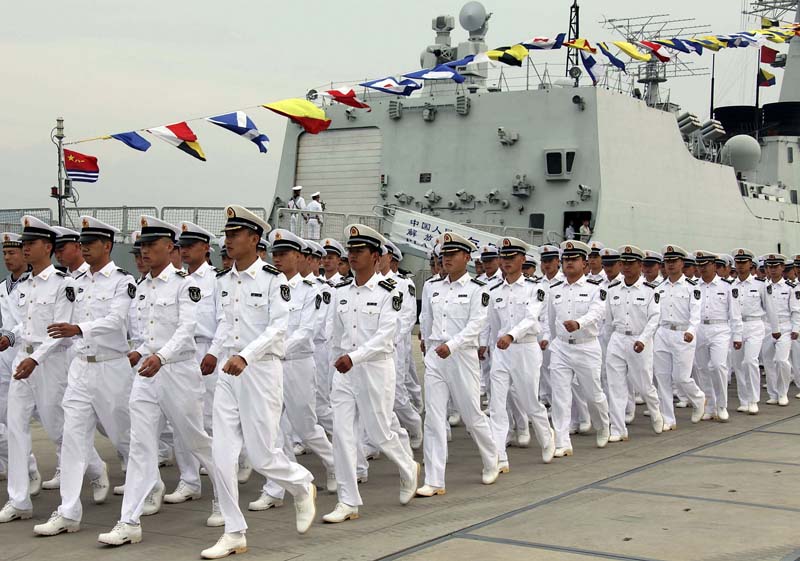
Chinese Navy

Chinese Navy

[by Mark Safranski, a.k. a. “zen“]

The editors of the excellent War of the Rocks invited me to post a short rebuttal to the op-ed “How Not to Go to War With China”, by Scott Cheney-Peters, which appears in their “Hasty Ambush” section:

UNDERSTANDING CHINA: THE REAL KEY TO AVOIDING WAR

….A place to begin our efforts in avoiding war with China might be avoiding engagement in some of the same incorrect mirror-imaging assumptions we once made about the Soviet Union, not least of which was MAD.  As a doctrine, Soviet leaders never accepted MAD and the Red Army general staff ignored it in drafting war plans to fight and prevail in any nuclear war. While the Soviets had no choice but to tackle the logic of deterrence as we did, the operative Soviet assumptions were predicated on a different strategic calculus, a different force structure and above all, different policy goals from their American counterparts.  A dangerous gap between American assumptions of Soviet intentions and the reality of these intentions came to light when in 1983 the Reagan administrationdiscovered to their alarm that Soviet leaders had interpreted the NATO exercise Abel Archer 83 as preparations for a real, imminent nuclear first strike on the USSR and ordered Soviet nuclear forces on high alert.

The military-to-military confidence-building initiatives outlined by Cheney-Peters intended to construct “habits of cooperation” are not entirely useless. There is some value in ensuring that high-ranking American military officers have personal and limited operational familiarity with their Chinese counterparts in the People’s Liberation Army (PLA), but as potential game-changers, they need to be taken with a grain of salt. Such a policy misses the essential strategic and political centers of gravity in the Sino-American relationship.  Namely that for the first time in 600 years, China is building a blue water Navy that will foster power projection as far away as the Indian ocean and Australia.  Secondly, this naval expansion, coupled with a new Chinese foreign policy, aggressively presses grandiose territorial demands on nearly all of its neighbors, including India and Japan.  These are fundamental conflicts with American interests that cannot be explained away or papered over by banquet toasts with visiting delegations of Chinese admirals. […]

Read the rest here.

Also read another WotR  China piece “99 Red Balloons: How War with China would Start” by Matthew Hipple

Manea Interviews Colby on Air-Sea Battle

Friday, November 8th, 2013

[by Mark Safranski, a.k.a. “zen“]

Octavian Manea branches out from COIN to the realm of power projection:

The Role of an Air Sea Battle-Centric Posture in Strategic Reassurance: SWJ Interview with Elbridge Colby 

SWJ: In a time when the PLA is intensively investing in anti-access/area-denial (A2/AD) capabilities, how would you characterize the Chinese way of war? What are they preparing for?

EC: My understanding of what the Chinese are trying to accomplish is the ability to effectively counter a third party intervention. If you look at the strategic landscape in the Western Pacific, more or less starting from 1945, the US dominated the aerial and maritime spheres. Obviously, we had less success on the Eurasian landmass, but the whole system was predicated on the ability of the US fleet and airpower to dominate the Pacific.

The particular contingency for which this was most relevant was Taiwan. Now, the US continues to have a policy guided by the Taiwan Act which, at the very least, suggests that we might intervene militarily. This is something that the Chinese are not comfortable with. It [the claim to Taiwan] is a core element of their regime’s legitimacy. This issue became more salient after the Taiwan Strait crisis in 1995/1996. That was a wakeup call for the Chinese, and in its aftermath they decided to build up the ability to try to effectively push back the US military. The trajectory of Chinese military development has therefore been to build forces that would potentially enable them to prevent the US from operating effectively in the areas that we need to be able to dominate if we decide to defend Taiwan in the event of Chinese military attack or attempted coercion. In this context they have spent a lot of time and resources on more accurate ballistic and cruise missiles, aerial forces and naval forces, basically with the overarching idea of creating an A2/AD bubble in order to deny the US the ability to exercise its power in the Western Pacific. That challenge to our power projection ability has been compounded because of the centralization of the US military posture following the Cold War, becoming increasingly focused on Guam and a few other nodes in the Pacific region.

SWJ: What are the implications of China’s military build-up for the United States?

EC:  As we go forward and the Chinese economy likely continues to grow, they will presumably continue to put significant resources into these military capabilities. If we think about the basic military problem, the US is trying to project its power across the greatest expense of water on the globe, very far from our shores, using naval and airpower, all while the Chinese are operating from their mainland. The Chinese basically are trying to frustrate our ability to enter, while we are trying to get there and accomplish our objectives. As the Chinese military become more sophisticated, it will become a great problem for us.

SWJ: Are the Chinese A2/AD capabilities a long-term threat to the credibility of the deterrence capital that the US is providing to the region?

EC: Absolutely. We can see this in the case of Japan, where we see a lot more interest, focus, and essentially need for a stronger military posture. Publicly the Japanese are talking about North Korea, but what they are really worried about is China. The Senkaku Islands are the tip of the iceberg. A few months ago the Chinese state-affiliated press started to talk about the Chinese claims on the Ryukyu Islands, of which Okinawa is a part. It is a classic example of the downside of accommodation or appeasement in that the potential adversary can get hungrier rather than sated due to accommodation. And Taiwan’s closer relationship with mainland China is, in part, a result of the shifting regional military balance. More broadly, in these kinds of strategic competitions, perceptions of capability and resolve are crucial. If everyone thinks we are growing weaker, then they are likely to behave accordingly. 

A lengthy interview – read the rest here.


Switch to our mobile site