zenpundit.com » science fiction

Archive for the ‘science fiction’ Category

Njdeh Asisian on Iranian eschatology at SWJ

Monday, May 9th, 2016

[ by Charles Cameron — one selection from a much longer piece, followed by a CAVEAT LECTOR in red and a note about the Houthis ]
.

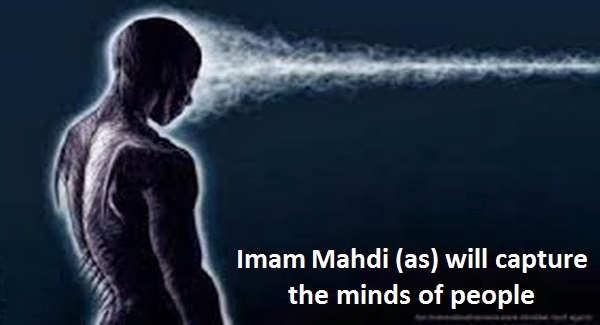
Imam Mahdi will capture minds
Mahdist image from a Haroun Yaha fansite in Pakistan — representing a Sunni variant eschatology in the school of Bediüzzaman Said Nursî, see Yahya’s official website, also an academic analysis of Yahya’s work at The Mahdi wears Armani — a distant cousin to the Shia and Sunni doctrines below
**

Okay, I posted the image above for its delightful AE Van Vogt science-fictionality. Now to the serious topic at hand.

Here’s the “Globalization and Eschatological-Apocalyptical Approach” section of Njdeh Asisian, Shia Iran and Effects of Globalization on State and Religion: The Beginning of Post-Islamism Era:

Eschatological-Apocalyptical analysts, without paying attention to what is going on within their own backyard, believe that the globalization provides tremendous opportunities for the expansion of the global reach of Shia Islam. The other side of this statement is also true when you read carefully between lines. The same Eschatological-Apocalyptical analysts believe that globalization negatively impacts the Islamic Republic because of its influence on Iranian civic society and the continuous weakening of the religious component of the Republic (Shia Islam). In other words, the Islamic Republic’s dilemma cannot be solved unless there is a global Islamic state where secularization and liberal-democratic forces have been defeated by the universal Islamization of the international political system. Consequently, the Islamization of global political system will also put an end to the liberal tendencies of Iranian people. The best possible model for such a scenario is the Soviet Union. With collapse of the Soviet Union, the Marxist-Leninist parties and even countries have collapsed, one after another, due to the failure of ideological legitimacy.

I will examine two types of “eschatological- apocalyptical” approaches to globalization. The first type is the realist approach in which adherents sought to prepare the ground for the political manipulation of the world order. The second type is to consider the globalization process through the Shia Eschatology.

The realist approach searches to find ways and means to establish a structure and thought process which will eventually bring into power an Islamic political and legal system as a dominant power on the world stage. In the realist opinion, the Iranian revolution of 1979 should serve as a serious basis of a new beginning for globalization of Islam as a major power broker in the international political system. They mentioned that, “From the beginning, the nature of revolution and the Islamic movement was based on the culture and return back to our original identity which was based on the religious doctrine. Therefore, we witnessed a fact that the Iranian Islamic Republic’s constitution highly praised the goal of having a global government which governs by Monotheism and hoists the banner of ‘There is no God but Allah’ in all over the world.”

At the same time, the realists promote the nature of global mission of the Iranian Revolution through the Iranian Constitution of 1979. In the constitution, religious identity and values are held in the highest possible place with the promise, made in the constitution, to assist all oppressed people around the world. They have envisioned the Iranian political system as the model for the future global Islamic order. At the same time, these Muslim intellectuals believe that they can offer something more important for human society, without rejecting the very essence of the globalization and technological advancements of our era.

The first step of the realists is to establish the legal framework for the future world order. They consider Islam as the engine of change on the global level and they mentioned that “now days the world turns to religion to fill the spiritual and emotional gaps; further, the world came to acknowledge that liberal-democracy is not useful and it tries to improve the situation through spirituality. This new trend produces a significant opportunity for different religions, and especially for Islam, in order to provide the masses with true teachings.” Further, Shia Jurisprudence is one that can bring serious and positive changes in human life because it has a global nature and it can implement it all over the word; therefore, “One of the distinguished features of Islam that makes it more applicable to the phenomenon of globalization is the existence of political Shia Jurisprudence. The special trait of political Shia Jurisprudence is that it turned Islam [automatically global]; Islam is a pro-active religion that is capable of answering all challenges that human beings can face.”

Besides the applicability of Islamic Jurisprudence at the global level which is theorized by religious scholars, Islamic Jurisprudence must be supported by sets of values that could be easily understandable and approachable by the masses. Therefore, the “Global Quranic Order is a desired system that had been promised to human beings. This system has structure and traits that is far different from the others. Creation of this Islamic Utopia is not possible unless [you] understand and recognize its peculiarities.” The most important pillars of this Islamic Utopia are “Global Quranic Order,” such as “Sovereignty belongs to God, Jurisprudence and Leadership, Unified Muslim Nation [Ummah], Unified Law [Fiqh], Justice, Rationality, Spirituality, Peace and Security, Good Life, Unified Language (Arabic as a Quranic language).”

The theory of Islamic globalization, as described above, is a world that its advocates want to create. They compare and contrast the current globalization with their own Quranic Order. “They do not reject the current technological advancement nor do they reject urbanization, industrialization, development, capitalism, science, and technology, and all that these imply for the organization of society. In this sense they are not anti-modern. They accept modernization, and the inevitability of science and technology and the changes in life-style they bring. However, and most importantly, they are unreceptive to the ideas that they say are Westernized.” They argued that the current Western-style globalization is based on false teachings. Therefore, globalization is taking the wrong route. “In the Alavi culture, technology is used for better living and the perfection of human beings and whatever improves the technological advancement is acceptable. In contrast, in the Western culture the technological advancements are used for profit and the capitalist culture is based on liberalism, individualism and hedonism which concluded in plunder of 99 percent of the population in favor of the 1 percent.”

The above mentioned Muslim scholars are providing theoretical grounds for an Islamic global government or empire. Naturally, these Muslim scholars resent the ideological part of globalization, where the liberal-democratic values have a dominant position in the global system. In other words, they want the technological advancements of the West without the ideology that is attached to it. A question arises here concerning what type of socio-economic system or platform they propose in order to keep up with the technological and economic creativity at the global level. It is obvious that no one can govern the world with just good wishes and ideology.

I move now from the realist theorists, who sought to establish an earthly Islamic Utopia, to the theocratic approach of Islamic globalization, where Shia Eschatology will change the world order beyond repair and establish a heavenly government on earth through the reappearance of the “12th Imam, Mehdi.”

In some Iranian writings regarding globalization and Islam, we see analysis that is a mixture of globalization theories, futurism, and the Shia Eschatology about the Mehdi. Muslims, regardless of whether they are Shia or Sunni, believe that one day the savior of the world or Lord of Ages, Mehdi, will appear in order to reestablish the justice, global governance and expanse of Islam all over the world.

In the Iranian case, we see the Shia version of Mehdi is somehow different from what Sunnis believe. The authors of these articles that call themselves “Mahdavist” have no faith in the current globalization processes. These authors are futuristic; they are analyzing international relations, geopolitics, socio-political relations, and economics of a society that does not exist, at least not yet. (Note: the other importance of this literature lies in the fact that the Iranian regime, due to its religious nature, cannot discount the religious belief system from interfering with what Kissinger called a Westphalian state that has specific commitments against the international community. However, many scholars and pundits do not look at the events in the Middle East through the lens of the religious belief system. Perhaps, this literature can assist them in understanding that the other side is preparing for an Eschatological end and even some activities may directly be connected to preparation for 12th Imams reappearance. The best example of this is Yemen. “Yemen plays a pivotal role in the Shia Eschatology”. Mahdavists have brought into Iranian globalization literature a phenomenon that is strictly religious. However, it is interesting to read and understand the religious scholars who are faithfully trying to analyze the religion through contemporary socio-political events. The other issue with these types of futuristic analysis is that there is no scientific literature or method that one can use to examine the validity of this claim. In other words, it is a religious belief system that one should accept by heart, rather than by scientific reason or methodology. The Mahdavists see the current globalization as a man-made phenomenon that has nothing to do with divine design for human beings.

They consider globalization as being empty of spirituality and human value and it is materialistic. In contrast they consider that real globalization will be achieved through the Mehdi’s revolt against the tyrannical order of the world. In the Mahdavist world, “The true definition of globalization is putting effort into building the world based on the Islamic teachings and governing the world through Islamic values. This goal is the undeniable promise of God. It is a message of the Quran, and the prophecy of prophets. On balance, wisdom of [the Islamic globalization] is doable. All man-made cultures and ideologies are condemned to total defeat and annihilation.”

Mahdavists believe that there is a close correlation between the reappearance of Mehdi and globalization. “The globalization that is based on liberalism, Omanism and secularism that propagated separation of church and state and rejected the system based on justice, is not acceptable for the global government of Mehdi. In contrast, the globalization that is acceptable is the one that does not pursue the domination of a specific culture, because all human beings are members of the global society. This type of globalization accepts multiculturalism, it accepts dialogue between civilizations, cultural understanding and access to shared values, mutual respect, international cooperation, and finally, the belief that global culture cannot swallow the other cultures, national or local”. Further, the global government of Mehdi cannot be considered as deterministic and cruel because it fulfills the prophet’s promises of global universal justice. Based on the Shia teachings, Mehdi will create a central government, a unified leadership and therefore, he will be able to end the main causes of conflict, wars and oppression.

In the final analysis, the universal Islamic government will establish the Islamic Jurisprudence that will put an end to religious and linguistic plurality where everyone is Muslim and speaks Arabic as the Quranic language. At the same time, the religious Eschatological-Apocalyptical approach does not produce a realistic analytical solution for the problems that Iran faces in the globalized world. This is because they are analyzing and looking for an unknown future and there is no set time for the reappearance of Mehdi.

**

I’m offering this here without much commentary, since I lack Farsi and access to the various quoted sources. This footnote, however, may be of interest:

Eschatology is a part of theology concerned with the final events of history, or the ultimate destiny of humanity. This concept is commonly referred to as the “end of the world” or “end time”. The word arises from the Greek eschatos meaning “last” and -logy meaning “the study of”, first used in English around 1550. The Oxford English Dictionary defines eschatology as “The department of theological science concerned with ‘the four last things: death, judgment, heaven and hell’.

**

CAVEAT:

I would however note this next footnote, and particularly the phrase, “According to our numerical analysis of the Quran”:

For Sunni Muslims, the Mahdi (Mehdi) is a unique Muslim leader who will appear in the End Times and act as a Caliph, ruling the Muslim World. According to our numerical analysis of the Quran, it seems that the Mahdi will be fulfilling a divine mission and will act as a Witness, a Warner and a Carrier of Good News, so he could be considered a Messenger.

This numerical anaysis appears to come from a site I’ve mentioned before [1, 2], Discovering Islam, which predicts:

The End Times: Based on Numerical Analysis of the Quran, Hadith, Arabic Words, and Historical Events.

Imam Mahdi in 2016
Jesus Christ (p) in 2022

I’d have to say that anyone quoting that site as though it is representative of Sunni Islam isn’t to be relied on for theological acumen. And that’s a serious defect, when writing about Shia Iran and Effects of Globalization on State and Religion

**

Finally — and bearing that caveat in mind — this footnote too may be of interest:

Based on the Shia Eschatology, the first group of people who will come to 12th Imam’s assistance are Yemenis. Currently the “Shia Houtis” of Yermen are trying to take over the government and establish a Shia state by Iranian assistance. As far as the Iranian theocratic elite concern, the sole purpose of the current Houtis’ agenda is to prepare for 12th Imam’s occultation which will take place in one of the Mosques in Makah Saudi Arabia. 12th Imam will be under siege in Makah until Yemenis come to his assistance. The Yemeni reinforcement will be the beginning of the 12th Imam’s journey.

And a minor point — just a typo — the Twelfth Imam’s occultation (ghayba) has already taken place: what is to be expected is his eventual return from occultation.


Yesterday’s learnings in science and religion

Wednesday, April 20th, 2016

[ by Charles Cameron — theo-ecology, with a side of spaghetti ]
.

First, a Nobel laureate makes a distinction that should be of interest to all who study war — as also to those who “ain’t gonna study war no more”. Lucy Hughes-Hallett begins a New Statesman book review titled Chernobyl and the ghosts of a nuclear past thus:

“This not a book on Chernobyl,” writes Svetlana Alexievich, “but on the world of Chernobyl.” It is not about what happened on 26 April 1986, when a nuclear reactor exploded near the border between Ukraine and Belarus. It is about an epoch that will last, like the radioactive material inside the reactor’s leaking ruin, for tens of thousands of years. Alexievich writes that, before the accident, “War was the yardstick of horror”, but at Chernobyl “the history of dis­asters began”.

If we are not approaching the Eve of Destruction, nor the Zombie Apocalypse, nor an outbreak of nuclear war or some abominable plague, nor the Islamic Qiyama nor the Christian Armageddon, nor the drowning of our major coastal cities nor rapid heat death of most or all human life on earth, and if we forgo the notions of the anthropocene age, or the impoending singularity, why then the distinction that we have left the age of war (as teh major concern of the human race) and entered the age of disaster may be of interest, taxonomically speaking.

But I understand that last paragraph contains a vast “if” encompassing a large range of “nors”.

**

Okay, getting back to what I hope is the positive side of the ledger while keeping an eye of the negative, A Western Soto Zen Buddhist Statement on the Climate Crisis just came out:

As Buddhists, our relationship with the earth is ancient. Shakyamuni Buddha, taunted by the demon king Mara under the Bodhi Tree before his enlightenment, remained steady in meditation. He reached down to touch the earth, and the earth responded: “I am your witness.” The earth was partner to the Buddha’s work; she is our partner, as we are hers.

From the Buddha’s time, our teachers have lived close to nature by choice, stepped lightly and mindfully on the earth, realizing that food, water, medicine, and life itself are gifts of nature.

The Japanese founders of Soto Zen Buddhism spoke with prophetic clarity about our responsibility to the planet and to all beings. In Bodaisatta Shishobo/The Bodhisattva’s Four Embracing Dharmas Dogen Zenji, the founder of Japanese Soto Zen, wrote:

To leave flowers to the wind, to leave birds to the seasons are the activity of dana/giving.

**

One particular concern of mine has to do with the impact of global warming on the heartlands of Islam, and Mecca in particular, as mentioned here in an NYT piece titled Deadly Heat Is Forecast in Persian Gulf by 2100:

The research raises the prospect of “severe consequences” for the hajj, the annual pilgrimage that draws roughly two million people to Mecca to pray outdoors from dawn to dusk. Should the hajj, which can occur at various times of the year, fall during summer’s height, “this necessary outdoor Muslim ritual is likely to become hazardous to human health,” the authors predicted.

Here’s another distinction worth pondering, this one drawn from the same NYT piece, quoting Erich M. Fischer of the Institute for Atmospheric and Climate Science at ETH Zurich:

Anyone can experience the fact that humidity plays a crucial role in this in the sauna. .. You can heat up a Finnish sauna up to 100 degrees Celsius since it is bone dry and the body efficiently cools down by excessive sweating even at ambient temperatures far higher than the body temperature. In a Turkish bath, on the other hand, with almost 100 percent relative humidity, you want to keep the temperatures well below 40 degrees Celsius since the body cannot get rid of the heat by sweating and starts to accumulate heat.

**

Staying with Islam, and parallel to the Zen declaration above, we have this Islamic Declaration on Global Climate Change. Section 2.8 reads:

In view of these considerations we affirm that our responsibility as Muslims is to act according to the example of the Prophet Muhammad (God’s peace and blessings be upon him) who –

  • Declared and protected the rights of all living beings, outlawed the custom of burying infant girls alive, prohibited killing living beings for sport, guided his companions to conserve water even in washing for prayer, forbade the felling of trees in the desert, ordered a man who had taken some nestlings from their nest to return them to their mother, and when he came upon a man who had lit a fire on an anthill, commanded, “Put it out, put it out!”;
  • Established inviolable zones (harams) around Makkah and Al-Madinah, within which native plants may not be felled or cut and wild animals may not be hunted or disturbed;
  • Established protected areas (himas) for the conservation and sustainable use of rangelands, plant cover and wildlife.
  • Lived a frugal life, free of excess, waste, and ostentation; Renewed and recycled his meagre possessions by repairing or giving them away;
  • Ate simple, healthy food, which only occasionally included meat;
  • Took delight in the created world; and
  • Was, in the words of the Qur’an, “a mercy to all beings.”
  • **

    It is curious to find Walid Shoebat, a vigorously anti-Muslim Christian apologeticist, making some of the same points in a piece titled It Is Now Confirmed And Scientists Now Predict That Mecca Will Be Destroyed By Extreme Heat:

    While many will cry “global warming”, it will actually be the sun heating up (Deut 28.23,24) (Zech 14.17). Another form of judgement prophesied by Isaiah appears to be extreme heat – heat severe enough to kill people:

    ‘Therefore … the inhabitants of the earth are burned, and few men are left’ (Isa 24.6)

    The book of Revelation appears to speak of the same end time events and predicts extreme weather as part of God’s judgement upon the nations. There will be fierce, scorching heat:

    ‘The fourth angel poured out his bowl upon the sun, and it was given to it to scorch men with fire. Men were scorched with fierce heat …’ (Rev 16.8,9)

    The Bible also predicted (as scientists now do) that Mecca will be “uninhabited”: “After her destruction, Babylon [Arabia] will merely be a home for demons, evil spirits, and scavenging desert creatures” (Revelation 18:1-2).

    **

    And finally, on a lighter note — sticking with religion, at least arguably, but definitely moving from science to science fiction, we have this (theological) ruling from a Nebraska federal district court in Cavanaugh v. Bartelt:

    This is not a question of theology: it is a matter of basic reading comprehension. The FSM Gospel is plainly a work of satire, meant to entertain while making a pointed political statement. To read it as religious doctrine would be little different from grounding a “religious exercise” on any other work of fiction. A prisoner could just as easily read the works of Vonnegut or Heinlein and claim it as his holy book, and demand accommodation of Bokononism or the Church of All Worlds. 6 See, Kurt Vonnegut, Cat’s Cradle (Dell Publishing 1988) (1963); Robert A. Heinlein, Stranger in a Strange Land (Putnam Publ’g Grp. 1961). Of course, there are those who contend—and Cavanaugh is probably among them—that the Bible or the Koran are just as fictional as those books. It is not always an easy line to draw. But there must be a line beyond which a practice is not “religious” simply because a plaintiff labels it as such. The Court concludes that FSMism is on the far side of that line.

    And may the force be with you — or what’s a metaphor?

    Pope Francis : Francis Bacon

    Monday, March 28th, 2016

    [ by Charles Cameron — and a tradition of natural philosophy profound enough to include Francis of Assisi ]
    .

    It’s a small point, perhaps, but M. Anthony Mills had a piece in The New Atlantis last Fall titled Is Pope Francis Anti-Modern? — which I ran across today because today 3 Quarks Daily posted it — and in it, Mills to my mind makes a false dichotomy between Pope Francis and Francis Bacon.

    Thus Mills writes:

    Pope Francis’s picture of nature is indebted to Genesis, the Biblical prophets, and the writings of Irenaeus, Aquinas, and Francis of Assisi — and, arguably, Plato and Aristotle — as well as to the twentieth-century theologian Romano Guardini (whose book The End of the Modern World is cited a number of times in the encyclical). But it is not true that doing so puts Pope Francis at odds with modern science. It does pit him against a particular understanding of modern science, bequeathed to us by Francis Bacon and, perhaps more importantly, by the Enlightenment philosophes such as Voltaire who claimed Bacon as the “father of experimental philosophy.” This view of science continues today in the cult of technological progress, which sees every problem as amenable to technocratic solution, no matter the environmental, social, cultural, or spiritual cost. This is what Pope Francis refers to and criticizes as the “technocratic paradigm.”

    To the contrary, at the end of his Preface to the Instauratio Magna, which Jerome Ravetz quotes in the final paragraph of his magisterial Scientific knowledge and its social problems, Bacon writes:

    Lastly, I would address one general admonition to all; that they consider what are the true ends of knowledge, and that they seek it not either for pleasure of the mind, or for contention, or for superiority to others, or for profit, or fame, or power, or any of these inferior things; but for the benefit and use of life; and that they perfect and govern it in charity. For it was from lust of power that the angels fell, from lust of knowledge that man fell; but of charity there can be no excess, neither did angel or man ever come in danger by it.

    And to bring the opposition between their two views into a nutshell, Mills writes of “the Baconian technocratic paradigm, which understands science and technology together as instruments for controlling and exploiting all of creation” — while Bacon is in fact opposed to such control and exploitation, as we see when he attacks certain of his contemporaries for precisely those failings:

    For we create worlds, we direct and domineer over nature, we will have it that all things are as in our folly we think they should be, not as seems fittest to the Divine wisdom, or as they are found to be in fact.

    **

    There are indeed two visions of science at work across history, as Ravetz is at pains to show. Perhaps we can see them best by comparing the two instances in which Mills and Ravetz respectively situate yet another Francis, St Francis of Assisi.

    Mills, as we have seen, locates him — along with the current Pope — on the anti-modern, and hence anti-Baconian, side of the ledger:

    Pope Francis’s picture of nature is indebted to Genesis, the Biblical prophets, and the writings of Irenaeus, Aquinas, and Francis of Assisi — and, arguably, Plato and Aristotle — as well as to the twentieth-century theologian Romano Guardini

    For Ravetz, St Francis is indeed a participant in one of two distinct streams of world exploration — the one he terms a “romantic” philosophy of nature:

    Looking back into history, we can find a similarity of doctrine or style, and sometimes a linking tradition, as far back as the Taoists of ancient China, through St. Francis of Assisi, to Paracelsus, William Blake, and Herbert Marcuse.

    He continues:

    Not every one of these figures would claim to be a natural scientist of any description; but as philosophers, poets or prophets, they must be recognized as participating in and shaping a tradition of a certain perception of nature and its relation to man. Granted all the variety of their messages and styles, certain themes recur. One is the ‘romantic’ striving for immediacy, of contact with the living things themselves rather than with book-learned descriptions. Another is ‘philanthropy’; the quest is not for a private realization, but for the benefit of all men and nature.

    And here’s the difference. Francis Bacon, Ravetz finds, stands clearly on this same “romantuc” side of the ledger. For:

    As deeply as any of his pietistic, alchemical forerunners, he felt the love of God’s creation, the pity for the sufferings of man, and the striving for innocence, humility, and charity; and he recognized vanity as the deadliest of sins.

    **

    Let me recapitulate that final paragraph of Ravetz’ book, quoted entirely from Bacon:

    Lastly, I would address one general admonition to all; that they consider what are the true ends of knowledge, and that they seek it not either for pleasure of the mind, or for contention, or for superiority to others, or for profit, or fame, or power, or any of these inferior things; but for the benefit and use of life; and that they perfect and govern it in charity. For it was from lust of power that the angels fell, from lust of knowledge that man fell; but of charity there can be no excess, neither did angel or man ever come in danger by it.

    This is virtually a monastic ideal of science, one which would be found most suitable in the halls of Hesse’s Castalia, and one well-suited to the Benedict Option as formulated by Rod Dreher.

    It is also, and significantly, as Ravetz points out, compatible with the truth concerns of Taoists, poets and theologians…

    **

    Hermann Hesse, it seems to me, gives a deeper and wider acknowledgment of both streams, bringing their “hard” and “soft” strands together in his history of the Glass Bead Game:

    How far back the historian wishes to place the origins and antecedents of the Glass Bead Game is, ultimately, a matter of his personal choice. For like every great idea it has no real beginning; rather, it has always been, at least the idea of it. We find it foreshadowed, as a dim anticipation and hope, in a good many earlier ages. There are hints of it in Pythagoras, for example, and then among Hellenistic Gnostic circles in the late period of classical civilization. We find it equally among the ancient Chinese, then again at the several pinnacles of Arabic-Moorish culture; and the path of its prehistory leads on through Scholasticism and Humanism to the academies of mathematicians of the seventeenth and eighteenth centuries and on to the Romantic philosophies and the runes of Novalis’s hallucinatory visions. This same eternal idea, which for us has been embodied in the Glass Bead Game, has underlain every movement of Mind toward the ideal goal of a universitas litterarum, every Platonic academy, every league of an intellectual elite, every rapprochement between the exact and the more liberal disciplines, every effort toward reconciliation between science and art or science and religion. Men like Abelard, Leibniz, and Hegel unquestionably were familiar with the dream of capturing the universe of the intellect in concentric systems, and pairing the living beauty of thought and art with the magical expressiveness of the exact sciences. In that age in which music and mathematics almost simultaneously attained classical heights, approaches and cross-fertilizations between the two disciplines occurred frequently. And two centuries earlier we find in Nicholas of Cues sentences of the same tenor, such as this: “The mind adapts itself to potentiality in order to measure everything in the mode of potentiality, and to absolute necessity in order to measure everything in the mode of unity and simplicity as God does, and to the necessity of nexus in order to measure everything with respect to its peculiar nature; finally, it adapts itself to determinate potentiality in order to measure everything with respect to its existence. But furthermore the mind also measures symbolically, by comparison, as when it employs numerals and geometric figures and equates other things with them.”

    Basta!

    Easter Sunday surprise

    Sunday, March 27th, 2016

    [ by Charles Cameron — rising from the dead: sacred & secular, natural & military, past & future ]
    .

    tablet dq ghost fleet easter

    The story of the mostly wooden ships featured in the upper image of this DoubleQuote, is an intriguing one:

    On the Maryland side of the Potomac, in the rural community of Nanjemoy, you’ll find a sheltered cove called Mallows Bay. The sandy bluffs and dense stands of ash and pine resemble many other quiet spots along the river. But there’s something in the water: the largest ship graveyard in North America.

    How’d it get there? Well, in the final years of World War I, the Allies found themselves short on sea-power: German submarines had taken a heavy toll. With ample timber reserves, Americans hit on a plan to make up the losses by building hundreds of wooden steamships. The U.S. government doled out contracts, and a building frenzy ensued.

    But the war ended sooner than expected, leaving officials with the peculiar problem of what to do with its unused (and now unwanted) armada. Riding at anchor in Widewater, Virginia, the hastily assembled fleet posed a hazard to shipping traffic and a nuisance to fishermen, so the decision was made to move most of the ships across the river to the secluded Mallows Bay.

    The fleet—and the Mallows Bay property itself—changed hands through a succession of salvage companies that tried everything to get rid of the ships: sinking them, beaching them, burning them, burying them, and taking them apart nail by nail. No one managed to turn much profit or to finish the job—and in the process of trying, they made a junkyard of the once pristine river cove.

    But in the decades that followed, writes historian Donald G. Shomette, nature took its course.”The years rolled by and the battlefield contours of Mallows Bay softened, as wind-borne seeds took root in the rich, soil-filled holds of burnt-out ships, as creatures large and small began to return, as the green chain of life was slowly reforged.”

    **

    Donald G. Shomette‘s book is titled Ghost Fleet of Mallows Bay: And Other Tales of the Lost Chesapeake, and I came across it today discovering this DoubleTweet

    — with its two striking and very different visuals and links to two articles, each with its headline The ‘ghost fleet’ graveyard where nature has risen from the dead.

    **

    So that’s the past, and the link to Easter lies in the wording of that headline: risen from the dead.

    But there’s also the future, nicely represented in the lower panel at the head of this post by PW Singer and August Cole‘s novel, Ghost Fleet: A Novel of the Next World War.

    As I suggested in my comment at the top of this post — rising from the dead: sacred & secular, natural & military, past & future. I wish you a blessed Easter if such may be found in your calender, and a happy future to the extent possible in any case.

    Dragging my tail in the mud

    Thursday, February 18th, 2016

    [ by Charles Cameron — i’m afraid this will be a very Thoreau-Taoist post for this electoral season ]
    .

    Two browsings recently set me thinking about politics in general — and dragging my tail in the mud in particular:

    Shadi Hamid in What is Policy Research For? Reflections on theUnited States’ Failures in Syria

    When the basic thrust of policy seems immovable irrespective of events on the ground, how should researchers respond? Should influencing policy be the animating objective of policy research?

    and at the pointy end, Matt Cavanaugh at War on the Rocks, The Way Home from ‘a War’:

    What is it like to make uncertain judgments with severe moral consequences? For military professionals, being the state’s lethal instrument necessarily entails ethically perilous, life-or-death choices.

    **

    Here’s the cntext, as I see it..

    Wallace Black Elk:

    The whole earth is an altar. In church, they have a little slab of marble which they call an altar. But our altar is Grandpa’s altar… Our carpet is the grass, the sacred altar; our ceiling is the stars; our night lamp is the moon; Grandpa the sun is our mystery power.

    Thomas Traherne:

    You never enjoy the world aright, till the Sea itself floweth in your veins, till you are clothed with the heavens, and crowned with the stars: and perceive yourself to be the sole heir of the whole world, and more than so, because men are in it who are every one sole heirs as well as you. Till you can sing and rejoice and delight in God, as misers do in gold, and Kings in sceptres, you never enjoy the world.

    Till your spirit filleth the whole world, and the stars are your jewels; till you are as familiar with the ways of God in all Ages as with your walk and table: till you are intimately acquainted with that shady nothing out of which the world was made: till you love men so as to desire their happiness, with a thirst equal to the zeal of your own: till you delight in God for being good to all: you never
    enjoy the world.”

    Chuang Tzu:

    I will have Heaven and Earth for my sarcophagus, the Sun and Moon shall be my burial insignia, the stars my coffin-jewels, and all Creation shall be mourners at my obsequies. Are not my funeral paraphernalia all in readiness?

    Thoreau-Taoism, which she would spell Thurrodowism, is Ursula Le Guin‘s superlative confection.

    **

    Chuang Tzu:

    From Chuang Tzu: Mystic, Moralist, and Social Reformer, tr. Herbert Giles, p. viii:

    Prince Wei (B.C. 338-327) of the Ch’u State, hearing of Chuang Tzu’s good report, sent messengers to him, bearing gifts, and inviting him to become Prime Minister. At this Chuang Tzu smiled and said to the messengers, “You offer me great wealth and a proud position indeed; but have you never seen a sacrificial ox:-When after being fattened up for several years, it is decked with embroidered trappings and led to the altar, would it not willingly then change places with some uncared for pigling?

    Or from Chuang Tzu, Basic Writings, tr. Burton Watson, p.108:

    Once, when Chuang Tzu was fishing in the P’u river, the king of Ch’u sent two officials to go and announce to him: “I would like to trouble you with the administration of my realm.”

    Chuang Tzu held onto the fishing pole and, without turning his head, said, “I have heard that there is a sacred tortoise in Ch’u that has been dead for three thousand years. The king keeps it wrapped in cloth and boxed, and stores it in the ancestral temple. Now would this tortoise rather be dead and have its bones left behind and honored? Or would it rather be alive and dragging its tail in the mud?”

    “It would rather be alive dragging its tail in the mud,” said the two officials.

    Chuang Tzu said, “Go away! I’ll drag my tail in the mud!”


    Switch to our mobile site
