zenpundit.com » dni

Archive for the ‘dni’ Category

Update: DNI

Wednesday, November 25th, 2009

Two bloggers have stepped forward to lend a hand in preserving and carrying on DNI’s legacy. In each instance, both efforts are “under construction”.

John Robb has set up a page for William Lind to continue his column and to house 4GW docs, also a page to house materials from strategist Col. John Boyd, whose ideas were at the core of DNI.

Ed Beakley of Project White Horse is developing a Boyd Compendium that will eventually be greatly expanded to include much of interest at DNI.

Dr. Richards announced he will be keeping DNI up until he can find another person or organization to take over site management.

The End of Defense and the National Interest

Friday, November 20th, 2009

Dr. Chet Richards announced that DNI is set to adjourn sine die.

DNI set to close 

 Probably on Monday, November 23, depending on how my travels work out. Please go ahead and download any thing you’d like to keep — I’d particularly recommend Boyd’s briefings and the 4GW manuals. I have great faith in the growing number of bloggers and commentators who cover many of the same subjects we did – check out a few of them in the “Blogs” and “Other Sites” sections on the right.

DNI started in March 1999 with a grant from Danielle Brian and the folks at the Project on Government Oversight. Its original purpose was to house the growing collection of Chuck Spinney’s commentaries on the foibles of our defense program (when you read these, keep in mind this was during the Clinton era.  We were not associated with any political party).  If you’re interested in strengthening our position in 4GW, I’d suggest a generous donation to POGO.  You could also run for office.

I’d like to thank Danielle, Chuck, Marcus Corbin (our original project officer at POGO and the person who commissioned A Swift, Elusive Sword), Ginger Richards (who designed and operated all the various versions of the site), Bill Lind and all of our other contributors, and all who have taken the time to compose comments.

Chet Richards,

Editor

This is a shame, but everything has its time.

DNI served as an important counterpoint to the “conventional wisdom” in military affairs long before the growth of the now influential  defense/.mil/intel/COIN/national security blogosphere. In addition to hosting the entertaining jeremiads of William Lind, Dr. Richards was the steward of the legacy of the great American strategist Colonel John Boyd and the benefactor of the 4GW School of strategic analysis. DNI was not only a resource for scholars and strategists interested in Boyd’s theories, it was a forum for vigorous debate at a time when unconventional views on military reform were unpopular as well as obscure.

Personally, I have learned much from both DNI and from Dr. Richards whom I had the pleasure of meeting in 2007, at the Boyd Conference at Quantico ( where I met other blogfriends and readers including Shane DeichmanDan TDAXPShlok VaidyaJohn RobbAdam ElkusDave Dilegge, Frank HoffmanDon VandergriffFrans Osinga, Ski, Isaac and Morgan). This event subsequently led to much good reading, writing, discussion and still more new friends now too numerous to mention here.  The keynote speaker that day was Col. Frans Osinga, whose magnum opus  Science, Strategy and War: The Strategic Theory of John Boyd is still the most comprehensive and detailed text on John Boyd’s strategic thought that we are ever likely to see.

Consequently, as a regular reader, I would like to thank Chet both for his hard work over the years as editor of DNI and for his occasional advice and contributions to various projects and discussions that have occurred in this section of the blogosphere. Dr. Richards appears to be very busy with his business consulting these days and I wish him the very best in his future endeavors.

DNI will soon be gone, but it will not be forgotten.

ADDENDUM:

Joseph Fouche is a step ahead on the Boyd downloads

Here are the 4GW manuals (temp).

UPDATE:

James Fallows on Chet Richards and DNI

Planet Russell on John Boyd and DNI

Strangling OSINT, Weakening Defense, Censoring Criticism: The Pentagon

Wednesday, April 29th, 2009

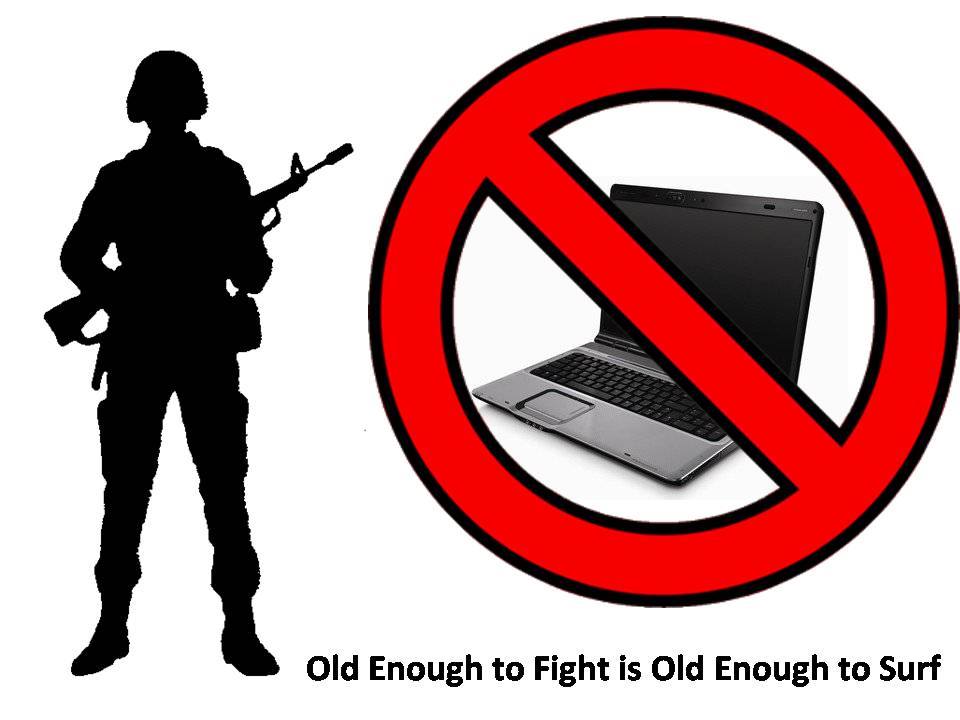
banned.jpg

William Lind has a new post up at Defense and The National Interest that addresses the issue of the IT restrictions on the use of the internet by military personnel. This topic has been touched on previous by others such as at the SWC, SWJ Blog, Haft of the Spear, Hidden Unities and many milbloggers, intel and cyberwonks but previously, IT policy varied across services and from command to command. That appears to be changing – for the worse.

On War #302: Blinders

At the height of the Cold War, a U.S. army corps commander in Europe asked for information on his Soviet opposite, the commander of the corps facing him across the inter-German border. All the U.S. intelligence agencies, working with classified material, came up with very little. He then took his question to Chris Donnelly, who had a small Soviet military research institute at Sandhurst. That institute worked solely from open source, i.e. unclassified material. It sent the American general a stack of reports six inches high, with articles by his Soviet counterpart, articles about him, descriptions of exercises he had played in, etc.

What was true during the Cold War is even more true now, in the face of Fourth Generation war. As we have witnessed in the hunt for Osama, our satellite-photo-addicted intel shops can’t tell us much. But there is a vast amount of 4GW material available open-source: websites by and about our opponents, works by civilian academics, material from think-tanks, reports from businessmen who travel in areas we are interested in – the pile is almost bottomless. Every American soldier with access to a computer can find almost anything he needs. Much of it is both more accurate and more useful than what filters down through the military intelligence chain.

Or at least he could. In recent months, more and more American officers have told me that when they attempt to access the websites they need, they find access is blocked on DOD computers. Is al Qaeda doing this in a dastardly attempt to blind American combat units?
Sadly, no. DOD is doing it. Someone in DOD is putting blinders on American troops.

I do not know who is behind this particular bit of idiocy. It may be the security trolls. They always like to restrict access to information, because doing so increases their bureaucratic power. One argument points to them, namely an assertion that the other side may obtain useful information by seeing what we are looking for. That is like arguing that our troops should be given no ammunition lest muzzle flashes give away their positions in a fire-fight.

But the fact that websites of American organizations whose views differ from DOD’s are also blocked points elsewhere. It suggests political involvement. Why, for example, is access to the website of the Center for Defense Information blocked? CDI is located in Washington, not the Hindu Kush. Its work includes the new book on military reform America’s Defense Meltdown, which has garnered quite a bit of attention at Quantico.

The goal of the website blockers, it seems, is to cut American military men off from any views except those of DOD itself. In other words, the blockaders want to create a closed system. John Boyd had quite a bit to say about closed systems, and it wasn’t favorable.

Read the rest here

What is disturbing to me is that Lind indicates that the previous policy, which left IT restrictions up to commanders, seems to be coalescing behind one of systemic, tight, restrictions on access for all uniformed personnel to all kinds of blogs or websites that do not jeopardize information security. Or may even be useful to the conduct of their mission. The previous excuse by DoD bureaucrats was “conserving bandwidth” but it’s hard to see how esoteric sites like the Center for Defense Information or some university PDF on Islamist madrassas in Pakistan clog up a combatant command’s skinny pipes.

Intel and cyber experts in the readership are cordially invited to weigh in here.

ADDENDUM:

Professor Sam Liles offered up this manifesto on cyberthreats and cybersecurity.

ADDENDUM II:

Fabius Maximus, Ubi war and Wings Over Iraq took a similar view ( Wings though, added “Curse you Zenpundit!”).

ADDENDUM III THE COUNTERPOINT:

Galrahn says Bill Lind does not understand the legitimate cybersecurity aspect that causes blogs and websites to be blocked and then offers some practical advice to the blocked bloggers (such as myself):

….but I’d bet at least 5 shots of Canadian Whiskey (I’m a Crown Royal fan until summer gets here) that the problem that triggered his rant doesn’t originate in the DoD or any government entity, rather the private sector.

But I will say this. There are several legitimate reasons why websites, blogs, and other forms of social media sites on the web are blocked. If your website or blog is blocked, please understand you can do something about it besides whine.

Use Feedburner, or some other form of syndication software to distribute your content, including by email. Organizations including the military may block Blogger but typically they do not block syndication service sites because from an IT perspective, syndication services like Feedburner is a better way to manage bandwidth for larger enterprises. If an organization is blocking syndication sites too, then your organization has a very strict IT policy, BUT if your favorite websites are distributing content by email, problem solved

I used Feedburner previously with my old blogger site when Feedburner was in beta but when it was purchased or absorbed by Google, that account went dormant. I think I will ressurect it and then look into Galrahn’s other suggestions.

Chet Richards: Review of The Scientific Way of Warfare

Monday, April 20th, 2009

Dr. Chet Richards has a methodical review up at DNI on Antoine Bousquet’s new book The Scientific Way of Warfare: Order and Chaos on the Battlefields of Modernity:

The Scientific Way of Warfare

….Bousquet opens with and ultimately answers the question of “does network-centric warfare (NCW) work?” To reach his conclusion, he proposes four “regimes” in the application of science to modern warfare:

  1. Mechanism, whose “key technology” was the clock, whose scientific framework was Newtonian, and whose military format was what we’d call first generation warfare — line, column, conformance, regularity
  2. Thermodynamics, characterized by engines, whose framework included entropy, energy, and probability, and whose military paradigm was 2GW (Bousquet does not use the generations of war model)
  3. Cybernetics — computers — whose scientific concepts included “negentropy,” negative feedback, homeostasis and whose military model would be modern 2GW, with heavy top-down, real time command and control
  4. Chaoplexity, where networks reign, whose framework is built upon the new sciences of non-linearity, complexity, chaos, and self-organization, and where warfare is conducted by decentralized cells, teams, or swarms — what we would call both 3GW and 4GW (p. 30)

Subsequent chapters take the reader on a tour of these ideas in turn, exploring their evolution as scientific patterns and their influence on the warfare of their, and subsequent, eras. So the chapter on mechanistic warfare introduces Vauban, close-order drill, and culminates in Frederick the Great’s Clockwork Army. The next chapter, Thermodynamic Warfare, concludes with Clausewitz, which is a stretch, of course, since the great Prussian died in 1831, some 20 years before the first publications in that discipline. But with liberal interpretation of the massive text of On War, passages can be found that seem like precursors of the Second Law. Bousquet does point out that these interpretations were not made in Clausewitz’s day but were retrofitted by later analysts and generals, including as he also notes, John Boyd.

Read the rest here. Good stuff!

Say 5GWhaaaat ?

Tuesday, January 13th, 2009

David Axe of War is Boring has a piece in World Politics Review on 5GW that summarizes the extended journal article “Fifth-Generation War: Warfare versus the nonstate” in the Marine Corps Gazette by LTC Stanton Coerr that I linked to previously:

War Is Boring: U.S. Wages First Battles in New Generation of War

War has evolved rapidly in the last 100 years, prompting historians and strategists to come up with new terms for new ways of fighting. They call mechanized warfare, which originated in the early 20th century, the third “generation” of war, and ideological warfare waged by guerilla groups the fourth.But what about guerilla-style warfare waged by non-ideological groups against traditional states — pirates, for instance, whose attacks can destabilize trade-dependent nations, but who don’t have strategic goals beyond just getting rich? Free-for-all violence, with indirect global effects, represents a fifth generation of war, according to some experts. And when it comes to defeating fifth-gen enemies, “the old rules of warfare do not apply,” declared Marine Lt. Col. Stanton Coerr, writing in Marine Corps Gazette, a professional journal.

So the U.S. military and its government partners are writing new rules, and putting them to the test on the first of the fifth-generation battlefields emerging in Africa.

Fifth-gen enemies do not have traditional “centers of gravity” — armies, governments, factories, charismatic leaders — that can be destroyed by military attacks. By their mere survival, these enemies undermine the notion that nation-states, their ideals and their economies are viable in the modern world.

To the extent that 5GW can be characterized at all, I think both Axe and Coerr are incorrect here because the term “Fifth-Generation War” makes little sense except in relation to “4GW” and the strategic school of thought associated with William Lind, Col. Thomas X. Hammes and others in the circle of DNI. As Axe and Coerr use “5GW” it is indistinguishable from how Lind has described “4GW” since 1989. To follow the logic of the 4GW theory, as Hammes did in The Sling and the Stone: On War in the 21st Century
, 5GW would be the strategy and tactics that developed in opposition to 4GW as 3GW “Blitzkrieg” emerged from the “Stormtroop tactics” used to counter static and linear 2GW of the Western Front in WWI. Without this context “5GW” is just a placeholder term.

That said, the articles by Coerr and Axe are otherwise praiseworthy for bringing the many nuances and potential dangers of rapidly evolving irregular warfare and associated concepts to describe it, to the attention of a wider audience. That’s useful for generating further debate and bringing more sharp minds to the table.  Complex, “hybrid” wars of mixed regulars, insurgents, terrorists and criminals will be here for some time to come and the entire panopaly of the national security establishment needs to come to grips with that threat, regardless of what we ultimately choose to call it. Labels matter less than substance.

Dan of TDAXP, who has voiced his own skepticism about Coerr’s and Axe’s pieces, has issued a call for papers on behalf of Nimble Books to debate the scope and legitimacy of 5GW which will be assembled into an anthology on this subject. It would be nice to have those people who have writtten previously on fifth -generation war a list that includes Thomas P.M. Barnett, John Robb, Thomas X. Hammes, William Lind as well as myself, the cast of Dreaming5GW and others, contribute old or new pieces to that project. Let’s bring it all under one roof for interested readers instead of having posts and articles scattered all over the internet.

ADDENDUM:

Bibliography – The Timeline of 5GW Theory


Switch to our mobile site

