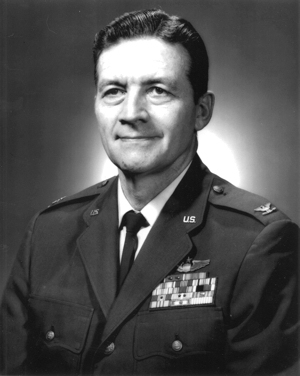
J. Scott Shipman is the owner of a boutique consulting firm in the Metro DC area that is putting Boyd’s ideas into action.
Boyd and Beyond, 2010
by J. Scott Shipman
Boyd & Beyond 2010, 15-16 October 2010
Mr. Stan Coerr (GS-15 Marine Corps, LtCol, USMCR), coordinator. Hosted by the USMC Command and Staff College at the Marine Corps University, Quantico, VA.
This was my first Boyd conference. I discovered Boyd in early 2005 through Robert Coram’s book, BOYD, The Fighter Pilot Who Changed the Art of War. I did not know what to expect of the conference, and was anxious to meet guys I’d corresponded with over the last couple of years (the ones who made it: Robert Coram, Fred Leland, Don Vandergriff, and Adam Elkus); so my thinking going in was at least I’d get to meet these guys regardless, and besides Quantico is right down I-95 from my home.
As others have already observed, Boyd 2010 exceeded any expectation. It was a pleasure to be in the same room with such an impressive collection of talent and intellect and listen to what they have done and continue to do with Boyd’s work and ideas. At the end of the first day, I felt my head was going to explode—and heard many others echoing similar sentiment. I told a friend, those two days were like drinking from a fire hydrant.
As many readers are probably already aware, the reaction to the conference has been universally positive, and calls for a 2011 event have been heard and is scheduled for 14-15 October 2011 at Quantico, same location. Stan Coerr and the USMC University deserve our gratitude for this recent event and the opportunity to reconvene next year. The bar, has indeed been set high.
What follows is from my notes, and I apologize in advance if I leave out something I should have remembered. I will try and avoid repeating too much of Adam Elkus’ excellent review, so all presenters are not covered—while all presenters provided valuable and enlightening insights. At the conclusion, I’ve added the references of books and online links that I heard (there were many more) recommended, and books and articles I recommended during the conference.
The day began with a colorful introduction to Boyd by Robert Coram. He related the circumstances of how he came to write BOYD, and shared several stories of the evolution of the book and the people he met. Coram reported that as of the conference, 73,000 copies of BOYD are in print—not bad for a book about someone most people have never heard of.
Ray Leopold, PhD, (the third acolyte) gave a touching and penetrating retrospective of how he came to be associated with John Boyd, and how that association changed his life for the better. Of interest, Ray shared a common introduction that he and Boyd used when they visited other Air Force officers. They would write the following on the blackboard:
DUTY, HONOR, COUNTRY
They would then cross these familiar words out, and replace with:
Pride, Power, Greed
From Boyd’s perspective, the military industrial complex and the inherent bureaucracy had (and in my humble opinion, continues) corrupted the original intent of those core principles military members are taught to embrace.
Don Vandergriff followed with a fast-paced explanation of his continuing efforts within the US Army to advocate Outcome Based Training and Education (T&E). He follows with successful practical examples of allowing his student to think and adapt-“off-script.” Vandergriff also recommended the work of Dr. Robert Bjork, Dean of the School of Psychology at UCLA, particularly his presentation “How We Learn Versus How We Think We Learn: Implications for the Organization of Army Training.”
General Paul Van Riper (LtGen, USMC, Ret) was the keynote and gave a compelling address on mental models and systems theory. Throughout his talk, he added insight into how John Boyd’s ideas found a home in the USMC. Gen Van Riper made the distinction between informational knowledge and transformational knowledge, and the “eloquent schema” that is OODA. He also discussed systems theory, and distinguished between linear systems (cause & effect), complex systems, and interactive complex systems. Of the later, he reminded that these systems are non-linear and unknowable using a deductive approach, and one output is emergent behavior(s).
Marcus Mainz (Major, USMC) provided insight into how he is using Boyd’s ideas in the training and development of young Marine officers and how he and his colleagues are creating the desire to learn. LtCol Mike Grice (USMC) provided our group with insight into how Boyd’s ideas translate in the field—having just returned from Afghanistan and a tour in one of Iraq’s more dangerous provinces. Both of these officers reflect well on the USMC—and if this caliber of leadership and thought is any indication, the USMC is in good hands in the years to come.
On the second day, Linton Wells, PhD, (CAPT, USN, Ret) gave a talk on naval maneuver warfare. Dr. Wells was providing a preview of his update to a seminal article of the same title he wrote for Proceedings in December 1980. Dr. Wells also provided one of the best quotes of the two days: “make knowledge accidents happen.”
Fred Leland’s presentation revolved on how he has used Boyd’s work to teach law enforcement personnel how to make good decisions. Fred began his talk with an absolutely frighteningly disturbing video from the dash-cam of a young police officer caught in a dangerous place. Fred lives his curricula, as he is an active duty police lieutenant, so his presentation had a resonance unique to our gathering.
Terry Barnhart, PhD, (Pfizer R&D) provided unique insight into how he is using Boyd’s ideas (OODA, to be specific) in his company’s R&D efforts. Barnhart, in my estimation, is onto something very powerful. He repurposed Boyd’s OODA from the traditional vernacular into: See, Reframe, Experience, Grow—but the intent remains. Dr. Barnhart placed great emphasis on “SEE” where his definition is: “assume it is wrong” and see without prejudice. He reported exciting results from using this and another model derived from Boyd’s work.
Chip Pearson, Managing Partner of a software company in Minnesota, gave an impassioned recounting of how he used/uses Boyd’s concepts to start and successfully operate his software company. His philosophy, “we make meaning, not money.” Chip focused on values, capability, and objectives. On his management philosophy, he remarked, “complete independent action scares the hell out of people”—which is how he wants his organization to operate.
Jussi Jaakonahon, from Nokia, travelled the furthest, coming from Norway, to give his talk on his experience using OODA in IT security exercises. He confirmed Boyd’s emphasis on sharing information of validity and integrity, and adapting on the fly to the mission. During this exchange someone remarked: “companies die because they do the right thing too long.” We hope he will be able to join us for both days next year.
CORRECTION:
I was contacted by Jussi Jaakonaho, I misspelled his name—this is the correct spelling. He came from Finland, not Norway. This quote should be attributed to Jussi: “companies won’t die because of their false actions. they die because of the continuing of the same actions for too long (which once were right).”
My sincere apologies for the inaccuracies.
There was a language barrier, and as a Southerner, English is my second language:))
Dave Foster provided an introduction to his draft paper on portfolio complexities in the fog of war. One goal of his paper is helping to shrink the knowledge-doing gap. Foster is on to something, and I’m guessing this forum will help him advance his ideas.
TJ Jankowski (Col, USMCR) was the anchor man for our two days. His talk, COIN Technology and Universal Structures of Technical Knowledge, dealt with emerging theories of a taxonomy of technologies. His ideas are based on the work of Dr. Rias van Wyk which advances the idea of “a fundamental structure of technological knowledge, based in part on a very precise definition of technology and a functional classification of all technological knowledge.” (TJ Jankowski follow-up email) The implications of these ideas could be revolutionary in our ability to conduct macro technology analysis.
Alan D. Beyerchen, Clausewitz, Nonlinearity ?and the Unpredictability of War http://www.clausewitz.com/readings/Beyerchen/CWZandNonlinearity.htm
DoD Command and Control Research Program (CCRP) by Tom Czerwinski: http://www.dodccrp.org/events/13th_iccrts_2008/CD/library/html/pdf/Czerwinski_Coping.pdf
Hew Strachan, Clausewitz’s On War: A Biography
http://www.amazon.com/gp/product/0802143636/ref=ord_cart_shr?ie=UTF8&m=ATVPDKIKX0DER
John Shook, Managing to Learn: Using the A3 Management Process
http://www.amazon.com/Managing-Learn-Using-Management-Process/dp/1934109207/ref=sr_1_1?ie=UTF8&qid=1287607276&sr=8-1
Nik Gowing, “Sky Full of Lies and Black Swans” (free registration required to access whole article)
http://www.bbcworldnews.com/Pages/Programme.aspx?id=362
Richard E. Neustadt and Ernest R. May, Thinking in Time: The Uses of History for Decision-Makers
http://www.amazon.com/Thinking-Time-Uses-History-Decision-Makers/dp/0029227917/ref=sr_1_1?ie=UTF8&qid=1287610406&sr=8-1
A few titles I recommended:
Seen recently here at Zenpundit comes with a hearty recommendation:
Magic and Mayhen, The Delusions American Foreign Policy from Korea to Afghanistan by Derek Leebaert
http://www.amazon.com/Magic-Mayhem-Delusions-American-Afghanistan/dp/1439125694/ref=sr_1_1?s=books&ie=UTF8&qid=1287610785&sr=1-1
Jim Storr, The Human Face of War. Storr does not hold Boyd and OODA in high regard, however there is much in this excellent book to admire and much to learn—it is worth the $100 price tag.
http://www.amazon.com/Human-Face-War-Birmingham-Studies/dp/1847065236/ref=sr_1_1?ie=UTF8&s=books&qid=1287611995&sr=1-1
Robert Leonhard, The Principles of War For the Information Age. Again, Leonhard is not a Boyd fan, but an important contribution to how we think—his IT ideas are dated, but the core is thought-provoking.
http://www.amazon.com/Principles-War-Information-Age/dp/0891417133/ref=sr_1_1?ie=UTF8&s=books&qid=1287612234&sr=1-1
Michael Van Nooten, The Law of the Somalis. The late Mr. Van Nooten married into a Somali tribe and used his training as an attorney to propose innovative ideas for the peaceful coexistence of Western jurisprudence with systems based on tribes or clans.
http://www.amazon.com/Law-Somalis-Foundation-Economic-Development/dp/156902250X/ref=sr_1_1?s=books&ie=UTF8&qid=1287612336&sr=1-1
Fredrich Hayek, Economics and Knowledge.
http://www.virtualschool.edu/mon/Economics/HayekEconomicsAndKnowledge.html
Fredrich Hayek, The Use of Knowledge in Society.
http://home.uchicago.edu/~vlima/courses/econ200/spring01/hayek.pdf
Many thanks to Mark for making this venue available, and I hope to see you next year at Boyd & Beyond 2011.